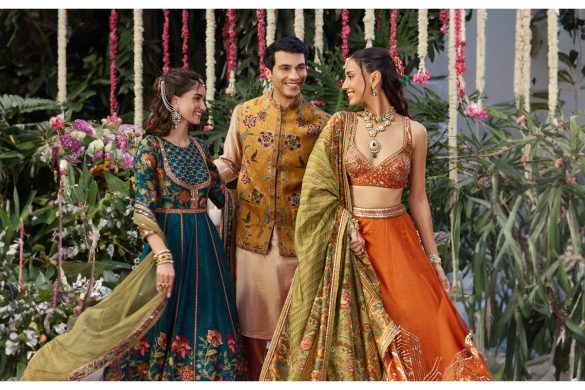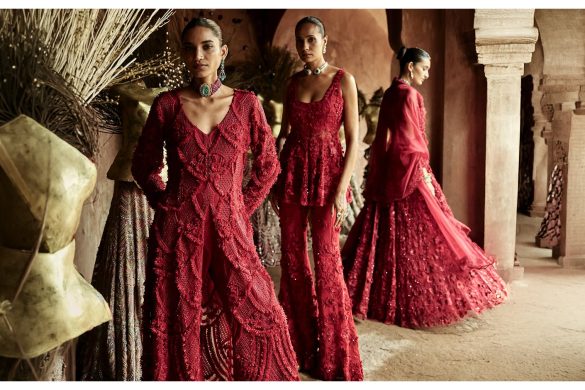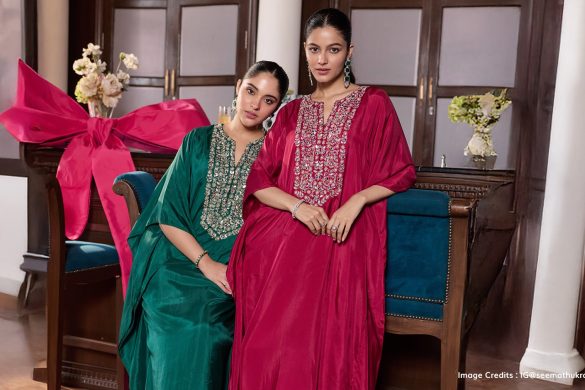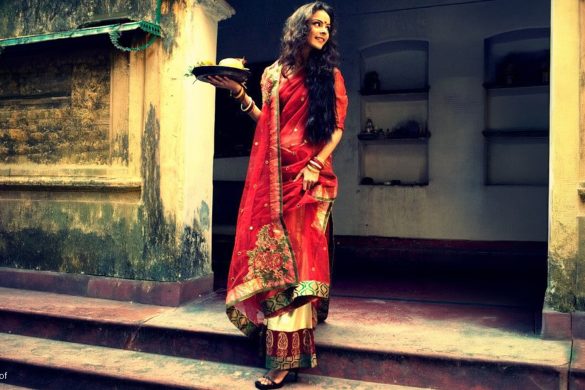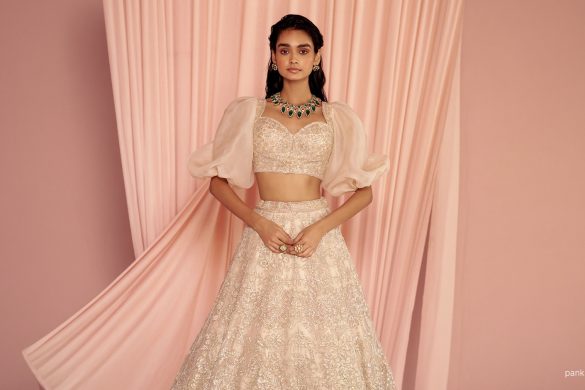
Paris just spent a week proving that clothes can be built from lightning, temple stone, deep-sea plasma and grief for the ephemeral, and somehow, all of it still had to fit like a second skin. Welcome to Haute Couture Week Fall/Winter 2026, the one season where the runway and the laboratory finally shook hands.
Rahul Mishra's Devi: Temples Made to Move
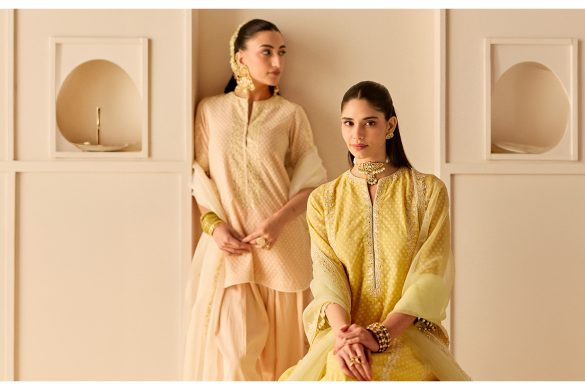
Under the Gothic vaults of the Collège des Bernardins, Rahul Mishra staged his most personal collection yet, Devi: The Eternal Muse, pulling from the Ajanta Caves, a 12th-century stone dancer from Karnataka, and the Tarakeshwara Temple.
Mishra built the collection on the idea that temple carvers had been "revealing through accumulation" long before Western art history caught up, piling thread over thread and bead over bead until embroidery began to resemble carved stone.
Zardozi and dabka techniques met crystals and bugle beads to fake the texture of basalt, soapstone and bronze,while the garments themselves stayed featherweight. Ceremonial headpieces were sculpted by clay artisan Sumant Kumar, with veils and millinery by longtime collaborator Stephen Jones.
The show also marked Mishra's debut fine jewellery collaboration with Tanishq, translating the collection's temple and embroidery language into precious stones and geometric forms. Isha Ambani and Cardi B both sat front row, Cardi later walking out in a custom ivory Mishra look.
Manish Malhotra: Grief, Gilded
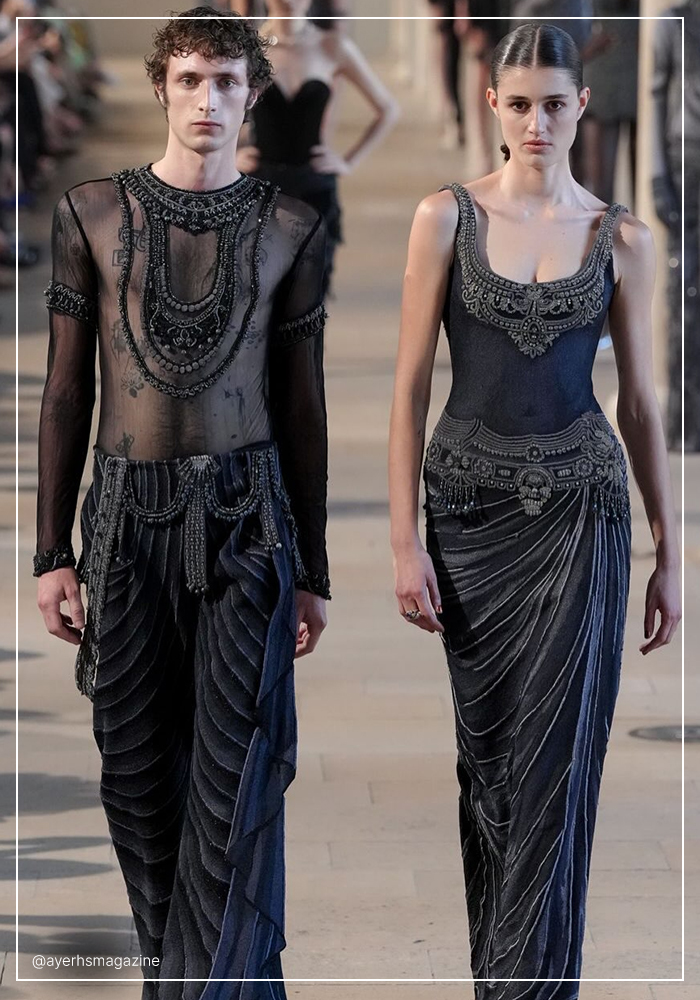
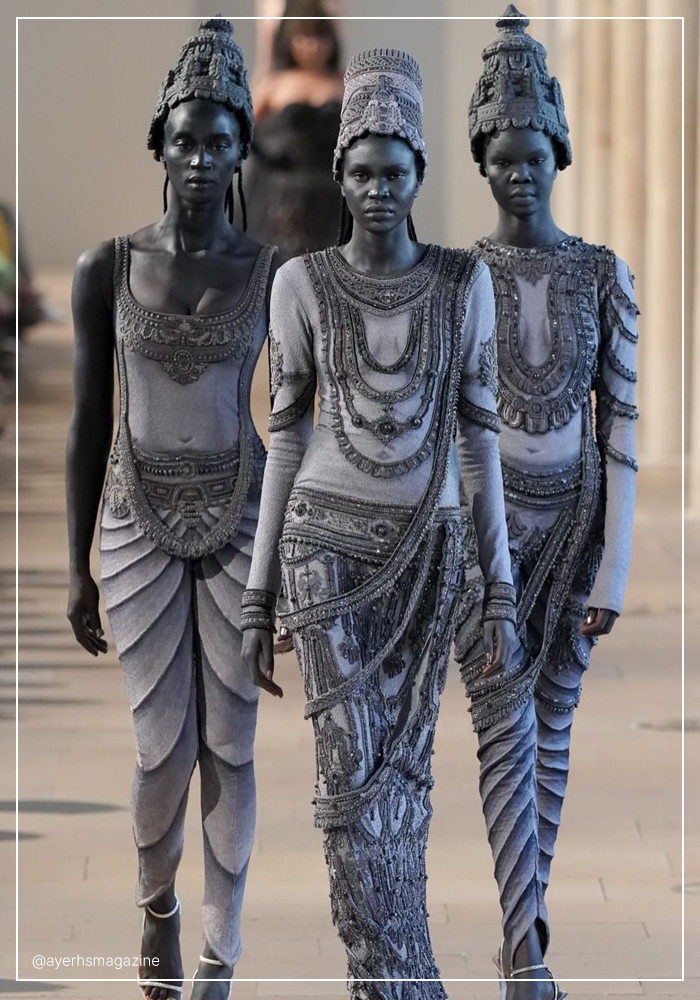
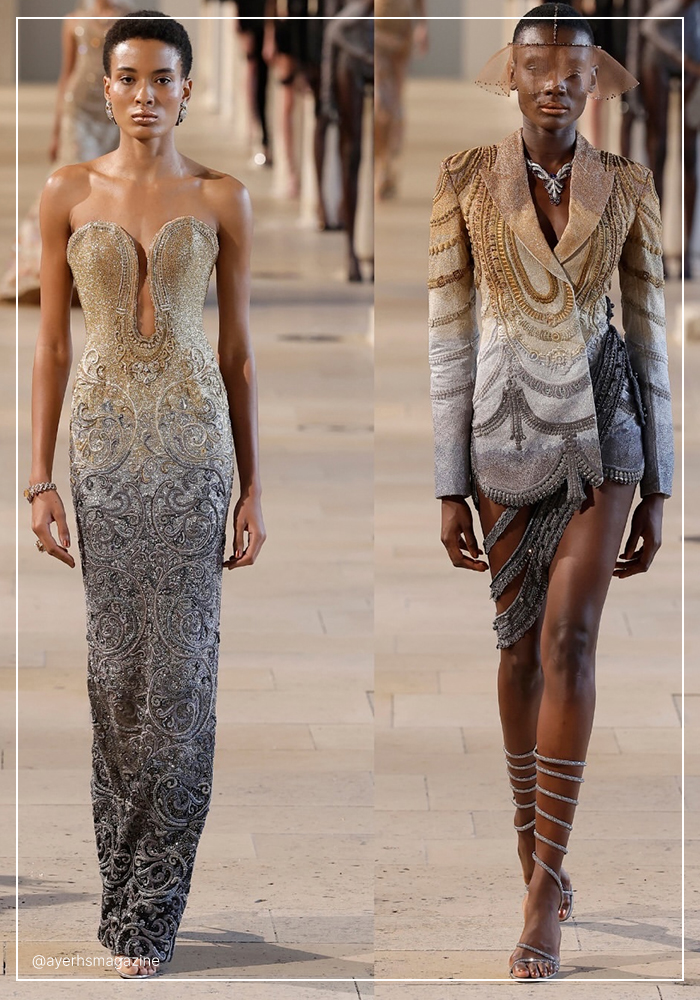
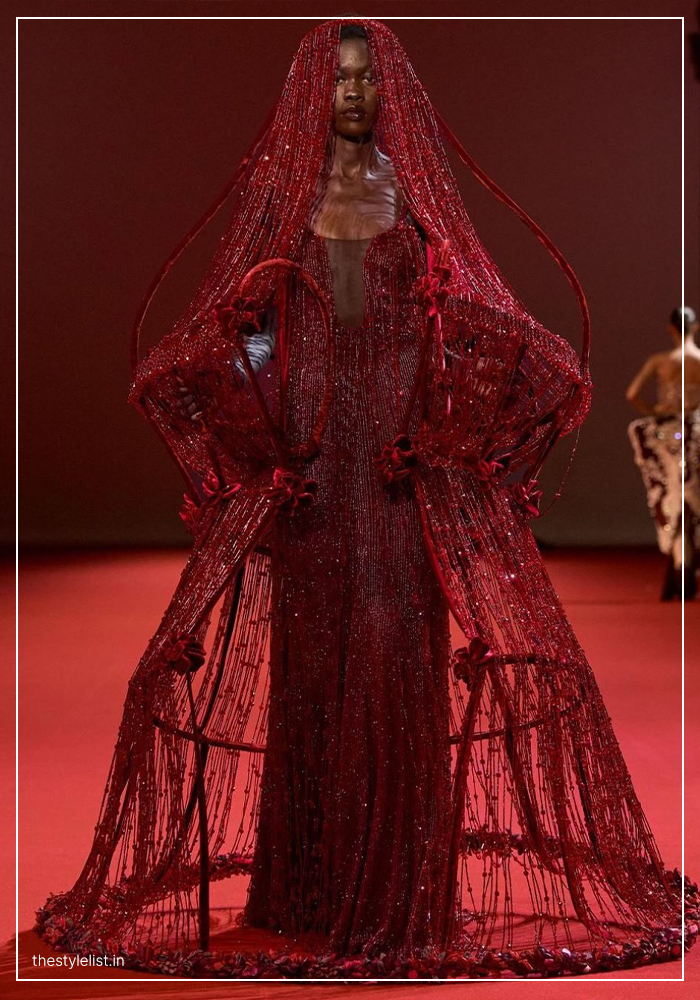
Paris finally met the man who's dressed three generations of Bollywood, and he arrived with a eulogy stitched in gold. Titled 'Maa,' Manish Malhotra's official couture debut at Pavillon Cambon Capucines was a tribute to his mother Sudarshan Malhotra, who passed away earlier this year, and it showed in every deliberately maternal silhouette.
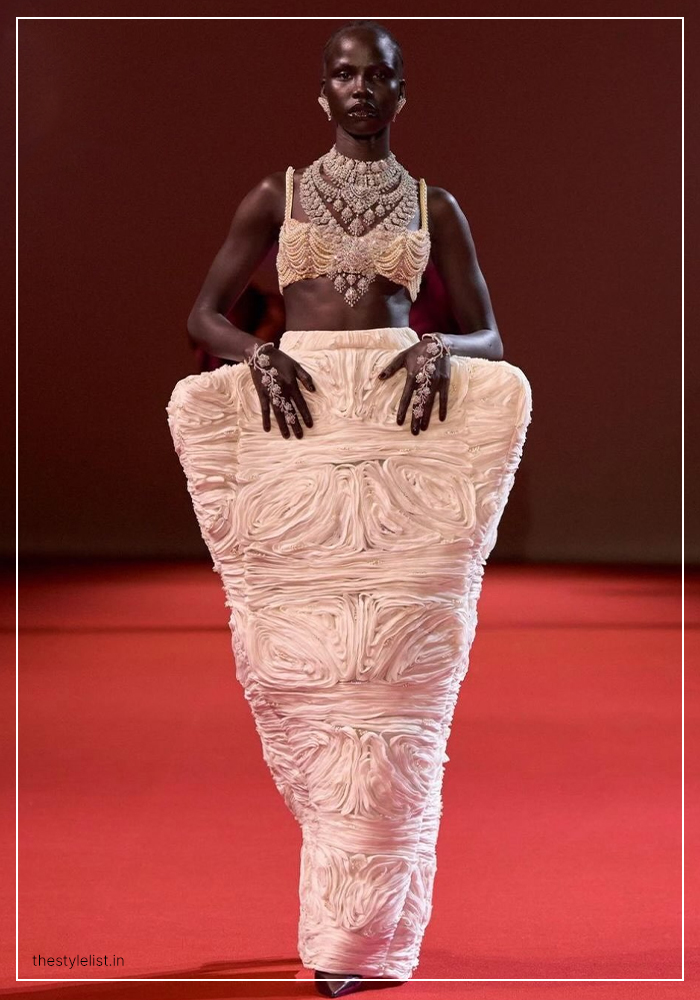
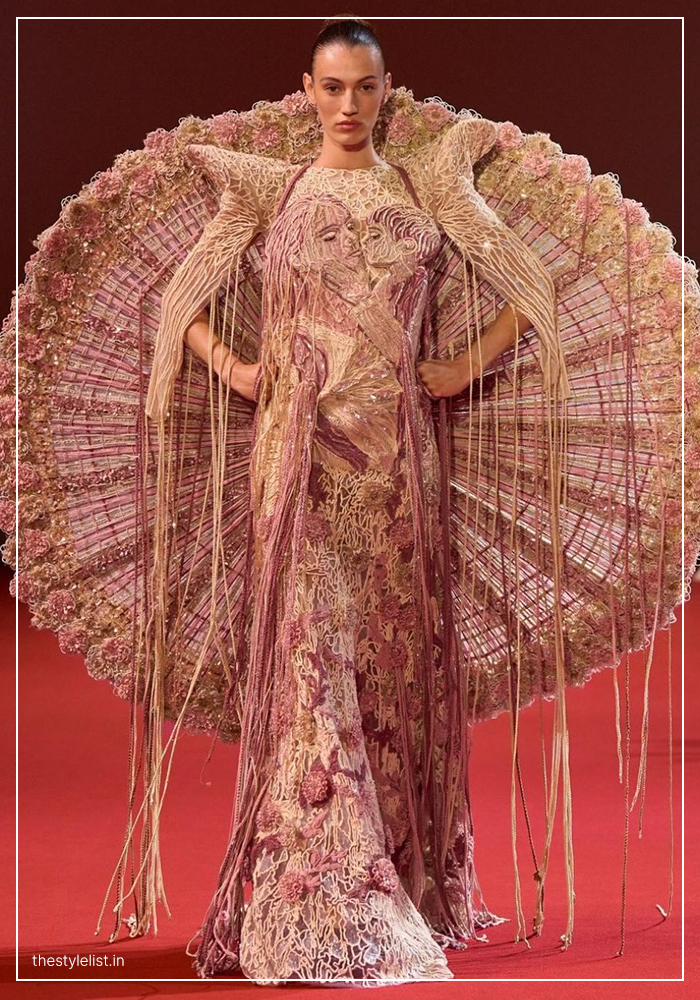
The designer described the collection as a tribute to the "architecture of a mother's unconditional love." Think hourglass gowns with padded, ring-shaped extremities, cocoon coats that opened like blankets and then closed like a conch shell, and, most striking sculptures of mothers and children fixed onto bodices, forming family portraits that transcended time.
The palette borrowed straight from the sarees his mother wore through the 1970s, while chikankari, zardozi, resham and gota work anchored the whole show firmly in Indian karigari, even as the cuts flirted with French couture's sculptural freedom. Volume was the loudest language here, imposing shoulders, matchstick-gold capes, gemstone constellations across figure-hugging bodices — proof that even mourning can be maximalist when it's Malhotra doing the mourning.
Robert Wun: A Fairytale, Unfiled
If everyone else in Paris was busy dreaming in metal and mythology, Robert Wun went straight for the nursery. Staged at the Dôme de Paris, "The Fairytale Cocoon" fused the darker moral weight of Grimm and Perrault with the deceptive innocence of Hayao Miyazaki — childhood not as costume, but as architecture.
Wun, admittedly running on fumes after two-and-a-half relentless years, turned to his own unrealized childhood ambitions, a scrapped space program became the reference for transparent, helmet-like headpieces. The opening exit was a monumental gown embroidered with colourful doodles, as though sketched by a child's hand, paired with its own matching stuffed toy.
A ballerina emerged in pink tulle with a jewellery-box figurine perched atop her head; the finale piece was crowned with actual balloons jutting from the body, a deliberate, nerve-wracking nod to the transience of infancy. It was surrealist, slightly unsettling, and completely unmistakable; Wun's couture has never once asked permission to be strange.
Balenciaga: Piccioli's First Bow
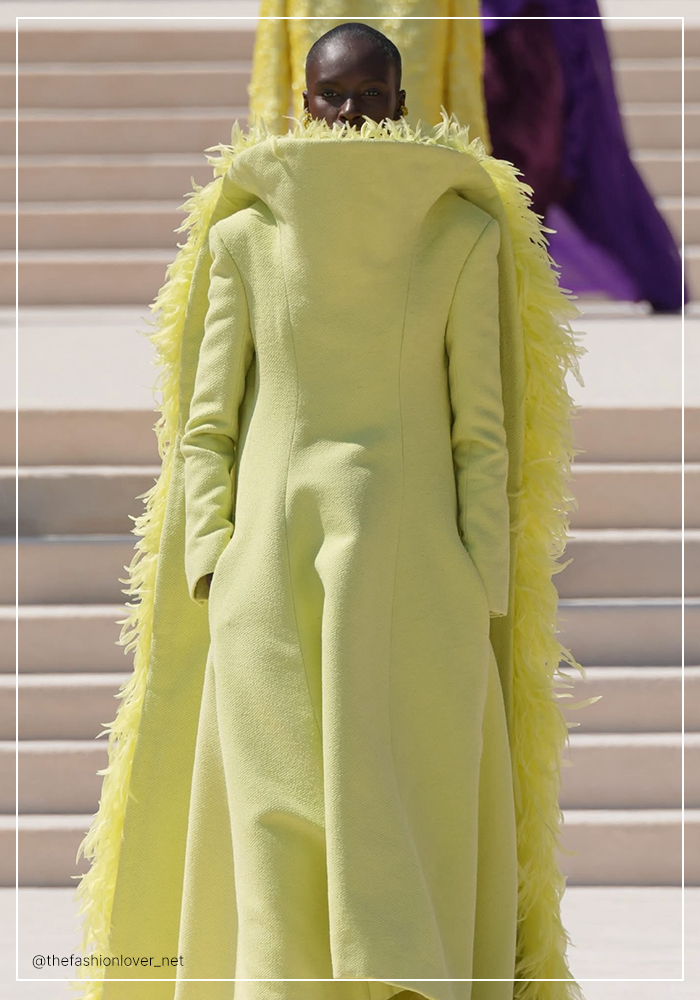
Pierpaolo Piccioli's couture debut at Balenciaga wasn't about erasing Demna, it was about bringing the body back into the room. Staged under blazing sun in the gardens of Cité Internationale Universitaire, the house's 55th haute couture show marked Piccioli's first outing since taking over almost a year after Demna's exit. And where his predecessor leaned dark and conceptual, Piccioli went the opposite way, rooting his vision in humanity, colour and emotion.
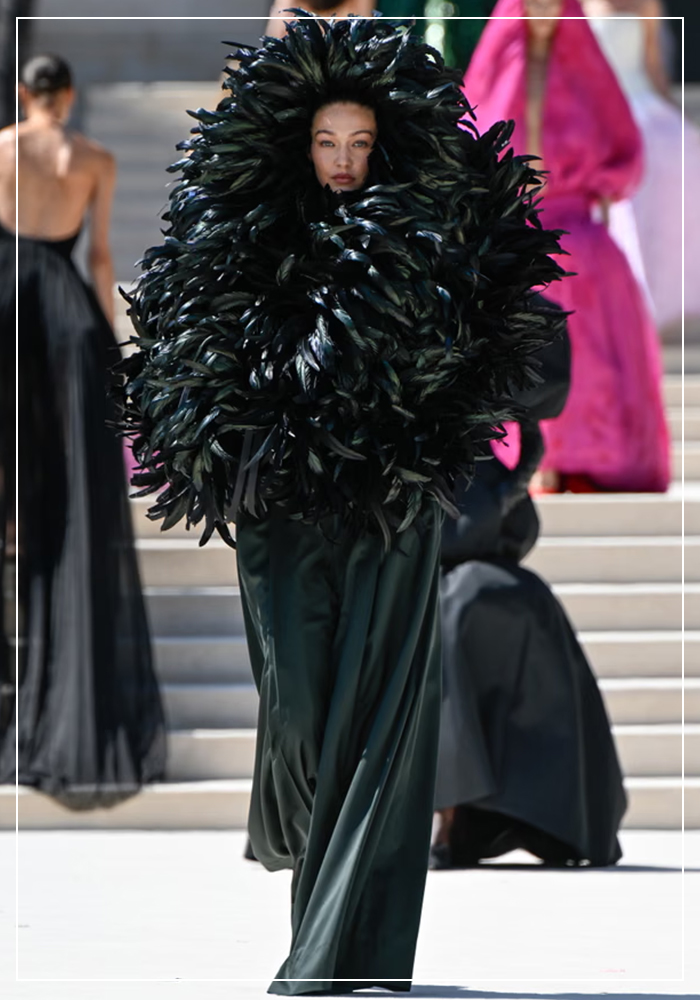
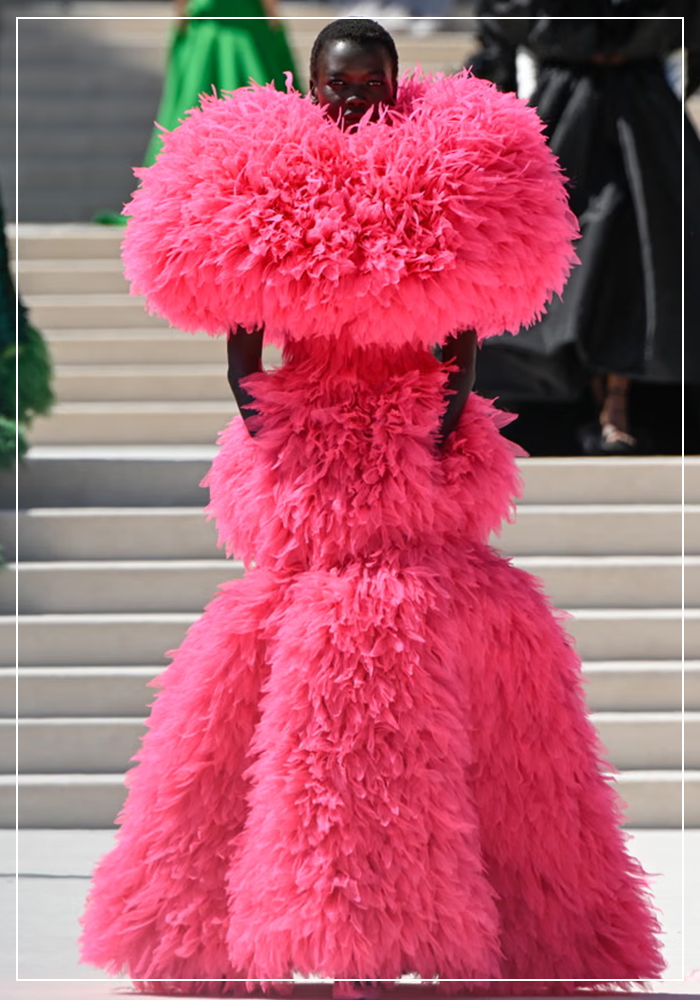
Electric pink, neon orange and mint green washed over hooded feather cocoons and hourglass dresses styled with leather opera gloves, a nod to Cristóbal's balloon silhouette, sack dress and cape, all reworked for now. The craftsmanship numbers alone tell the story: 24,150 satin feathers hand-cut and attached using jewellery-making techniques, alongside 8,000 individually hand-painted petals.
Gigi Hadid closed the show swallowed inside a rooster-feather hood, and the entire white-coated atelier walked the finale with Piccioli, because for him, "couture is made by the people who live it.
A Heatwave, a Museum Garden, and Dior's New Grammar
Fresh off dressing Taylor Swift for her wedding to Travis Kelce, Jonathan Anderson brought his second couture outing for Dior to the gardens of the Rodin Museum, as Paris baked under a 30-degree heatwave.
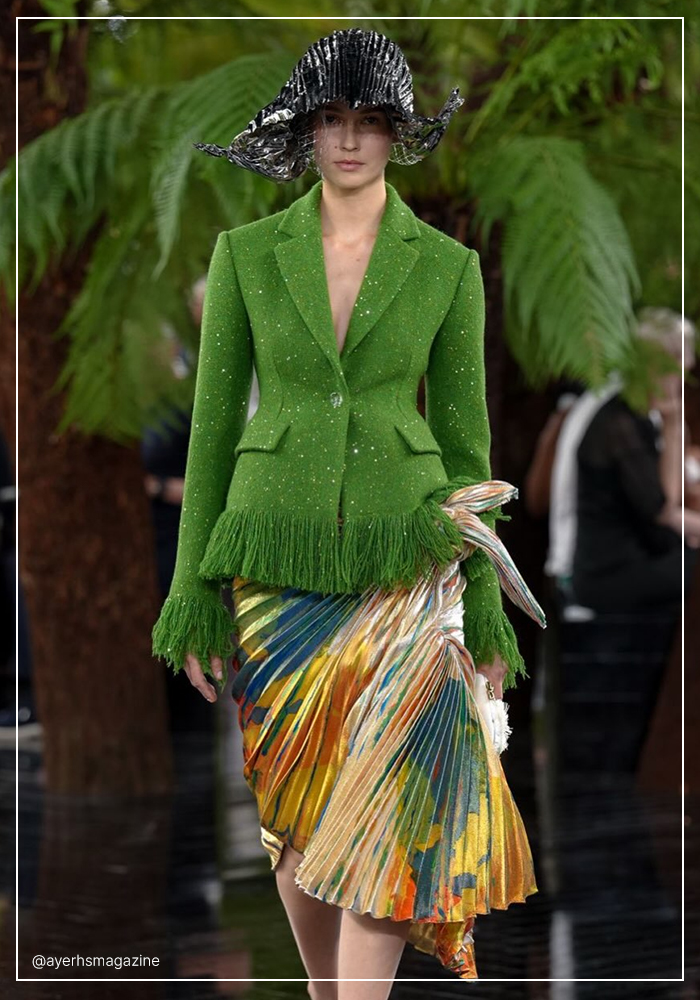
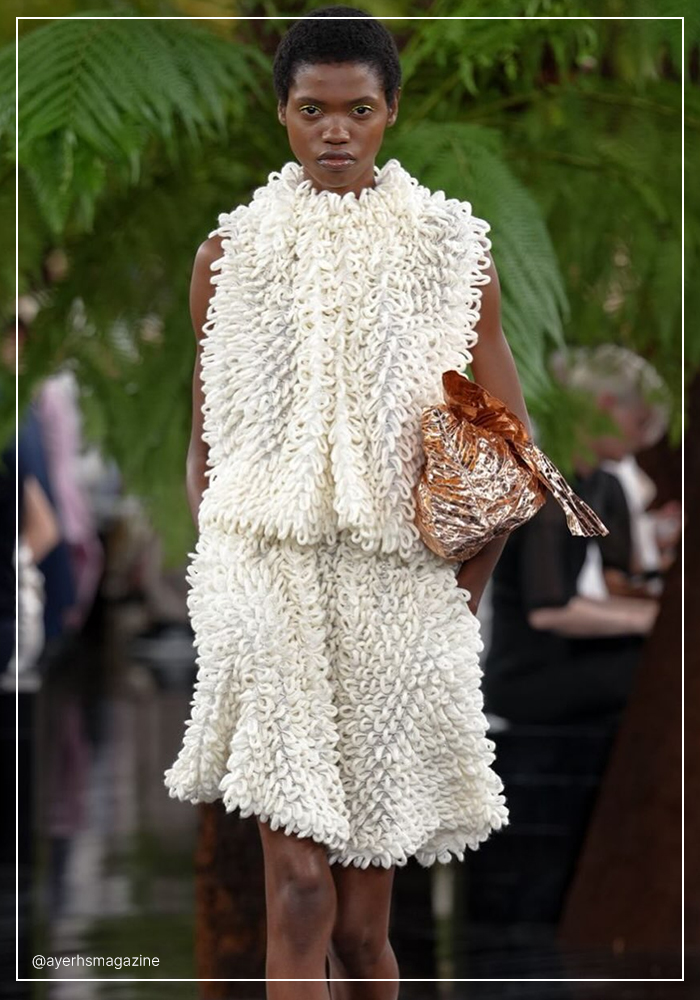
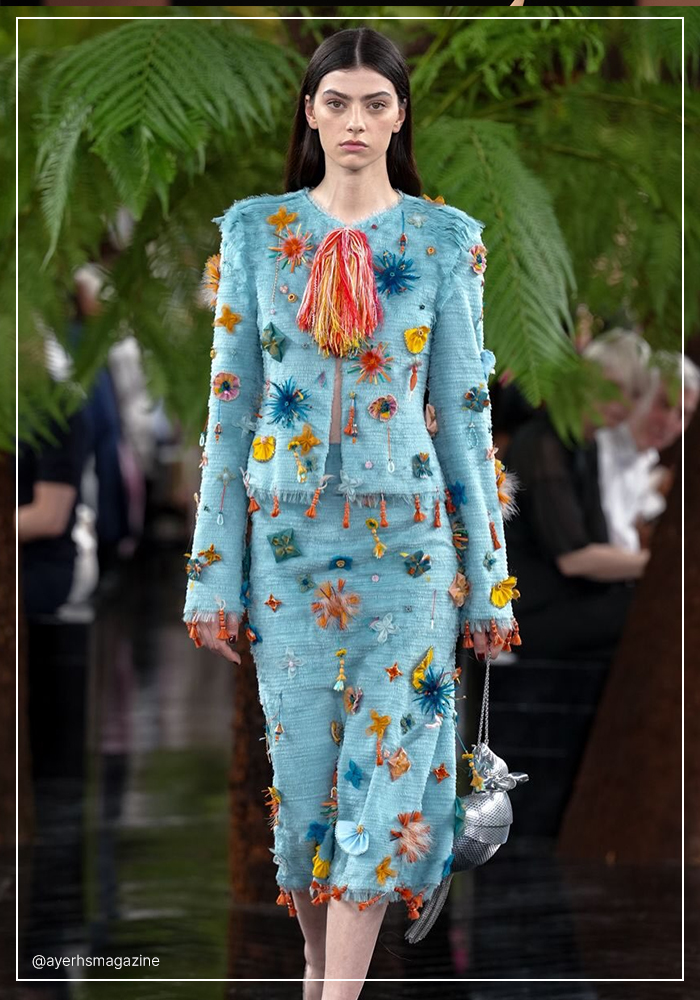
Titled Grammar of Forms, the collection translated the sculptures of American artist Lynda Benglis, all "frozen gestures," pleats, and materials trusted to behave on their own terms, into hand-pleated chiffon, sculptural bows and silk flowers.
Benglis's own history with India shaped the palette: her time at the Sarabhai estate in Ahmedabad inspired her Peacock series, rendered here in beaded florals, while her arid Santa Fe studio pulled the collection toward crystalline greys and silvers.
The house's Bar jacket returned in fern-green tweed and frayed fringe; bags made in direct collaboration with Benglis carried metallic plissé and sculptural bows, while jewellery crafted in Jaipur strung mother-of-pearl and carved onyx onto tasseled cords.
Iris van Herpen Sends Fashion Into Outer Space
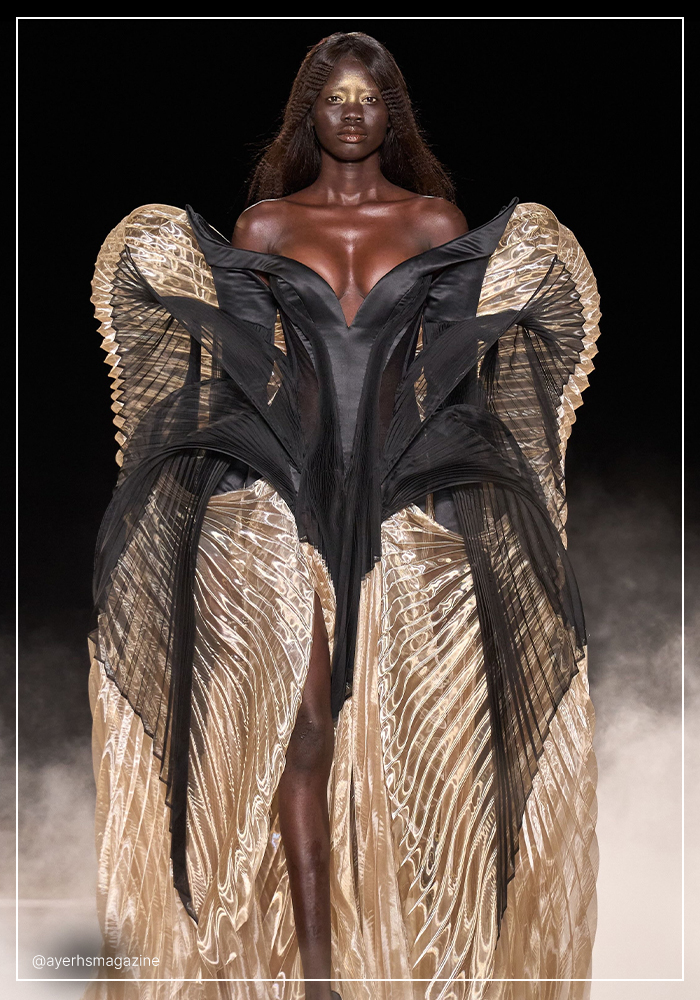
If Schiaparelli went underwater, Iris van Herpen went to the stars. Her collection, Sonic Starquakes, drew on vibrating stars, exploding supernovae and, for the first time in couture history, actual plasma.
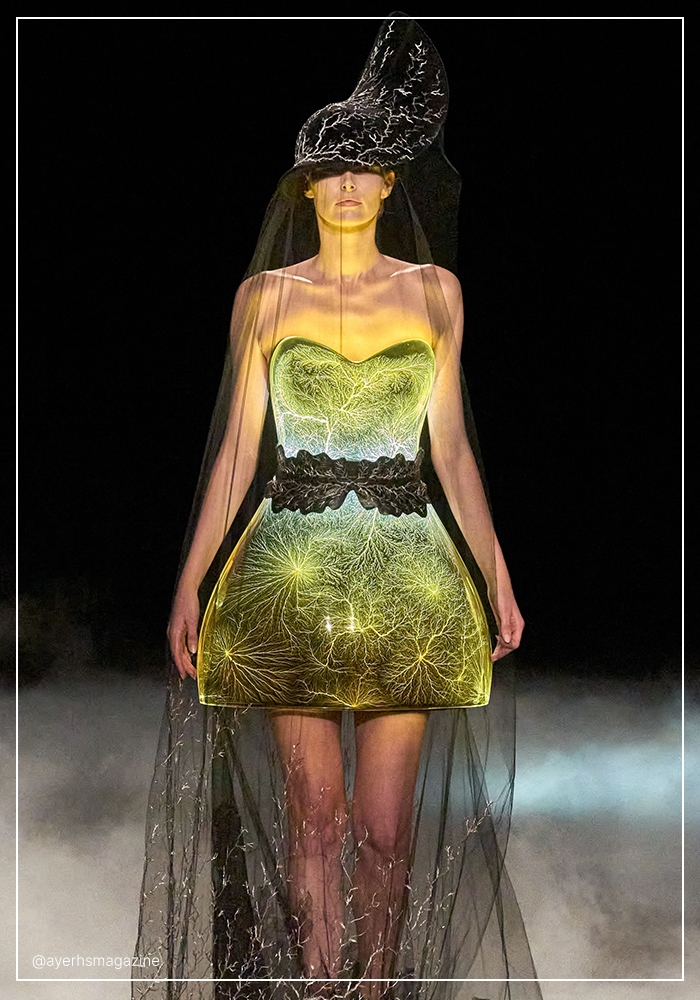
Plasma reacting to the body's magnetic field was inserted into crescent-shaped glass tubes swooping from a tulle dress covered in over 30,000 hand-blown glass bubbles, crackling and glowing as models walked.
One dress was charged inside a particle accelerator and cryogenically preserved, meant to discharge lightning-like patterns on the runway, except the garment had other plans. Days before the show, it began discharging on its own, etching fractal, fern-like patterns across its surface, which van Herpen embraced as the collection's most poetic accident.
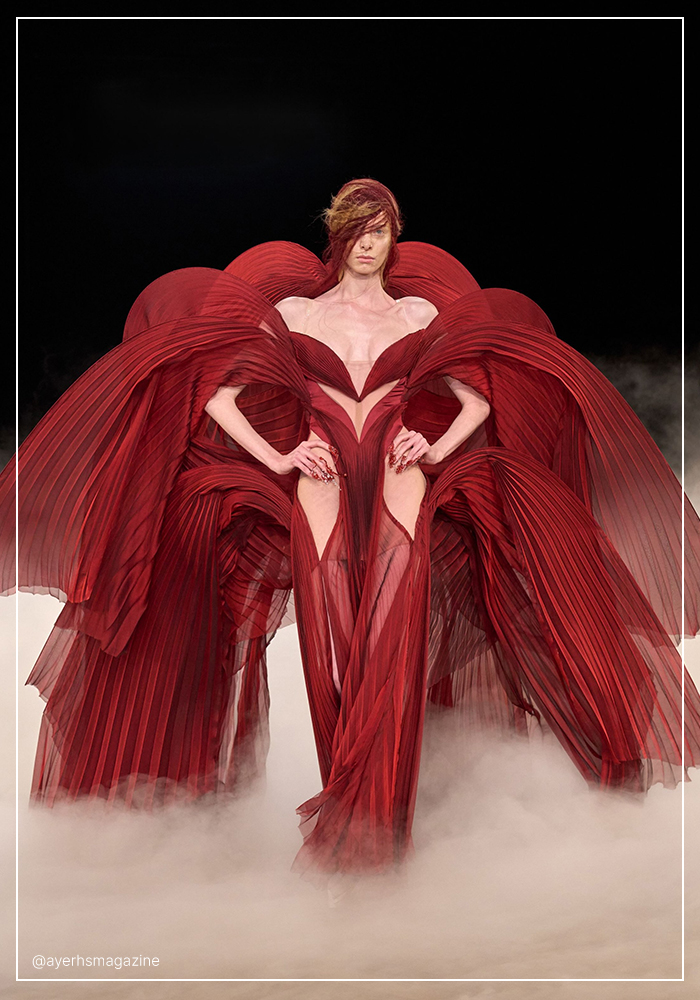
Laser-cut velvets traced undulating motifs across the body that continued onto bare skin as embroidery, while pleated chiffon and organza were suspended within moon-curved carbon-fibre boning. The palette moved through midnight black, cobalt, nebula red and storm-lit silver, couture as astrophysics.
Schiaparelli Goes Underwater — and a Little Feral
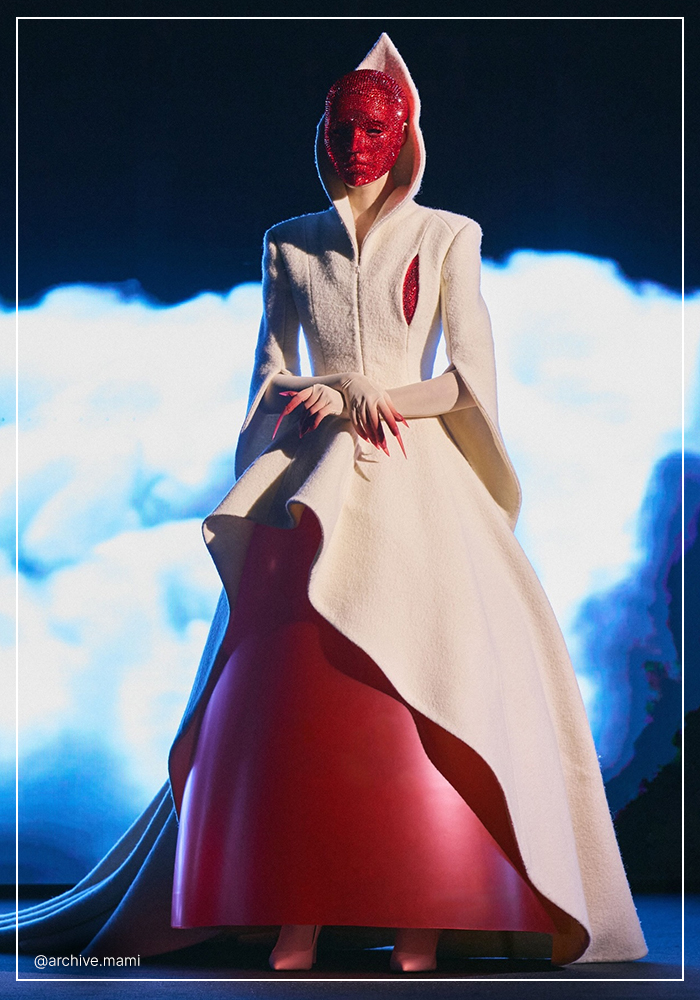
Daniel Roseberry opened Couture Week with what he called The Call of the Void, a collection born, by his own account, out of creative crisis after a trip to see Gaudí's Barcelona didn't yield the usual spark.
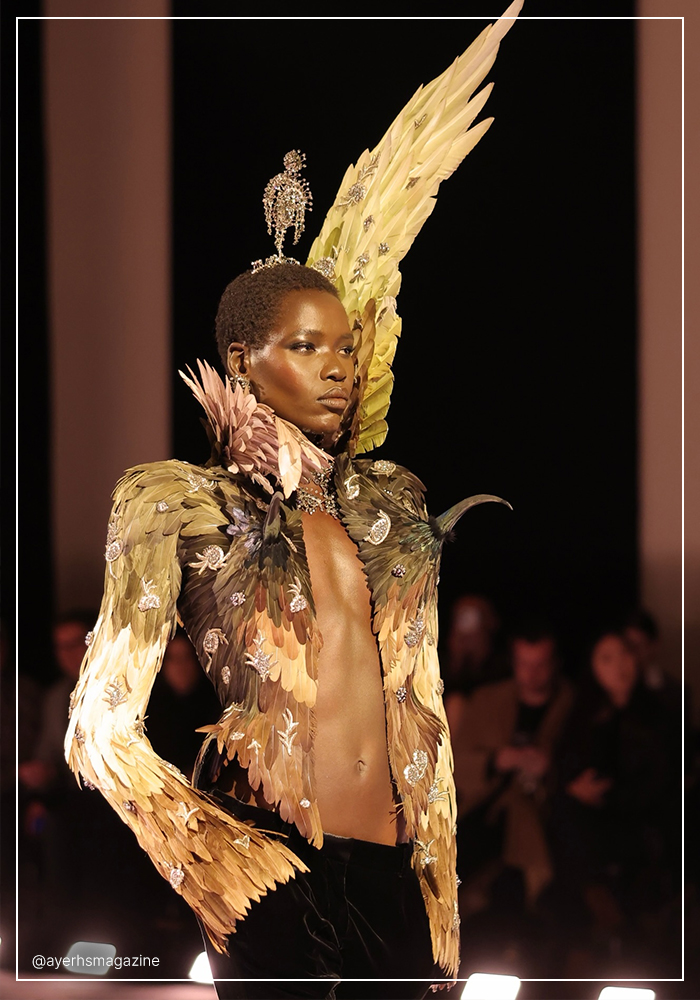
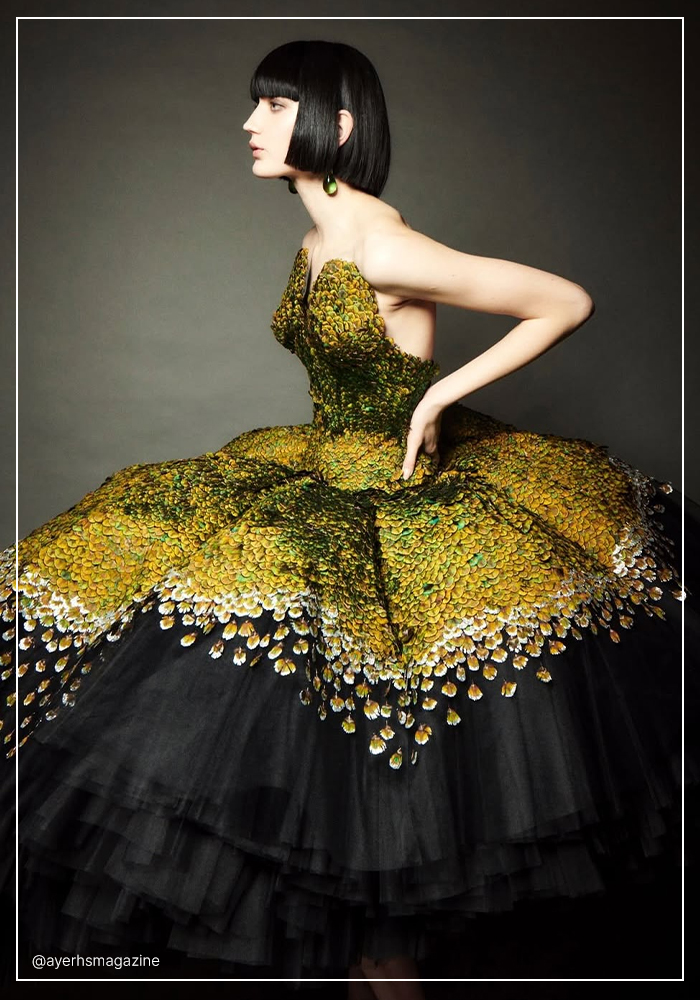
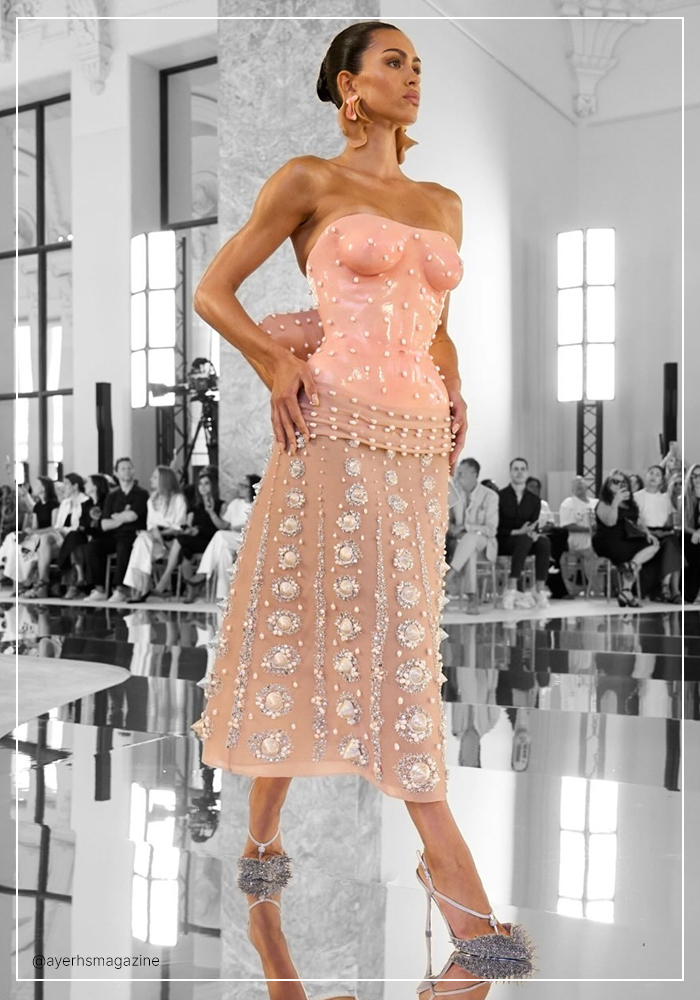
The result was aquatic-inspired: latex jackets with inflatable tentacles, jelly-like molded silicone bustiers and gowns that pulsed with light. Roseberry pulled his colour palette from artist Matthew Barney's unsettling Cremaster Cycle, working with a Paris workshop known for making photorealistic silicone babies for film.
Real flowers preserved in sugar water were embroidered onto dresses, alongside natural seashells and baked fish scales; a look designed, as one reviewer put it, to give an ASMR quality to the walk. Sculpted anatomical bustiers appeared cast in silicone, one of which reappeared on Zendaya hours later at a London premiere.
Old-house references weren't abandoned entirely, a silver reworking of Elsa Schiaparelli's sequinned "Apollo of Versailles" cape appeared lined with curled ringlets of hair, next to '80s-shouldered suits and '30s-style pillbox skirt suits.
Elie Saab: Masks, Not Mystery
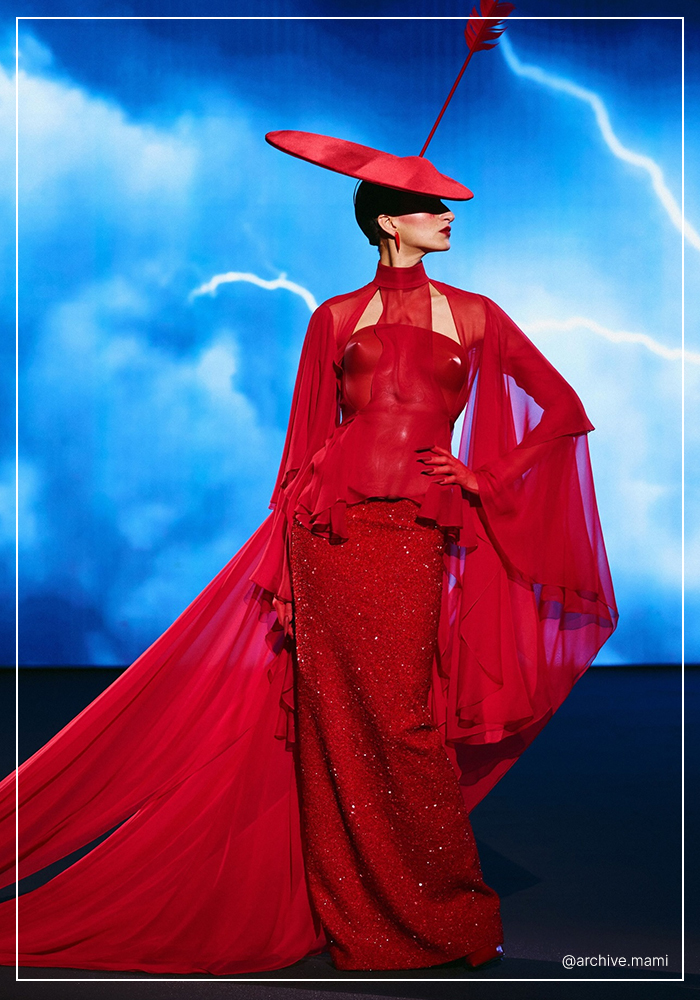
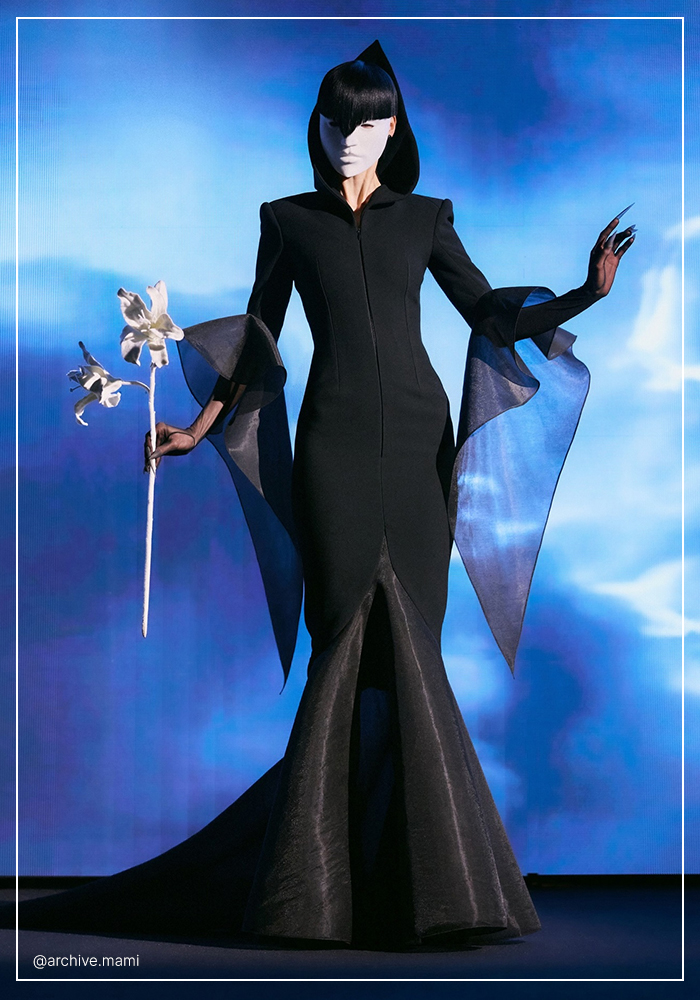
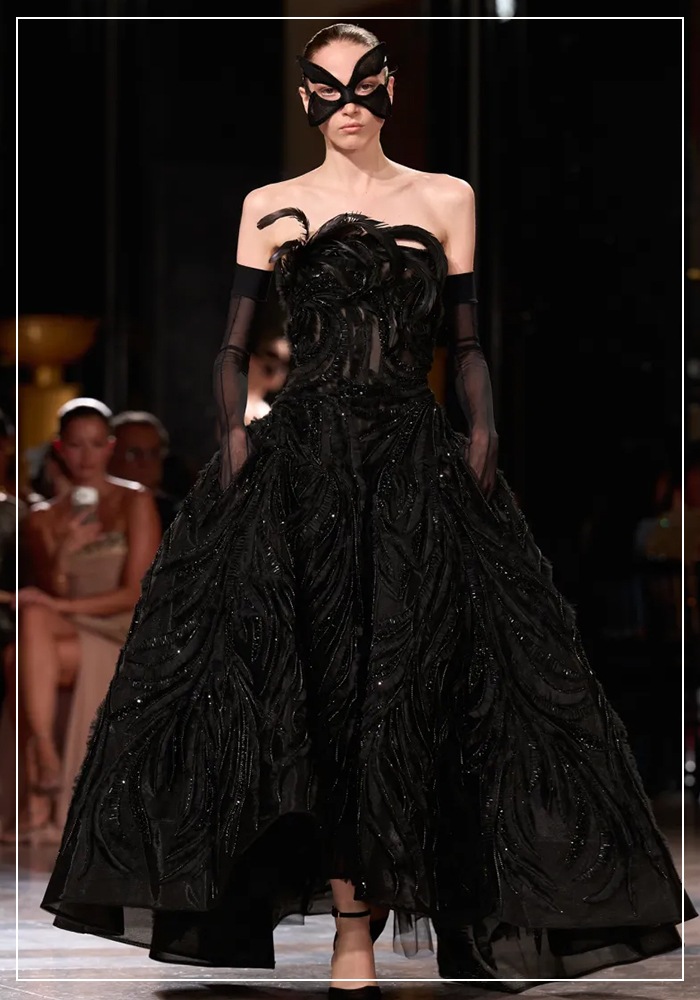
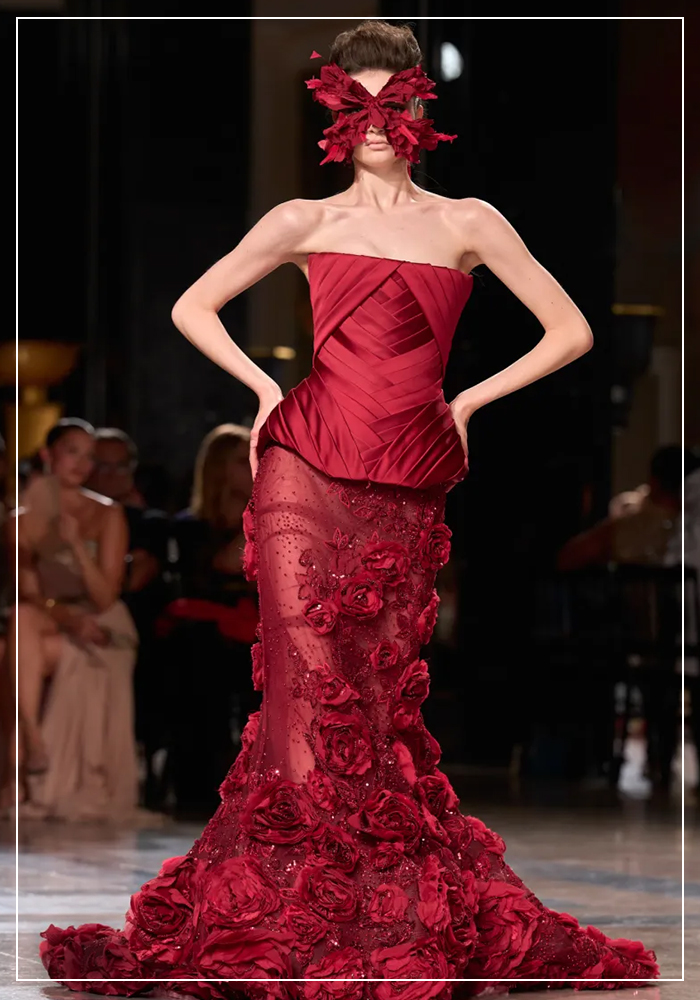
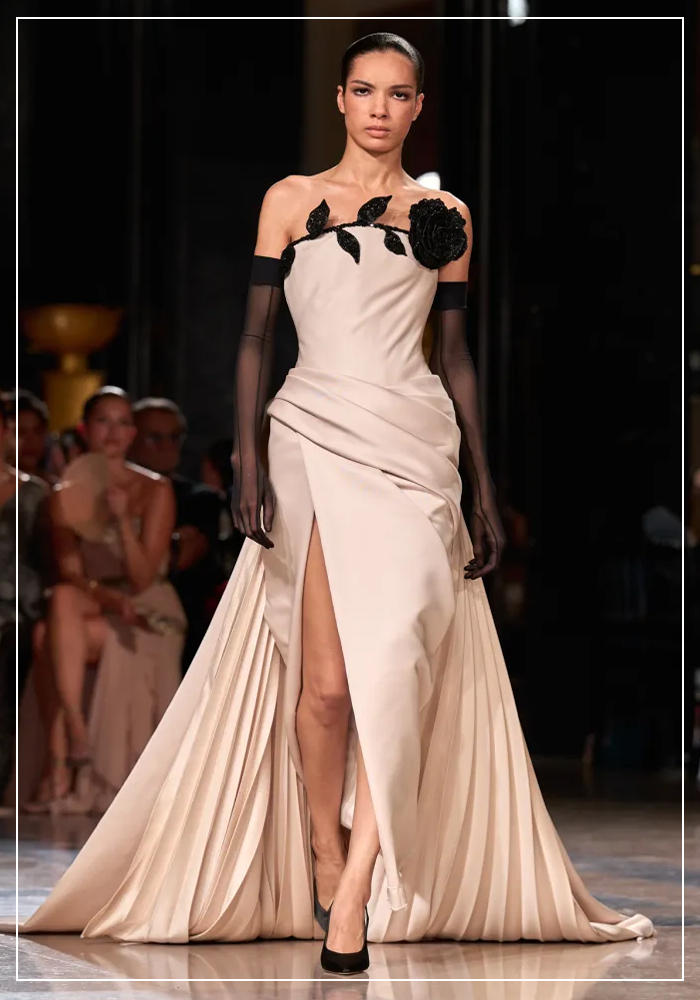
Elie Saab did what Elie Saab does, except this time, the lights went down. Set beneath the Louvre on a black carpet, the house's Fall 2026 couture took its trusted world of crystal embroidery, corseted waists and sweeping trains and pushed it into a darker, more nocturnal register, masks, black lace, oxblood velvet, deep red gowns.
The reference point was the mythology of the grand masked ball, from Truman Capote's Black and White Ball to Old Hollywood glamour, and Saab described the mask not as concealment but as transformation, a way for women to reveal different facets of themselves.
Velvet corsetry and New Look silhouettes sat beside fluid tuxedos and sharply tailored trousers for women, while embellished jackets and capes extended the house's growing menswear couture offering. Ornamentation was more restrained than in past seasons, with the drama instead coming from luxurious fabrication, sculptural pleating and colour — proof that Saab's fantasy doesn't need more embroidery to hit harder, just better shadows.
Boloria: Olivier Theyskens Builds a House From Scratch
Technically a day before Couture Week proper, Olivier Theyskens' new label Boloria, backed by the company behind Tomorrowland, made its debut with Le Monde Flottant, "the floating world."
The collection was built around movement, memory and impermanence, with fine wool, cashmere, silk charmeuse and lace forming a material language that felt precious without becoming ornamental.
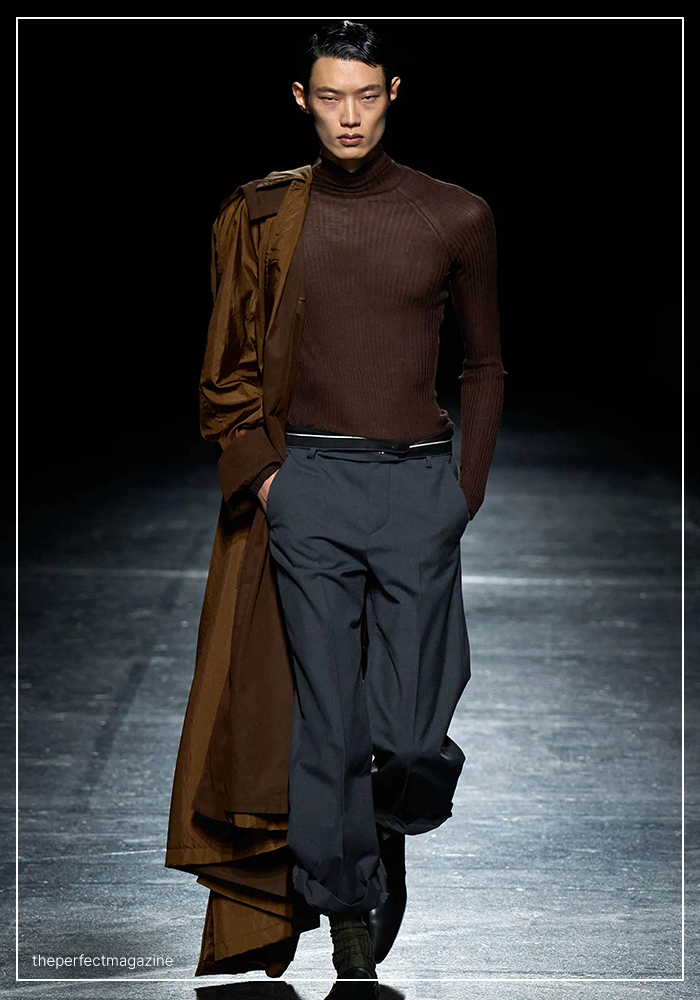
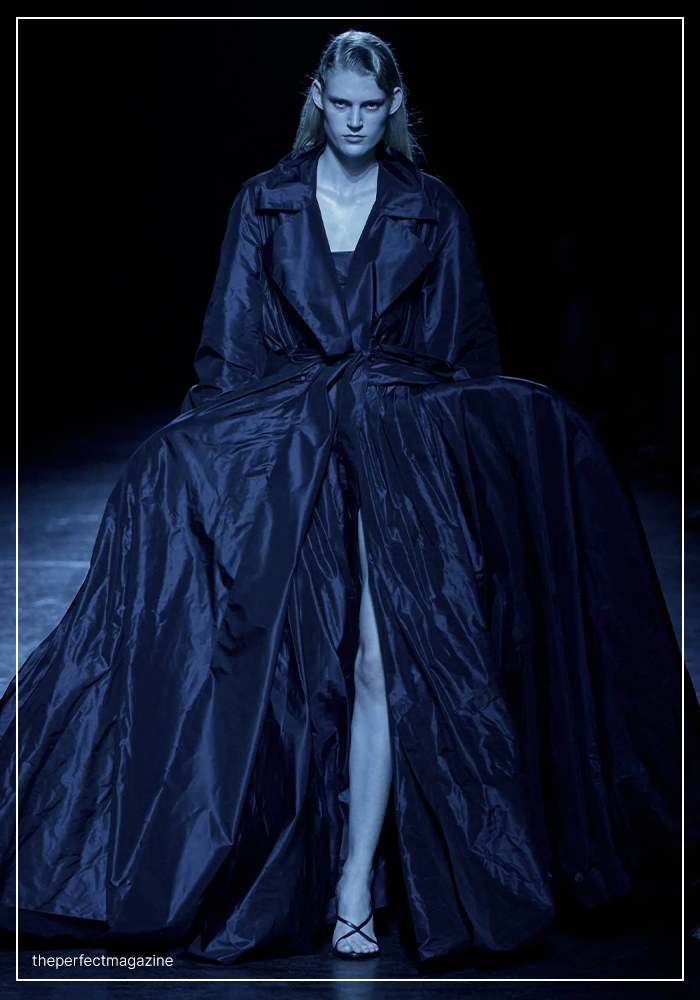
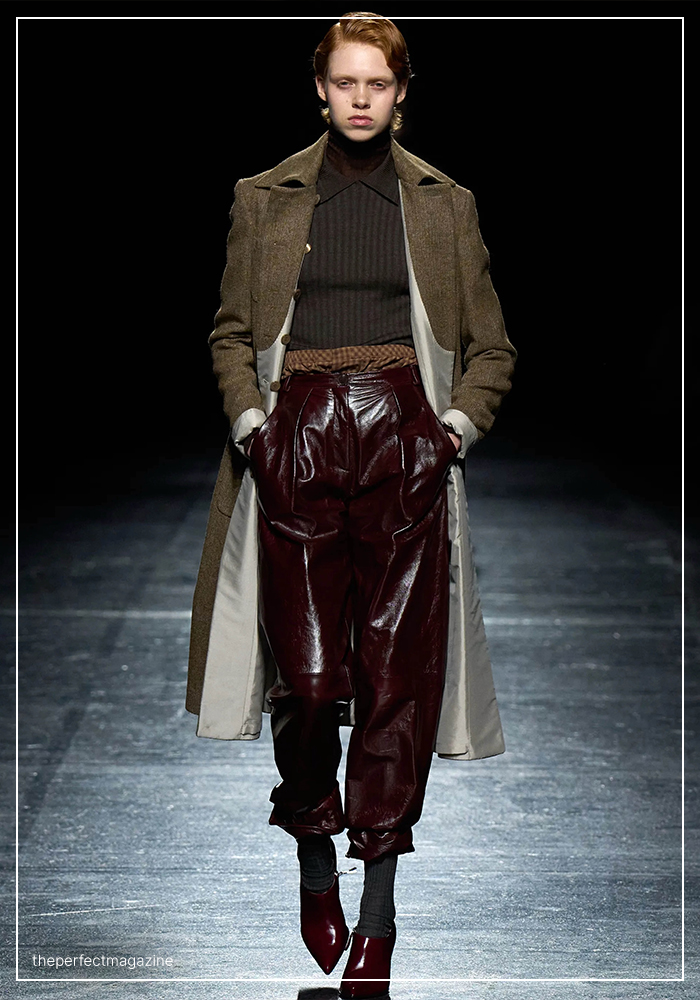
Theyskens opened with dark, bulging gowns reminiscent of the styles that caught Madonna's attention decades ago, before moving into tailoring that balanced structure with slouch, upturned cuffs, rolled pants, metallic pocket squares. Full-skirted, crinoline-panniered silhouettes gave the show its dreamlike opening, followed by male models wrapped like elegant bedsheets in white cloaks.
A distinctly Belgian sensibility ran underneath it all; muted, remembered colours drawn from Belgian landscapes and even suburban kitchens, alongside maritime nods to waxed jackets and trench coats reflecting Boloria's Antwerp roots.
Five houses, five entirely different universes, sculpture, science, deep-sea horror, temple stone, and a floating world of memory. If this season proved anything, it's that couture in 2026 isn't choosing between craft and concept. It's demanding both, at full volume.