
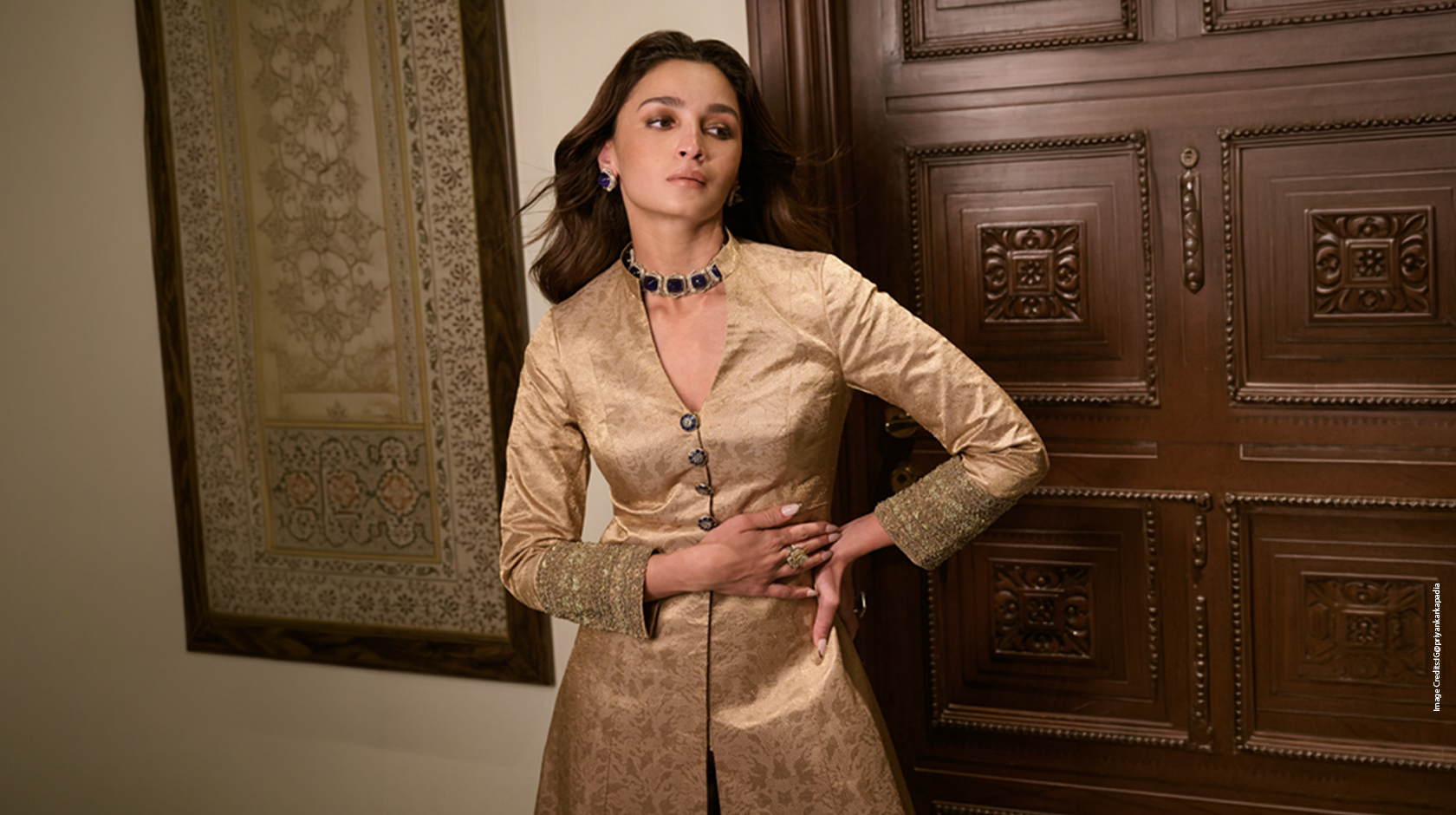
Some outfits photograph well. Others actually say something. Alia Bhatt's latest appearance in a Mayyur Girotra ensemble falls firmly into the second category, and it's the kind of festive outfit that makes you stop scrolling and actually look at the details. The occasion called for traditional Indian couture, but what she wore felt anything but expected. Instead of leaning on the usual lehenga-and-dupatta formula, Mayyur Girotra built a silhouette around a structured jacket, treating it as the centerpiece rather than an accessory to something bigger.
What makes this look worth dissecting isn't just the gold-on-gold glamour, though there's plenty of that. It's how every element, from the weave of the fabric to the cut of a button, connects back to a bigger idea about what Indian couture can look like right now. Banarasi textiles, archival embroidery motifs, fine jewellery details, and a tailored silhouette all show up in one outfit without competing for attention. That balance is rare, and it's worth breaking down piece by piece.
The Gold Banarasi Kalidar Jacket That Stole the Show
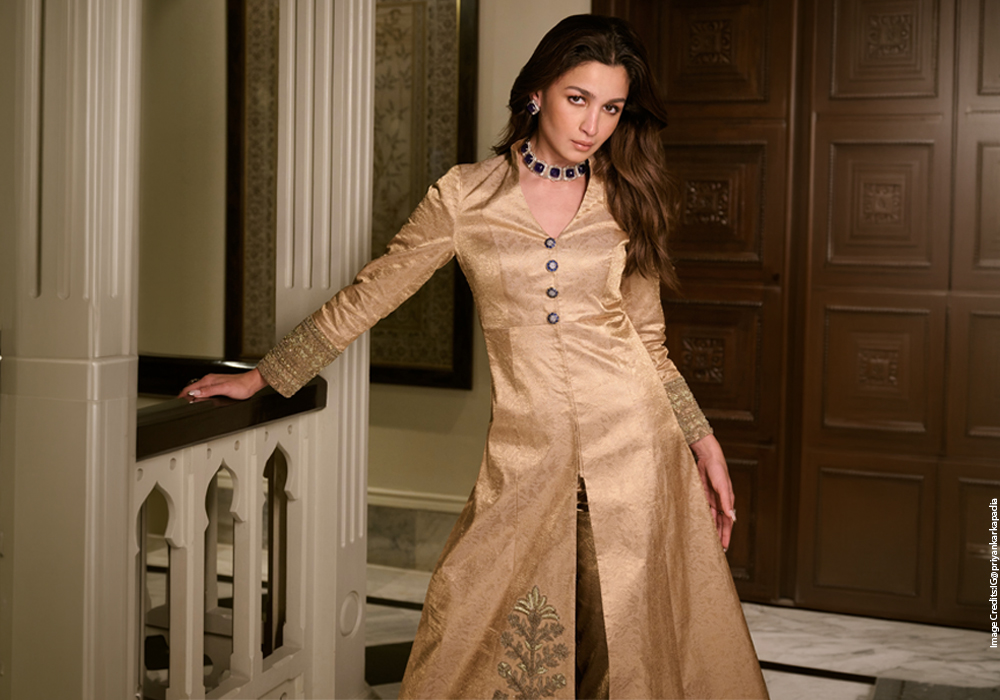
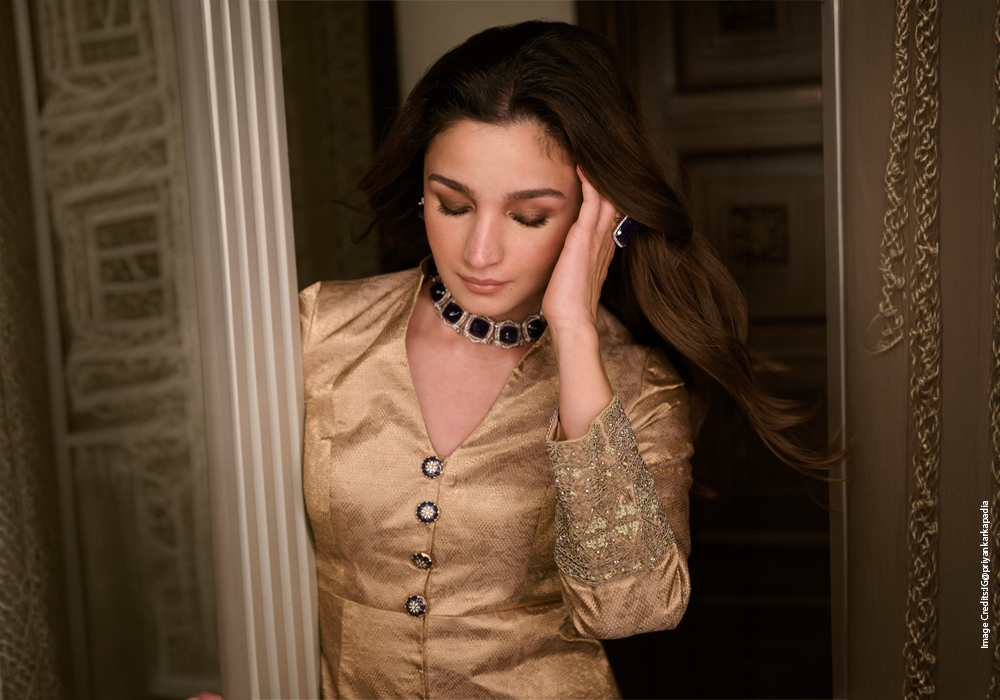
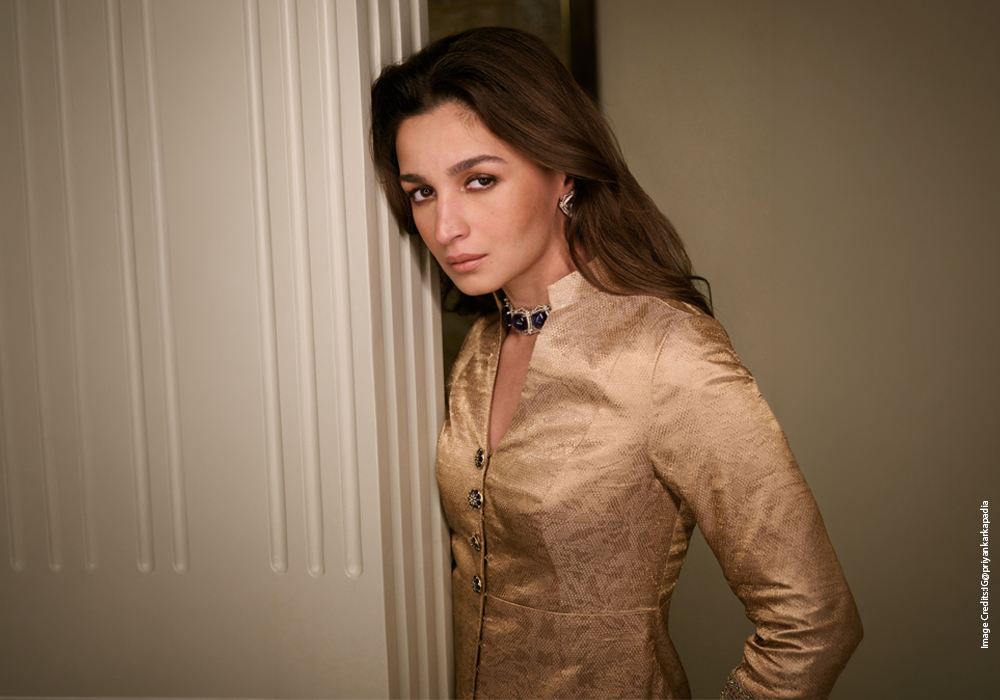
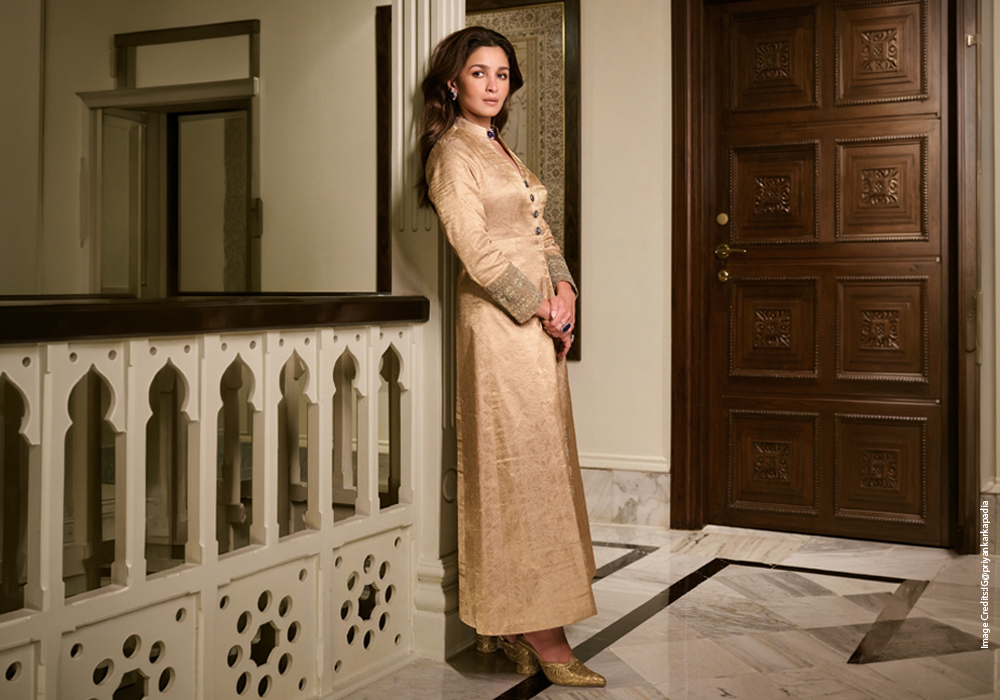
The foundation of the entire look is a gold-woven Banarasi jacket, and the fabric alone carries centuries of craft behind it. Banarasi weaving comes out of Varanasi, where artisans have spent generations perfecting the technique of brocading gold and silver thread into silk. Mayyur Girotra used that traditional textile as the base for something far more modern: a custom kalidar jacket silhouette with a high neckline, a fitted bodice, and a lower half that flows out rather than clinging to the body. That contrast between structure up top and movement below gives the jacket a kind of architectural quality you don't usually see in festive dressing.
Pairing the jacket with tailored pencil trousers instead of a traditional lehenga or Sharara was the smarter choice here. It streamlines the whole silhouette and lets the jacket do the talking. This is where the outfit earns its place as a genuine Banarasi jacket reference point for anyone trying to modernize heritage textiles without losing what makes them special. It also explains why platforms like Aza have seen growing interest in statement jackets as standalone festive pieces. Shoppers want the richness of traditional fabric without the volume of a full ensemble, and this look is proof of how well that formula can work.

The Archival Tree of Life Motif and Intricate Kora Embroidery
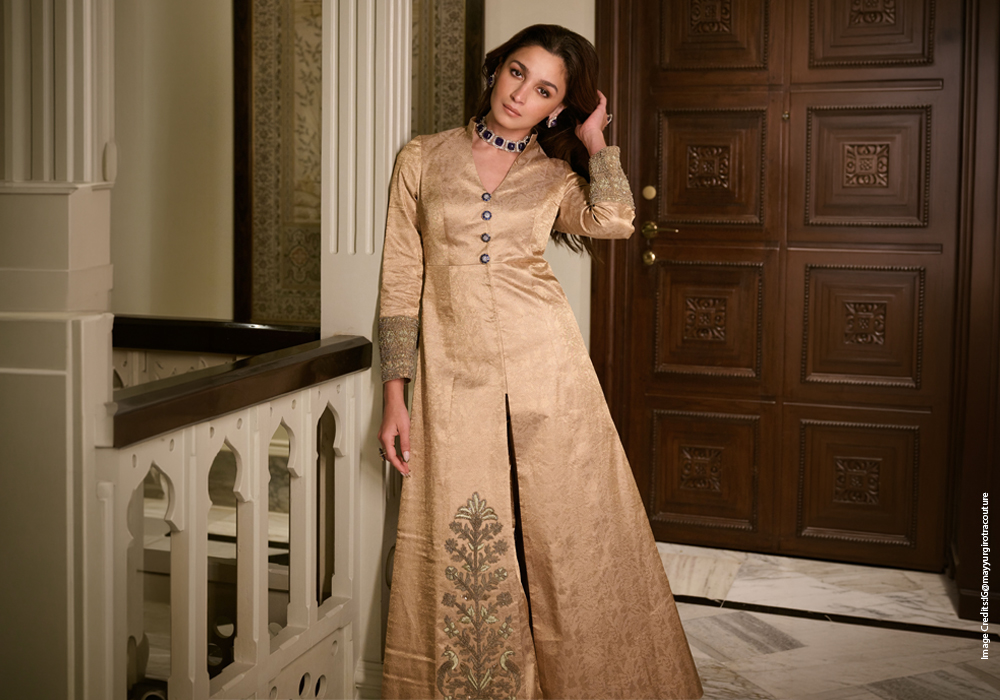
Look closer at the jacket and the embroidery tells its own story. The motif running across it is the Mor Bagh Tree of Life, pulled directly from Mayyur Girotra's archives and rooted in Mughal-era art. The Tree of Life has shown up in Indian textile tradition for centuries, often symbolizing abundance and continuity, and its use here grounds the whole garment in something historical rather than purely decorative.
The embroidery itself is Kora work, finished in an antique-gold tone that reads as soft and slightly weathered rather than shiny or new. That finish matters. A high-shine gold would have fought with the Banarasi fabric underneath; the antique tone lets the two textures sit together instead of competing. The placement is just as deliberate, tracing the neckline, wrapping the cuffs, and running along the hem, so the embroidery frames the jacket's structure instead of overwhelming it. It's the kind of detailing that rewards a second look, which is exactly what good Indian couture should do.
Enamel and Diamond Buttons That Added Understated Opulence
The buttons running down the jacket are real enamel and diamond pieces, designed by jeweller Sunita Shekhawat. On paper, that might sound like a small detail. In practice, it's one of the smartest choices in the entire outfit. Instead of relying on an elaborate neckpiece or layered jewellery to carry the opulence, the look tucks that luxury directly into the garment itself.
This is a technique borrowed from jewellery design, where enamel work and stone setting are usually reserved for necklaces, bangles, or rings. Applying that same craftsmanship to functional buttons turns a practical element into a quiet flex. It also signals a broader shift in how festive outfits are being styled: less about stacking on accessories, more about embedding fine detail into the construction of the garment itself.
Statement Blue Jewellery That Contrasted the Gold
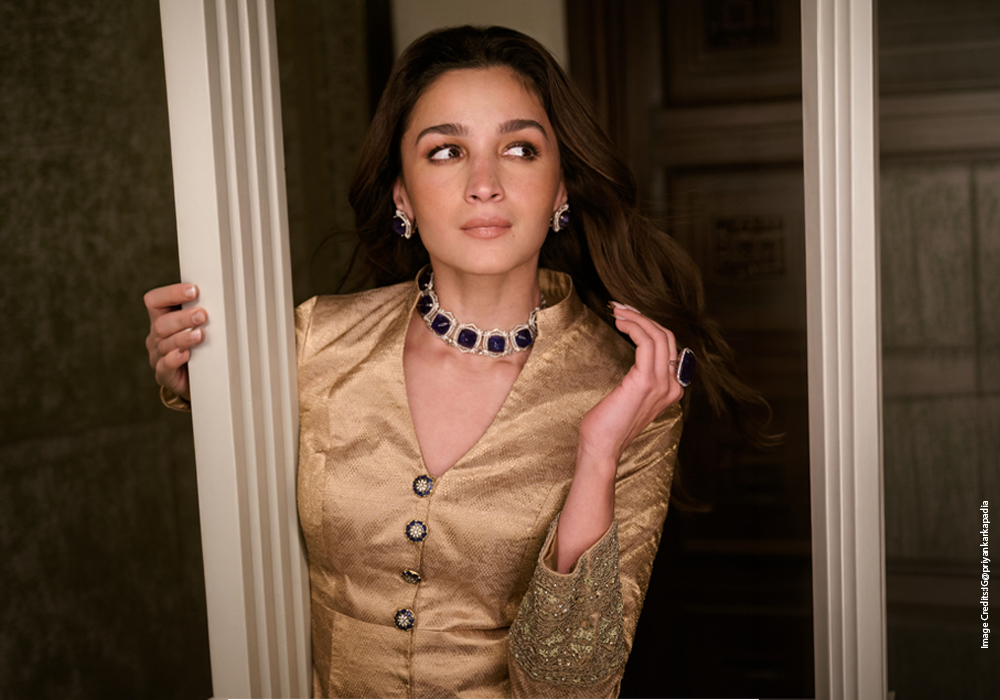
With the jacket doing most of the heavy lifting, the jewellery had one job: add contrast without stealing focus. Alia wore a choker set with blue cabochon gemstones and diamonds, a deliberate counterpoint to the warmth of the gold Banarasi fabric. Blue and gold is a classic pairing in Indian jewellery design, but here it feels fresh because of how restrained the rest of the look is.
Earrings by P C Totuka & Sons continued that blue thread, while a gemstone ring by Archana Aggarwal added one more quiet pop of color without tipping into excess. Each piece was chosen to complement the jacket rather than compete with it, which is harder to pull off than it looks. Sapphire tones against gold create dimension; too much jewellery would have flattened the whole effect. This kind of restraint is becoming a signature move in festive styling, and it's a big reason why curated jewellery edits on sites like Aza tend to favor one statement piece over a fully matched set.
Soft Waves and Bronzed Makeup for the Finishing Touch
The hair and makeup followed the same philosophy as the jewellery: support the outfit, don't overshadow it. Hairstylist Flavien Heldt gave Alia middle-parted, softly styled waves, a look that feels modern and a little undone rather than pageant-polished. Makeup artist Puneet B Saini kept the base bronzed and warm, with softly defined eyes and skin that looked lit from within rather than heavily set.
There's a reason this pairing works so well with an elaborate jacket. When the garment carries this much embroidery, texture, and detail, an equally dramatic beauty look would create visual noise. Soft waves and bronzed skin let the clothing stay the focus while still giving the overall look polish and warmth.
Embroidered Gold Mules to Complete the Look
The final piece was a pair of embroidered gold mules by Aprajita Toor. Footwear often gets treated as an afterthought in festive dressing, but here it extends the craftsmanship story instead of breaking it. The gold embroidery on the mules echoes the Kora work on the jacket without trying to replicate it exactly, which keeps the look cohesive without feeling matchy.
It's a small but telling choice. Mules also kept the silhouette streamlined, avoiding the bulk of a traditional heeled sandal and letting the tailored trousers remain the visual throughline from jacket to shoe.
The Final Take: A New Way to Wear Indian Couture
What makes this Mayyur Girotra look genuinely interesting isn't any single element. It's how deliberately everything works together: a Banarasi jacket that honors traditional weaving, embroidery pulled from a real archive, jewellery-grade detailing on the buttons, and styling restrained enough to let all of it breathe. Alia Bhatt didn't just wear couture here. She wore a case study in how heritage textiles and archival motifs can be reconstructed for a wardrobe that still feels current.
This is where Indian festive fashion seems to be heading: fewer full lehengas, more tailored statement pieces that carry centuries of craft in a single garment. If this look proves anything, it's that the next era of Indian couture might be built one jacket at a time.