


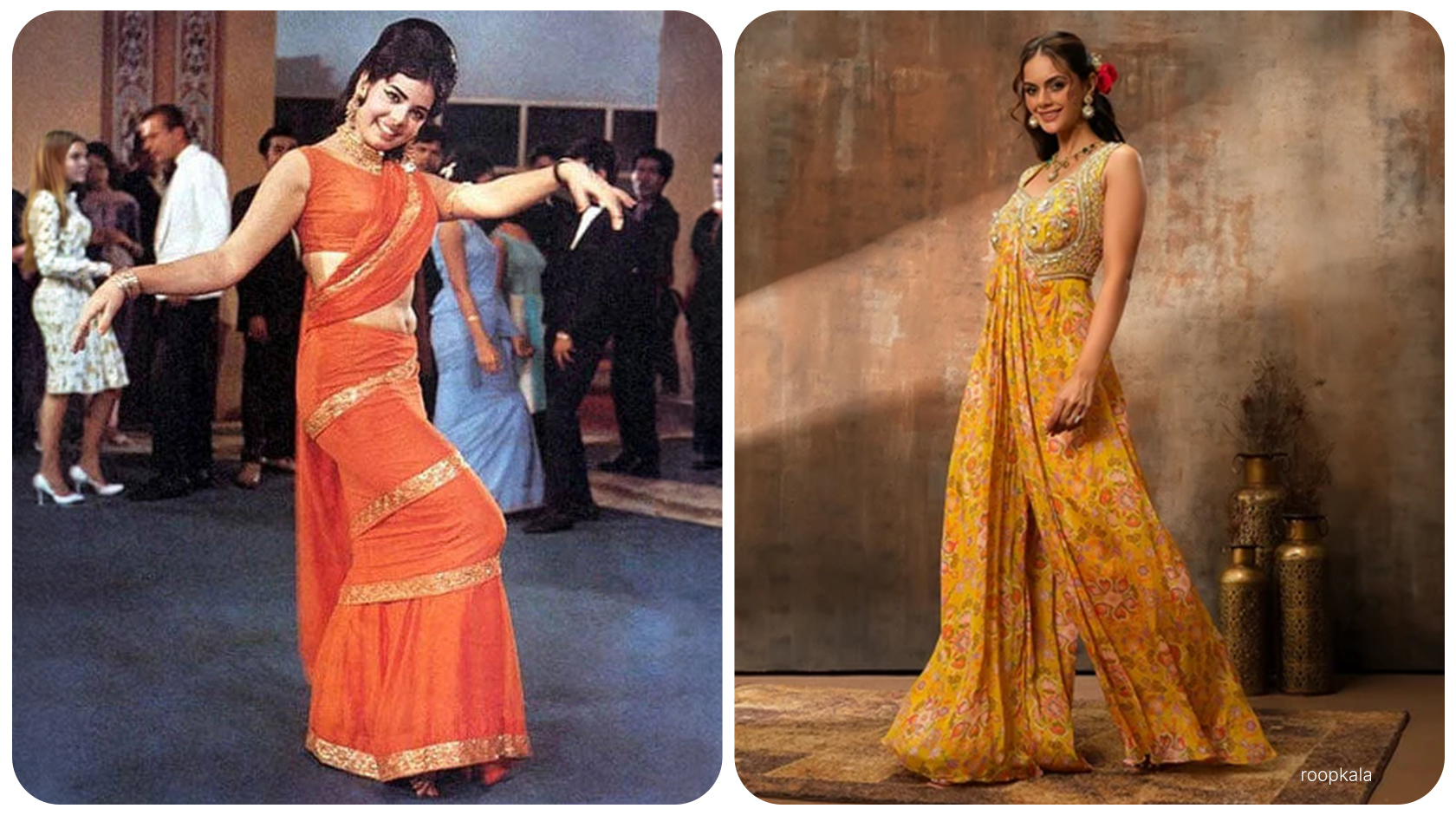
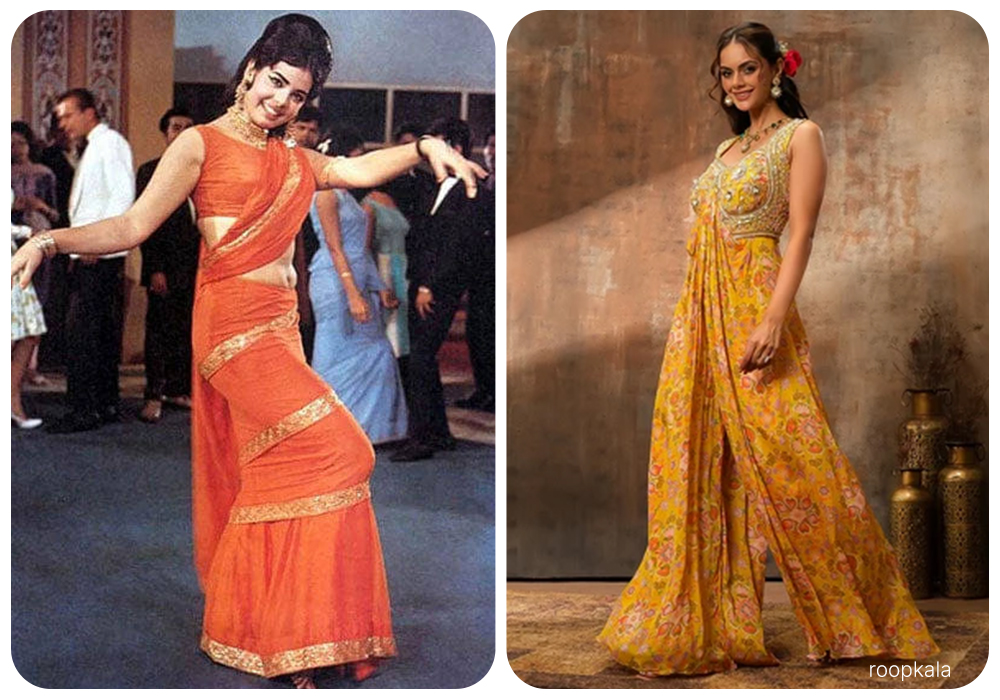
1980s Indian fashion leaned heavily on structured silhouettes, bold jewel tones, and traditional zari embroidery across sarees, lehengas, and kurtas. By 2026, the look has shifted toward lighter fabrics, fusion silhouettes like jacket lehengas and pre-draped sarees, and a broader color palette that includes pastels and sage green. What's stayed the same? Ethnic wear is still the heart of Indian celebration dressing.

Flip through an old family photo album from the 1980s and you'll notice something right away: everyone looks put together in a completely different way than we do now. The sarees are heavier. The lehengas have more structure. The colors lean deep and traditional rather than soft and experimental.
Forty years is a long time for any fashion category to sit still, and Indian ethnic wear certainly hasn't. Sarees, lehengas, kurtas, and occasionwear have all gone through their own quiet revolutions, shaped by changing fabrics, new silhouettes, and a generation that wants tradition without sacrificing comfort.
So what's actually changed, and what's carried through? Here's a full breakdown.
What Did Indian Fashion Look Like in the 1980s?
The 1980s were all about structure and richness. Sarees came in heavy silks with wide zari borders, often paired with full-sleeved or elbow-length blouses in contrasting shades. Lehengas followed a similar formula: dense fabrics, bold jewel tones like maroon and royal blue, and traditional embroidery that announced itself from across the room.
Kurtas of the era were simple by comparison, usually straight-cut with minimal embellishment, reserved for daily wear rather than statement dressing. Occasionwear didn't have the range it does today. Brides and guests alike gravitated toward the same handful of silhouettes, with variation coming mostly from color and fabric rather than cut.
How Has Indian Fashion Changed in 2026?
Fast forward to now, and the transformation is hard to miss. Fabrics have gotten lighter across the board, think organza, tulle, and net replacing heavy silk, making it easier to move (and breathe) through long wedding functions.
Fusion has become the defining feature of 2026 ethnic wear. Jacket and cape lehengas sit next to classic bridal styles. Pre-draped sarees have made getting ready dramatically faster without sacrificing the traditional drape. Corset blouses have largely replaced the boxier cuts of the past, and necklines have opened up with sweetheart and off-shoulder styles.
Color palettes have expanded too. Pastels, ivory, and sage green now sit comfortably alongside the reds and maroons that once dominated every wedding season.
Which 1980s Indian Fashion Trends Have Come Back in 2026?
Some things really are cyclical. Zari embroidery, once a defining feature of 1980s bridalwear, has made a comeback, though it's now often paired with lighter base fabrics instead of heavy silk. Bold jewel tones like emerald green and deep maroon are also back in circulation, appearing on everything from sarees to sharara sets, usually reworked with a more contemporary cut.
Mirror work has had a similar arc. It was used sparingly decades ago, and now it's often the main event on a lehenga or blouse rather than a secondary detail.
What's Currently Trending in 2026 Indian Fashion?
A few things stand out this season. Corset-style blouses continue to dominate both lehengas and sarees, offering a fitted alternative to traditional cuts. Pre-draped sarees remain a practical favorite for anyone who wants the saree look without the time commitment of hand-draping. And jacket-cape lehengas have carved out a permanent spot in bridal and reception wardrobes, giving brides a way to layer drama onto an otherwise classic silhouette.
Kurta sets have also evolved well beyond their simple 1980s roots, now showing up in straight cuts, Anarkali styles, and pant-set silhouettes with far more embroidery and print variety than before.
What Hasn't Changed About Indian Fashion?
Despite all these shifts, some things remain constant. Craftsmanship is still the backbone of Indian ethnic wear. Whether it's hand embroidery, zardozi, or mirror work, these pieces still showcase generations of technique that can't be replicated by machine.
Occasionwear also still centers around the same major life events: weddings, sangeets, and festive celebrations. And ethnic wear continues to carry emotional weight. A bridal lehenga or saree isn't just an outfit. For many families, it's something that gets referenced, photographed, and remembered for decades.
Where to Shop the Latest Indian Fashion Styles
If 2026's fusion-forward take on ethnic wear has you rethinking your wardrobe, Aza Fashions is a good place to start browsing. Their lehenga collection covers everything from jacket-cape sets to traditional bridal styles, while their saree collection includes both classic drapes and modern pre-draped options.
For occasion-specific shopping, the Aza wedding edit rounds up sangeet outfits, bridal lehengas, and reception-ready pieces in one place.
Frequently Asked Questions
What is the biggest difference between 1980s and 2026 Indian fashion?
The biggest shift is in fabric weight and silhouette variety. 1980s ethnic wear relied on heavy silks and a handful of traditional cuts, while 2026 styles favor lighter fabrics like organza and net, along with fusion silhouettes like jacket-cape lehengas.
Are corset blouses replacing traditional blouse styles?
Corset blouses have become the go-to choice for 2026 bridal and party wear, but traditional full-sleeved and elbow-length blouses are still widely available for those who prefer a classic look.
What colors are trending in Indian fashion for 2026?
Pastels, ivory, and jewel tones like sage green are trending alongside traditional reds and maroons, giving shoppers more options beyond the classic bridal palette.
Is embroidery still a major part of Indian ethnic wear?
Yes. Techniques like zari, zardozi, and mirror work remain central to Indian fashion, though they're now often paired with lighter fabrics and more contemporary silhouettes.
Where can I shop both traditional and modern Indian fashion styles?
Aza Fashions offers both traditional and fusion ethnic wear across sarees, lehengas, and kurta sets, making it easy to compare eras side by side.

