
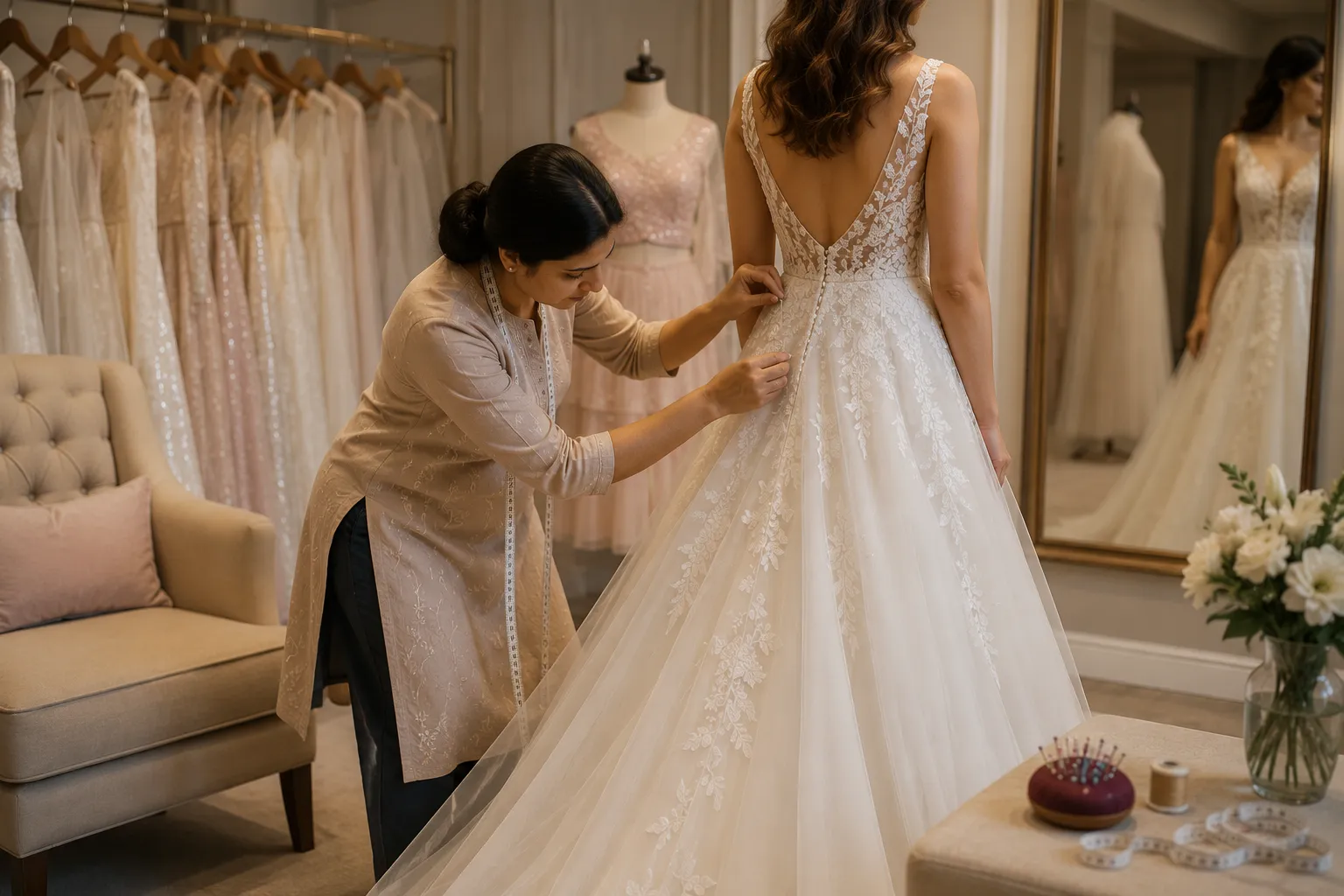
If your wedding falls in November or December 2026, you need your lehenga alterations started by early November at the latest, ideally 4-6 weeks before the big day. That gives you time for a first fitting, the actual stitching work, a final fitting, and steaming before the wedding. If you're reading this with just a few weeks left, don't panic. There's still a path forward.
Buying a lehenga is the easy part. Getting it to actually fit, the waist sitting right, the length grazing your shoes just so, the blouse not pinching anywhere, that's where most brides underestimate the timeline. A stunning bridal lehenga that doesn't fit properly reads as a mistake in every photo. Here's how to plan backward from your wedding date so that doesn't happen to you

When should I order or buy my lehenga for a Nov-Dec wedding?
If you haven't bought your outfit yet and your wedding is in November or December, this week is the week. Shopping online, especially from international retailers or designer labels shipping from India, adds transit time on top of production time. Browse ready-to-ship styles if you need something fast, or check curated edits like styles for the bride-to-be if you have a bit more runway. Either way, the goal is to have the physical garment in hand at least 4-6 weeks before your wedding date, not just ordered.
When should the first fitting happen?
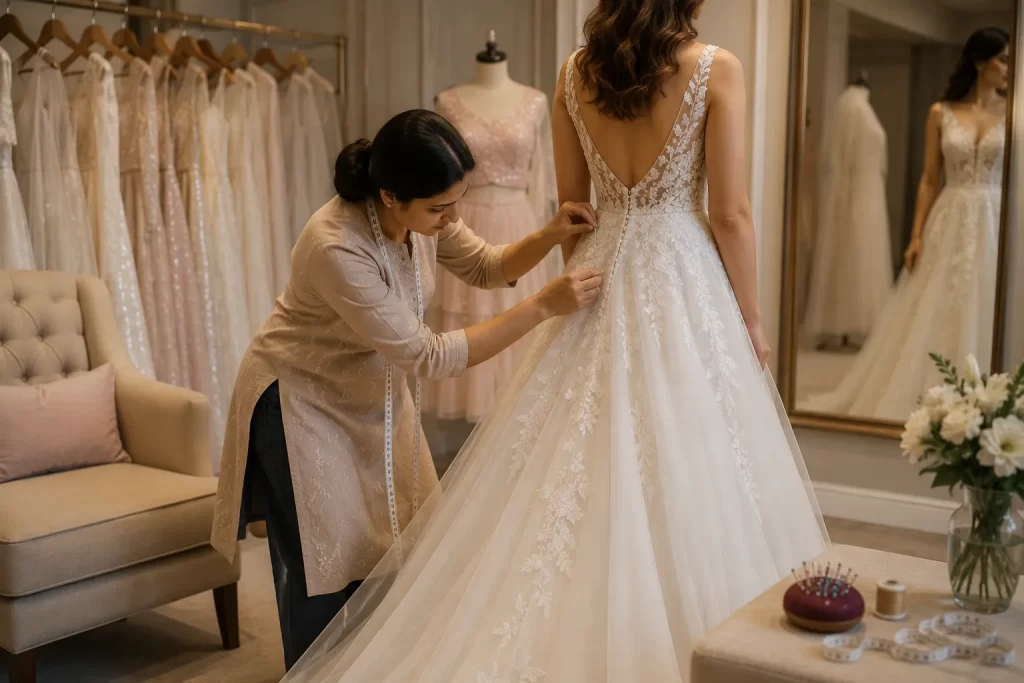
Book your first fitting the moment the lehenga arrives. Don't wait a week to "find time." Tailors need to see how the piece sits on your actual body, not your measurements on paper, because fabric behaves differently once it's on. This first fitting is where you flag everything: blouse too loose around the bust, waistband digging in, length pooling too much at the hem. Write it all down. Your tailor can't fix what you don't mention.
What alterations are typical for a lehenga?
Most brides need some combination of these:
- Blouse fit: Taking in the bust, shoulders, or back for a snug, supportive fit
- Length adjustment: Hemming the skirt so it clears the floor correctly with your wedding shoes on, not your sneakers
- Waist resizing: Adjusting the skirt's waistband, especially if you bought online without a custom fitting
- Can-can (cancan) adjustment: Adding or adjusting the underskirt layer that gives the lehenga its flare and structure
- Dupatta pleating or edging: Some brides ask for pre-pleating or a fresh border finish for a cleaner drape
Budget at least 10-14 days for the tailor to complete this work properly. Rushed alterations show, especially in structured fabrics like velvet or heavily embroidered pieces.
When is the final fitting?
Schedule your final fitting about a week before the wedding. Wear the actual blouse, skirt, and dupatta together, along with your wedding shoes and any shapewear you plan to wear underneath. This is your last real chance to catch anything off. Small tweaks, like a stray thread or a slightly uneven hem, can still be handled here.
When should I steam and store the lehenga?
Steam the outfit 1-2 days before the wedding, never earlier, since folds and wrinkles can reappear if it sits too long. Hang it on a padded hanger in a breathable garment bag, away from direct sunlight.