
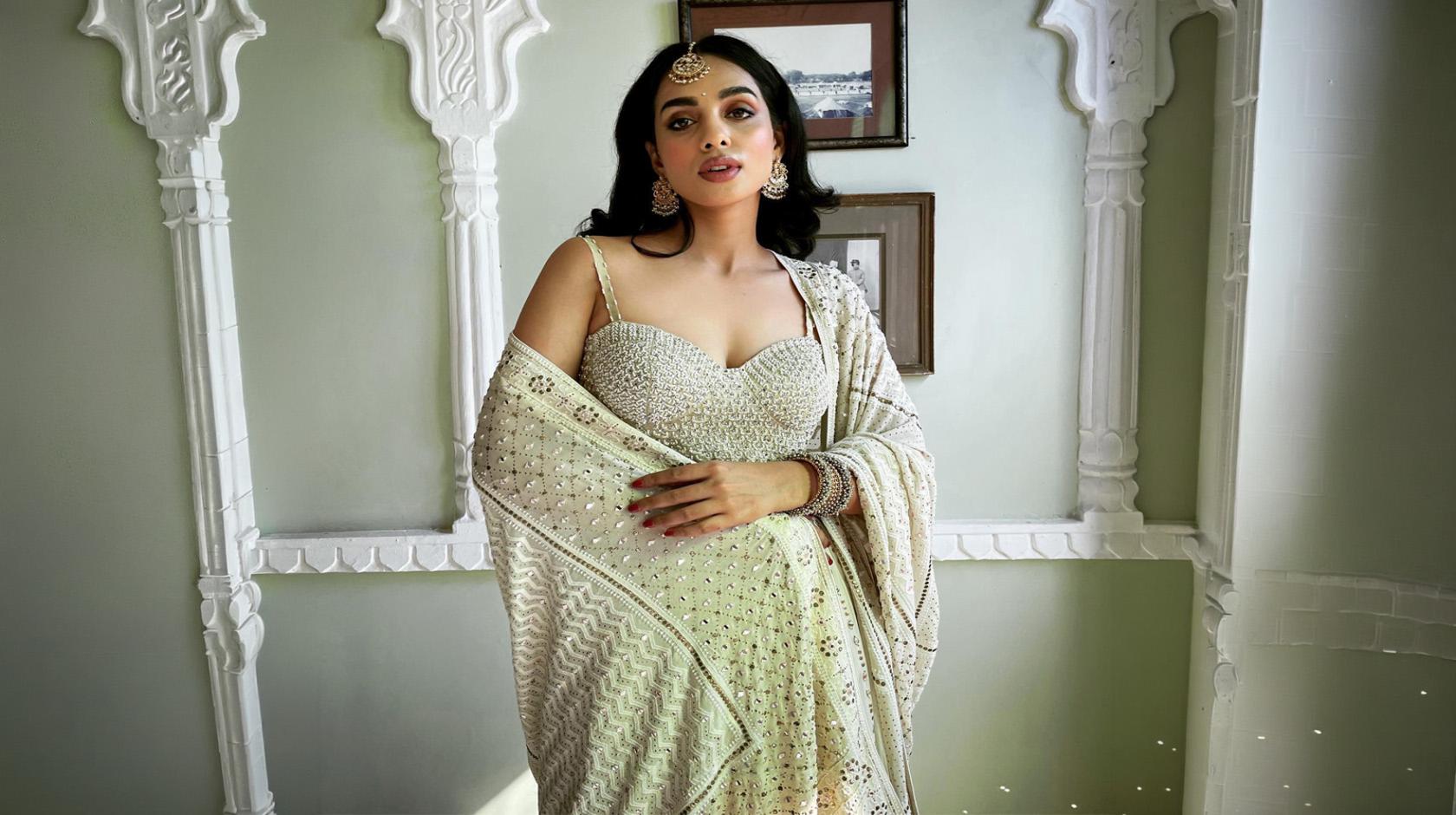
Some embellishments are made to steal the spotlight. Mukaish, on the other hand, catches it effortlessly. A scattering of tiny metallic details, a little movement, and suddenly, the simplest outfit has a whole new charm. Rooted in Lucknow's rich embroidery heritage, Mukaish has been around for generations. Traditionally seen alongside Chikankari, this delicate craft is now finding its way onto everything from sarees and dupattas to contemporary festive sets. Its appeal lies in its understated sparkle. Not too ornate, never too overwhelming, just the right amount of shimmer.
And while it has always had a place in Indian wardrobes, Mukaish is enjoying a renewed moment in fashion. With designers revisiting traditional crafts and Bollywood embracing homegrown techniques, this age-old embroidery is looking anything but old-fashioned. Unlike sequins or heavy zari work, Mukaish doesn't announce itself. It waits for you to notice. And once you do, you can't stop looking.
This old Lucknowi technique, where thin metallic wire is hand pushed into fabric to create a scattering of tiny glints, has quietly made its way from royal wardrobes to festive closets, red carpets, and now, everyday fashion conversations. It's subtle. It's slow. And right now, it's everywhere that matters.
Bollywood's Latest Obsession with Mukaish Work
Fashion has a habit of circling back to craftsmanship when everything else starts to feel the same. Mukaish, closely tied to Lucknow's Chikankari tradition, has benefited from this shift.
Designers known for reviving heritage techniques, think names like Abu Jani Sandeep Khosla, Anita Dongre, Sawan Gandhi, have long championed hand embroidery rooted in regional craft, and Mukaish often finds its place within that larger Chikankari story. As festive and bridal fashion increasingly favors handwork over mass embellishment, pieces featuring this fine metallic detailing have become a natural choice for designers building collections around Lucknow's textile legacy.


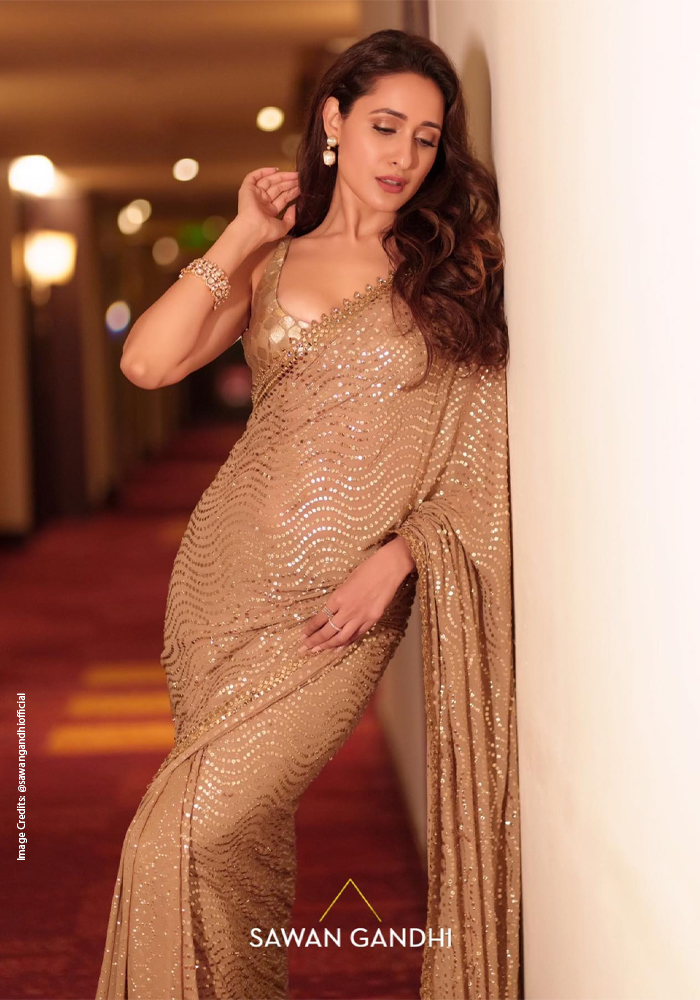
It's less about one single red carpet moment and more about a pattern. Celebrity stylists have been steadily pulling from heritage categories for award shows, weddings, and festive appearances, and Chikankari-Mukaish outfits sit comfortably within that growing appetite for understated, craft-led glamour.
A Little Shimmer, A Lot of Style: How to Wear Mukaish
Mukaish is flexible in a way few embellishments are. It works as quietly as a background detail or as the entire point of an outfit.
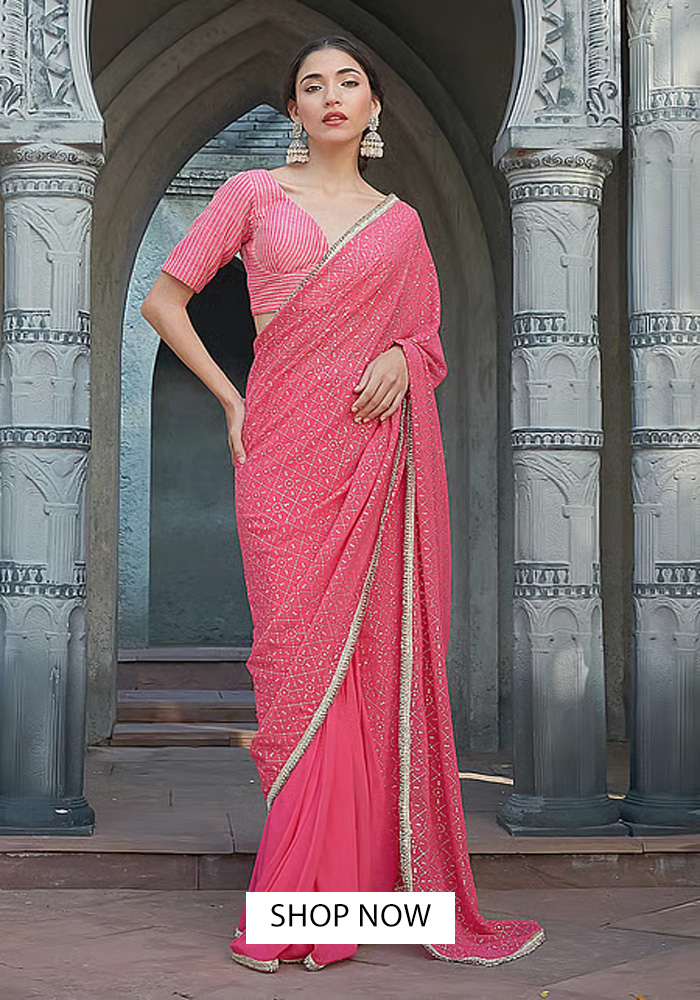
Sarees
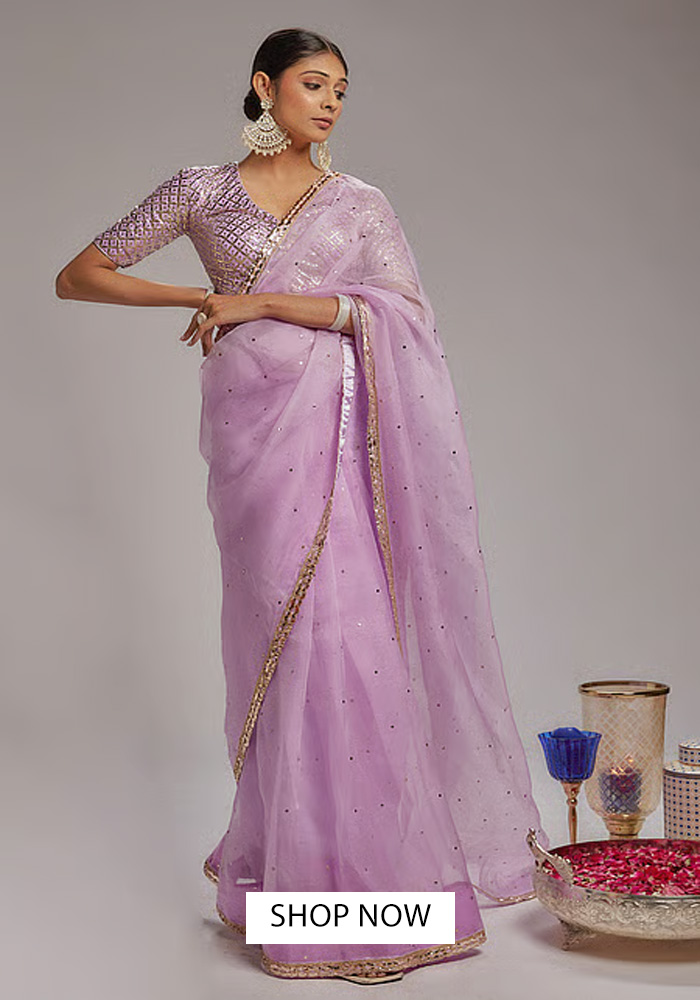
A Mukaish saree in pastel chiffon or organza feels like something passed down, even if you bought it last week. Pair it with a contrast blouse and minimal jewellery. Let the fabric do the talking.
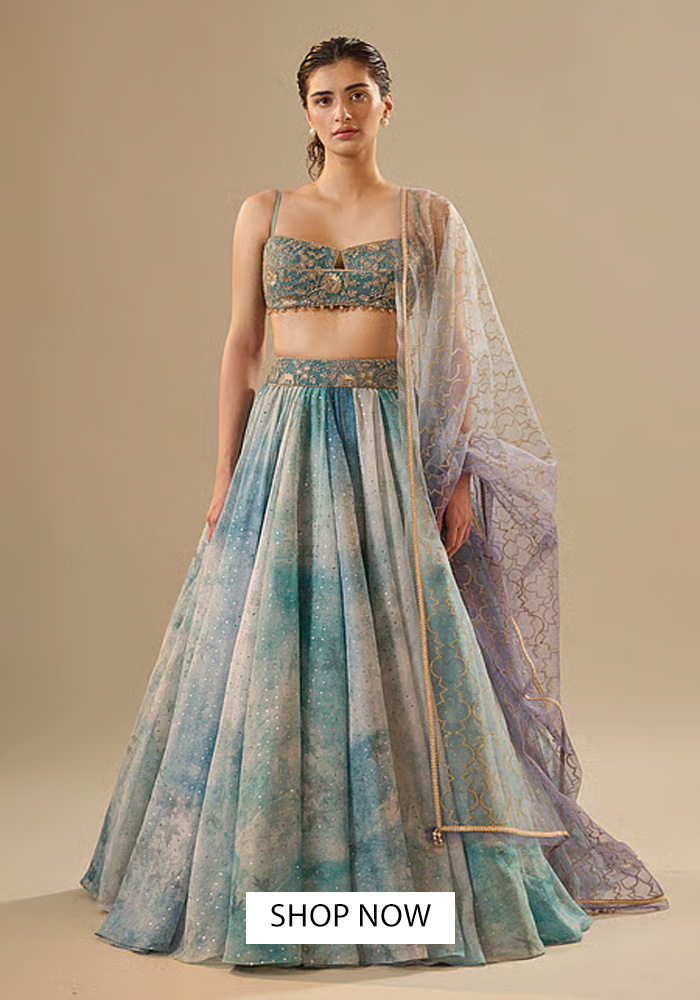
Lehengas: A Little Heritage, A Lot of Glamour
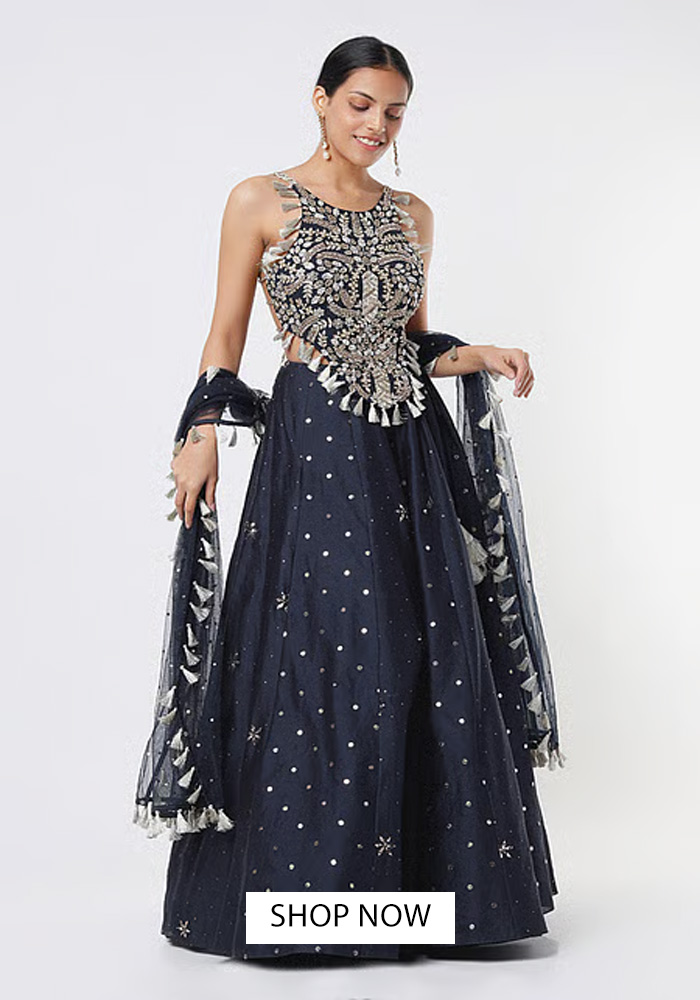
Mukaish-embellished lehengas bring a softer kind of opulence to occasion dressing. Whether scattered across a flowing skirt or paired with intricate Chikankari on the blouse, the metallic detailing adds dimension without making the ensemble feel too heavy. Style yours with a statement choker, soft waves, and a sheer dupatta for a look that feels equal parts timeless and contemporary.

Salwar Sets: A Festive Classic
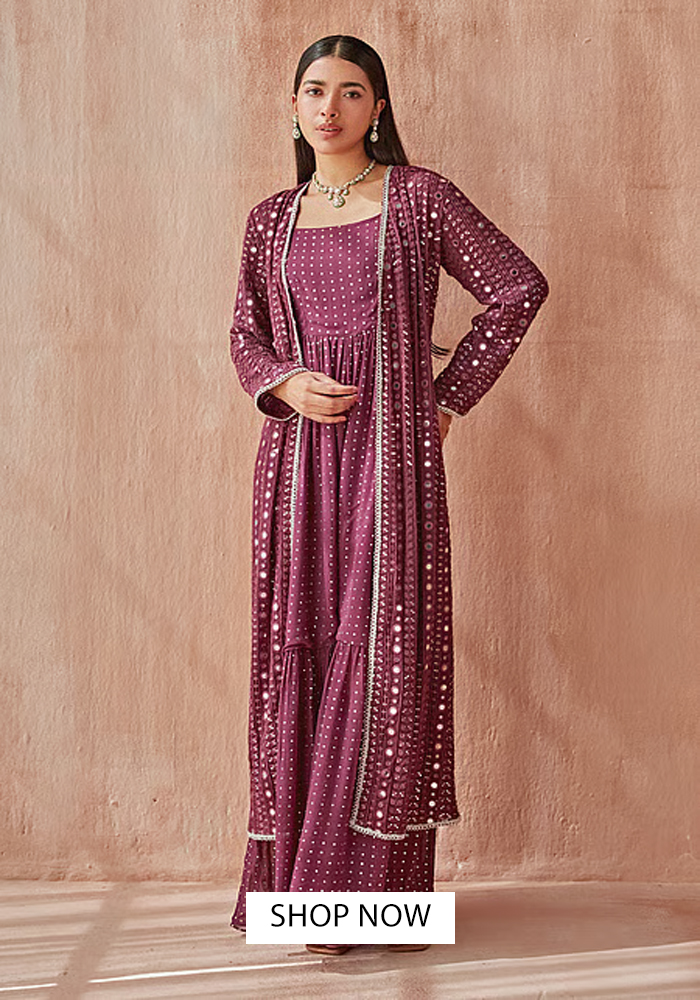
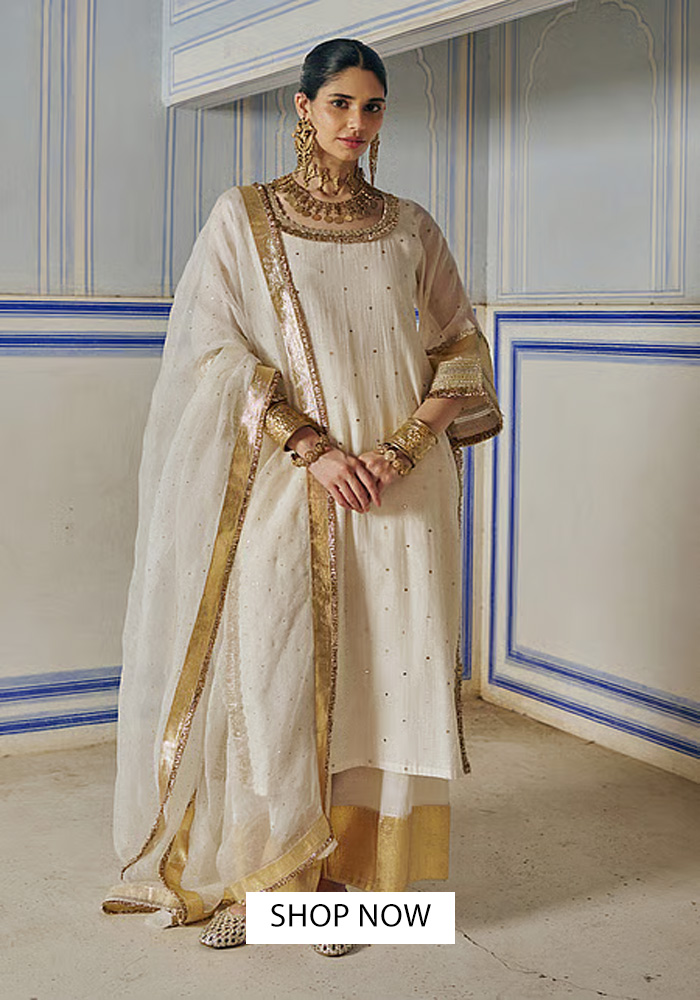
Mukaish-embroidered salwar sets bring just the right amount of shimmer to festive dressing. Think flowy Anarkalis, straight-cut kurtas, and shararas with delicate metallic detailing. Pair them with statement jhumkas, embellished juttis, and a potli for an effortlessly festive look.
For a subtler take, opt for a simple kurta with a heavily embellished Mukaish dupatta. Add chandbalis and stacked bangles, and let the craftsmanship take centre stage.
Jumpsuits: One-Piece, All Glam
Give traditional embellishment a modern spin with a Mukaish jumpsuit. Delicate metallic detailing along the neckline, sleeves, or bodice adds a festive touch without taking away from the contemporary silhouette.
Opt for a wide-legged style with subtle embroidery and finish with statement earrings, strappy heels, and a compact clutch.
Fusion Sets: Tradition With a Twist
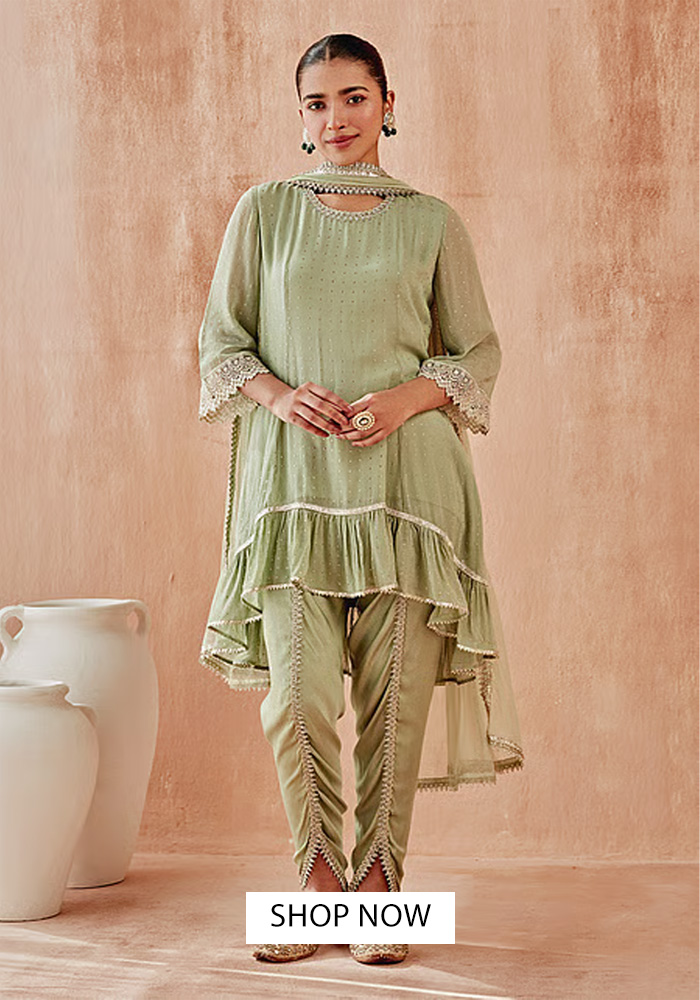
Mukaish finds a fresh expression in contemporary silhouettes. Cropped tops with flared trousers, asymmetric kurtas with dhoti pants, and embroidered jackets make for interesting fusion combinations.
You can also try Mukaish co-ord sets or draped skirts. Finish with metallic heels, sculptural earrings, and a sleek clutch.
Why This Old Favourite Feels New Again
Handcrafted fashion has been having a quiet revival for a while now. People are tired of fast, repetitive embellishment that looks identical across brands. Mukaish offers the opposite.
It's slow by nature. It's regional. It carries a story that mass production simply cannot replicate. That alone makes it appealing to a generation of shoppers who care about where their clothes come from and who made them.

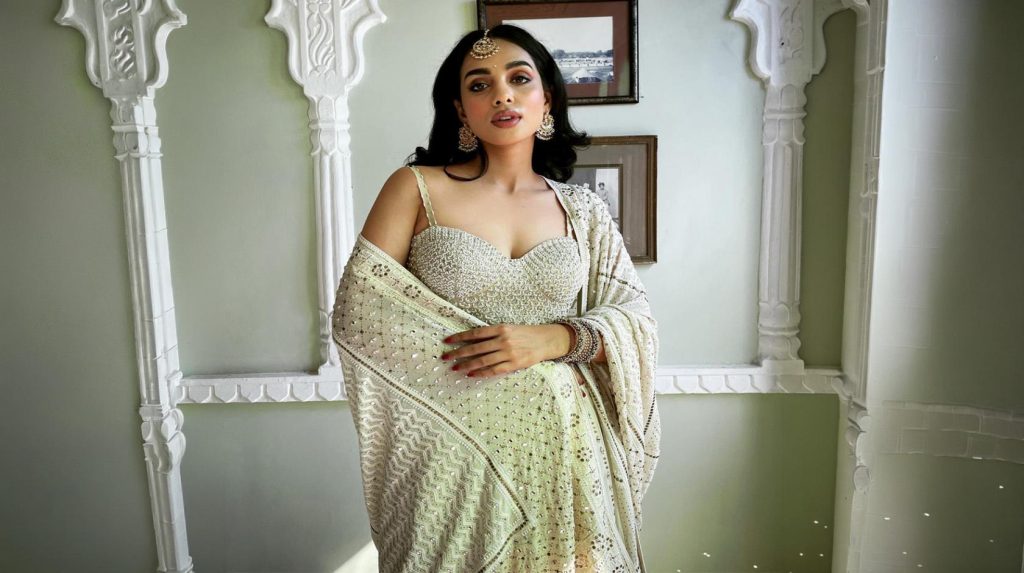
Then comes versatility. Designers have figured out how to place Mukaish on contemporary silhouettes, co-ord sets, fitted blouses, structured jackets, without losing its traditional character. That blend of old technique and new shape is exactly what keeps heritage crafts relevant instead of nostalgic.
And then there's the simple visual fact that understated glamour is back. Nobody wants to look like they tried too hard. Mukaish lets you look expensive without looking loud.
Behind the Shimmer: How Mukaish Embroidery Is Made
The process starts with the wire itself, a fine metallic strip, traditionally made from silver or an alloy, that's thin enough to be worked through fabric without tearing it.
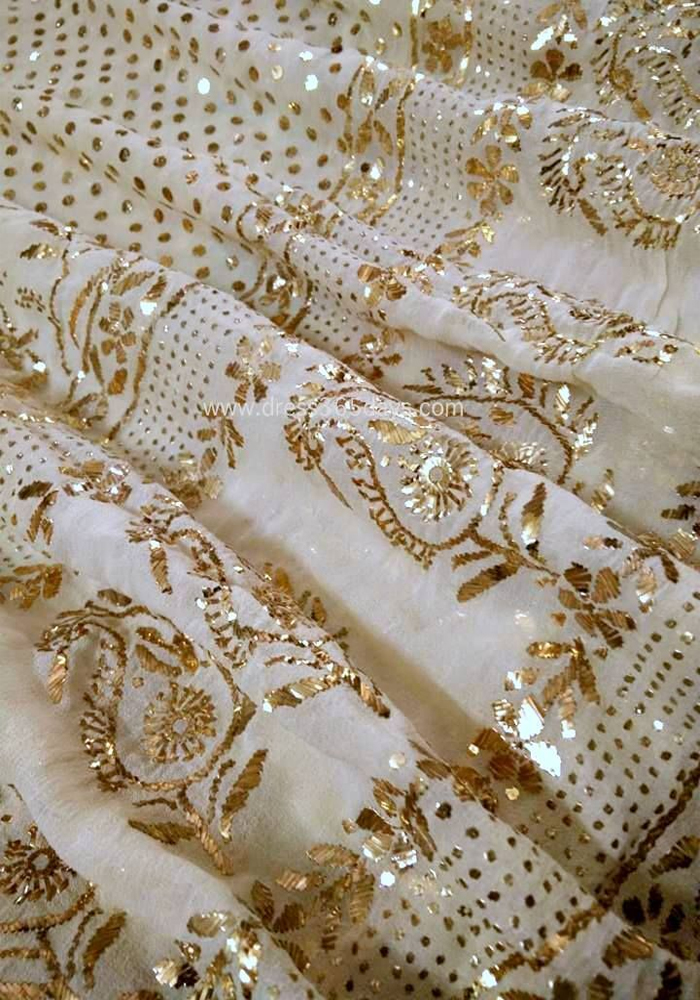
Artisans push this wire into the cloth using a needle, twisting it slightly to secure it in place, then cutting it to leave behind a tiny metallic dot or curve. Multiply that single motion across hundreds, sometimes thousands, of points, and you get a pattern that catches light from every angle.
The motifs are usually planned out first, often floral or geometric, mirroring the same design language found in Chikankari. The embroiderer works section by section, checking spacing and symmetry as they go, since even a slight miscalculation changes how the final piece catches light.
Finishing involves washing and pressing the fabric to set the embroidery and remove any marking used to trace the original design. What's left is a piece that looks effortless, even though nothing about the process actually was.
The Art of Patience: How Long Does It Take?
Mukaish doesn't work on anyone's deadline but its own.
A simple dupatta with light scattered embroidery might take a few days. A heavily worked saree or lehenga, especially one with dense motifs across a large surface area, can take several weeks of consistent, skilled handwork.
Fabric matters too. Finer materials like georgette or chiffon require more careful handling than cotton, which slows the process further. And because the technique depends entirely on hand accuracy, there's no real way to speed it up without compromising the final result.
This is the part people forget when they see the finished piece hanging in a store. Someone sat with that fabric for days, sometimes weeks, placing each tiny element by hand.
What Makes Mukaish So Special?
Put Mukaish next to Gota Patti or Zardozi and the difference is immediate. Gota Patti uses metallic ribbon applied onto fabric. Zardozi relies on heavier metallic thread and often beads or stones for a more opulent, raised texture. Mukaish does neither. The wire is worked directly into the fabric itself, which is what gives it that flat, subtle glimmer instead of a raised, textured one.
That distinction matters more than it sounds. Mukaish can sit on sheer, lightweight fabric without adding bulk, which is exactly why it pairs so well with chiffon and organza. It has restraint built into its technique.

It's also uniquely versatile in tone. The same craft that decorates a simple everyday dupatta can be scaled up to cover an entire bridal lehenga. Few embroidery styles move that comfortably between casual and formal.
And there's the heritage factor. Mukaish isn't trying to look old. It simply is old, and that authenticity is hard to fake no matter how advanced embellishment techniques get.
Little-Known Facts About Mukaish Embroidery
Mukaish, also called badla, takes its name from the metallic wire used in the technique itself, badla referring to the strip and mukaish to the finished embroidery.
It developed in Lucknow alongside Chikankari, and the two crafts are often found together on the same piece, one providing textured thread work, the other adding scattered metallic shine.
Traditionally, the wire used real silver, which meant garments featuring heavy Mukaish work were genuinely valuable, not just decorative. Over time, more affordable metal alloys replaced pure silver for everyday pieces, while finer silver work remained reserved for special occasion garments.
The technique is almost entirely hand done, even today. There's no mechanized process that replicates the exact flat, embedded look of hand worked Mukaish, which is part of why skilled artisans in this craft remain in genuine demand.
Mukaish motifs often mirror nature, florals, vines, and small geometric repeats, the same visual vocabulary found across Lucknow's broader embroidery traditions.
Some Crafts Never Go Out of Style
Trends move fast. Crafts like Mukaish don't, and that's precisely the point.
The next time you spot that quiet metallic glint on a saree or dupatta, take a second look. It's not just embellishment. It's a technique that's survived generations, carried by artisans who still do it exactly the way it was done a century ago.
Wear it. Appreciate it. And remember that the shimmer you're seeing took far more time, and far more skill, than any trend ever could.