
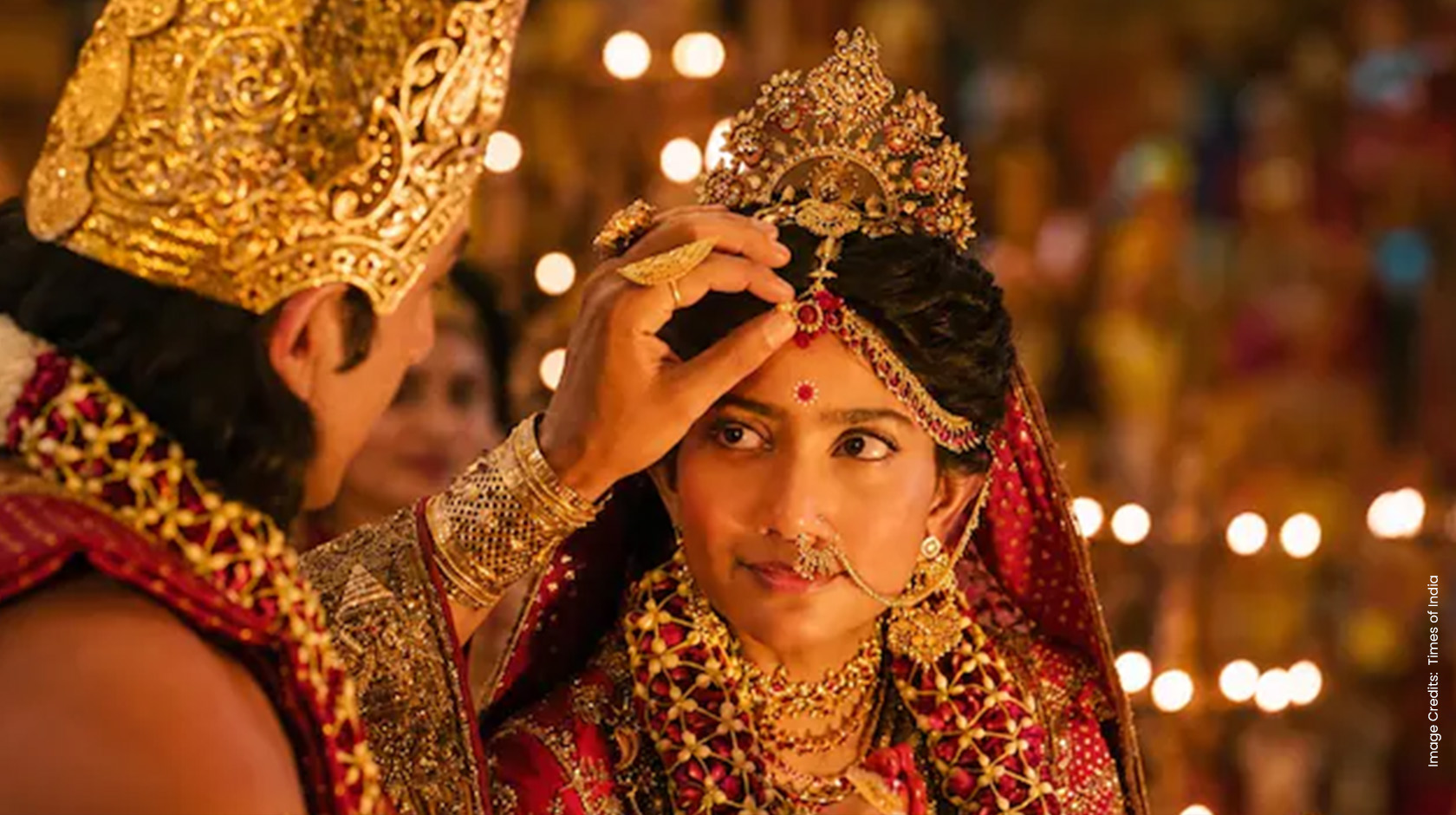
Indian bridal fashion is in the middle of a quiet but very real renaissance, and the Ramayana's visual world is at the center of it. The Ramayana wardrobe is getting all the love and rightly so. While designer duo Rimple and Harpreet Narula gave their heart into making each costume stand out for their grandeur and royalty, brand Amrapali Jewels worked on creating conversation-starter jewellery pieces that have found their place in the moodboards of every bride-to-be. From the oh-so-glamorous silhouettes to the flowy and layered drapes, the visual language is winning hearts. What makes every bit of the wardrobe so drool-worthy is how it weaves tradition, grandeur, detailed craftsmanship without ever losing an ounce of royal appeal.
The masters behind the wardrobe went back to the costumes, the layered jewellery, and their sense of ceremonial grandeur only to translate them into something today's brides actually want to wear to their own weddings. The interest isn't nostalgic or costume-driven. It's rooted in something more instinctive: the idea that traditional Indian bridal aesthetics, when worn with intention, carry a kind of beauty that contemporary trends can rarely replicate.
If you're in the middle of planning your Indian bridal look and want your wedding wardrobe to feel considered rather than assembled, here are six styling ideas directly inspired by that aesthetic — covering everything from bridal jewellery to draping techniques that still feel modern.
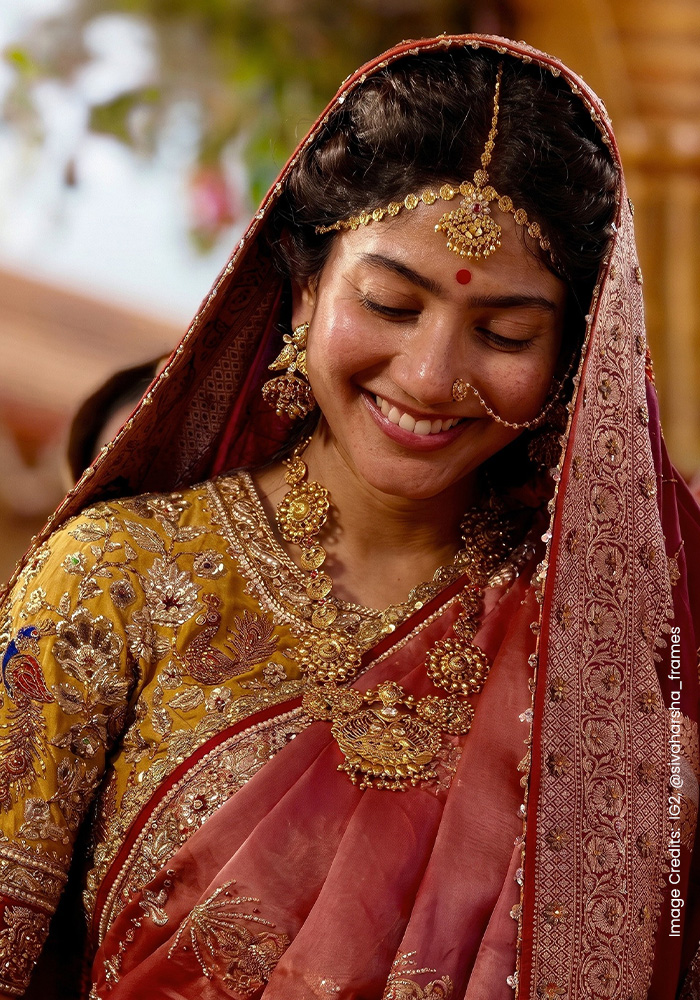
Matha Patti: The Bridal Head Jewellery That Frames Everything
A matha patti does something most other bridal jewellery pieces can't: it frames the face from the hairline down, which means it quietly changes how every other piece on your face and neck reads. Worn well, it brings the entire bridal look to a finish that feels complete — not overdone, but considered.
How you wear it depends almost entirely on your hairstyle. For a structured updo, choose a matha patti with more symmetry and clean lines, it'll sit flush against the scalp and frame the look without competing with the hair. For softer, loosely pinned styles or open waves, a more delicate matha patti with finer chains moves with the hair rather than against it.

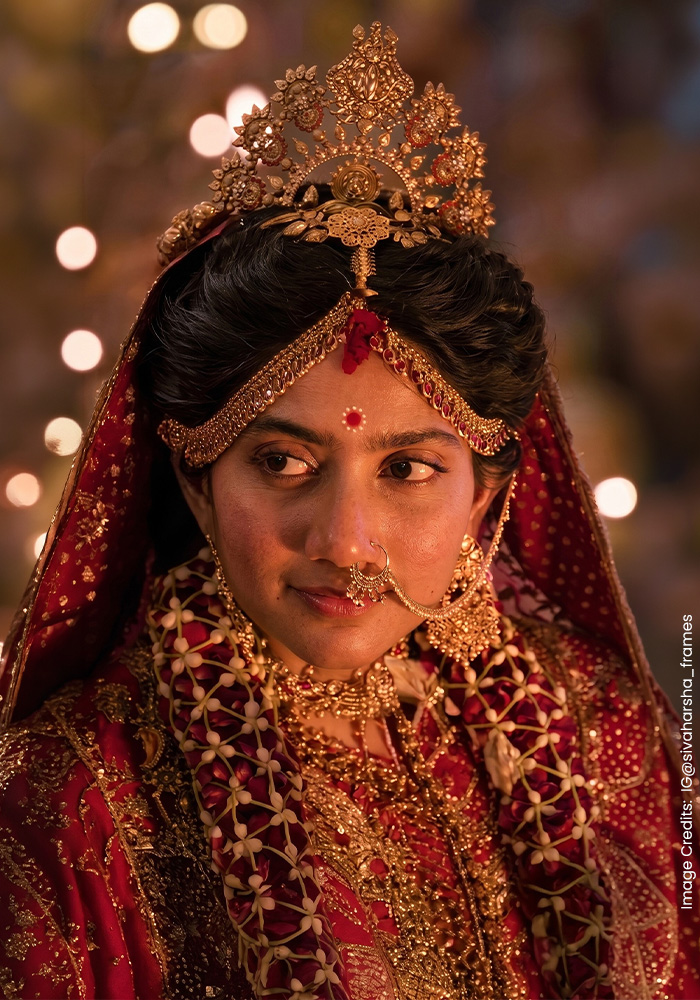
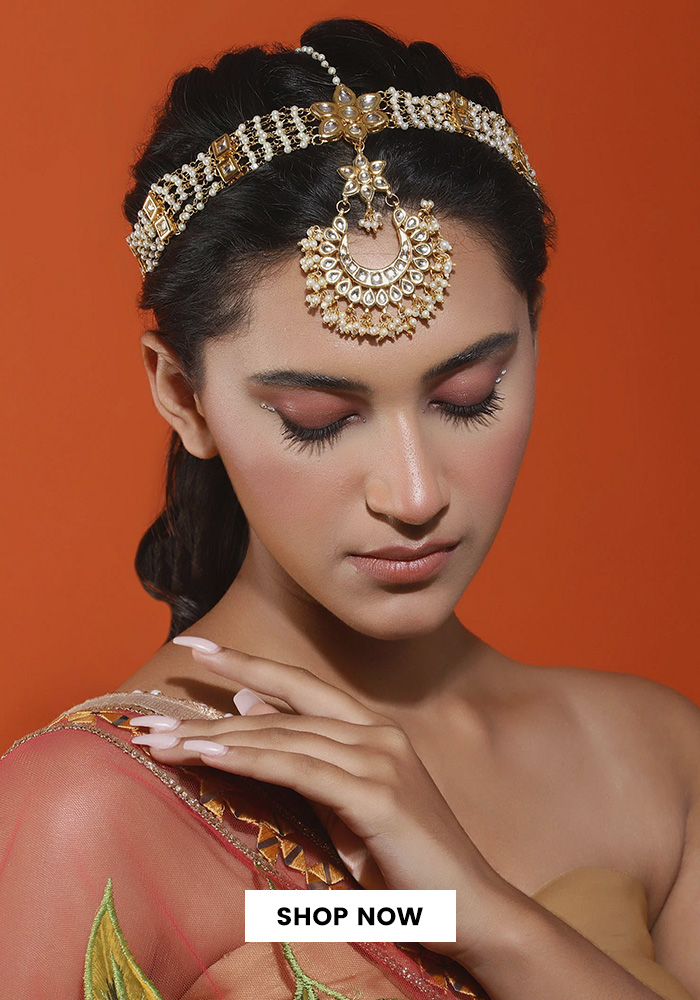
If your bridal jewellery is already substantial across the ears and neck, go minimal with the matha patti. If the rest of your look is relatively understated, this is where you can afford to go a little more elaborate. It's the piece that tends to surprise brides most — worn right, it does far more than it looks like it should.
More Is More, At Least When It Comes to Bridal Jewellery
The Ramayana's visual aesthetic never played it safe with jewellery. Necklaces layered over necklaces, ears framed in multiple pieces, every element of the look considered and stacked. That instinct, bridal jewellery as abundance rather than accent, is exactly what modern Indian brides are reaching back for, and it's working.
The key to layering bridal jewellery without the look feeling overwhelming is knowing which pieces to build around. A long statement necklace gives you that cascading, multi-length effect without needing several smaller pieces to fill in the gaps. Pair it with bridal ear cuffs instead of traditional jhumkas or studs, and you get movement and height near the face without cluttering the neckline. These two pieces alone, a long necklace and statement ear cuffs, can anchor an entire bridal jewellery look when chosen with intention.
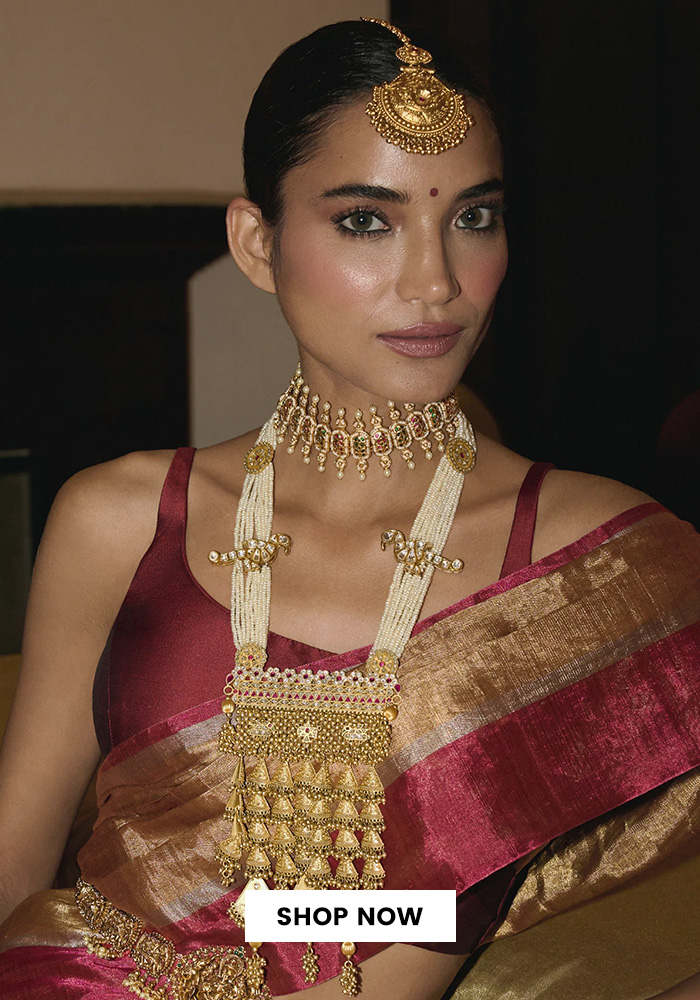

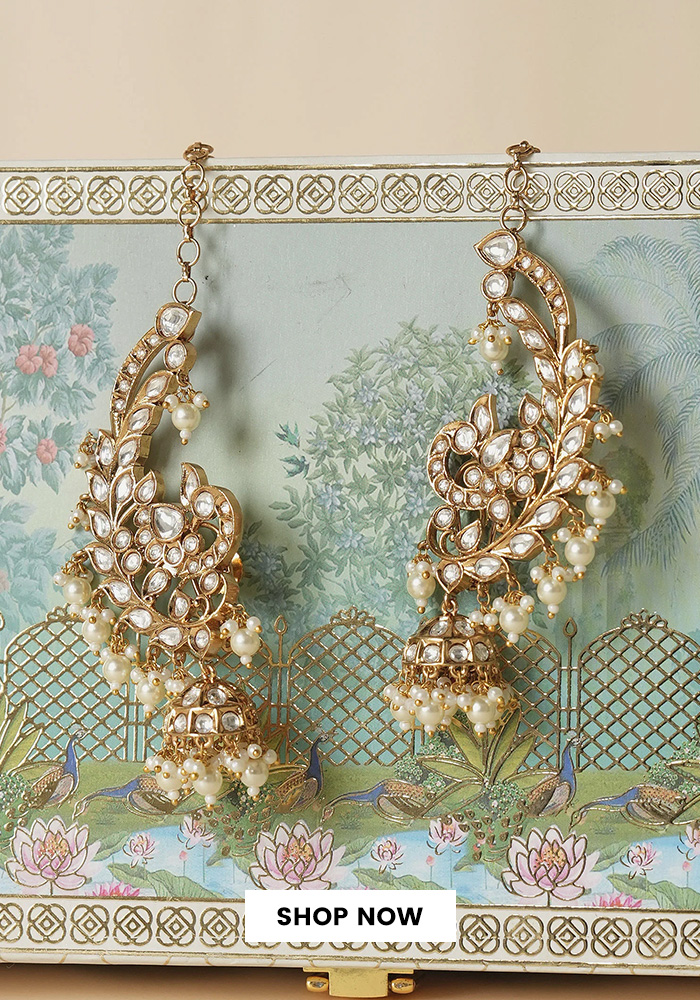
The balance comes down to scale, weight, and placement. If the necklace is bold, let the earrings be sculptural rather than heavy. If the ears are doing the most, the neckpiece can be simpler. Three well-chosen pieces, worn with purpose, will always read more clearly than five pieces competing for the same space.
The Bridal Nath: A Traditional Nose Ring That Still Commands Attention
A bridal nath has a way of catching the light and the room in the same moment. There's a reason this traditional nose ring has stayed central to Indian bridal jewellery styling for generations. It frames the face from an angle nothing else quite manages, and it photographs with a kind of quiet drama that more conventional pieces rarely match.
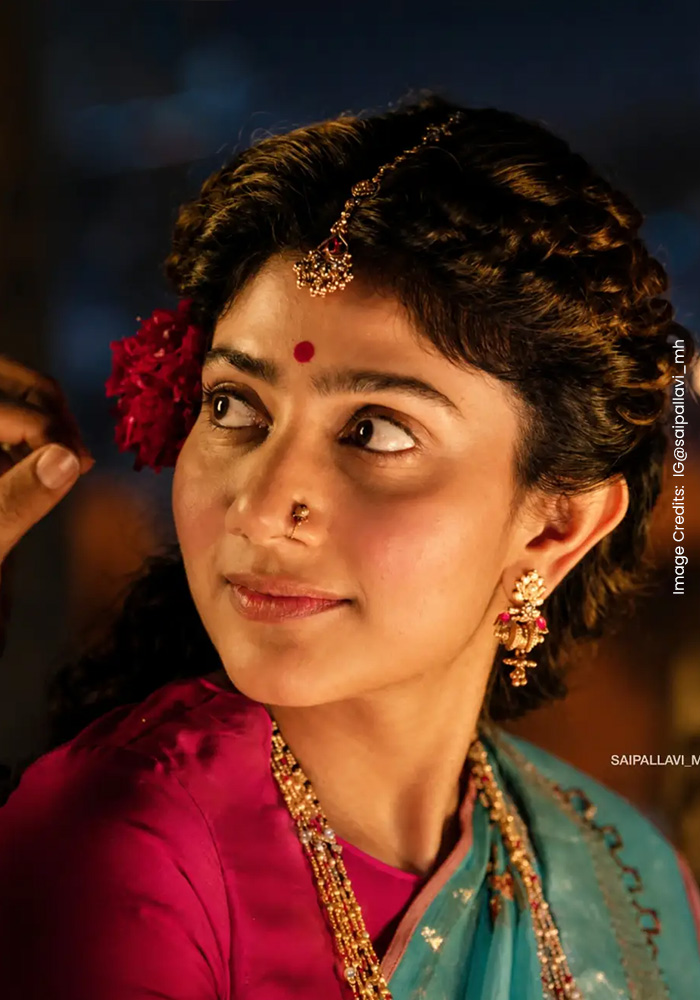
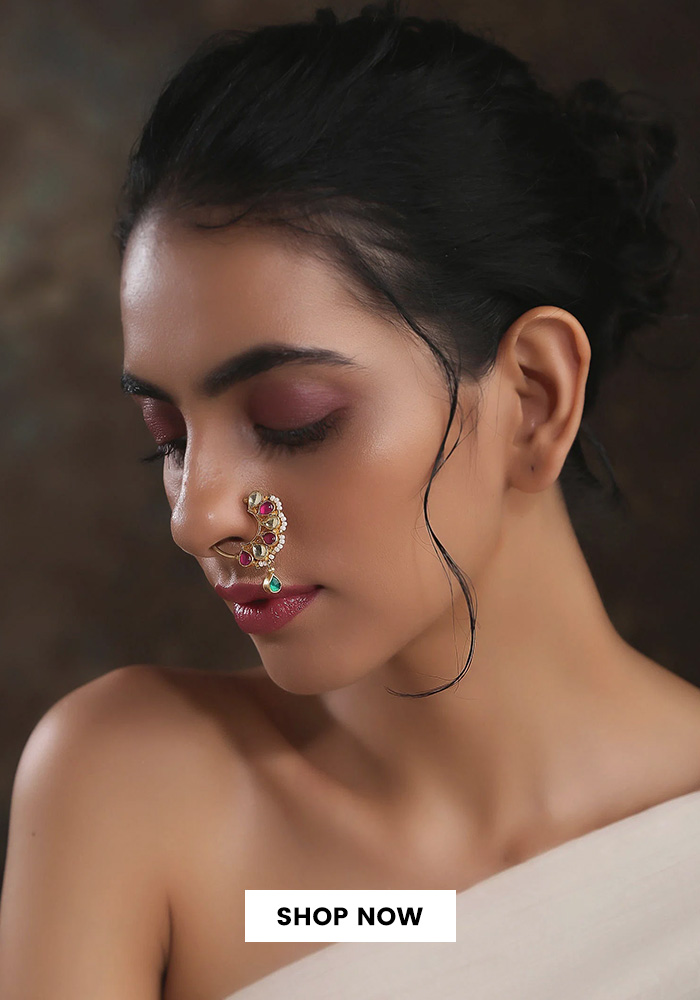
For a traditional wedding ceremony, a larger nath with intricate detailing works beautifully alongside heavier bridal makeup and a structured hair look. For more contemporary functions or second-day events, brides are increasingly choosing smaller, more delicate naths that honor the tradition without overwhelming a softer overall aesthetic. Either way, secure it properly before the ceremony. A beautiful entrance loses something when you're adjusting your jewellery halfway through it.
Banarasi Sarees for Brides: When the Weave Speaks for Itself
A Banarasi silk saree carries a richness that doesn't require much additional explanation. The brocade work, typically done in gold or silver zari, moves through motifs, paisleys, floral clusters, intricate borders, that have been part of Indian textile craftsmanship for centuries. The result is a fabric that looks different depending on the light, the drape, and the occasion, which is exactly what makes it such a strong choice for Indian bridal wear.

If you're considering a Banarasi saree for your wedding look, pay attention to how the density of the weave interacts with your jewellery. A heavily worked Banarasi with a rich border pairs best with jewellery that complements rather than competes — think clean temple gold or polki pieces in one or two layers. A Banarasi with more open spacing in the motifs gives you room to go bolder with your accessories. The blouse matters here too: an embroidered or contrast blouse can either extend the saree's visual language or give it a fresh, contemporary edge depending on the cut and fabric.
The Saree-Dupatta Drape: A Styling Technique Worth Trying
Draping a dupatta over a saree isn't conventional saree styling exactly, but it has become one of the more interesting techniques in Indian bridal fashion. The layering adds dimension and silhouette in a way that's hard to achieve otherwise, and it photographs with a sense of movement that static draping rarely produces.
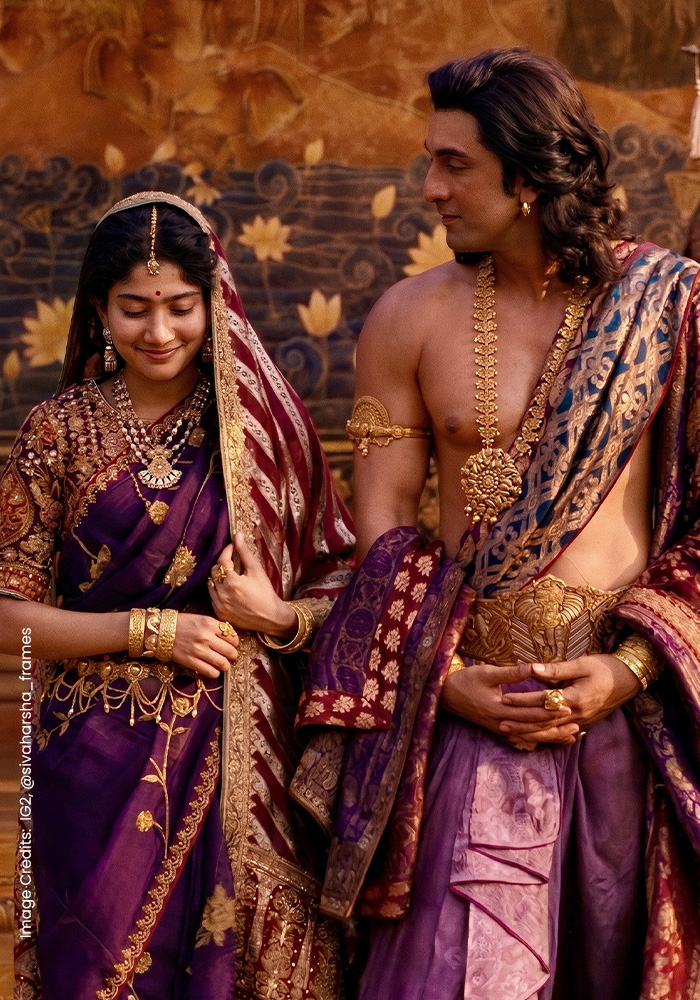

For an Indian bridal look, try a contrasting color dupatta for visual depth, or choose a sheer fabric if you want the saree's embroidery to remain visible underneath. An embroidered dupatta with a rich border works particularly well over a plainer saree, giving the eye somewhere to travel. If you're going for a heavier dupatta with intricate work, pin it securely at the shoulder and anchor it at the waist — you want the drama without the constant readjusting. Keep the jewelry balanced so the dupatta has room to register as a styling choice rather than just an add-on.
The Kumkum Bindi: The Detail That Ties a Bridal Look Together
No other accessory pulls an entire Indian bridal look together quite like a kumkum bindi. It sits at the center of the face and does quiet and the does the most important job; framing the eyes, anchoring the makeup, and giving the whole look a sense of intentional finish.
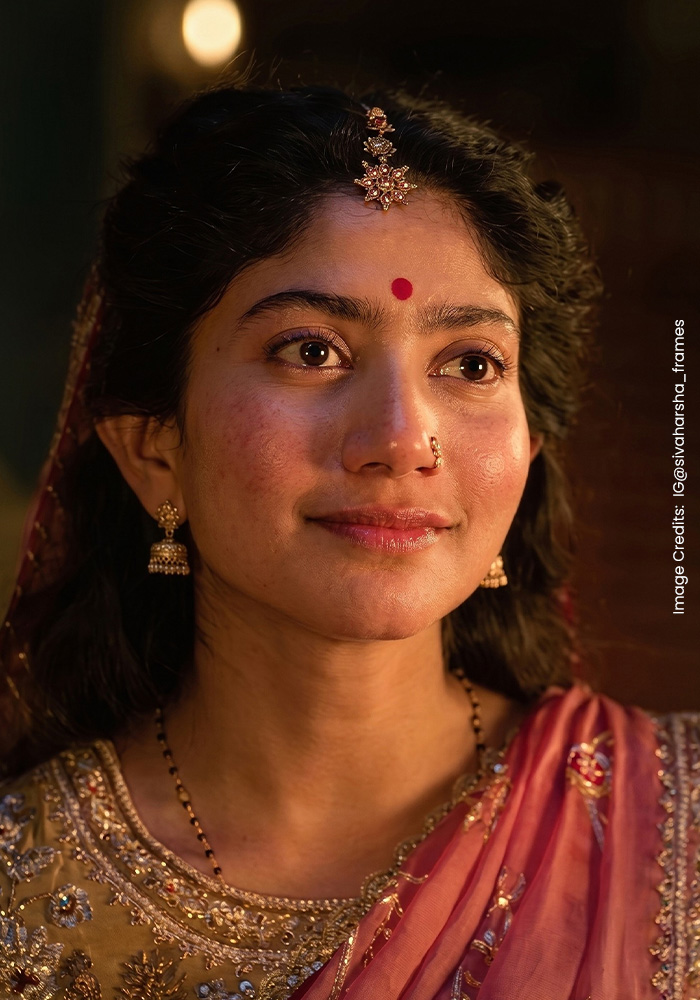
While brides might get too caught up in pulling off the right makeup and jewellery, focusing on this detail is equally important. Because, Ramayana teaches us the value of well-placed bindi; what it can do to give that perfect finish to your overall look. If your bridal look is already heavy on jewellery and drape, keep the bindi traditional and minimal. If your overall styling is more restrained, this is where you can let it do a little more work.
The Real Takeaway for Indian Brides
Putting together a bridal look that feels genuinely personal doesn't always mean starting from scratch. Sometimes the most interesting ideas are already there, sitting inside aesthetics that have held their own across generations of Indian weddings and bridal fashion. The Ramayana's visual world is one of those references worth revisiting — not as a costume brief, but as a source of real styling instinct.
Whether it's the way you layer your bridal jewellery, the choice to anchor your look with a kumkum bindi, or the decision to drape a dupatta over your saree for a more dynamic silhouette, the details matter. If you're starting to build your bridal jewellery edit, begin with the pieces that work across multiple occasions — a long necklace and a pair of ear cuffs are a good place to start.