


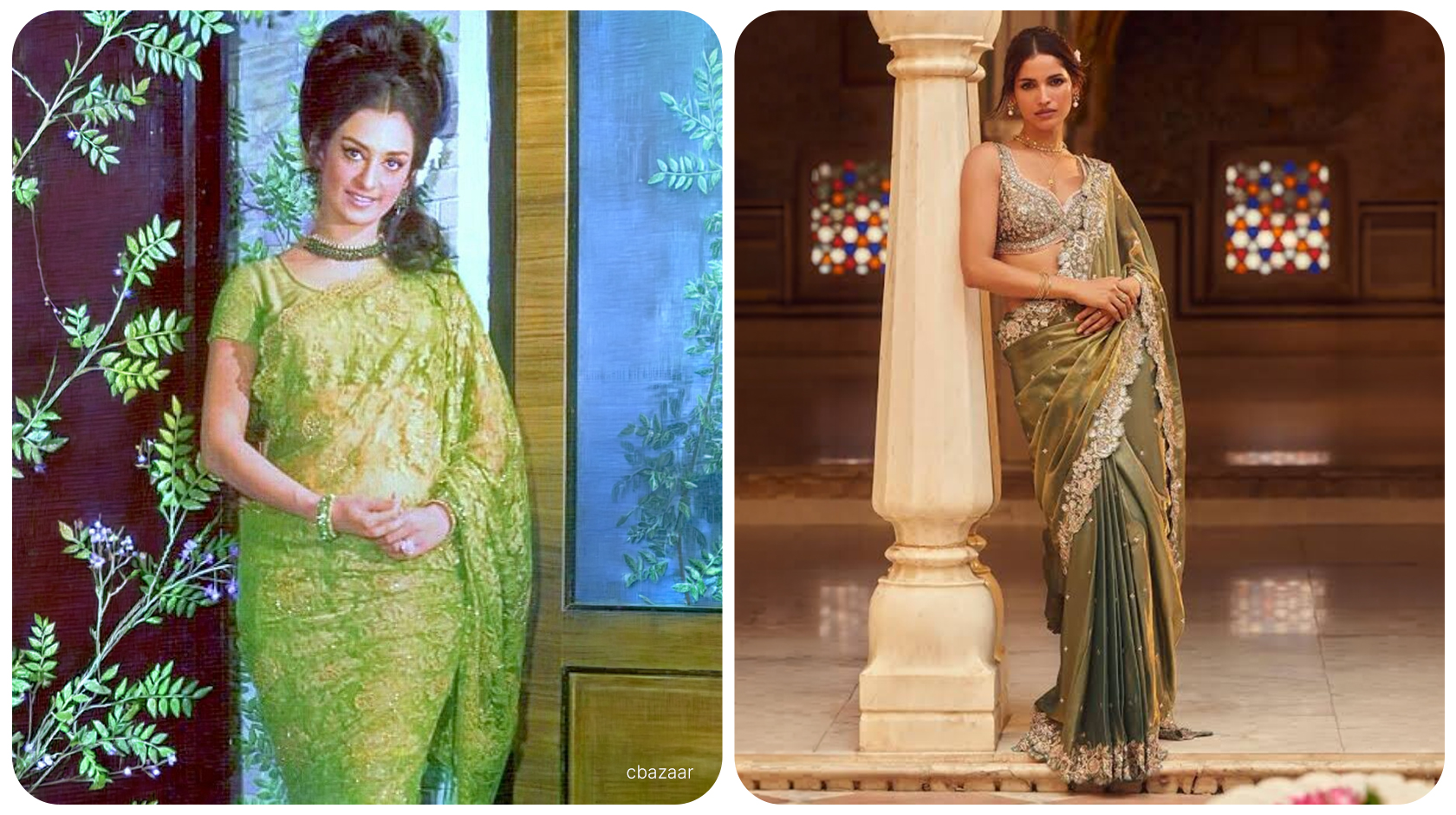
The 1980s saree favored heavy silks, bold prints, and traditional nivi drapes worn with minimal fuss. The 2026 saree keeps that same grace but adds pre-draped convenience, corset blouses, and fusion silhouettes designed for modern bodies and modern schedules. What stayed constant across both decades is the saree's role as India's most versatile symbol of celebration.

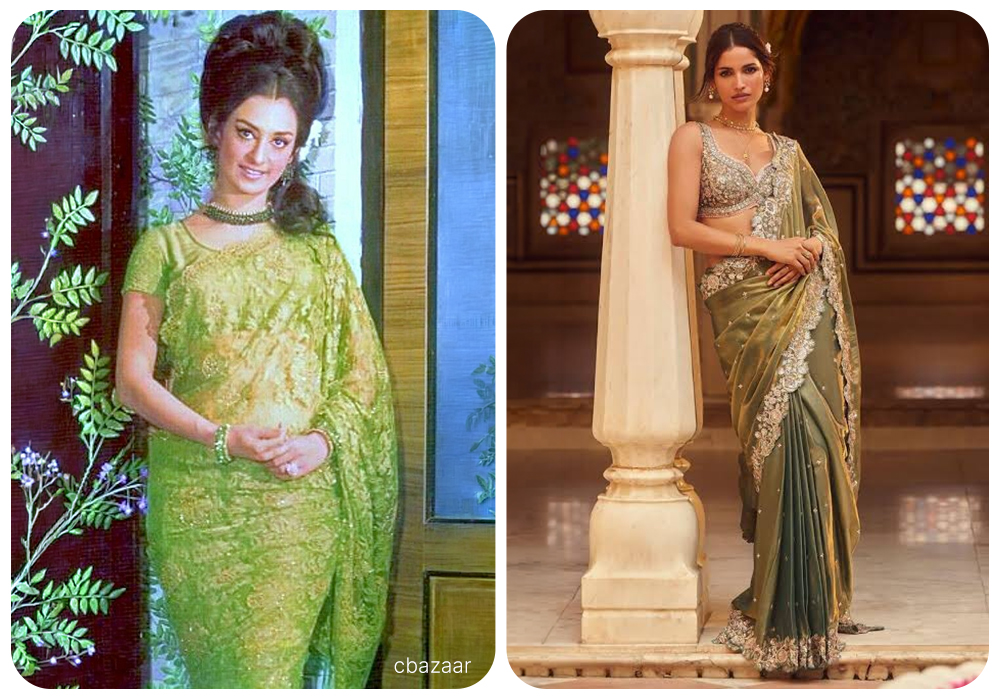
The saree has never really left the room. It's just changed clothes, so to speak. Flip through a photo album from the 1980s and you'll see mothers and aunts in crisp cotton and silk drapes, pleats sharp enough to cut paper. Scroll through Instagram today and you'll find the same garment reborn as a pre-draped saree gown with a corset blouse and a thigh-high slit. Same six yards, completely different attitude.
So what actually changed, and what's stayed exactly the same? Let's break it down.
What Made the 1980s Saree Iconic?
The 1980s saree was all about richness without excess. Fabrics leaned heavily on pure silks like Kanjivaram and Banarasi, alongside handloom cottons for daily wear. Prints were bold, think large florals, geometric borders, and contrasting pallus that did a lot of the visual heavy lifting.
Draping in the 1980s was almost exclusively the nivi style: pleats tucked at the waist, the pallu draped over the left shoulder, and a well-fitted blouse with a modest neckline and full sleeves. Embellishment was there, but it was restrained. Zari borders, subtle embroidery, and the occasional sequin work for special occasions. The silhouette stayed close to the body, and the overall look prioritized elegance over experimentation.
How Is the 2026 Saree Different?
Fast forward to 2026, and the saree has picked up a few new tricks. The biggest shift is convenience. Pre-draped sarees now dominate wedding wardrobes because they cut drape time down to minutes without sacrificing the fall of the fabric.
Designers have also gotten playful with the blouse. The corset drape has become a wedding season favorite, pairing structured, body-hugging corsets with flowing saree drapes for a look that feels both traditional and unapologetically modern. Saree gowns, lehenga sarees, and pant sarees have all joined the mix too, giving women more silhouettes to choose from than ever before.
Fabric choices have widened as well. While regal silks still hold their ground for weddings, tissue, organza, and net have become everyday favorites for their lightweight drape and contemporary sheen.
What Hasn't Changed About the Saree?
Here's the thing. Despite four decades of reinvention, a few things about the saree have stayed untouched. It's still the go-to choice for weddings and festive occasions across India. The pallu still serves as the canvas for a designer's most intricate work. And draping a saree, whether by hand or pre-stitched, still carries the same emotional weight it always has.
The relationship between fabric and movement hasn't changed either. A well-made saree, whether from 1980 or 2026, should still fall and flow in a way that flatters rather than restricts.
Where to Shop the Latest Saree Styles
Fashion moves in circles, and the saree proves it better than almost any other garment. What was once an heirloom locked away for special occasions is now an everyday statement piece, thanks to smarter drapes and bolder silhouettes.
If you're ready to build your own saree collection, whether it's a classic silk for a family wedding or a pre-draped corset saree for a cocktail evening, explore Aza Fashions' saree collection or browse the wedding edit for pieces made to mark your biggest moments.
Frequently Asked Questions
Are pre-draped sarees as authentic as traditional hand-draped ones?
Pre-draped sarees use the same fabrics and design sensibilities as traditional sarees, just pre-stitched into the pleats and pallu for faster wear. They're a practical evolution, not a replacement for tradition.
What's the best saree style for a wedding in 2026?
Corset sarees and lehenga sarees are leading wedding trends right now, offering structure and glamour while still keeping the drape's traditional silhouette intact.
Which fabric is better for a saree, silk or organza?
Silk works best for weddings and formal occasions thanks to its richness and durability. Organza suits lighter, contemporary settings where you want movement and a sheer, airy finish.
Can a 1980s-style saree still work for modern occasions?
Absolutely. Classic silk sarees with traditional borders remain a strong choice for weddings and festive events, especially when paired with a modern blouse cut.

