
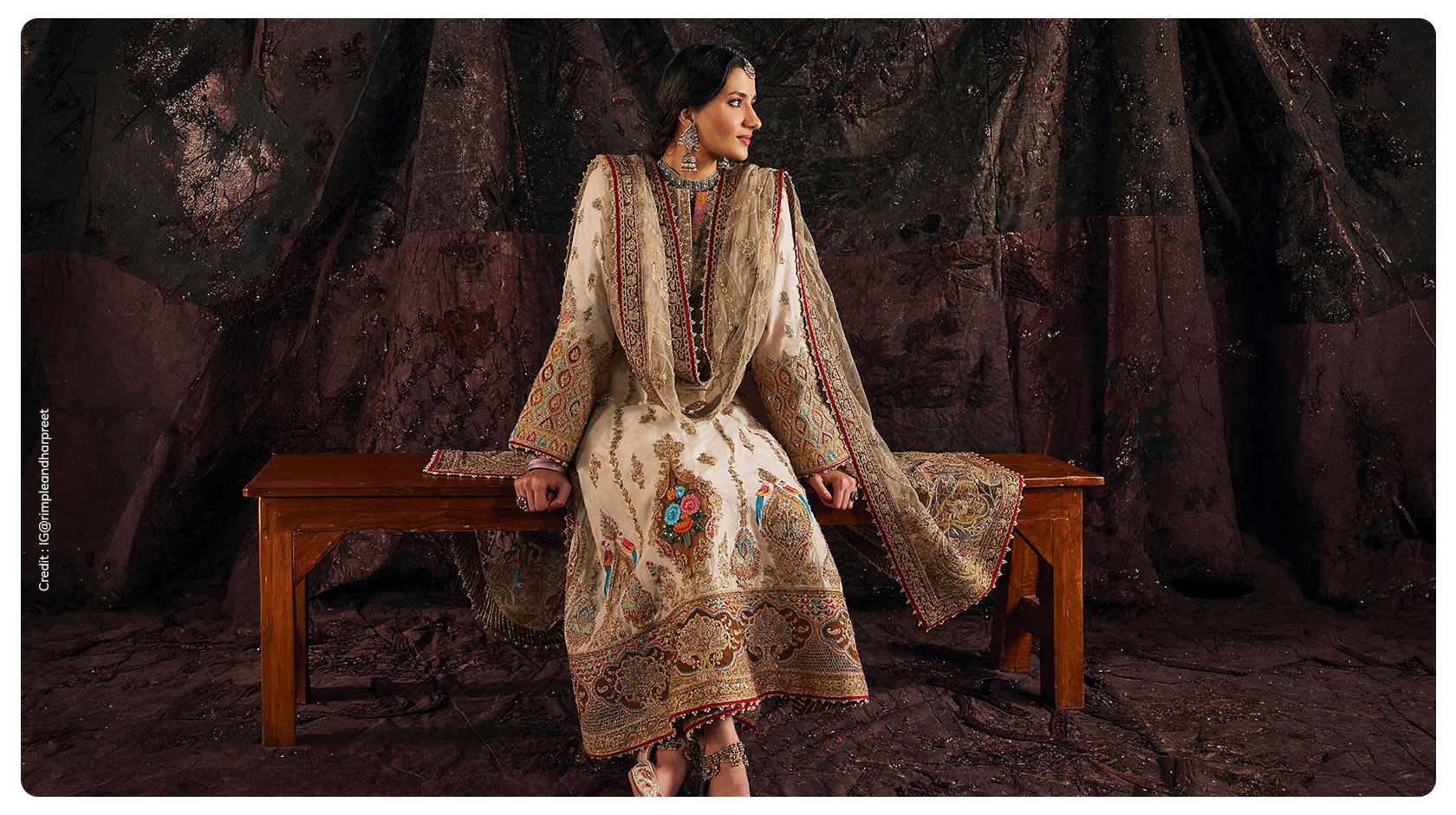
Eid Milad-un-Nabi in Saudi Arabia isn't loud. It's reflective, warm, and deeply rooted in faith and community, family gatherings that linger long into the evening, conversations shared over Arabic coffee and dates, and moments of remembrance observed with sincerity and grace. It's a celebration that asks for reverence first and festivity second. Much like the elegance seen in modest dresses for women and timeless Saudi festive fashion, the focus remains on dressing with dignity while embracing beauty in a thoughtful way.
That balance shows up in what women wear. Across Riyadh, Jeddah, and Dammam, the dress code for Eid Milad gatherings leans firmly modest, necklines that stay high, sleeves that go long, silhouettes that skim rather than cling. But modest has never meant plain. If anything, Saudi Arabia's Eid Milad wardrobe is where restraint and richness meet: covered-up outfits that still carry embroidery, drape, and presence.
Here's how women are approaching it this year, category by category.
Kaftans: The Effortless Reverence Piece
Nothing says "gathered, not performing" quite like a kaftan. It's a staple in Saudi wardrobes for religious occasions, loose through the body, floor-grazing, and built for long hours of sitting, praying, hosting, and visiting family without a single tug or adjustment.
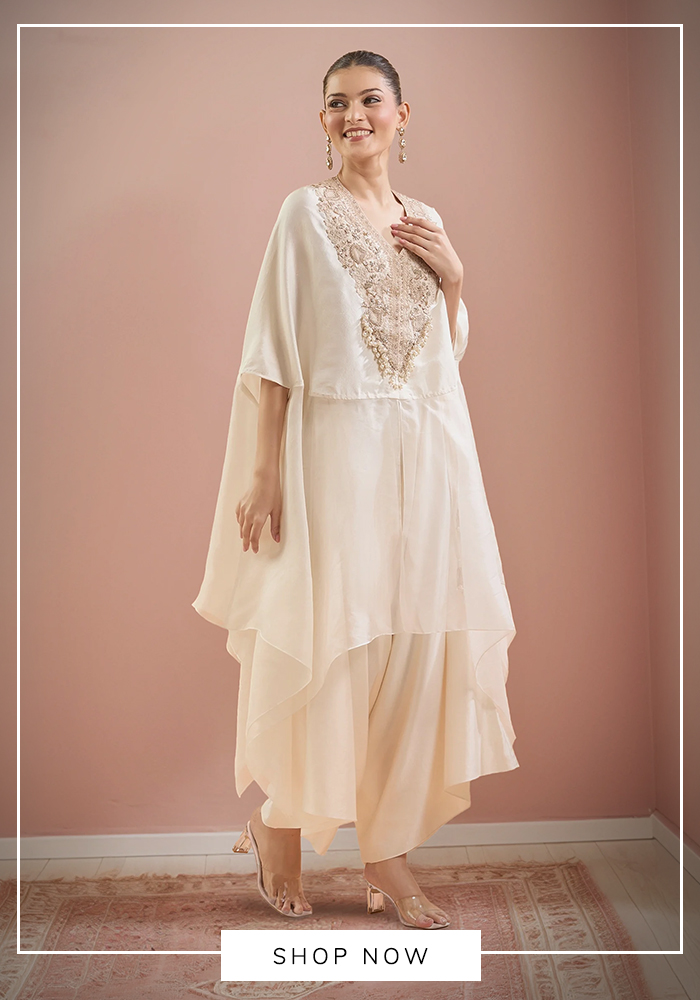
What makes kaftans work so well for Eid Milad is their built-in modesty. There's no fitting required, no strategic layering, the silhouette does the work. A version like Prisho's ivory kaftan and draped pant set leans into this with gota, sequin, and thread embroidery in a soft floral pattern. It is paired with a dhoti-style pant that keeps the whole look grounded and easy.

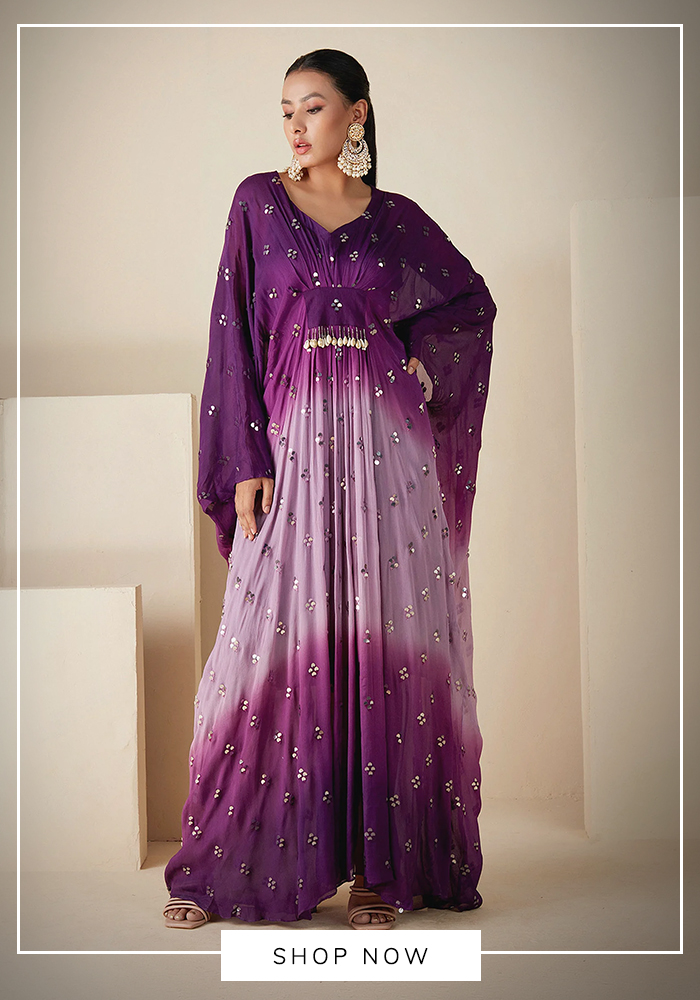
For something with more personality, Suruchi Parakh's ombre kaftan in purple chiffon uses sequin and thread work through a fading colour gradient. The piece is festive without ever feeling showy, and it comes with its own inner lining, so coverage is never a compromise.
Anarkalis: Old-World Grace, Full Coverage
The anarkali has always understood modesty better than most silhouettes — fitted through the bodice, then falling into a generous flare that hides more than it reveals. For Eid Milad, that flowing drop from waist to hem reads as quiet elegance rather than costume drama.
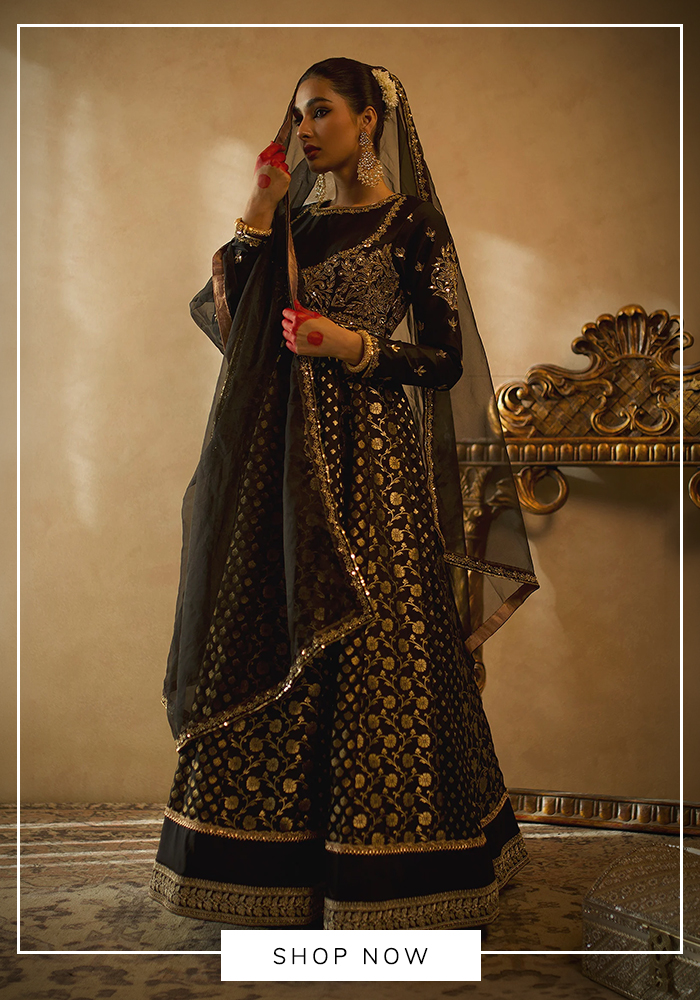
Libas Cafe by Nidhi & Ashish's black Banarasi silk anarkali is a masterclass in this — hand and machine embroidery running across the front, back, and sleeves. You get a padded blouse for structure, and an organza dupatta that adds one more soft layer of coverage over the shoulders.
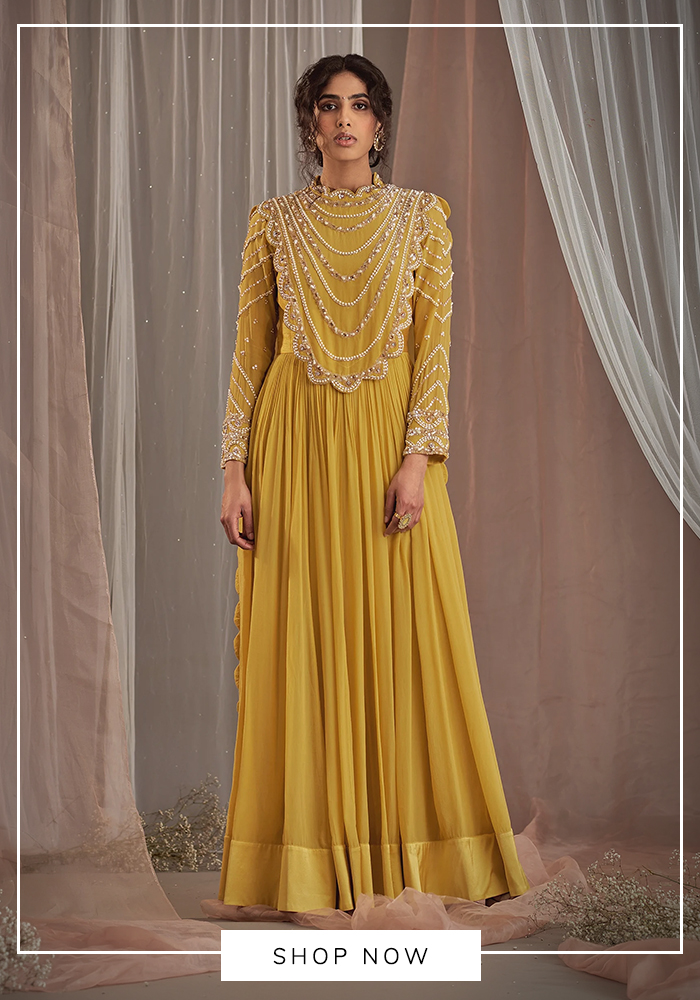
If deeper colour feels more fitting for the occasion, Nidhika Shekhar's yellow silk anarkali brings cutdana, pearl, and Swarovski work with an attached dupatta. Which means the coverage is stitched in, not something you're constantly readjusting through the evening.
Sharara Sets: Movement That Stays Grounded
There's something about a sharara that suits the rhythm of an Eid Milad evening. The flared pants move when you walk, sit, or greet guests, but the kurta on top keeps everything modest and composed. It's a three-piece formula (kurta, sharara, dupatta) that does double duty: festive enough for the occasion, structured enough for family gatherings and prayer.
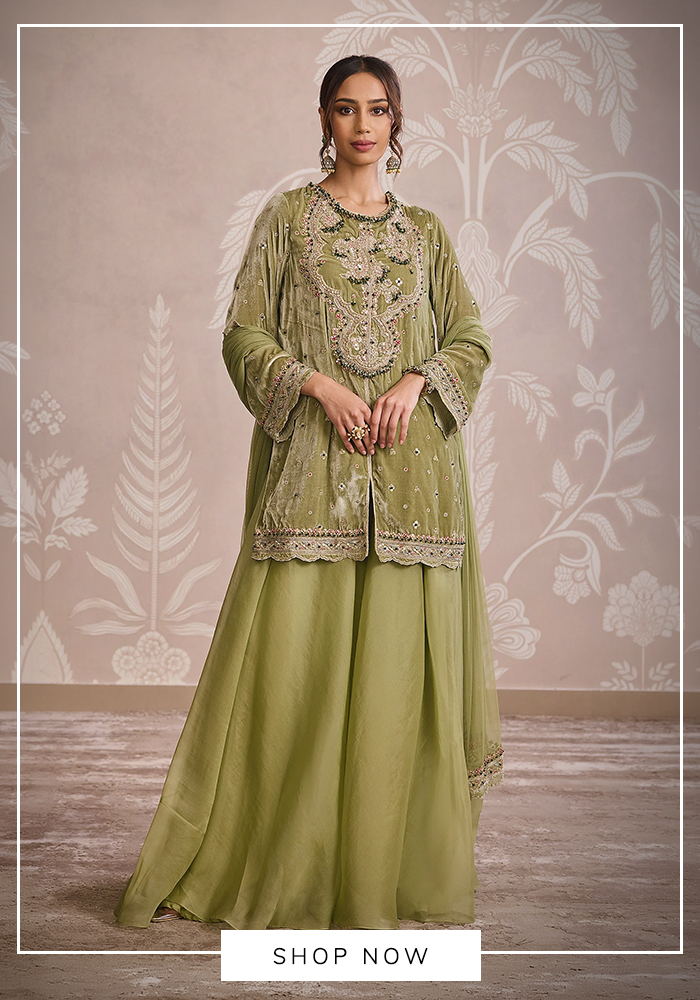
Ridhi Mehra's olive green velvet kurta set pairs an allover embroidered velvet kurta with a plain organza sharara and an embroidered-border net dupatta, the velvet giving it a jewel-toned depth that suits elegant evening gatherings.
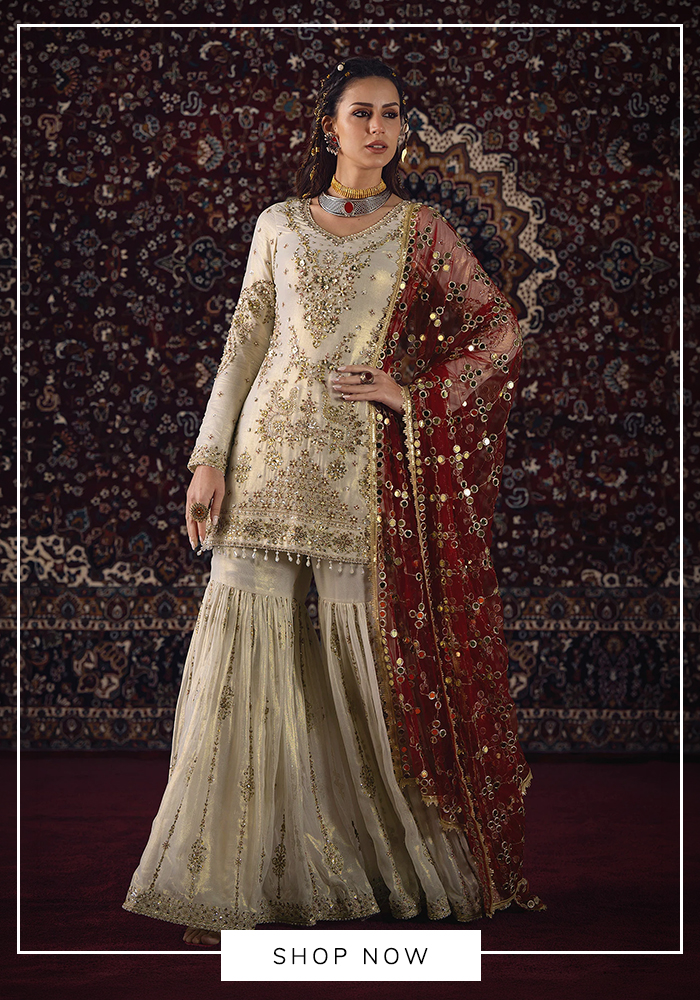
For something lighter, Lashkaraa's ivory georgette gharara set features zari and sequin embroidery, a gathered gharara flare, and a net dupatta, an easier, breezier take for warmer Saudi evenings.
Ethnic Gowns: Structure With Softness
Gowns bring a different kind of modesty to the table — one built around clean lines and floor-length coverage rather than draping and layering. For Eid Milad, a full-sleeve gown with a high neckline reads as both reverent and quietly glamorous, especially for evening gatherings at home or women-only celebrations.
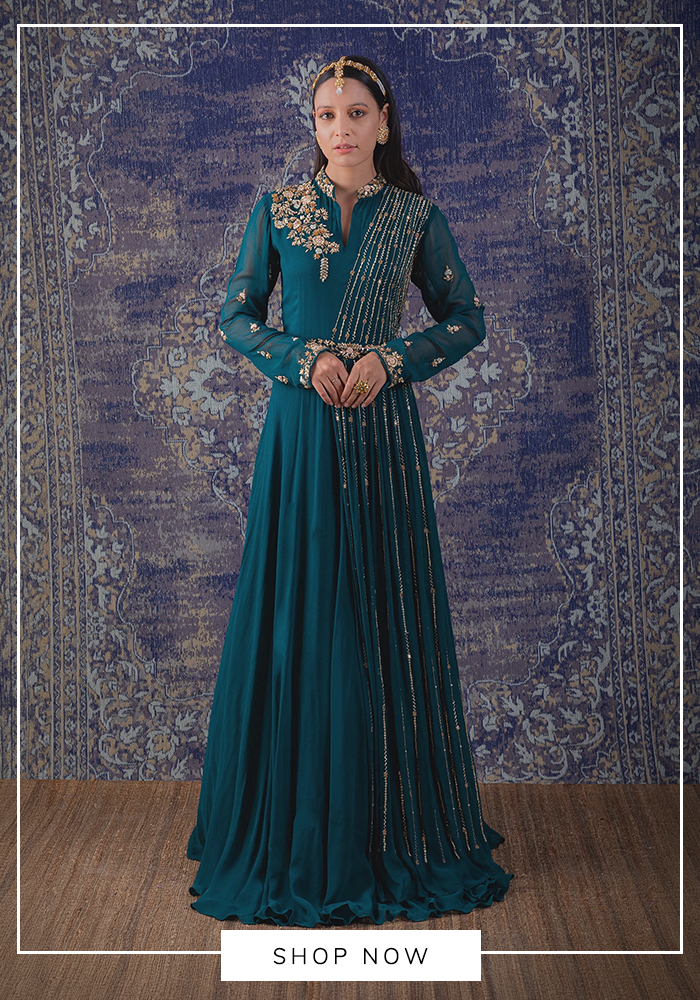
Baidehi's rama green draped maxi gown is a strong example, full sleeves, a stand collar, and floral embroidery in resham, zardozi, and dabka that keeps the coverage from feeling austere.
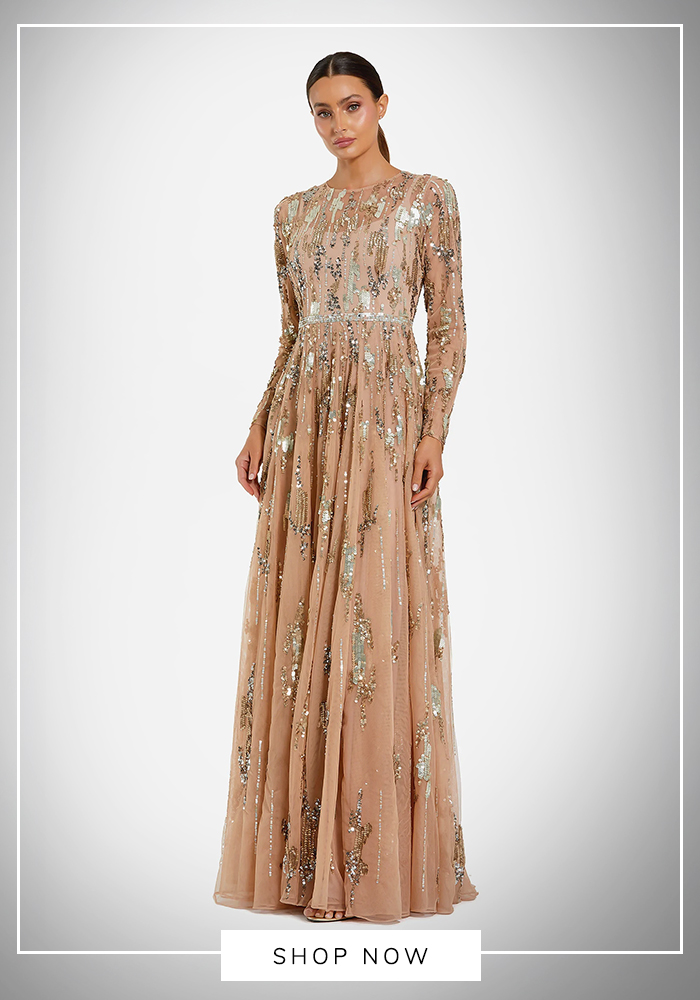
On the more contemporary end, Mac Duggal's beige sequin-embellished gown uses sheer, long sleeves and allover sequin work with a fitted bodice and flowing A-line skirt proof that Western silhouettes can hold their own within a modest dress code too.
Abayas: Saudi Arabia's Signature Expression of Modesty
No conversation about Eid Milad dressing in Saudi Arabia is complete without the abaya, it's more than a garment here; it's part of the country's style language. What's shifted is how designers are reworking it: less limited to classic black, more artful print, embroidery, texture, and layering, worn over a coordinating dress rather than as a standalone piece.
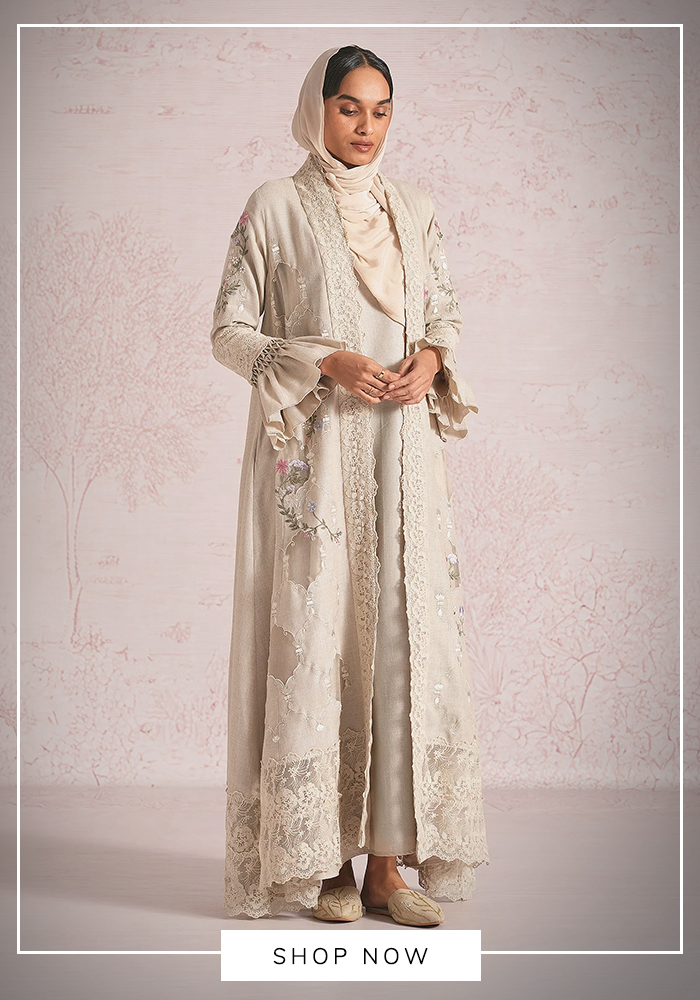
Kaveri's Window to Eden abaya and dress set captures this beautifully, a beige linen abaya with hand-embroidered floral organza panels, smocked sleeves that flare softly, and a lace shawl collar, worn over its own inner dress.
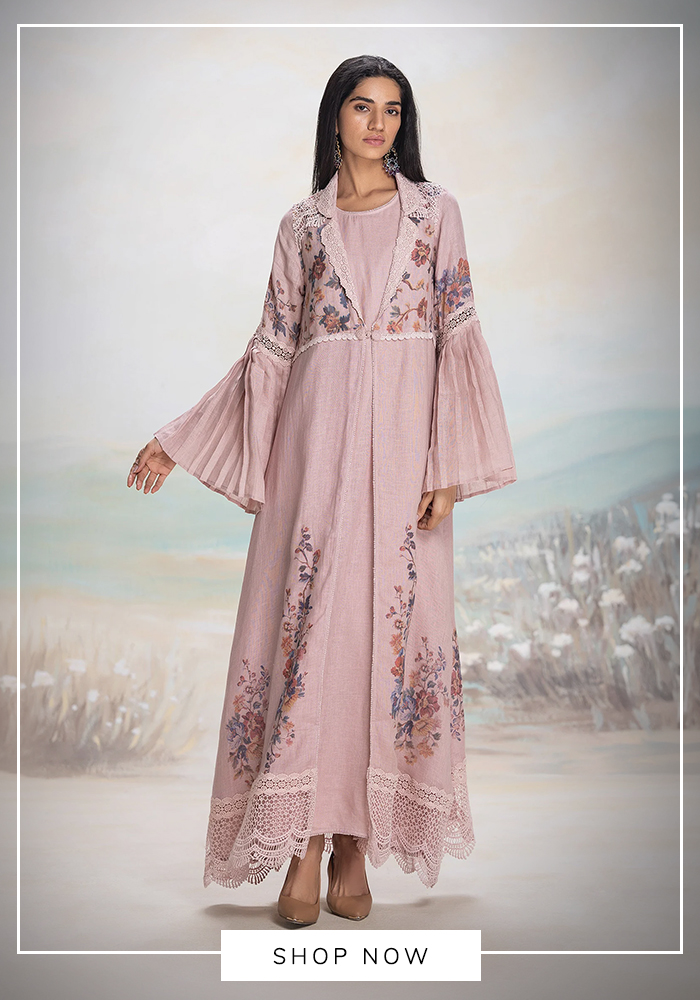
Kaveri's Vintage Rosa abaya set takes a similar structure into pink linen, hand screen-printed with delicate florals and finished with knife-pleated, lace-trimmed sleeves — soft, unhurried, and entirely at home at a family gathering or women's majlis.
Angarkhas: The Quiet Showstopper
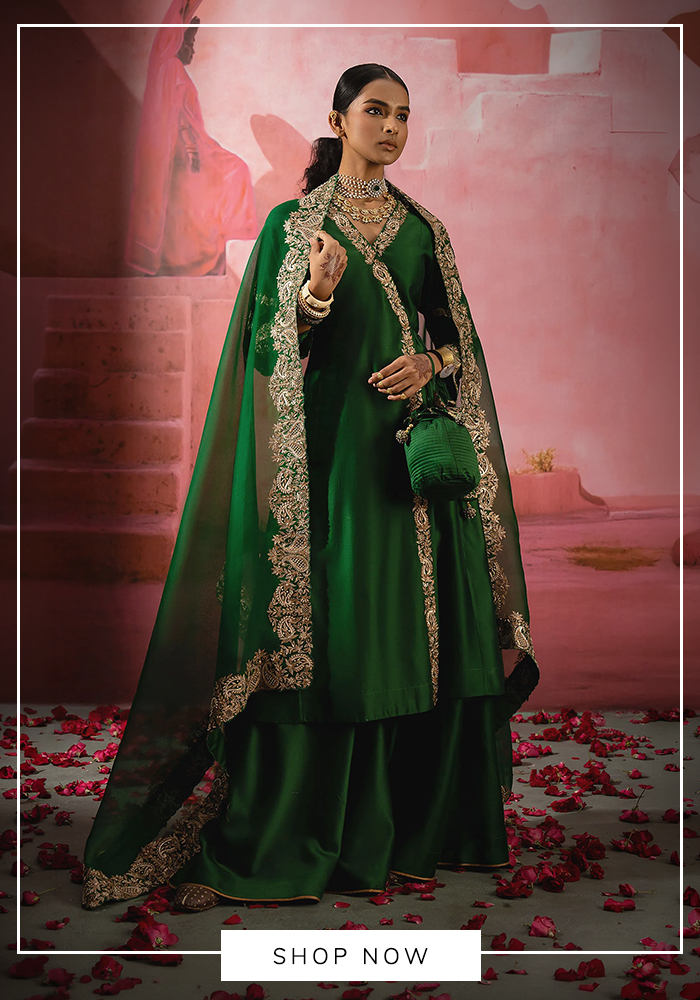
The angarkha's overlapping front panel was practically designed for modesty — that wraparound closure creates a natural double layer across the chest, and the flared silhouette below keeps everything else covered too. It's a silhouette with old-court elegance, which makes it feel especially fitting for a religious occasion rooted in remembrance and respect.
Pink City by Sarika's green angarkha sharara set brings sequin and aari embroidery in floral and paisley motifs, finished with a matching potli bag, festive detailing that never tips into excess.
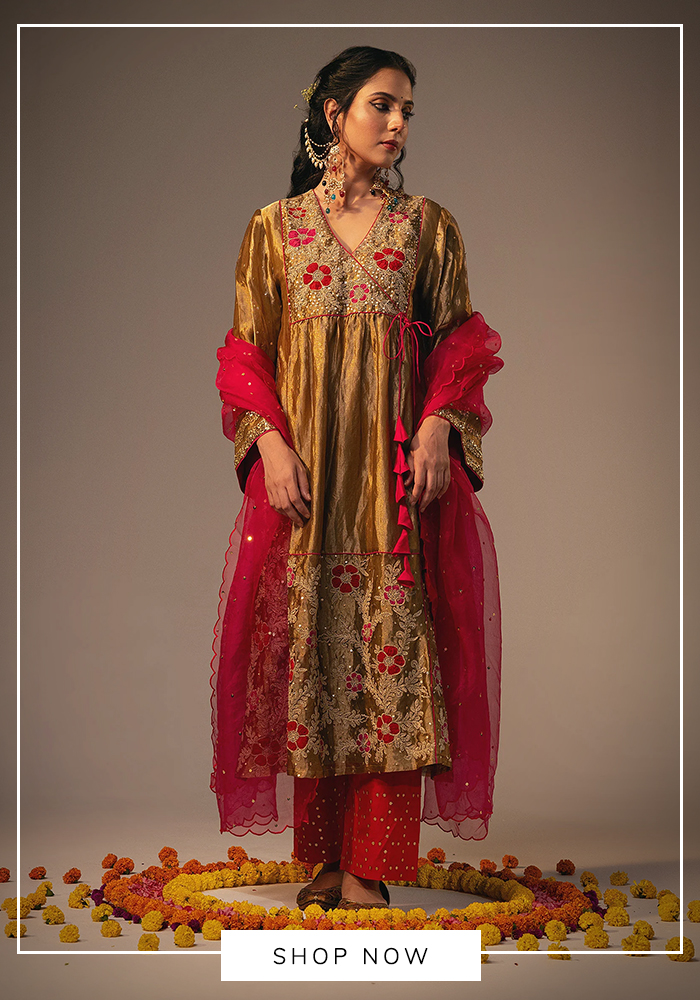
Svastih's gold angarkha kurta set takes a more textural approach, with 3D floral appliqué, dori embroidery, and a sequin-detailed pant, a set that photographs beautifully under the soft lighting of an evening gathering.
Whatever the silhouette, the thread running through Saudi Arabia's Eid Milad wardrobe is the same: coverage that never feels like a compromise, and embellishment that never overshadows the occasion's spirit. Pick the one that matches your gathering — a kaftan for an easy family evening, an abaya for a women's majlis, a sharara set for something with more movement — and let the outfit hold space, not steal it.