
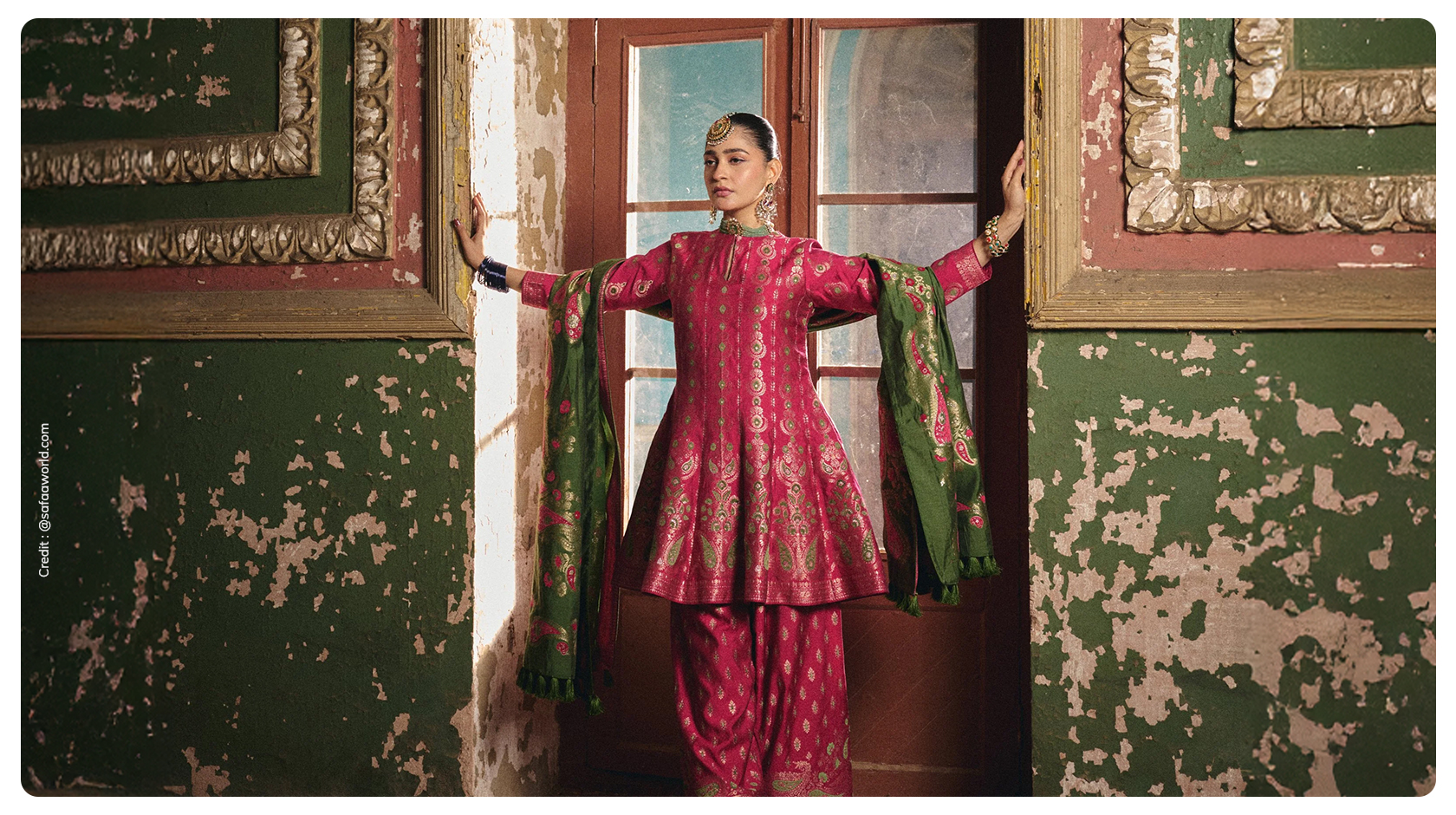
Before we talk trends, let's talk etymology. The word farshi comes from the Persian word farsh, meaning "floor." And that is precisely what this silhouette does — it touches it, trails it, commands it. The Farshi Salwar is a wide-legged, floor-length trouser with a dramatic flare that pools elegantly around the feet, giving every wearer the walk of a woman who once ruled a darbar.
Whispers from the Mughal Era
The Farshi Salwar traces its origins to the grandeur of 17th and 18th-century Mughal courts — particularly the refined cultural capitals of Uttar Pradesh, Lucknow, and Hyderabad, regions whose textile traditions continue to influence wedding wardrobes across South Asia and the Gulf today.. Worn by royal noblewomen and aristocrats, it was a status symbol as much as a garment. The sweeping fabric — sometimes spanning six to ten metres — was crafted from silk, brocade, jamawar, and velvet, then embroidered with zardozi, gota-patti, and intricate gold threadwork.
"Wearing a Farshi Salwar was not just dressing — it was a declaration. Of wealth, of artistry, of a woman's place in her world."
The British Influence Theory
Historians also point to an interesting colonial thread: some believe the Farshi Salwar's dramatic length was inspired by the sweeping evening gowns worn by British noblewomen during the colonial era. The noblewomen of Awadhi and Lucknowi courts, known for their cultural sophistication, may have absorbed this silhouette and reinterpreted it through the lens of South Asian craftsmanship and tradition — creating something entirely their own.

Captured in Cinema
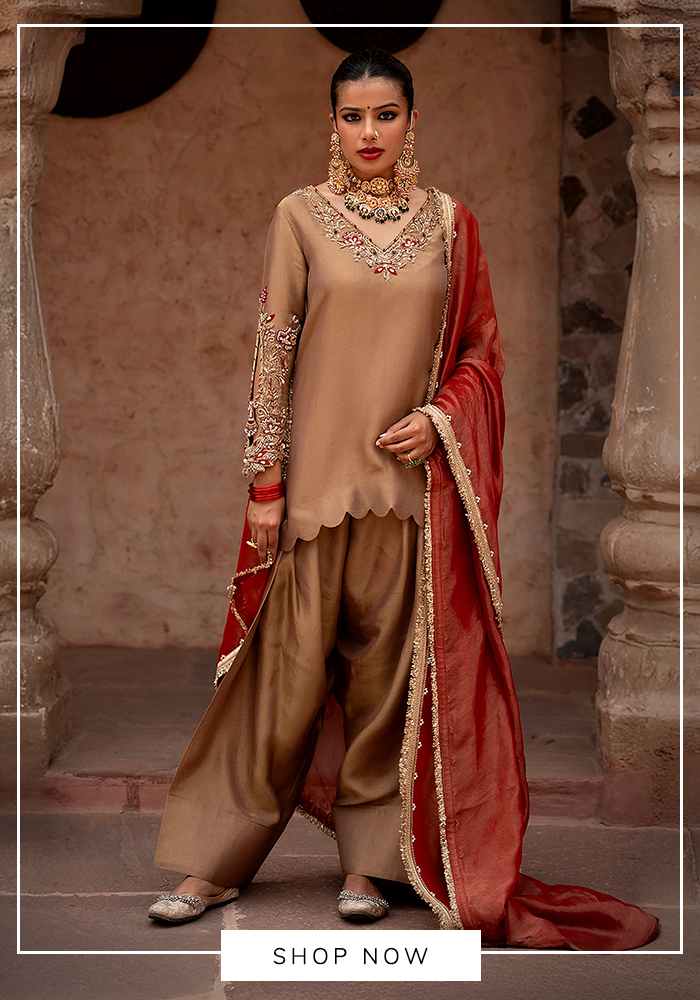
Iconic films like Umrao Jaan (1981) and Shatranj Ke Khilari (1977) depicted the Farshi Salwar on screen for generations to witness — worn by courtesans and noblewomen of 19th-century Lucknow, the silhouette became synonymous with Nawabi elegance, grace under pressure, and a particular brand of South Asian femininity that was both sensuous and sophisticated.
How the Farshi Got Its Groove Back
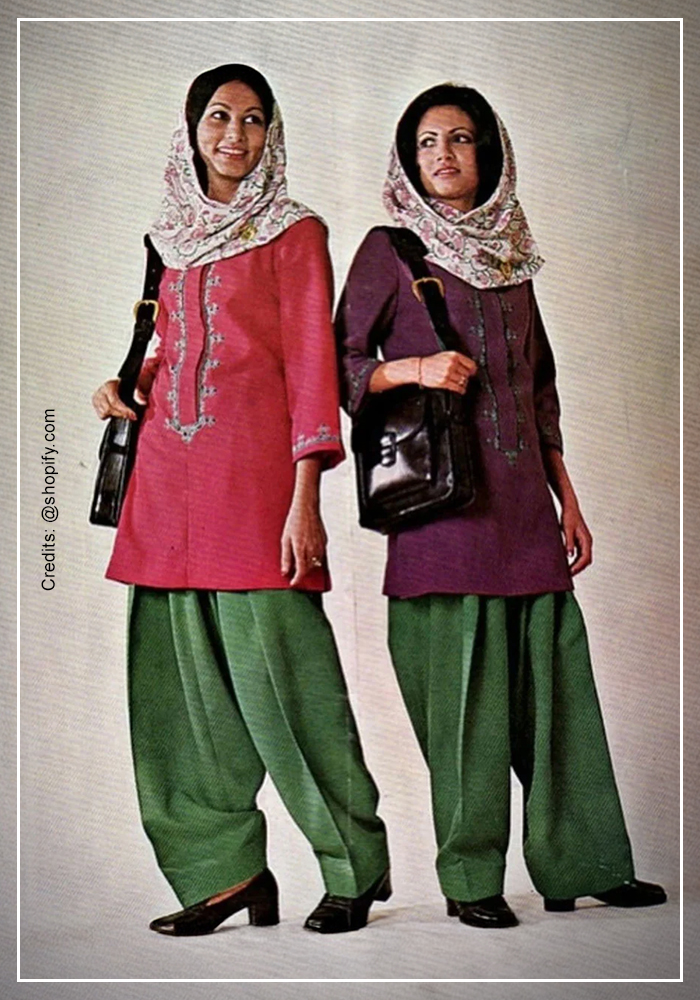
After partition and independence, the Farshi Salwar retreated mostly into bridal trousseaus, ceremonial wardrobes, and the back of grandmothers' almirahs. The 1980s and 90s saw Bollywood favour the churidaar and later the palazzo. The Farshi became a rarity — glimpsed at weddings and mehndi functions, passed down as heirlooms rather than worn as fashion.
Pakistan Kept the Flame Alive
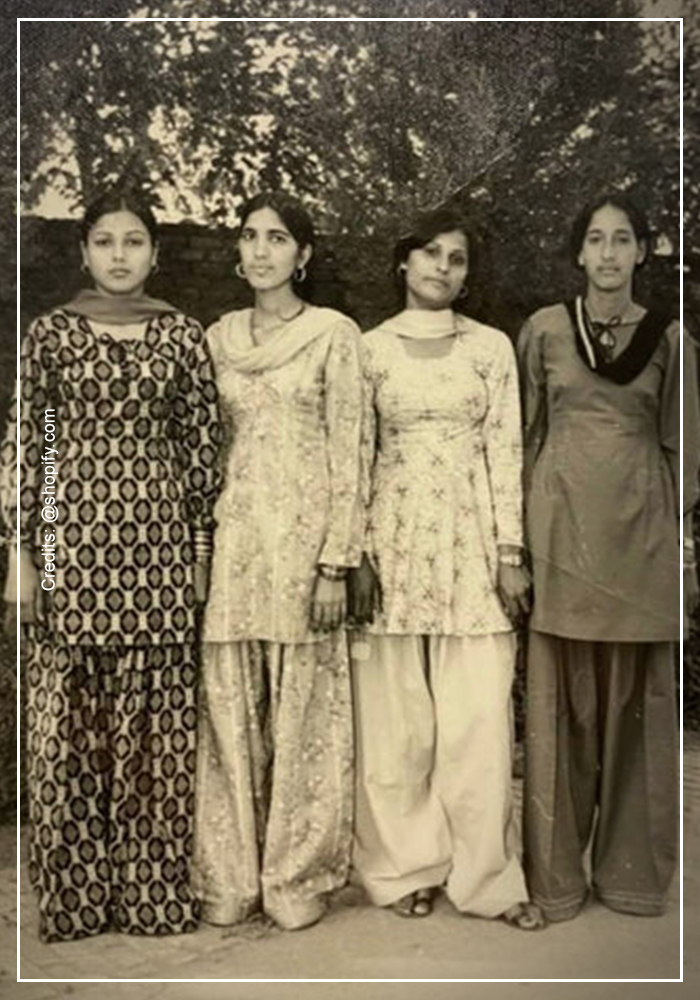
While India largely forgot it, the Farshi Salwar quietly thrived in Pakistan's fashion consciousness. Pakistani television dramas — beloved for their rich cultural aesthetics — kept the silhouette visible. It was fashion stylist Tabesh Khoja who first styled a Farshi Salwar in 2023 for designer and actress Sadaf Kanwal's label, sparking what would become a full-blown revival across the subcontinent.
Designers Who Changed the Game
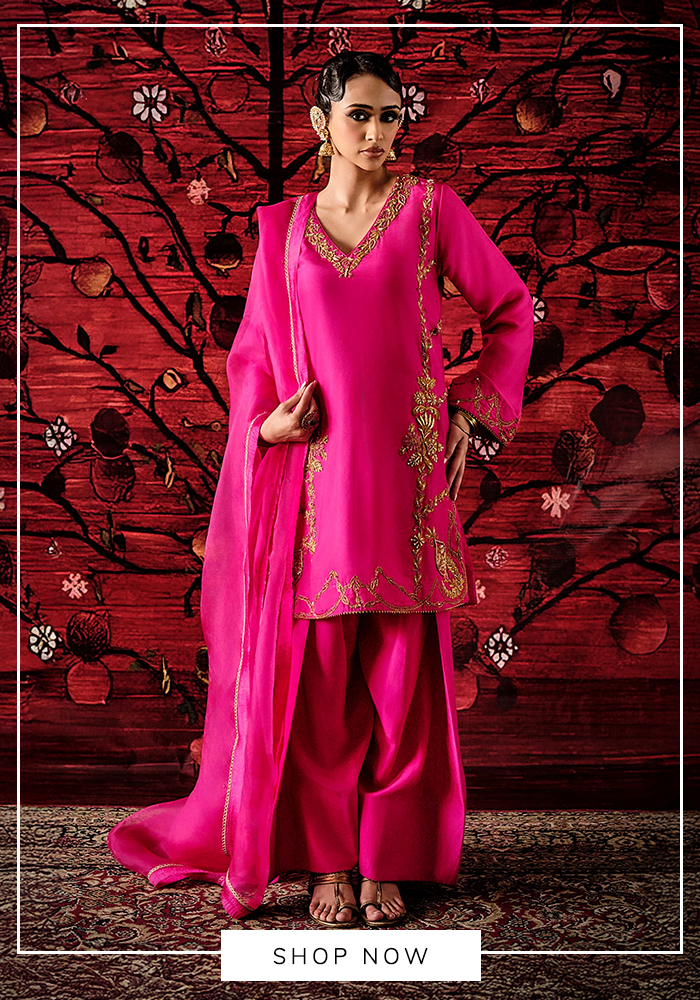
Visionary designers like Hussain Rehar, Zara Shahjahan, and Faiza Saqlain began reimagining the Farshi in lighter fabrics — chiffon, organza, tussar — with contemporary tailoring and restrained embellishment. They made it wearable not just for weddings but for festive occasions, celebrations, and even elevated everyday wear. Indian designers like Sheetal Batra, Heena Kochhar, Gopi Vaid, and Sobariko soon followed, creating their own stunning iterations of this heirloom silhouette.
Social Media Sealed the Deal
The Farshi's dramatic sweep makes it extraordinarily photogenic. The moment it hit Instagram and Pinterest, it went viral. Its sweeping hem, its regal posture, its sheer visual impact — these made it irresistible to content creators and fashion enthusiasts. The slow fashion movement also played a role: in a world craving artisanal craftsmanship and cultural roots over fast fashion, the Farshi was a perfect answer.
Across the UAE — from Dubai's luxury weddings to Abu Dhabi's festive soirées — the Farshi Salwar has quietly re-emerged as a favourite among women seeking statement silhouettes rooted in heritage.
The Star Power Behind the Silhouette
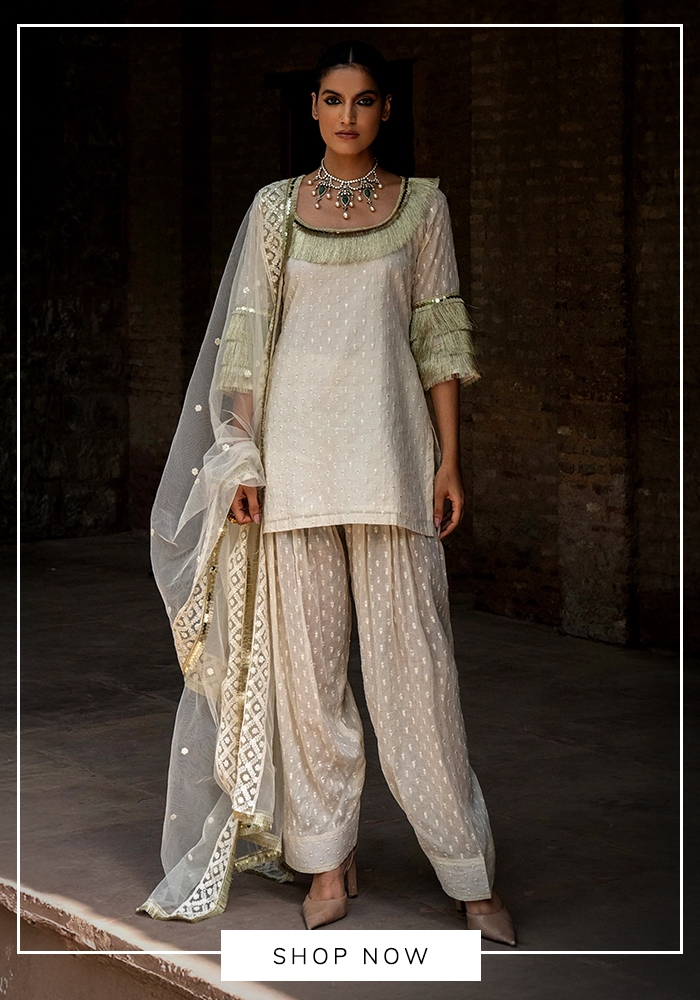
Every great fashion revival needs its champions — those faces that translate history into desire. The Farshi Salwar found its in some of the most stylish names in Indian and Punjabi cinema.
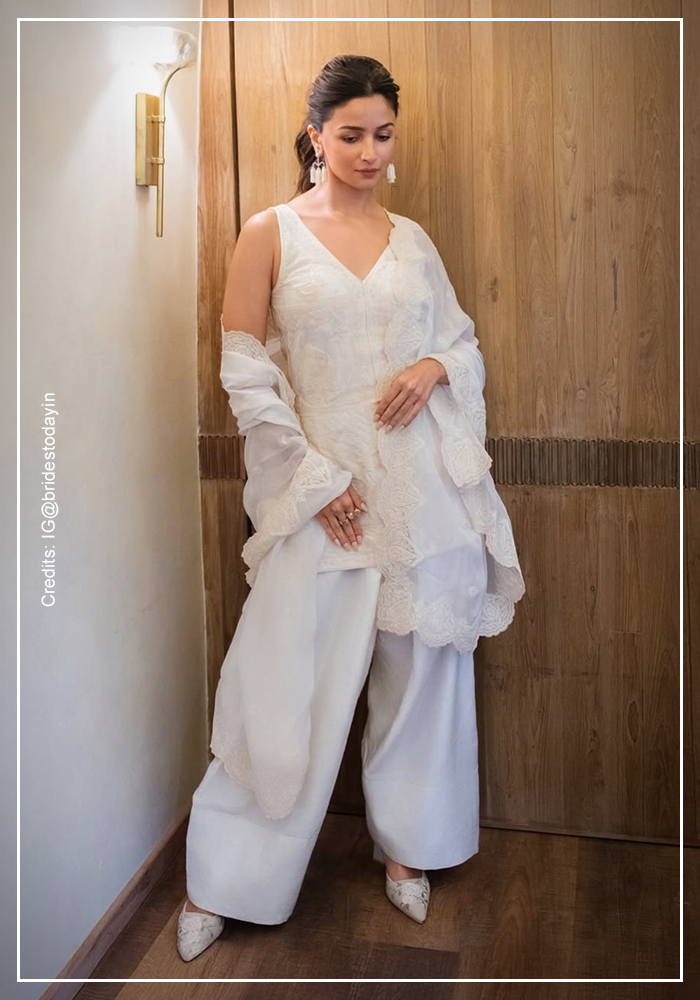
Alia Bhatt
Known for her effortless ability to blend elegance with accessibility, Alia's embrace of heritage Indian silhouettes has introduced entire new audiences to ethnic fashion. Her endorsement of traditional bottomwear styles makes the Farshi aspirational for a generation raised on fusion fashion — proving regal and relevant can coexist beautifully.
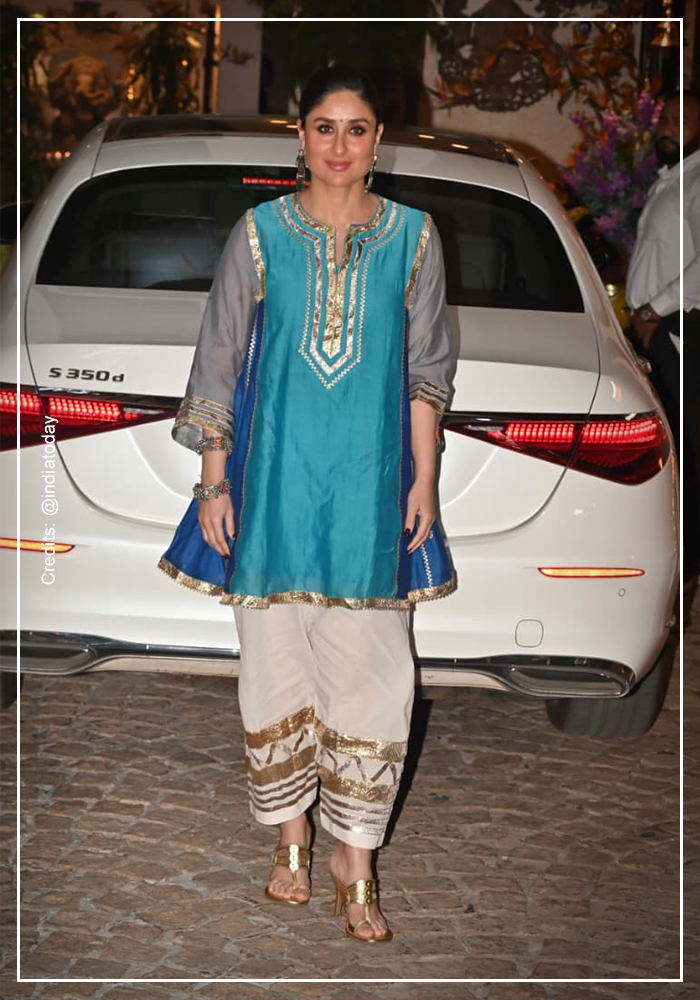
Kareena Kapoor Khan
The queen of ethnic style evolution, Kareena has always had an uncanny instinct for when tradition is ready for a comeback. Much like she turned the patiala into a cultural phenomenon through Jab We Met, her affinity for dramatic silhouettes and rich traditional styles makes her a natural champion of the floor-touching Farshi aesthetic.
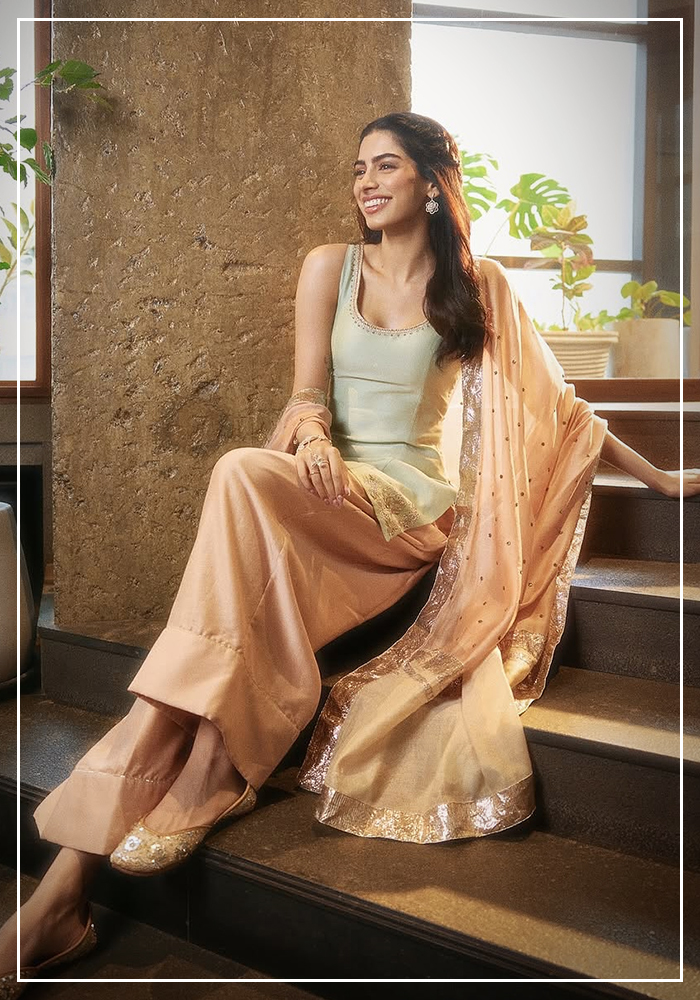
Khushi Kapoor
Gen Z's darling and Sridevi's younger daughter, Khushi brings fresh energy to traditional dressing. Her willingness to experiment with heritage silhouettes while keeping them modern and youthful speaks directly to a new generation of women discovering ethnic fashion for the first time — making the Farshi cool rather than just classic.
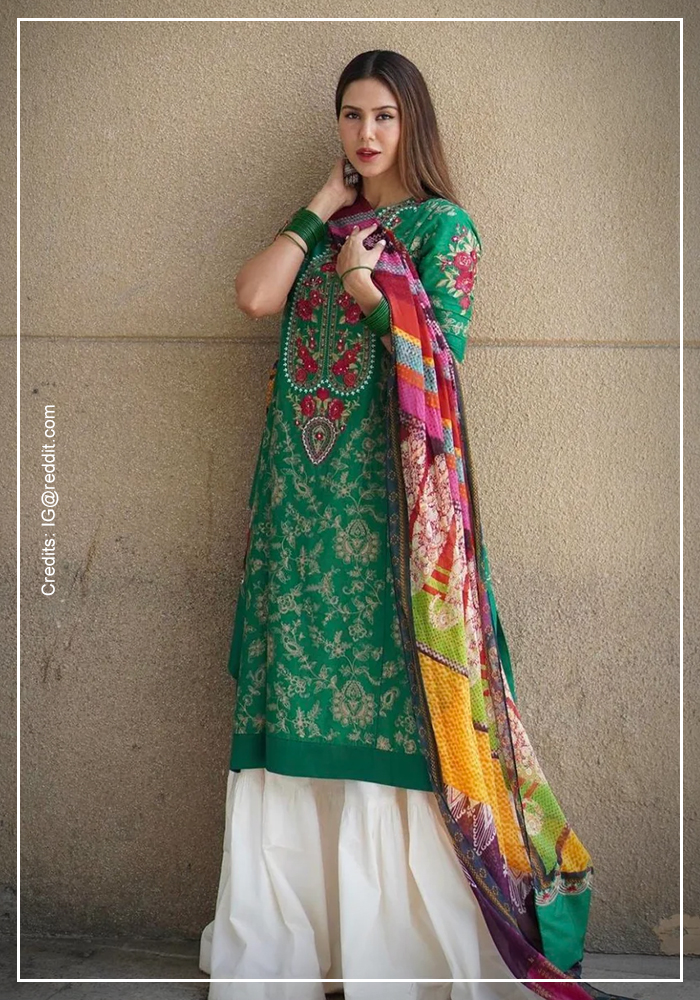
Sonam Bajwa
The Punjabi cinema's biggest fashion icon, Sonam has long championed designs by Pakistani and cross-border designers — including Hussain Rehar, one of the Farshi's greatest modern champions. Her deep comfort with wide-legged, dramatic ethnic silhouettes and her massive following in North India have made her one of the most influential voices in this revival.
Not All Farshis Are the Same: Know Your Silhouettes
The Farshi Salwar is more of a canvas than a single style. Depending on the fabric, the pairing, and the occasion, it transforms entirely. Here's a quick orientation before you shop.
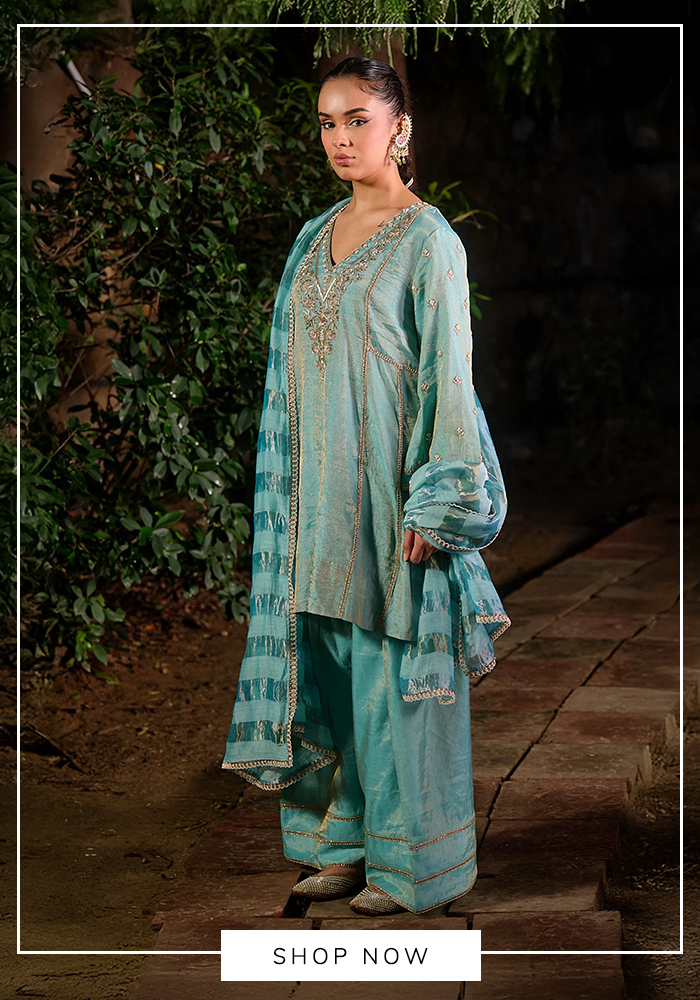
Pastel & Festive
Soft hues with delicate embroidery. The go-to for daytime weddings, mehndi functions, and elegant daytime celebrations across the UAE.
Velvet & Opulent
The OG Farshi energy. Heavy fabric, rich colour, maximum grandeur. Made for evenings and formal celebrations.
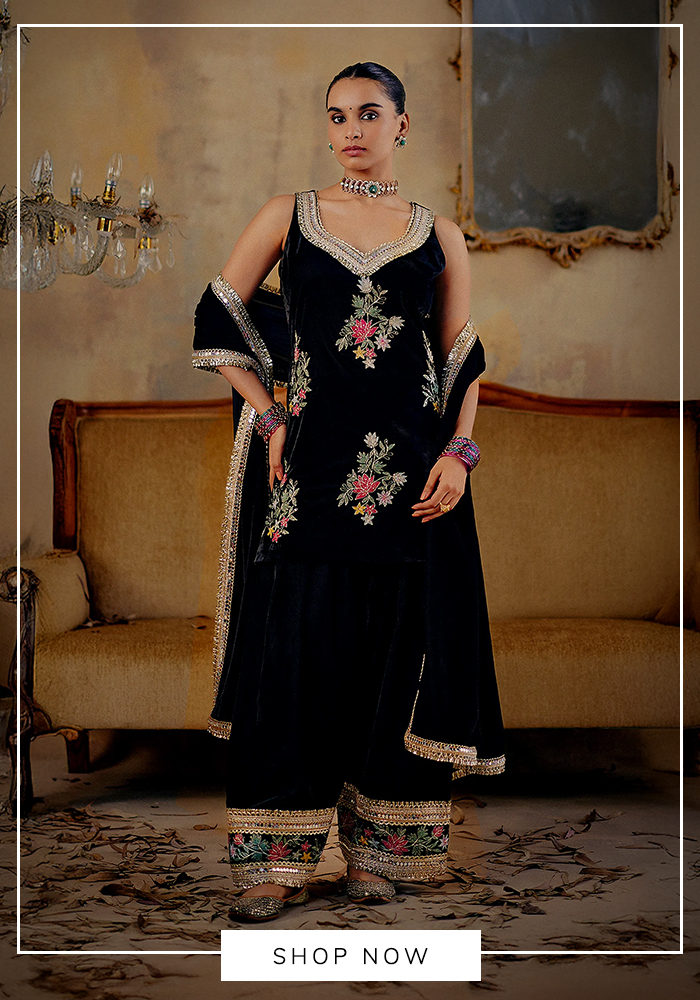
Anarkali with Farshi
A dramatic pairing — the full-length anarkali kurta paired with a Farshi base creates a silhouette of extraordinary elegance.
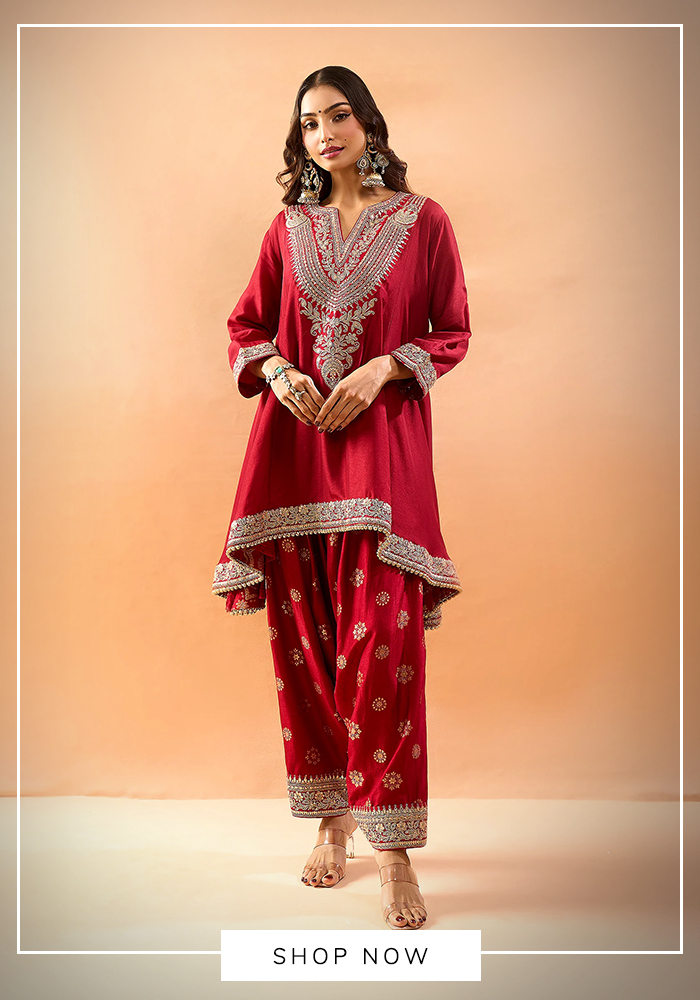
Contemporary
Lightweight tussar or cotton, minimal embellishment, clean lines. The modern woman's Farshi heritage without the heaviness.
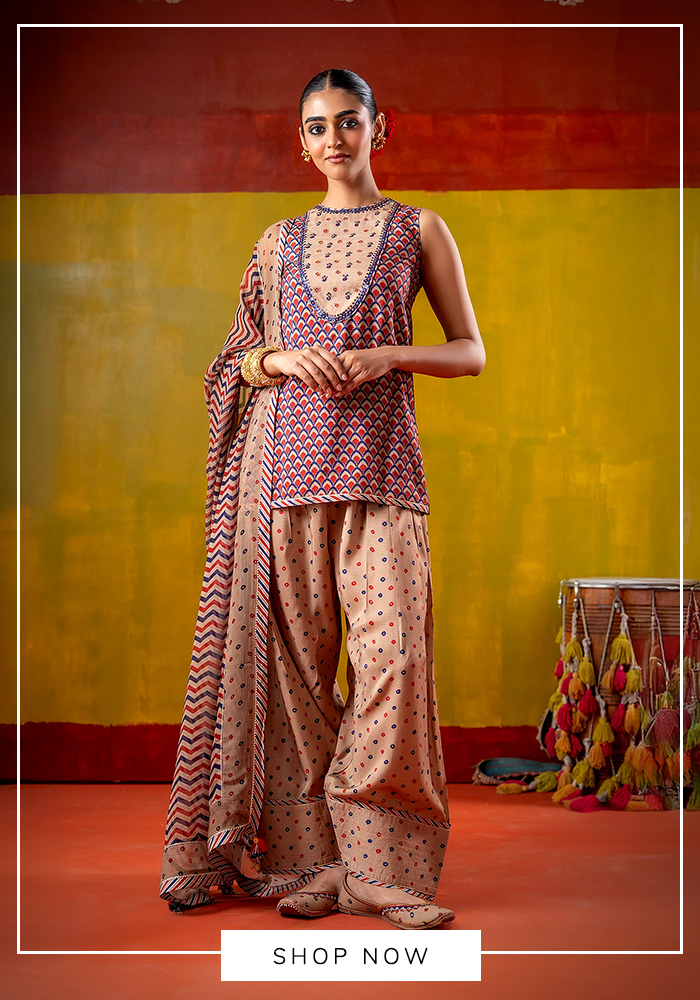
Printed
Block prints, scallop prints, digital florals. These bring a playful, casual energy to the silhouette — perfect for non-wedding occasions.
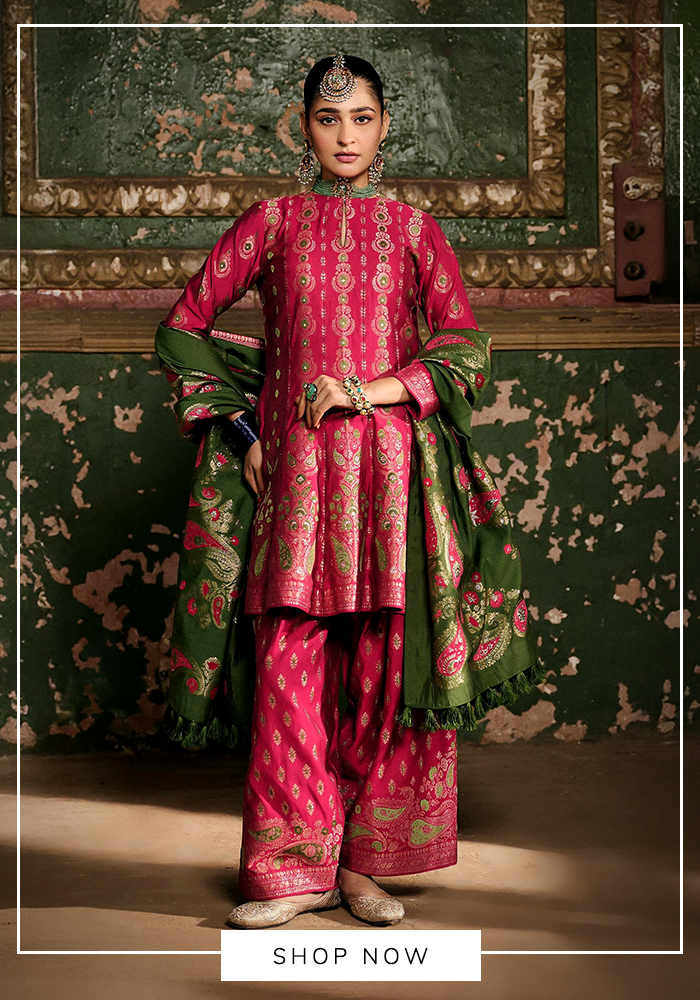
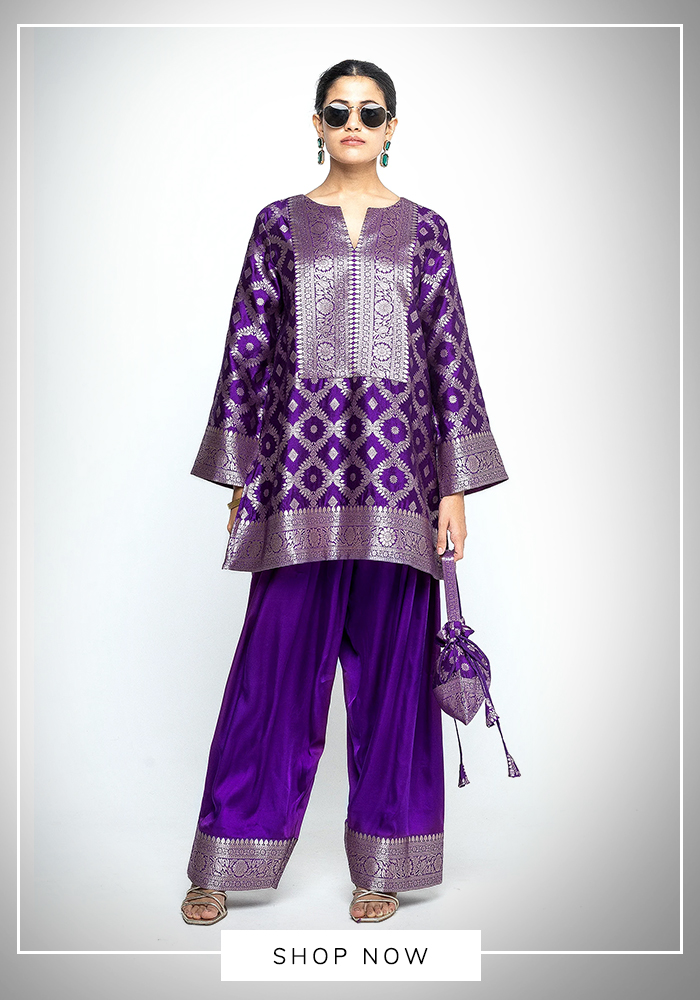
Mughal / Brocade
Jaal patterns, brocade silk, gold-threaded motifs. The most historically authentic version — as close to the original as it gets.
Why the Farshi Salwar Works So Well for UAE Celebrations
The UAE's celebration culture — from grand destination weddings to intimate majlis gatherings — naturally complements the drama of the Farshi Salwar. Its sweeping silhouette photographs beautifully in ornate venues, while modern lightweight versions make it surprisingly wearable even in warm climates.