
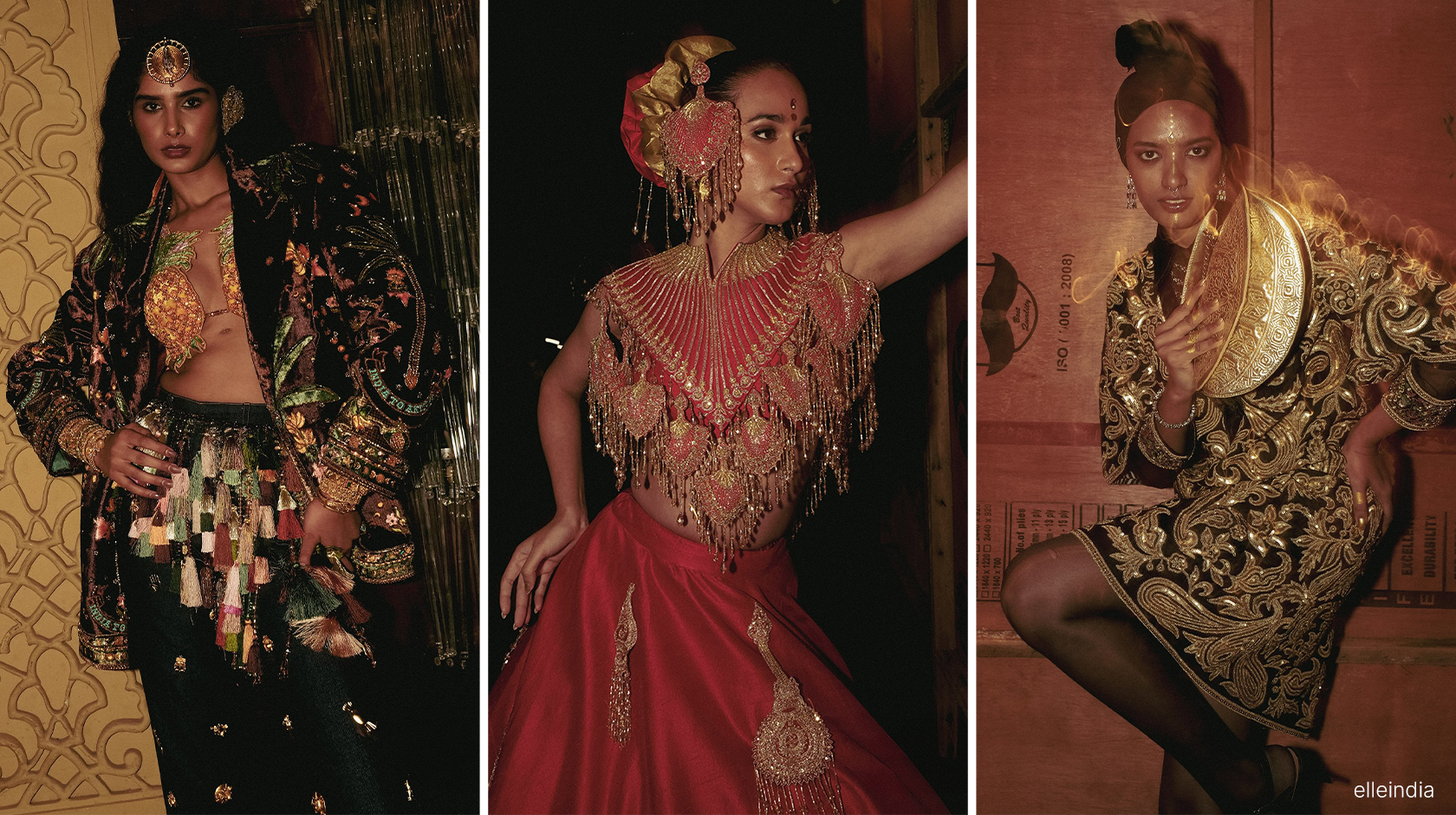
The murmurs had been building for a season or two. Quiet luxury, for all its elegance, had started to feel like an excuse—a retreat from the kind of bold, labor-intensive couture that Indian fashion does better than almost anyone else on earth. Then came India Couture Week 2026, and the conversation changed entirely.
Organized by FDCI (Hyundai India Couture Week 2026 in association with Nexxus New York) and anchored at Taj Palace, New Delhi, this year's edition ran from July 23–29 across fourteen shows. The week didn't just showcase collections—it made a statement. Craftsmanship was repositioned as the ultimate luxury. Presentations became theatrical experiences. And maximalism returned, not as nostalgia or excess, but as a sophisticated, intentional design language built on embroidery, architecture, heritage, and storytelling.
Designer Breakdowns: Every Show at India Couture Week 2026
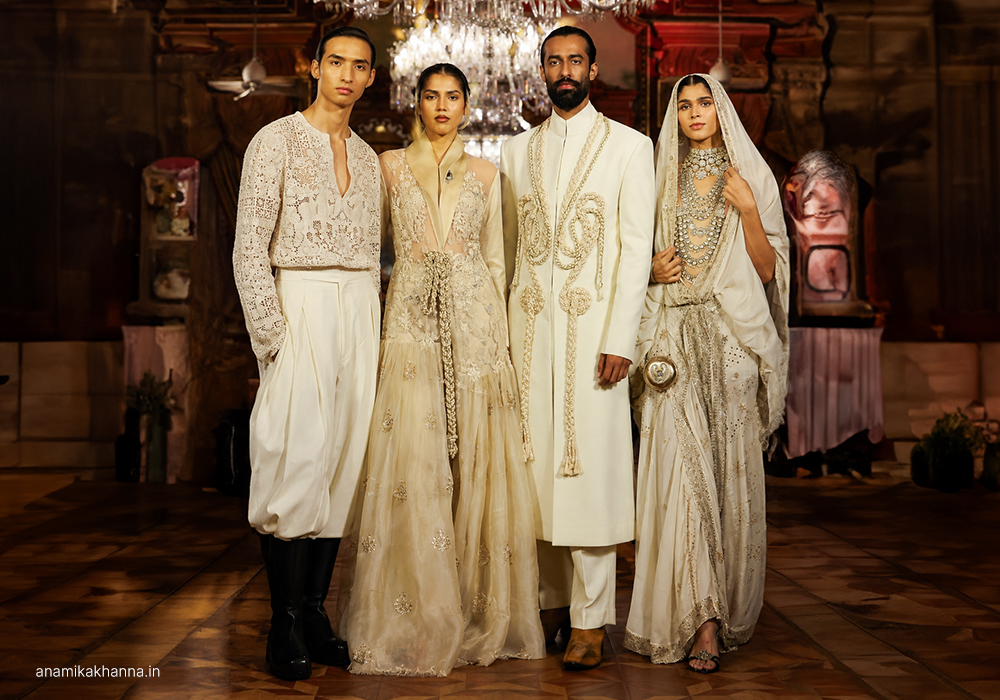
Anamika Khanna – Moonlit Palace
What Was Showcased: Anamika Khanna opened Hyundai India Couture Week 2026 with a landmark decision: taking the season's first show entirely out of Delhi, staging Moonlit Palace at the Taj Falaknuma Palace in Hyderabad—the first time in ICW history that an opening presentation has been held outside the capital. The collection itself matched the grandeur of its setting. Fluid silhouettes moved through the palace's candlelit corridors in ivory, gold, and deep sapphire; hand-embroidered drapes and layered textiles referenced Mughal court dress while remaining unmistakably contemporary.
What Stood Out: The venue was the message. Choosing a 19th-century Nizam palace as a runway was a declaration that Indian couture belongs in its own architectural heritage—not just in a tent.
Why It Defined This Season: By anchoring craft in a site of genuine historical significance, Khanna set the tone for the entire week: that maximalism, done right, is about depth and context, not surface decoration.

Falguni Shane Peacock – Le Grand Voyage
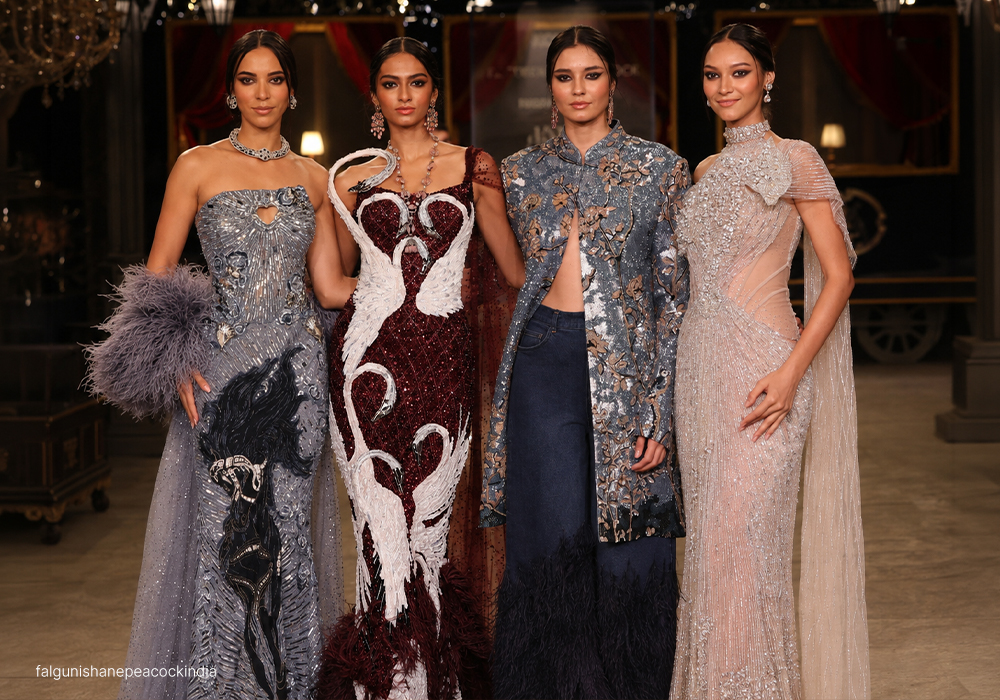
What Was Showcased: High-octane and unapologetic, Le Grand Voyage leaned into couture embellishment with sculptural silhouettes that drew on international couture references while remaining rooted in Indian craft. Crystal-encrusted bodices, dramatic use of feathers, and rich jewel-toned palettes made this one of the week's most visually arresting presentations.
What Stood Out: The collection's architectural corsetry—each piece structured like wearable sculpture—felt like the duo's boldest technical statement yet.
Why It Defined This Season: Falguni Shane Peacock proved that glamour and craftsmanship are not opposing forces. Le Grand Voyage made the case for embellishment as artistry.
House of Rohit Bal – DASTKAR
What Was Showcased: DASTKAR—the Hindi word for artisan—was the week's most emotionally charged presentation: a posthumous tribute to the late Rohit Bal, celebrating the craftspeople whose work defined his legacy. The collection honored India's weaving and embroidery traditions through heritage textiles, intricate hand-work, and silhouettes that felt both timeless and deeply human.
What Stood Out: The decision to foreground the artisans themselves—their techniques, their communities, their hands—rather than any single design moment, gave the show a rare emotional weight.
Why It Defined This Season: DASTKAR reminded the industry that Indian couture's greatest resource has always been its craftspeople. In a week about maximalism, this was the show that argued craft is the point.
House of Masaba – Chardi Kala
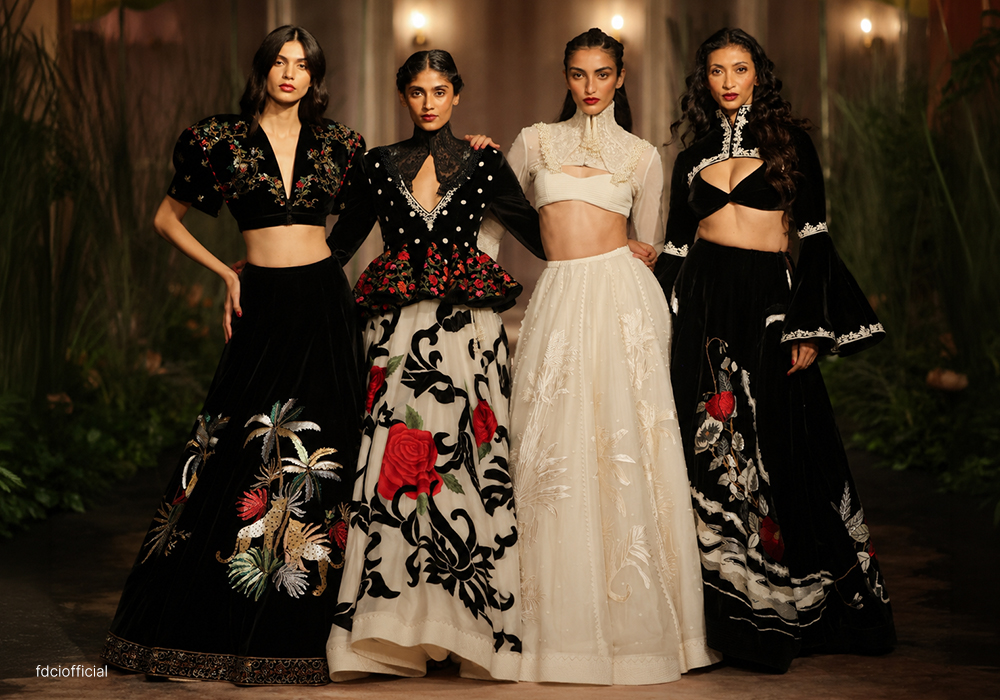
What Was Showcased: Masaba Gupta presented her first-ever bridal couture collection, Chardi Kala—a Punjabi phrase meaning "eternal optimism" or "rising spirit." The collection channeled joyful maximalism through bold color, exuberant embroidery, and bridal silhouettes rooted in Punjabi cultural heritage. Lehengas arrived in saffron, fuchsia, and deep red; embroidery patterns drew on folk motifs rendered in contemporary scale.
What Stood Out: A debut bridal collection from one of Indian fashion's most distinctive voices was always going to be significant. Chardi Kala delivered a vision of the Indian bride that felt genuinely fresh—celebratory rather than aspirational.
Why It Defined This Season: Masaba's entrance into bridal couture signaled that the genre is expanding. Joy, personality, and cultural specificity are becoming the new bridal luxury.
JJ Valaya – SIDDI
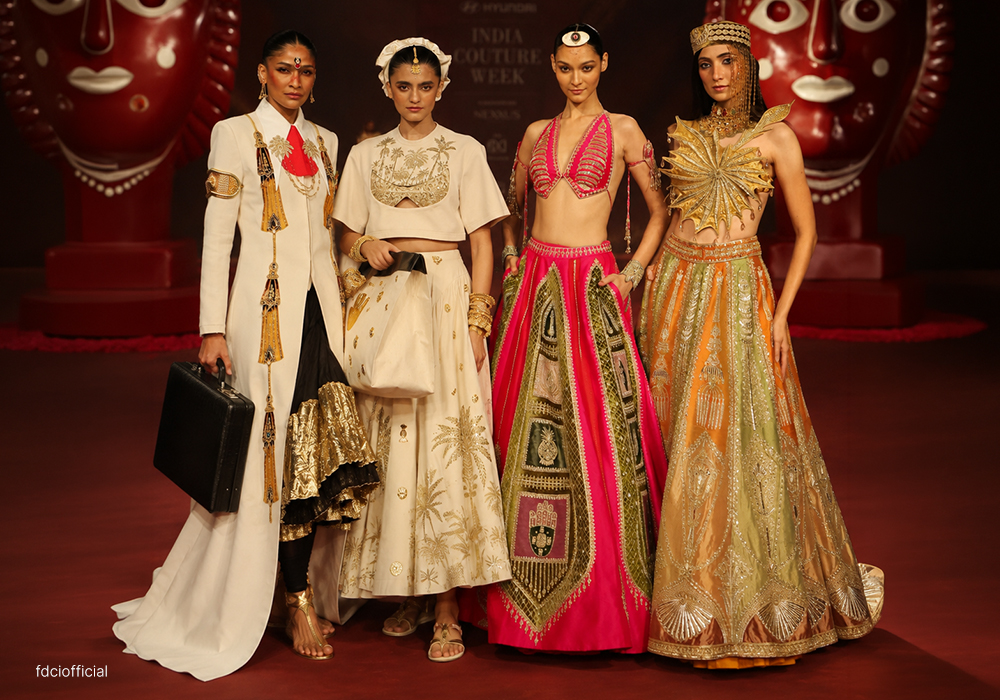
What Was Showcased: JJ Valaya's SIDDI was a masterclass in cultural storytelling through tailoring. Drawing on historical references and regal craftsmanship, the collection presented a vision of Indian luxury that felt rooted in scholarship as much as aesthetics. Structured silhouettes, rich surface ornamentation, and a palette that moved between burnished gold and deep jewel tones made every piece feel like an artifact.
What Stood Out: The precision of Valaya's tailoring—each garment constructed with an almost architectural logic—distinguished SIDDI as one of the week's most technically accomplished presentations.
Why It Defined This Season: Valaya demonstrated that maximalism and restraint are not mutually exclusive. SIDDI was rich, rigorous, and completely confident.
Tarun Tahiliani – Navaratna
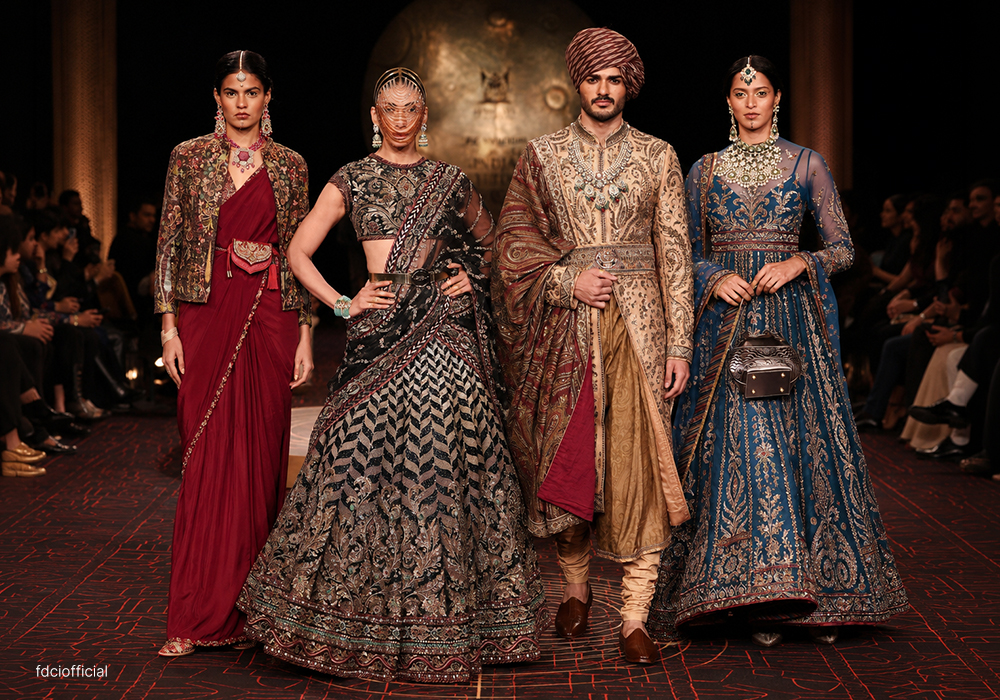
What Was Showcased: Tarun Tahiliani took his presentation off-site to Bikaner House, a decision that felt entirely in keeping with the season's shift toward immersive, site-specific couture. Navaratna (nine gems) presented refined draping, modernized Indian silhouettes, and the designer's signature fluid construction—luxury expressed through proportion and technique rather than surface decoration.
What Stood Out: The off-site format at Bikaner House gave Navaratna room to breathe, each look considered in architectural context rather than staged against a backdrop.
Why It Defined This Season: Tahiliani's understated grandeur offered a counterpoint to the week's more exuberant presentations—proof that India Couture Week 2026 had range.
Roseroom by Isha Jajodia – Softly, Strong
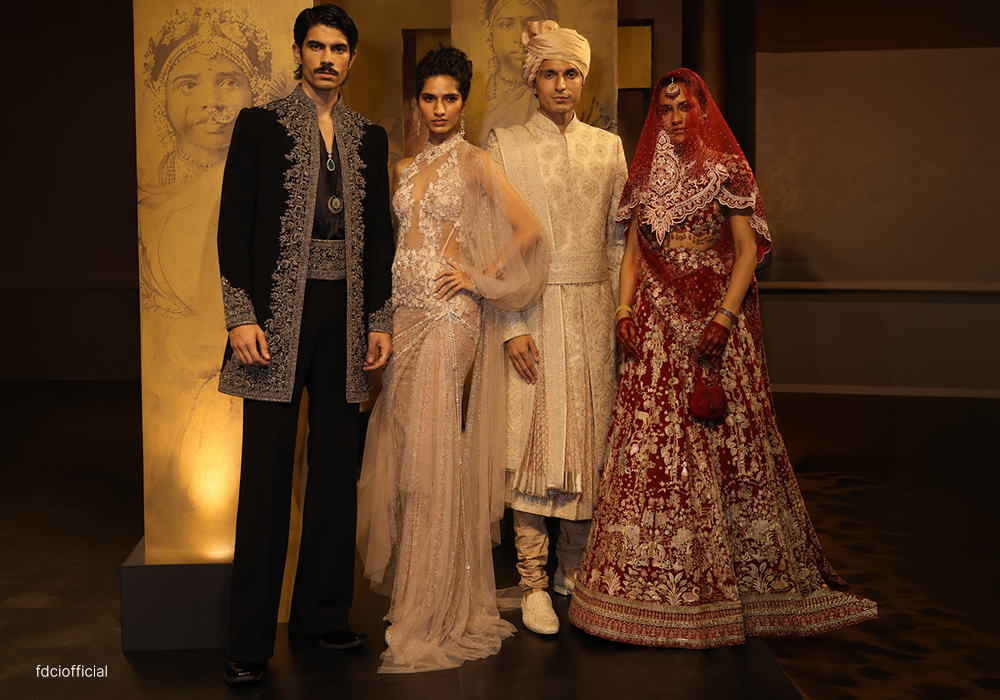
What Was Showcased: Softly, Strong balanced romantic craftsmanship with sculptural precision—feminine silhouettes constructed with genuine couture rigor. Delicate embellishment, soft palettes, and considered draping sat alongside structured bodices and architectural volume, making the collection feel like a conversation between fragility and strength.
What Stood Out: The tension built into each garment—softness that held its shape, delicacy that had real structure—gave the collection a conceptual clarity that announced Roseroom as a name to watch.
Why It Defined This Season: Jajodia's debut on the ICW schedule added a contemporary, female-led perspective on couture craft that the week needed.
Rimzim Dadu – INLAE
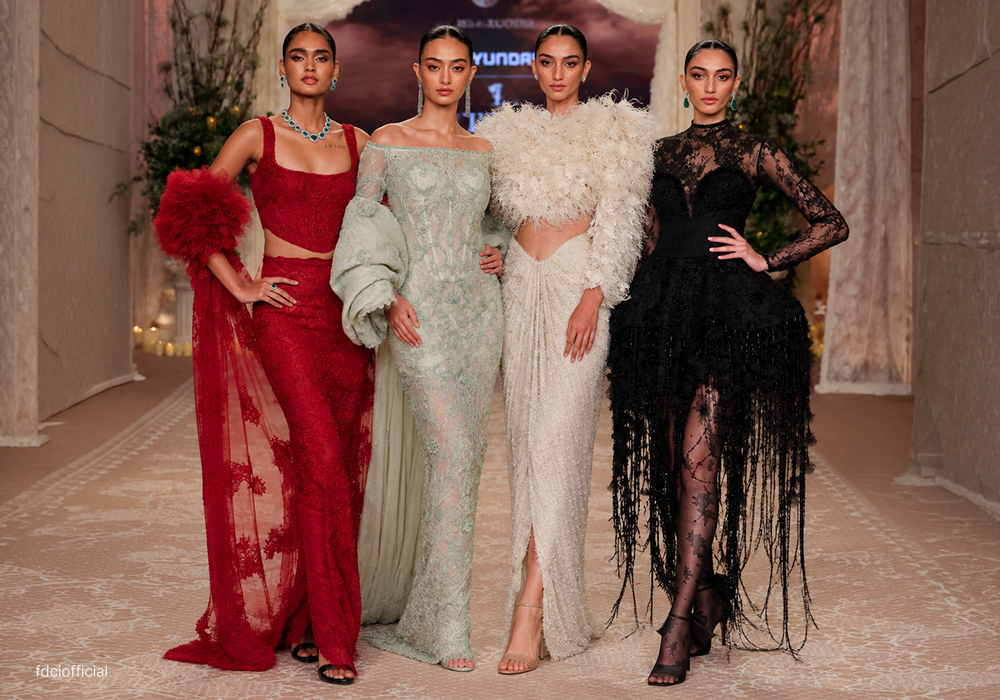
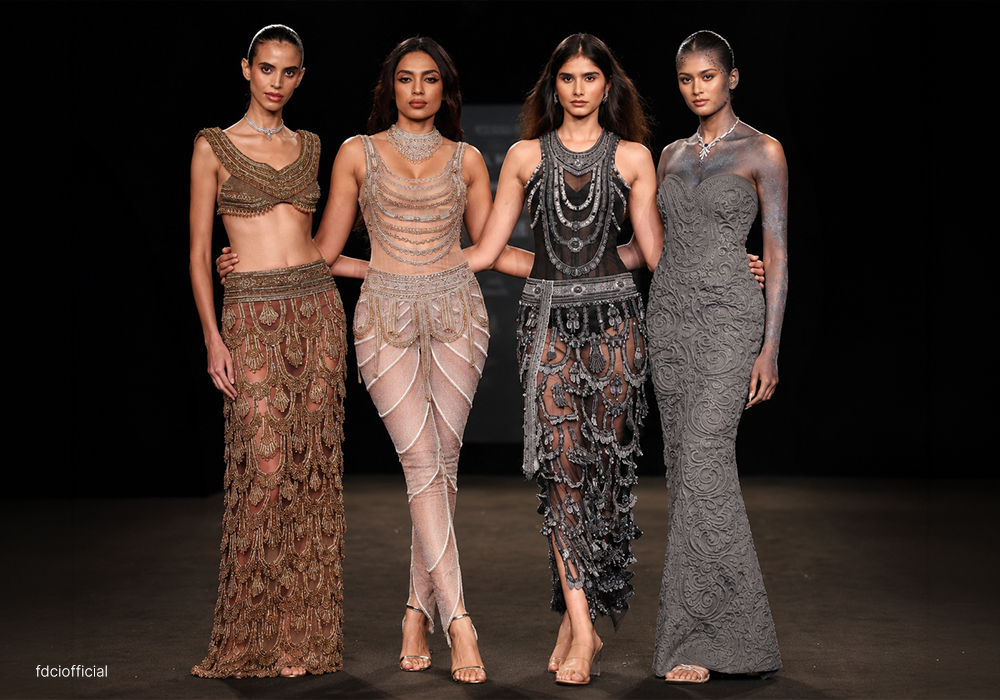
What Was Showcased: INLAE was the week's most technically innovative presentation. Rimzim Dadu's signature steel wire textile techniques were here paired with mother-of-pearl, the collection's title and inspiration drawn from Mughal inlay work—the parchin kari tradition of embedding precious stone into marble. The result was genuinely architectural: garments that functioned as wearable structures, surfaces that caught and fragmented light with every movement.
What Stood Out: The material innovation was unprecedented on the ICW schedule. Pairing industrial steel wire with the luminous organic quality of mother-of-pearl produced a surface language that referenced Mughal heritage while looking entirely of the future.
Why It Defined This Season: INLAE made the strongest argument of any show that Indian couture's maximalism is rooted in craft innovation, not decoration. Dadu is building a new textile vocabulary—one bead, one wire at a time.
Arpita Mehta – Ceremonial
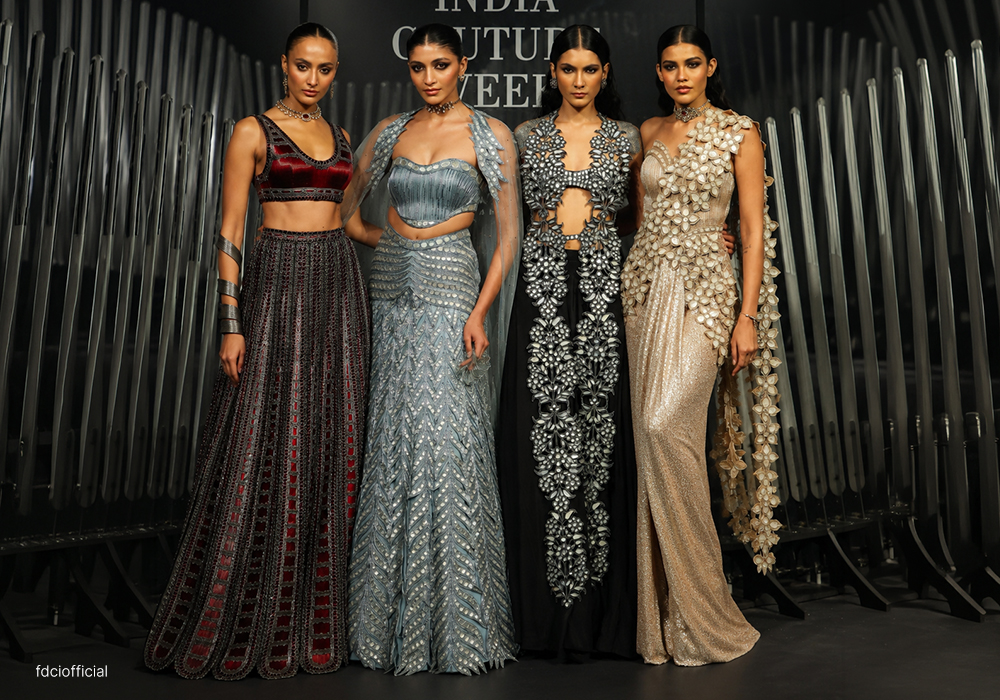
What Was Showcased: Arpita Mehta's Ceremonial focused on occasion dressing elevated through handcrafted embellishment—modern glamour delivered with effortless luxury. The collection presented couture as something wearable and joyful, with embroidery techniques that were intricate without feeling heavy.
What Stood Out: The lightness of execution, technically demanding work that read as effortless on the body, demonstrated the depth of craft Arpita Mehta brings to her process.
Why It Defined This Season: Ceremonial understood that couture's purpose is ultimately to be worn. Mehta made maximalism feel like freedom.
Kunal Rawal – Rawalgarh
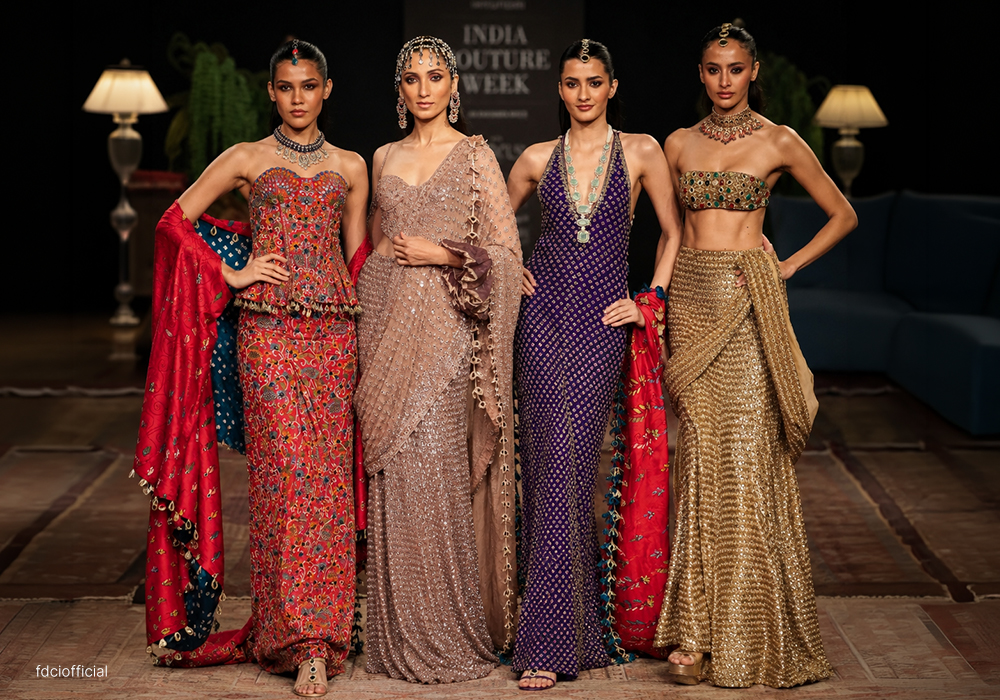
What Was Showcased: The week's standout menswear presentation, Rawalgarh explored contemporary Indian masculinity through royal tailoring references and craftsmanship that matched anything on the womenswear schedule. Structured sherwanis, couture bandhgalas, and layered draped pieces offered a modern update on ceremonial Indian menswear.
What Stood Out: Rawal made a clear case that Indian couture menswear is operating at the same level of craft ambition as its womenswear counterpart—something the industry has been slow to acknowledge.
Why It Defined This Season: Rawalgarh widened the conversation about who Indian maximalist couture is for.
Dolly J – BRĀHM
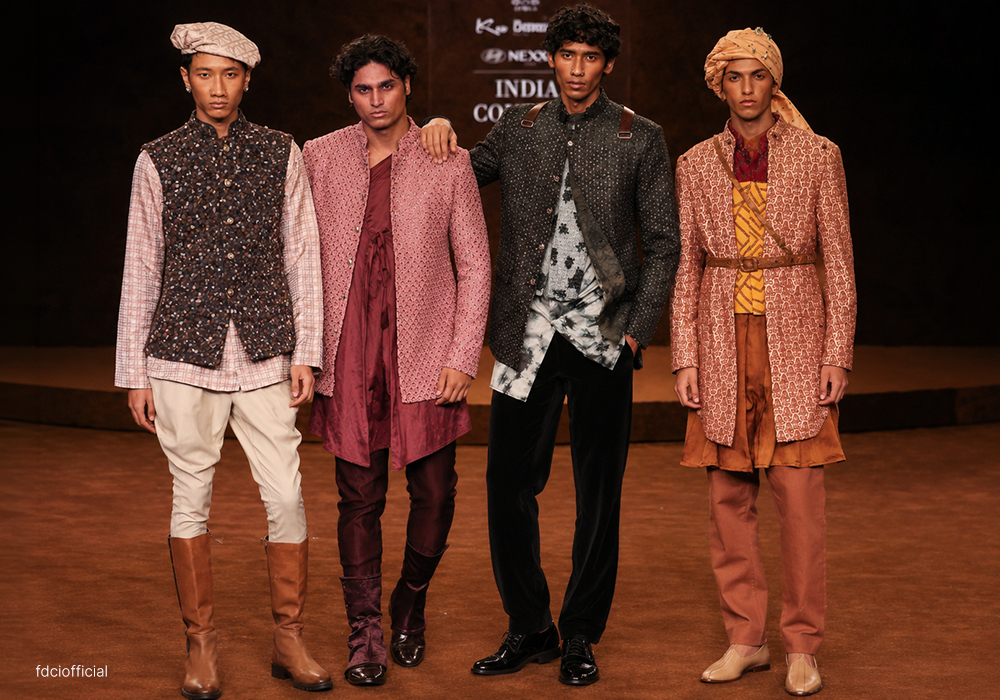
What Was Showcased: BRĀHM was ethereal, intricate, and dreamlike—a collection built on layered embellishment, delicate textiles, and a vision of feminine glamour that felt genuinely otherworldly. Vaani Kapoor closed the show as showstopper, appearing in a piece that distilled everything BRĀHM had built toward: luminous, complex, and quietly spectacular.
What Stood Out: Kapoor's finale appearance confirmed BRĀHM's grand, couture-first ambition. The collection earned its showstopper.
Why It Defined This Season: Dolly J demonstrated that dreamlike couture and rigorous craft are the same thing.
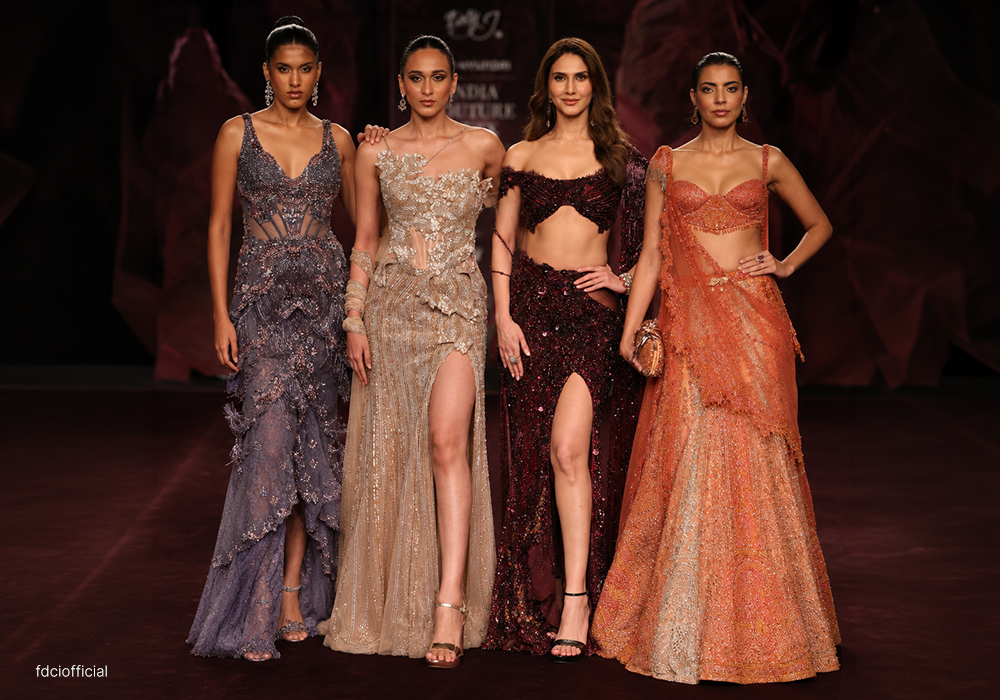
Jayanti Reddy – The Gilded Era
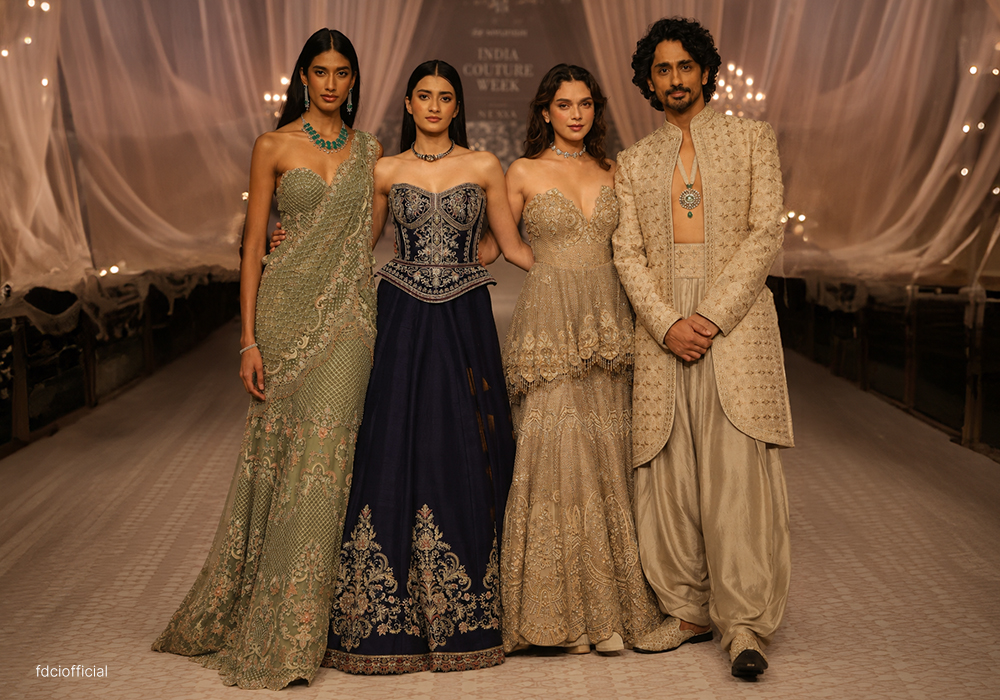
What Was Showcased: Drawing on Hyderabad's Nizami architectural heritage—its arches, jalis, carved stucco, and palace interiors—The Gilded Era was one of the week's most visually cohesive collections. Regal romance translated into vintage opulence; embroidery patterns referenced architectural motifs; silhouettes were structured and considered. Aditi Rao Hydari and Siddharth appeared as showstoppers, closing a collection that felt like both a love letter to Hyderabad and a vision of timeless Indian luxury.
What Stood Out: The specificity of Reddy's research—the direct translation of Nizami architectural detail into garment surface—gave The Gilded Era a cultural authenticity that elevated it beyond period reference.
Why It Defined This Season: Jayanti Reddy's work exemplified the week's most important argument: that maximalism, grounded in genuine cultural knowledge, becomes something more than decoration. It becomes heritage.
Aisha Rao – Priyasi
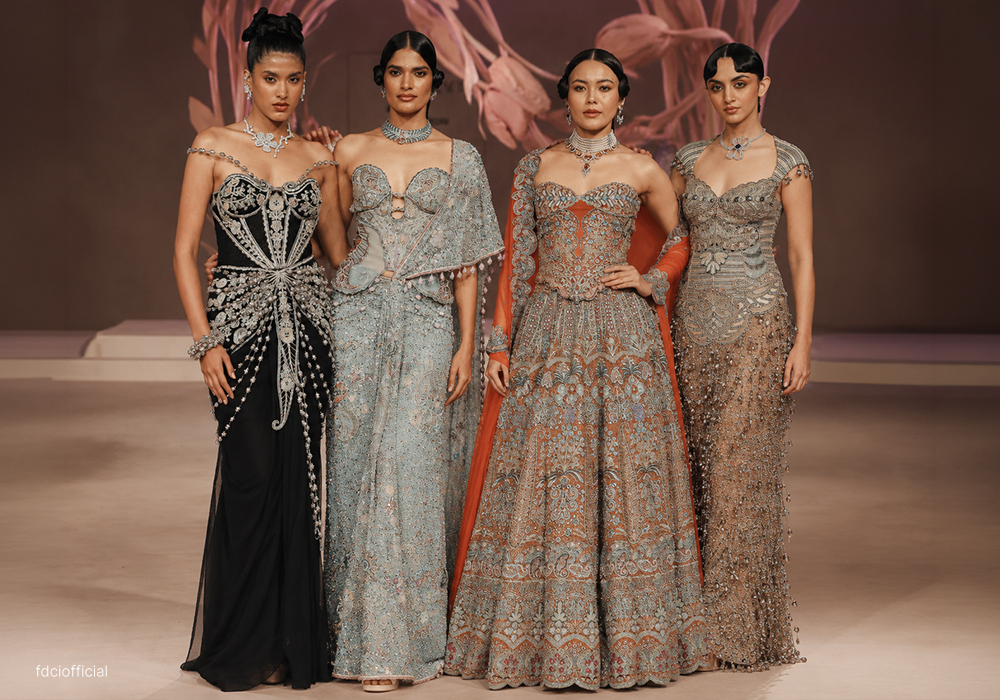
What Was Showcased: Aisha Rao's Priyasi brought a youthful, contemporary voice to ICW's couture conversation. Handcrafted textiles were central, each piece a vehicle for Rao's signature artistry—intricate surface work delivered with a freshness that felt generationally distinct from the week's more established names.
What Stood Out: The collection's contemporary interpretation of Indian craftsmanship felt genuinely new—not a reinterpretation of heritage, but a new chapter being written.
Why It Defined This Season: Priyasi proved that Indian couture's next generation is arriving with craft ambition fully intact.
Rahul Mishra – Devi
What Was Showcased: Rahul Mishra closed India Couture Week 2026 with Devi, a grand finale in every sense. Known for his masterful embroidery work and commitment to artisan communities, Mishra delivered a collection that treated couture as wearable art—embroidery as storytelling, silhouette as statement. Sobhita Dhulipala appeared as showstopper, closing the season in a piece that felt like a summation: all the week's ambitions—craft, story, spectacle, and restraint—held in a single garment.
What Stood Out: Dhulipala's finale brought Devi to its emotional peak, but the real revelation was the collection's sustained narrative coherence—every piece connected to a larger story told through stitch.
Why It Defined This Season: Mishra ended the week exactly as it needed to end: with a reminder that Indian couture's greatest strength is its ability to make craft feel like poetry.
The Trends That Defined India Couture Week 2026
Major observations from the season's runways:
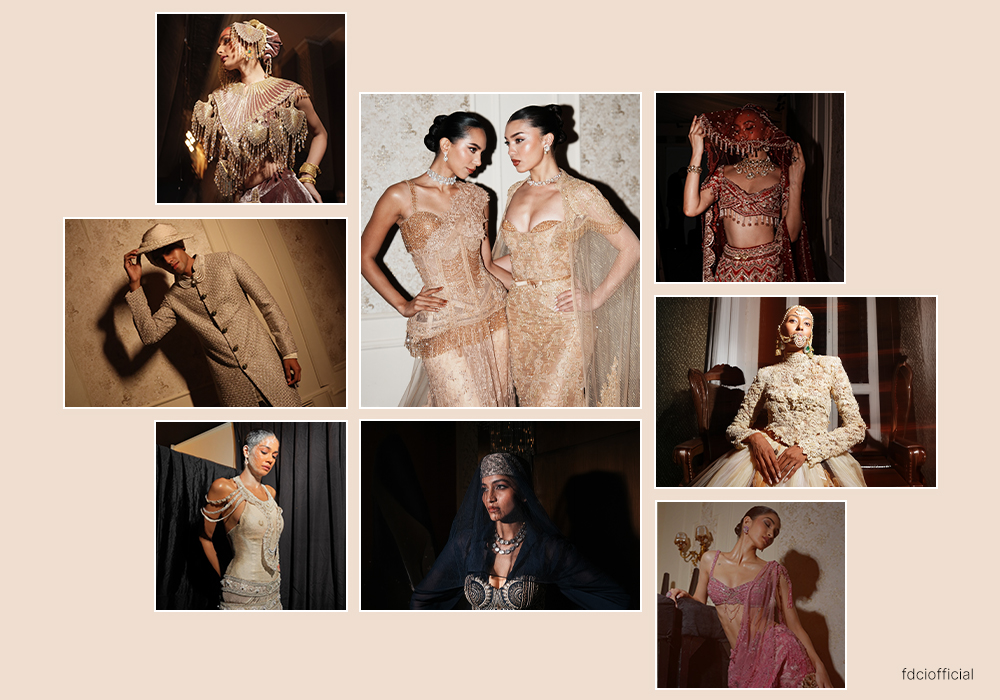
- Statement ceremonial headpieces appeared across multiple shows, repositioning headwear as couture's focal point
- Sculptural and architectural corsetry drove silhouette across womenswear and occasionwear collections
- Jewellery integrated directly into garments—not styled alongside them—blurred the line between fashion and adornment
- The return of bridal reds in deeper, richer tones replaced the season's previous preference for blush and ivory
- Dramatic veils returned with structural intent, often constructed rather than draped
- Maximal embellishment was everywhere, but the execution was rigorous—nothing felt gratuitous
- Handcrafted textiles as the focal point—not the backdrop—drove the most memorable collections
- Craft-first storytelling replaced celebrity-led spectacle as the week's dominant currency
- Maximalism as sophisticated expression of luxury was the season's defining argument—and the designers made it convincingly
India Couture Week 2026 Made the Case That Maximalism Is the Future
A season this coherent doesn't happen by accident. Across fourteen shows, fourteen designers reached the same conclusion through entirely different means: that Indian couture's future is expressive, handcrafted, culturally grounded, and bold.
The shift away from quiet luxury was never really about rejecting restraint. It was about returning to what Indian fashion does with unmatched skill—the kind of embroidery that takes months, the textile innovation that takes years, the cultural knowledge that takes generations. India Couture Week 2026 collected all of it and presented it as a single, unified argument: that maximalism, at its most refined, is the most sophisticated luxury position available.
Every bead, every stitch, every silhouette this season told a story. The question for the season ahead is which stories come next.