


Indian ethnic wear sizing differs significantly from US standard sizing. Most Indian brands size by bust measurement in centimeters, while US sizing uses inches. As a general rule, Indian sizes run one to two sizes smaller than US equivalents. Always cross-reference the brand's specific size chart before purchasing, and prioritize fit at the bust and shoulders for draped styles like sarees.
Ordering Indian ethnic wear from the US—whether a lehenga for a wedding, a kurta set for a festival, or a saree for a formal event—comes with one consistent friction point: sizing. Indian and US sizing systems use different measurement standards, different number ranges, and different fit assumptions. Getting this wrong means returns, delays, and outfits that don't photograph the way you imagined.

This guide breaks down exactly how to convert Indian sizes to US sizes for key ethnic wear categories, with fit tips to help you get it right the first time.
How Does Indian Ethnic Wear Sizing Differ from US Sizing?
US clothing sizes are typically labeled with numbers (0, 2, 4, 6, 8...) or generic descriptors (XS, S, M, L, XL), based on bust, waist, and hip measurements in inches. Indian ethnic wear brands most commonly size by bust measurement in centimeters, labeled numerically—36, 38, 40, 42—which correspond to inches directly (a size 38 means a 38-inch bust).
The key difference is in fit construction. Indian ethnic wear is generally cut with less ease allowance than US casualwear, meaning the same numerical measurement may feel snugger in an Indian garment. For most shoppers based in the US, sizing up by one size from your standard US measurement is a reliable starting point.
How to Find Your Size for Specific Garment Types
Sarees
Sarees are draped rather than fitted, so the saree itself is one-size-fits-most. The critical fit variable is the blouse. Measure your bust, waist, and back length precisely—blouses are tailored close to the body and have very little room for error. When in doubt, order a blouse in the larger of two sizes, as taking in fabric is easier than letting it out.
Pre-draped sarees follow standard Indian ethnic wear sizing and should be sized by bust measurement as outlined in the chart above.
Lehengas
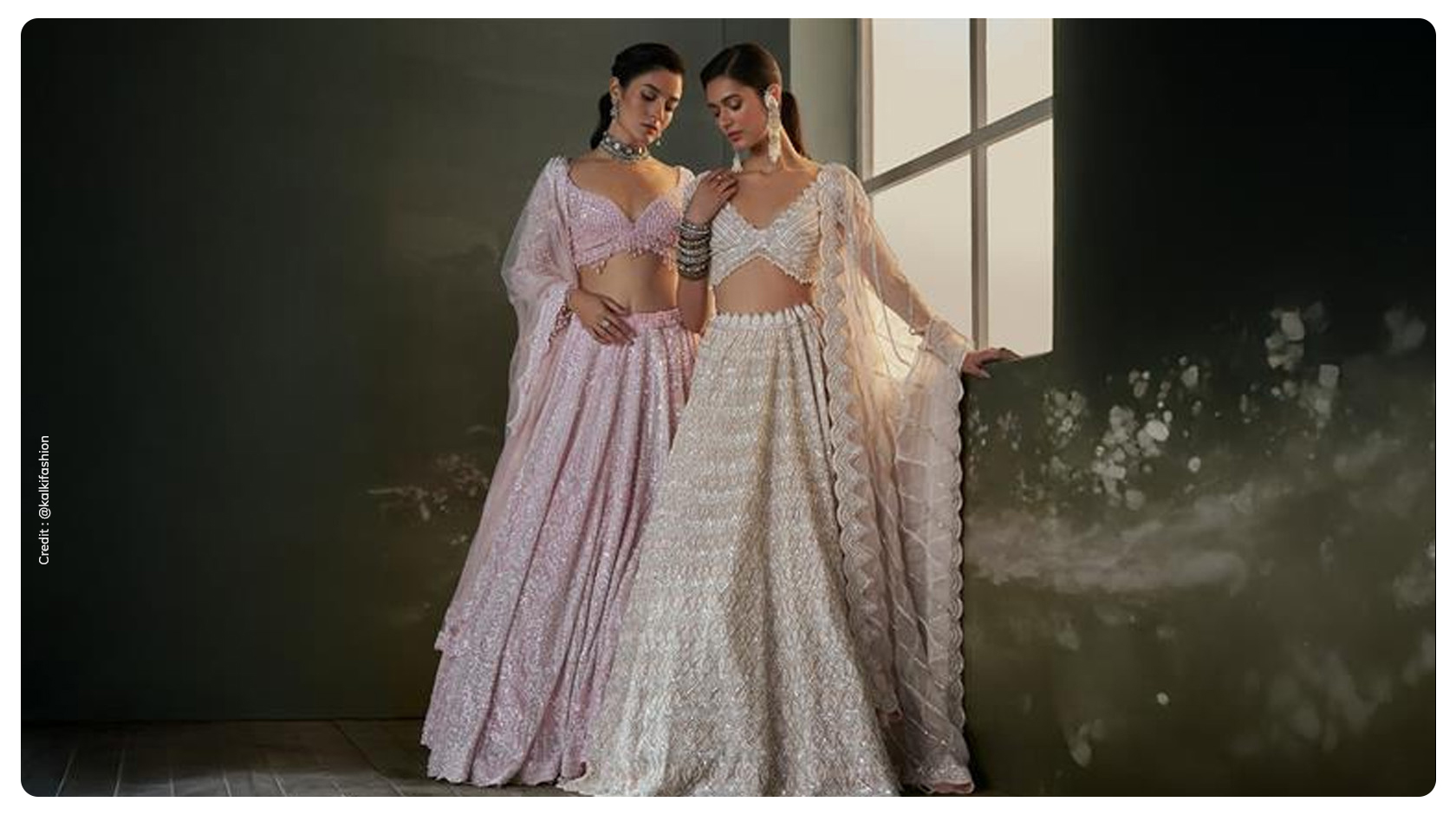
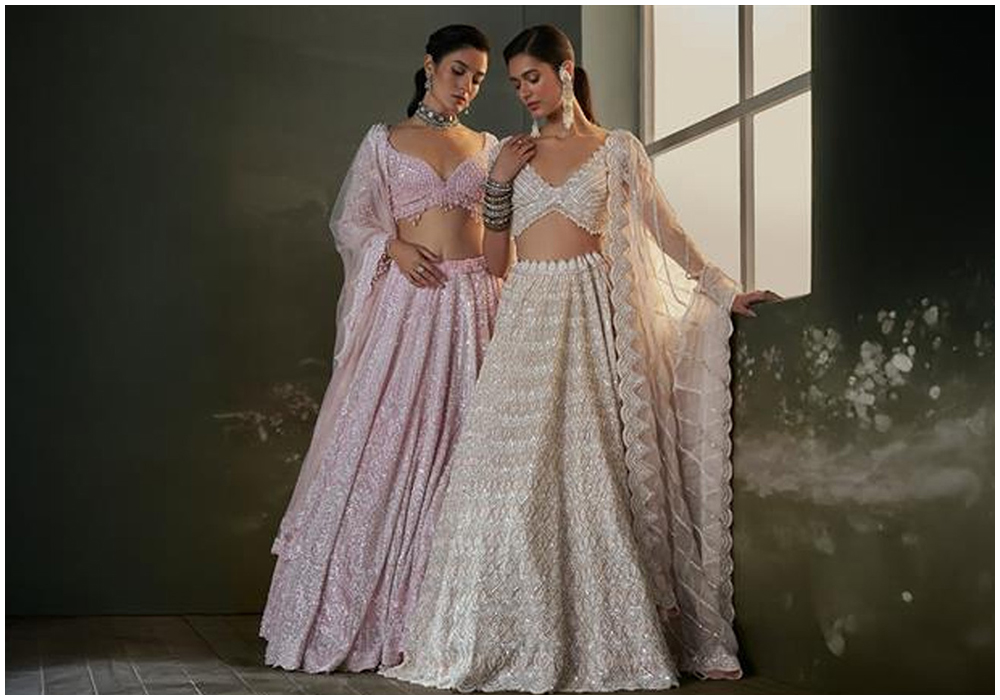
For lehengas, measure both your bust (for the blouse/choli) and your waist and hips (for the skirt). Lehenga skirts from most Indian designers are flared and come with drawstring or hook-and-eye closures, offering some adjustability at the waist. If your bust and hip measurements fall into different size brackets, prioritize the bust measurement for the choli and check whether the skirt's waist can be adjusted.
Kurta Sets and Anarkalis
Kurta sets and anarkalis are sized primarily by bust. These silhouettes typically offer more ease than lehenga blouses, making them slightly more forgiving if you fall between sizes. Fit at the shoulders is the hardest alteration to make, so always match your shoulder width when possible.
Gowns and Kaftans
Gowns follow standard Indian numeric sizing by bust. Kaftans are generally cut with generous ease and are among the most size-flexible garments in Indian ethnic wear—most kaftans are labeled as free size or come in just two to three size options.
Practical Sizing Tips for Shopping Indian Ethnic Wear from the US
- Take measurements in inches, then convert. Most Indian size labels correspond directly to bust measurements in inches (e.g., size 38 = 38" bust).
- Size up if you're between sizes. Indian ethnic wear construction typically has less ease than US casualwear.
- Prioritize shoulder fit for structured garments. Shoulders are the most difficult seam to alter; everything else can usually be adjusted by a local tailor.
- Check the brand's own size chart first. Sizing conventions can vary between designers on Aza Fashions—always cross-reference the product-level size guide.
- Factor in fabric when assessing fit. Structured fabrics like brocade and raw silk hold their shape; georgette and chiffon drape more loosely and can accommodate a slightly larger size.
Explore the full range of sarees, lehengas, kurta sets, gowns, and kaftans at Aza Fashions, with detailed size guides available on every product page.
Get the Fit Right—Every Time
Sizing differences between Indian and US standards are real, but navigable. Measure accurately, check the brand's size chart, and when in doubt, size up. A well-fitting ethnic wear outfit—one that moves with you through a ceremony, a sangeet, or a reception—is always worth the extra step.
Browse Aza Fashions' Celebration Closet edit for curated occasion wear, with sizing information available across all categories.
Frequently Asked Questions
How do Indian ethnic wear sizes compare to US sizes?
Indian ethnic wear is sized by bust measurement in inches, labeled numerically (34, 36, 38, etc.). A general rule is that Indian sizes run one to two sizes smaller than US equivalents—a US size 8–10 typically corresponds to an Indian size 38.
What measurements do I need to order Indian ethnic wear from the US?
For most garments, you need your bust, waist, and hip measurements in inches. For lehengas, both bust and hip measurements matter. For sarees, the blouse requires bust, waist, and back-length measurements.
Should I size up when ordering Indian ethnic wear?
In most cases, yes. Indian ethnic wear is cut with less ease than standard US casualwear. If you fall between two sizes, selecting the larger size and having minor adjustments made by a local tailor is the more practical approach.
Does saree sizing work differently than lehenga or kurta sizing?
Yes. The saree fabric itself is one-size-fits-most; the fit challenge is the blouse, which is tailored closely to the body. Lehengas and kurtas are sized by bust, with some additional adjustability built into waistbands and skirt closures.
Where can I shop Indian ethnic wear in my US size?
Aza Fashions offers a wide range of Indian ethnic wear with detailed size guides on each product page. Browse azafashions.com across categories including sarees, lehengas, kurta sets, gowns, and kaftans.

