


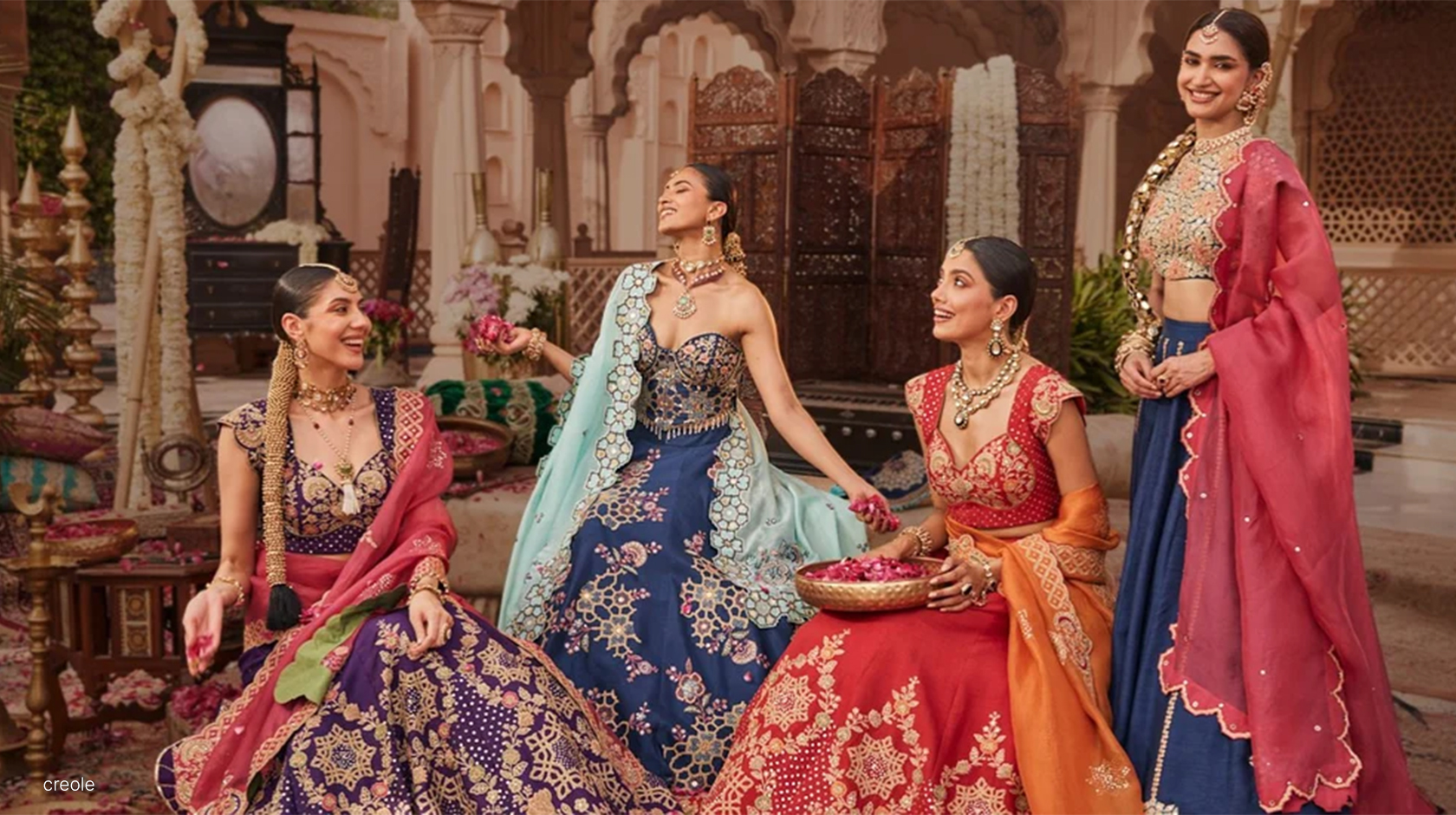
The strongest lehenga colour choices for winter weddings in 2026 lean into deep jewel tones — emerald, ruby, navy, and plum — grounded in heavier fabrics like velvet and Banarasi silk. Rich, warm hues photograph better under reception lighting and suit the season far more naturally than pale or pastel palettes.
Wedding season in November and December has its own distinct visual logic. The lighting is warmer, the evenings are cooler, and the ceremonies tend to run long — across mehendi, sangeet, and the main event. Colour choice isn't just an aesthetic decision; it's a practical one. The right lehenga shade works with the season, the fabric, and the occasion rather than against it.

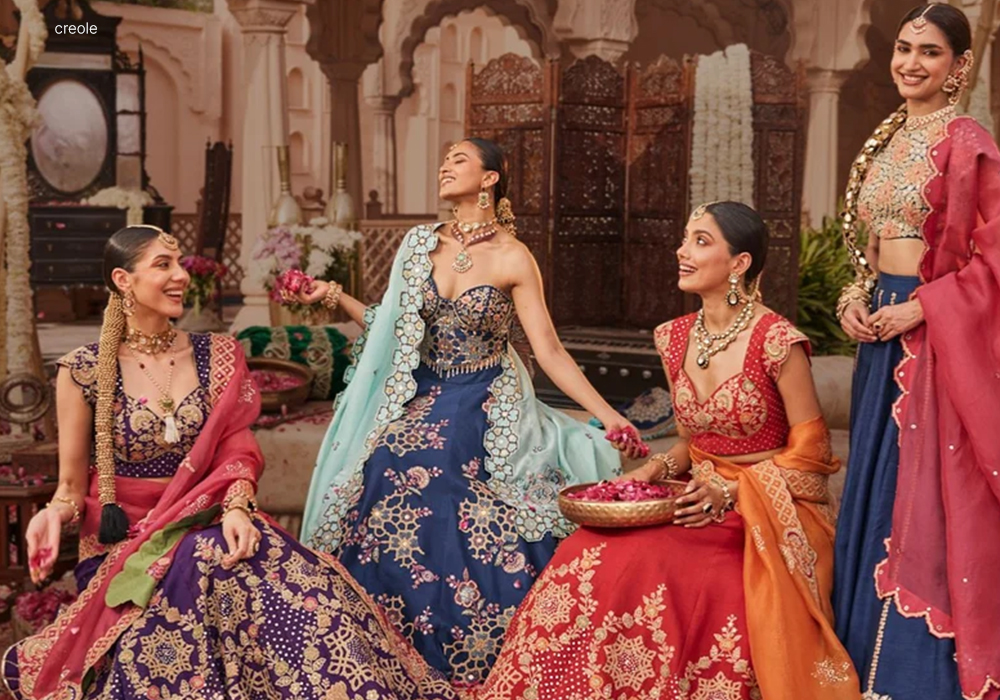
Here's what's actually trending for winter wedding lehengas in 2026, and why these colours hold up across every event on the schedule.
Which Lehenga Colours Are Trending for Winter Weddings in 2026?
Deep Emerald and Bottle Green
Green has emerged as one of the most consistent choices for winter wedding lehengas — and 2026 is no exception. Deep emerald and bottle green photograph exceptionally well under warm indoor lighting, and both shades pair naturally with gold zardozi embroidery and antique jewellery. In velvet, the colour takes on a richness that lighter fabrics simply can't replicate.
Ruby Red and Burgundy
Red holds a different weight at Indian weddings than almost any other colour. For guests, burgundy and deep ruby offer the warmth of red without overlapping too closely with bridal palettes. These shades work particularly well in Banarasi silk or brocade — both fabrics that carry visual depth and suit the structured silhouettes that winter events call for.
Midnight Navy and Sapphire
Navy is having a significant moment in 2026 bridal and wedding guest fashion. Midnight navy and sapphire blue offer the formality of a dark tone with versatility across event types — sangeet, reception, and ceremony alike. Paired with silver or gold embroidery, either shade reads as deliberate and considered rather than safe.
Deep Plum and Wine
Plum and wine are the season's quieter choices — but they photograph beautifully and suit a wide range of skin tones. These shades carry warmth without the brightness of red, making them strong picks for guests who want something rich but understated. In velvet or embroidered net over lining, they hold up well across long days and into the evening.
Warm Gold and Antique Bronze
Gold-toned lehengas work particularly well for daytime or outdoor winter ceremonies where natural light is still a factor. Antique bronze and champagne gold feel more seasonally appropriate than bright, reflective gold — and both pair naturally with the heavier embroidery techniques like resham and zardozi that define winter lehenga design in 2026.
Does Fabric Change How Lehenga Colours Read?
Significantly. The same colour in velvet versus chiffon produces two very different results — both visually and practically.
Velvet deepens colour, giving jewel tones like emerald and plum a richness that photographs well under reception lighting. Banarasi and Kanjivaram silk carry colour with the kind of visual weight that suits a formal ceremony. Brocade adds texture that makes single-colour lehengas feel more layered and intentional.
Lighter fabrics — chiffon, lightweight georgette — work better in summer. For November and December weddings, committing to a heavier fabric is the more reliable approach, and it directly affects how the colour lands.
What Colours Should Winter Wedding Guests Avoid?
Pastels aren't off the table, but they require careful handling. A pale pink or lavender lehenga in velvet reads as seasonally appropriate; the same shades in chiffon tend to feel thin and out of step with the winter aesthetic.
Avoid colours that are likely to read as bridal — ivory, white, and deep red in heavily embroidered styles — unless the wedding palette and dress code specifically allows for it.
The Colour Formula That Works Every Time
For a winter wedding lehenga in 2026, the most dependable approach is: choose a deep jewel tone, commit to a heavier fabric, and let embroidery and jewellery do the detail work. Emerald in velvet, burgundy in Banarasi silk, navy in embroidered net — each combination is seasonally appropriate, visually strong, and consistently well-suited to the long hours and varied lighting of a late-year wedding.
Fit and tailoring matter more than price. A well-tailored lehenga in a strong colour and fabric will consistently outperform a more expensive piece that doesn't sit correctly.
Frequently Asked Questions
What are the most popular lehenga colours for winter weddings in 2026?
Deep emerald, ruby red, midnight navy, plum, and warm gold are the strongest trending colours for winter wedding lehengas in 2026. These jewel tones perform well under indoor reception lighting and suit heavier winter fabrics like velvet and Banarasi silk.
Can I wear a pastel lehenga to a winter wedding?
Yes, but fabric choice is key. A pastel lehenga in velvet or heavy silk reads as seasonally appropriate. The same colour in lightweight chiffon or georgette tends to feel out of place at a late-year wedding.
What lehenga fabric best enhances colour for winter weddings?
Velvet deepens and enriches colour, making it the strongest fabric choice for jewel-toned lehengas. Banarasi silk and brocade are also excellent — both carry colour with visual weight and hold up well across long ceremonies and receptions.

