

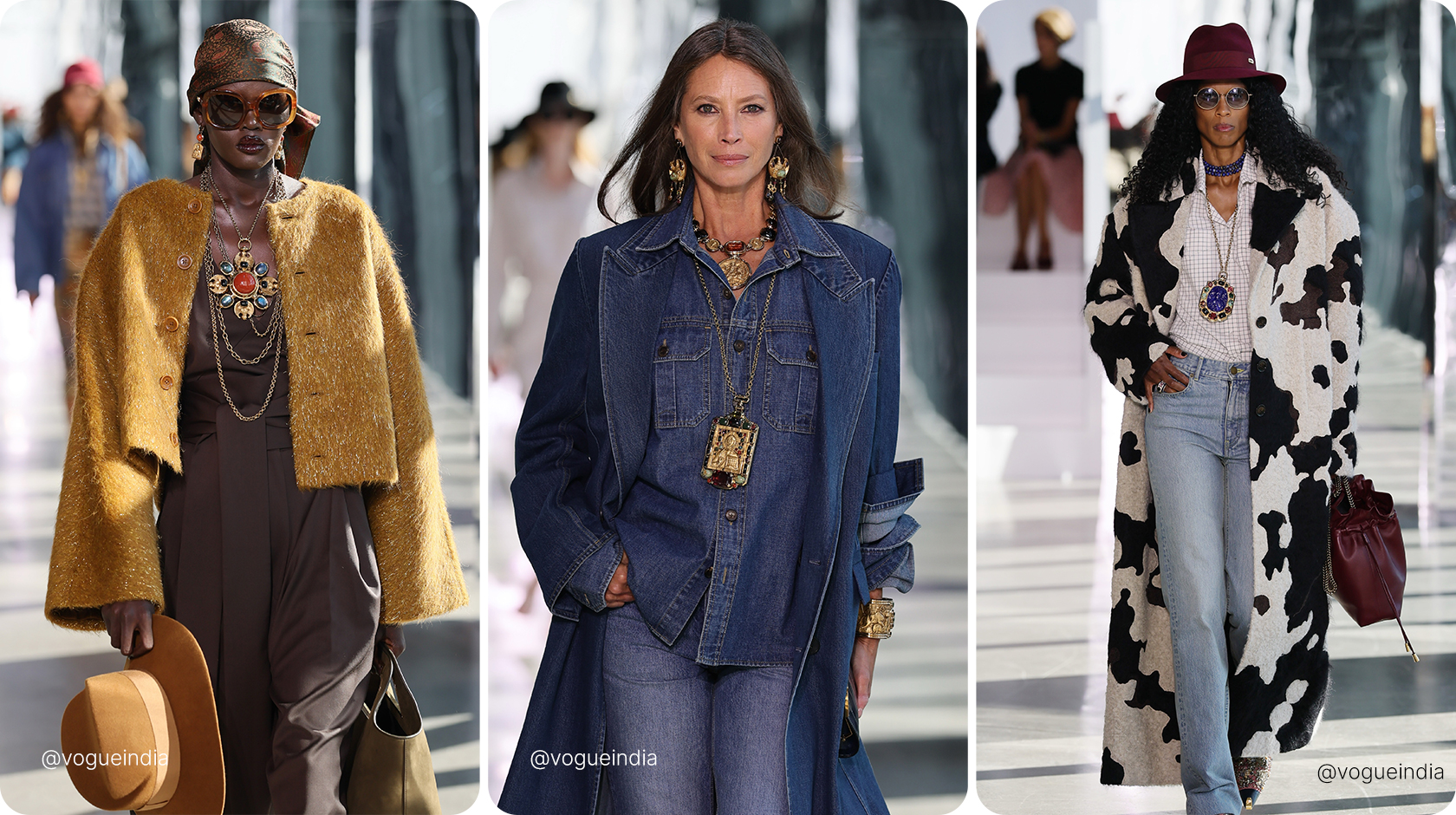
Some comebacks whisper. This one roared in denim and gold.
Sabyasachi Mukherjee last stood on a New York runway two decades ago, a debut that came and went before the world was ready for him. He walked away with a promise: he'd be back when the time was right.
Cut to September 2026. The time was right.

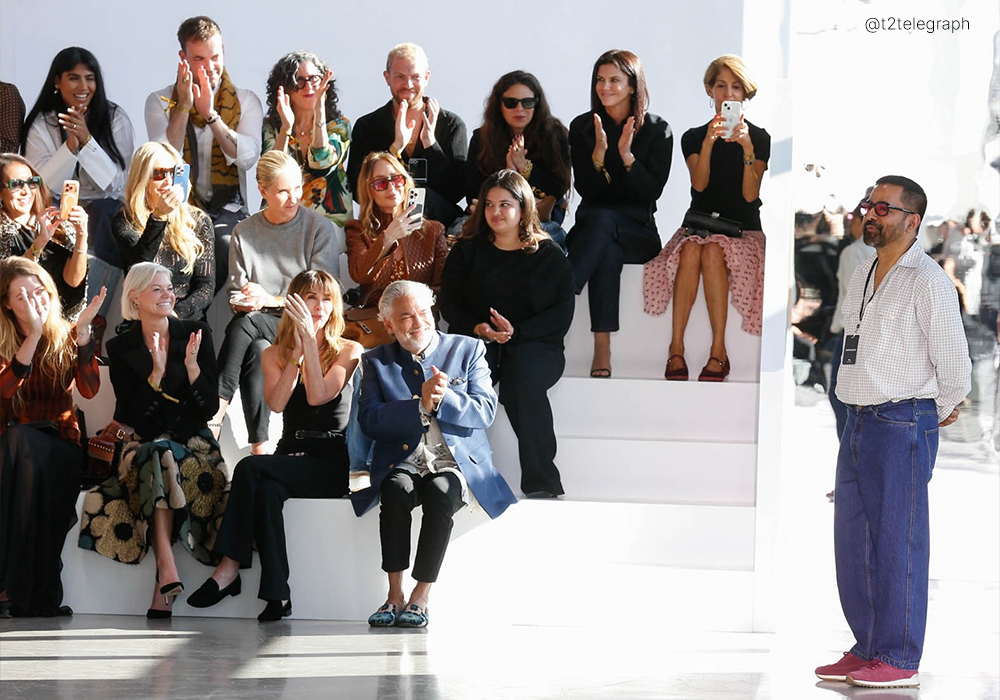
On the closing day of New York Fashion Week, with the Manhattan skyline as his backdrop, Sabyasachi returned with Bengal Byzantine Broadway, a collection that didn't just mark a homecoming. It marked arrival.
The Comeback, Decoded
This wasn't nostalgia dressed up as fashion. It was a house that spent twenty years building empire, stores, jewellery, a Met Gala presence, global collaborations, finally showing New York what it missed.
The show opened with supermodel Christy Turlington in a floor-length Japanese denim jacket. It closed with her too, this time in denim head-to-toe. In between: a masterclass in what happens when Calcutta meets Constantinople meets Manhattan.

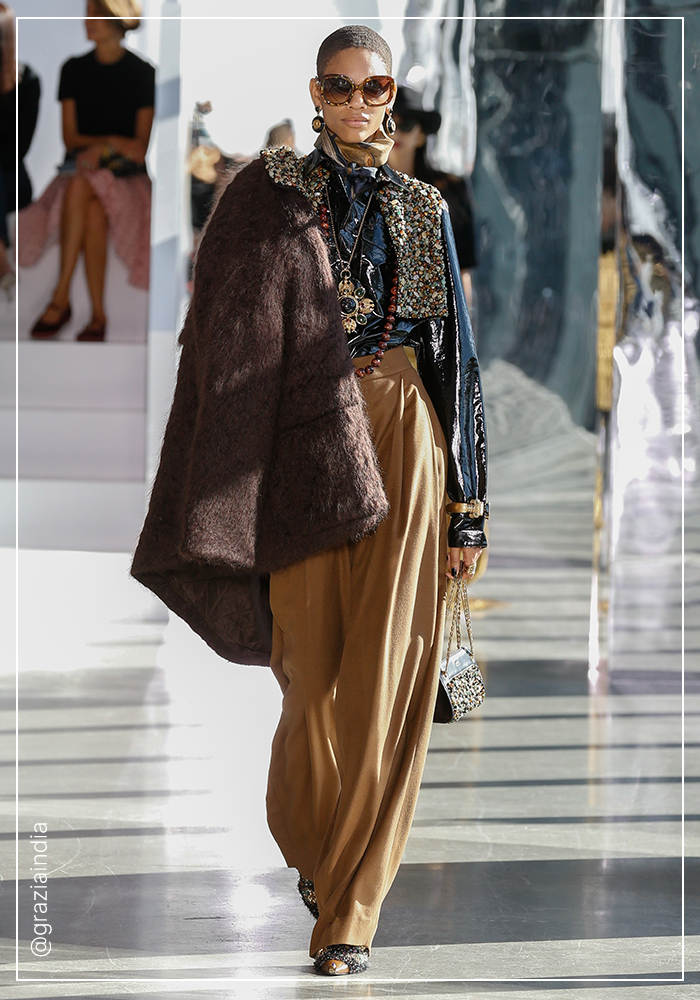
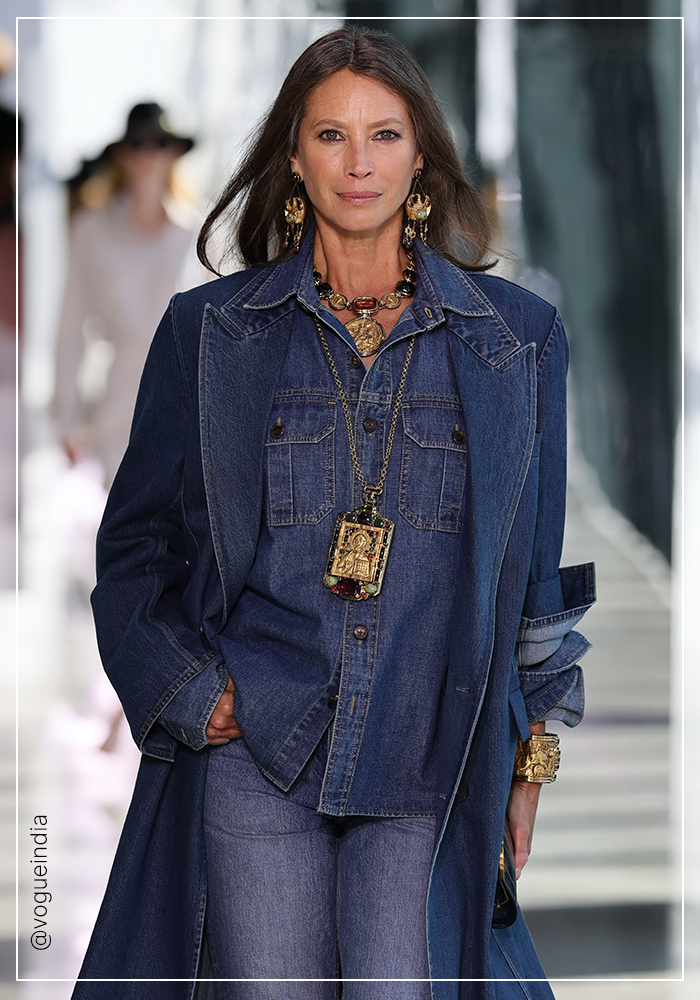
Sabyasachi called it a story about cultural migration, what happens when worlds collide instead of staying pure. Bengal, Byzantium, Broadway. Three points on a map of trade, exchange, and history, stitched into one silhouette.
What Stood Out on the Runway
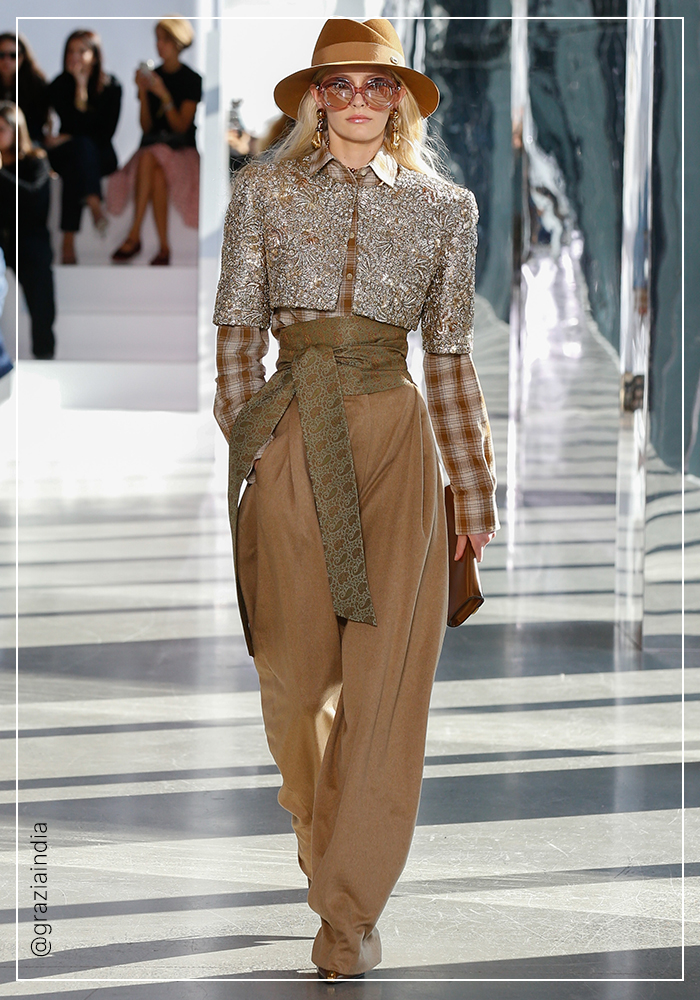
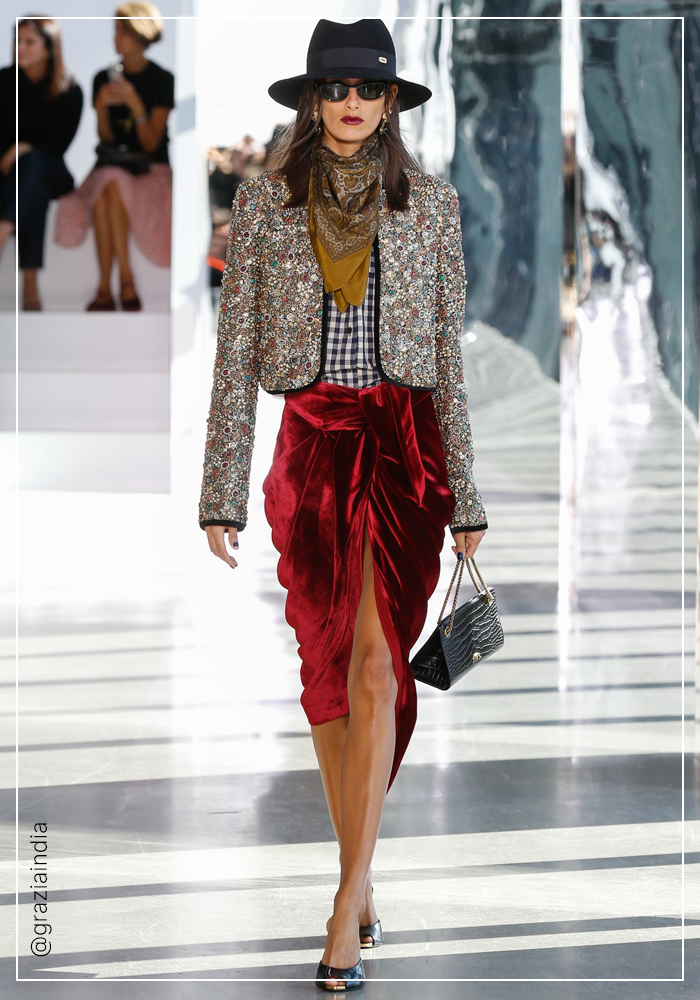
Texture did the talking here. A crystal-embellished tweed jacket that wasn't tweed at all, it was embroidery so precise it fooled the eye. A rust sweater with a beaded tiger prowling across the chest. British wool meeting Japanese denim like old friends catching up.
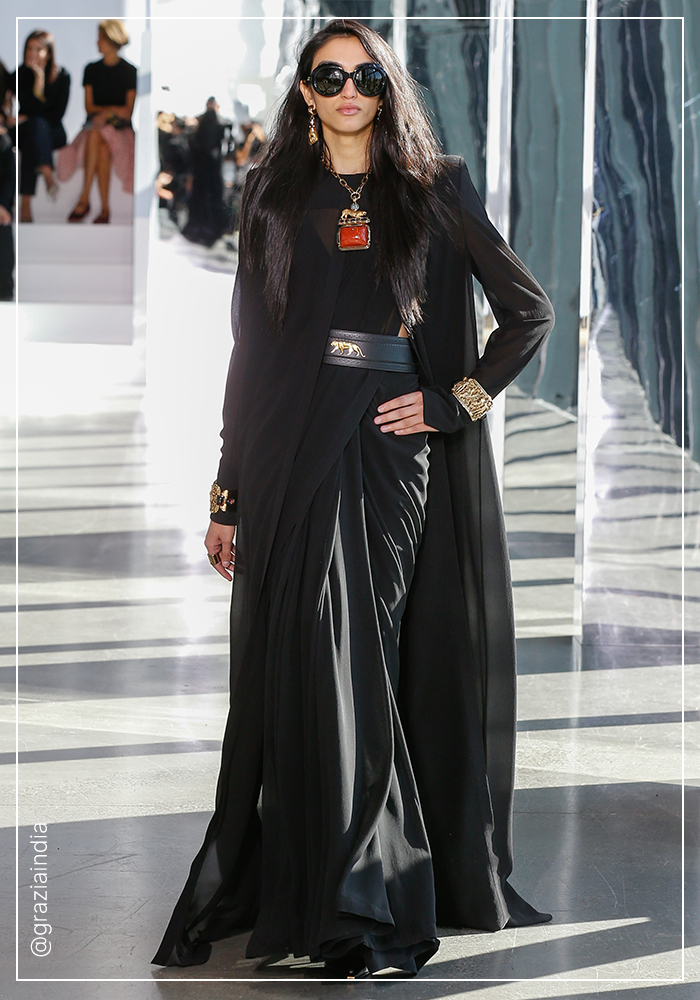
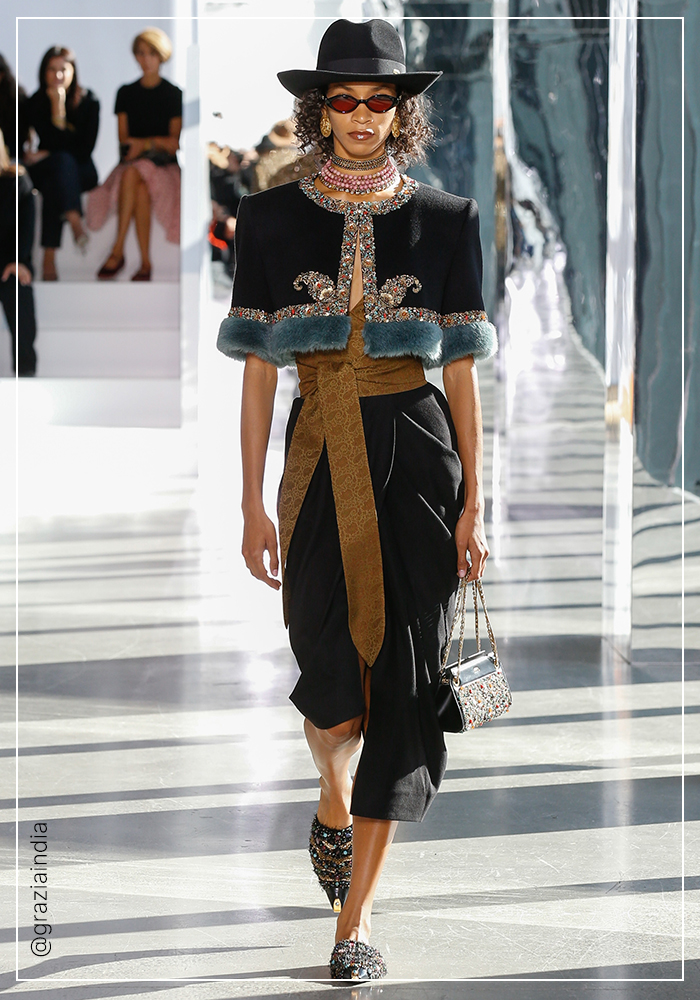
Modesty got a glamour upgrade too. Long wrap skirts. Blouses styled with scarves draped over the head or looped at the neck. Embellishment used with restraint — extravagant, never excessive.
The Jewellery: A Byzantine Love Letter, Made in Calcutta
This is where the show stopped being a fashion moment and became a cultural one.
Bengal Byzantine Broadway marked the debut of Sabyasachi's multi-year collaboration with New York's Metropolitan Museum of Art, a high jewellery line pulled straight from the Met's Byzantine archives.
Monumental cuffs. Oversized medallions. Necklaces heavy with garnets, tourmalines, turquoise, sapphires, onyx, spinels. This was jewellery-maxxing in its purest form, pieces so important they'd usually live behind glass, instead worn over denim shirts and trompe l'oeil tweed like everyday armour.
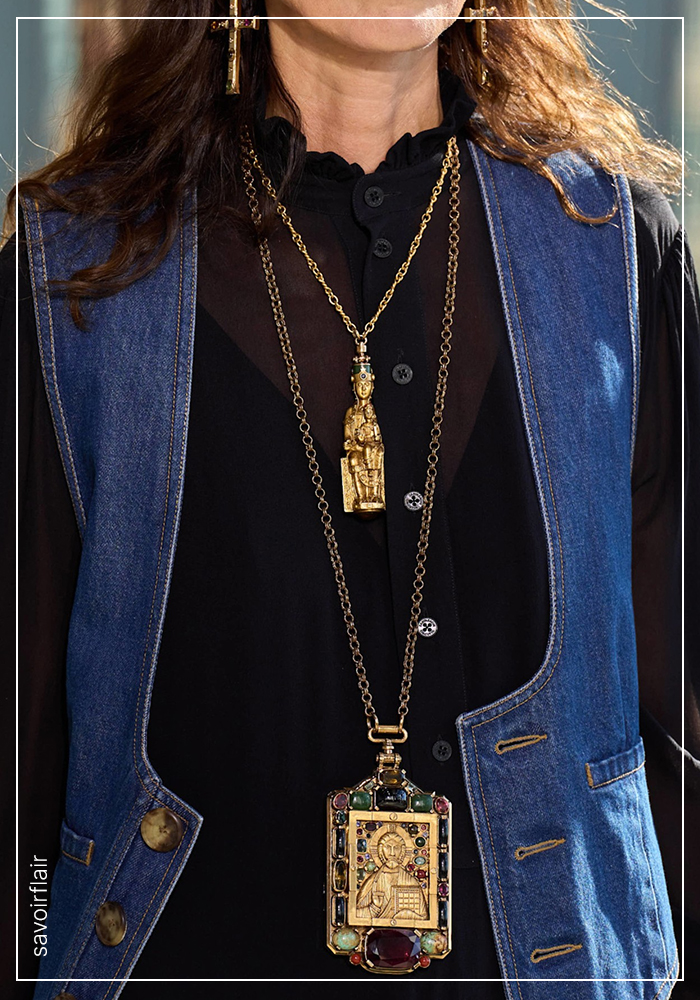
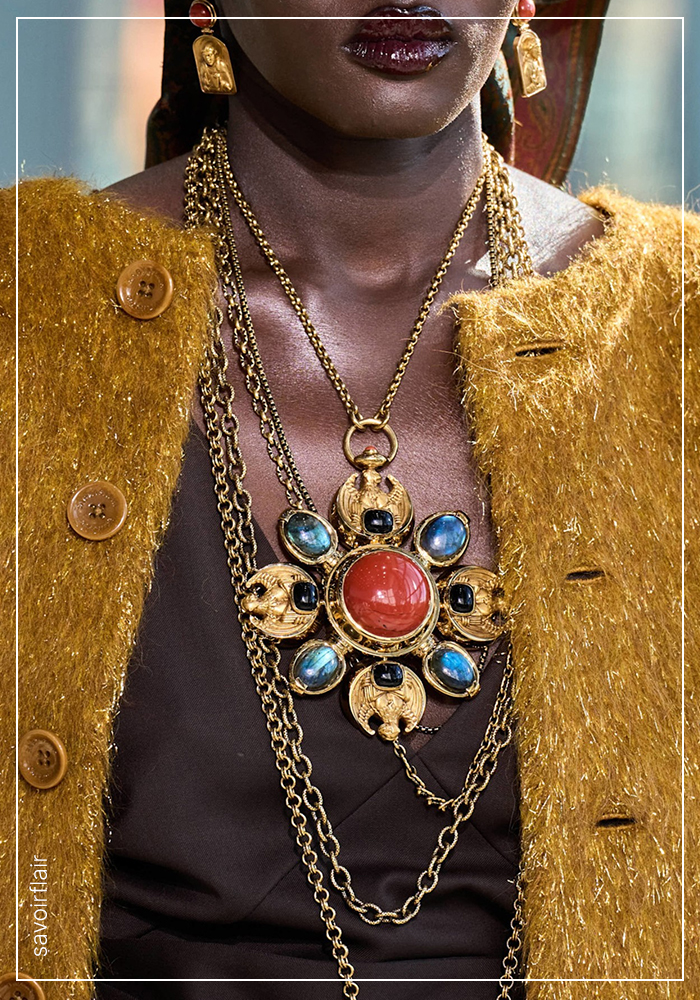
That's the trick of it. Sabyasachi didn't dress up the jewellery for the occasion. He dressed it down for real life.
There was even a single, quietly radical saree: paired not with a blouse, but a long-sleeved, diaphanous jacket, softly draped rather than structured. One look. Maximum statement.
Menswear, Reimagined for Everyone
There was no separate menswear line here, instead, menswear crept into womenswear like a well-kept secret.
The kamarbandh belt made a quiet but pointed comeback. A staple of South Asian and Middle Eastern dressing tradition for centuries, it travelled West in the 1800s and became black-tie law. Sabyasachi brought it full circle, back onto the runway, back into the conversation, and (notably) onto more than one other NYFW runway this season too.
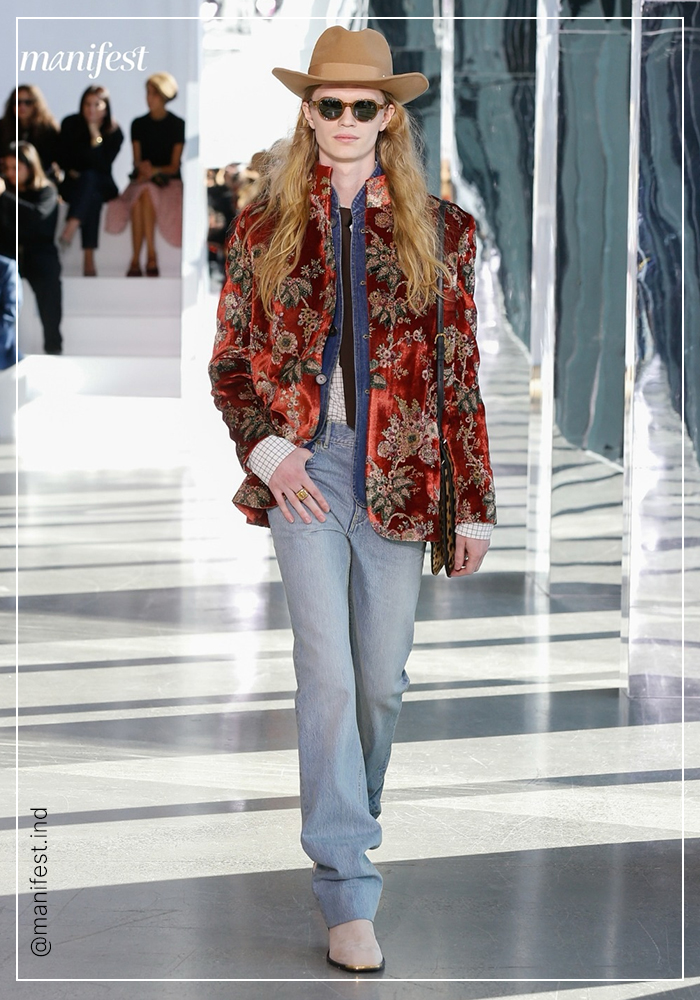
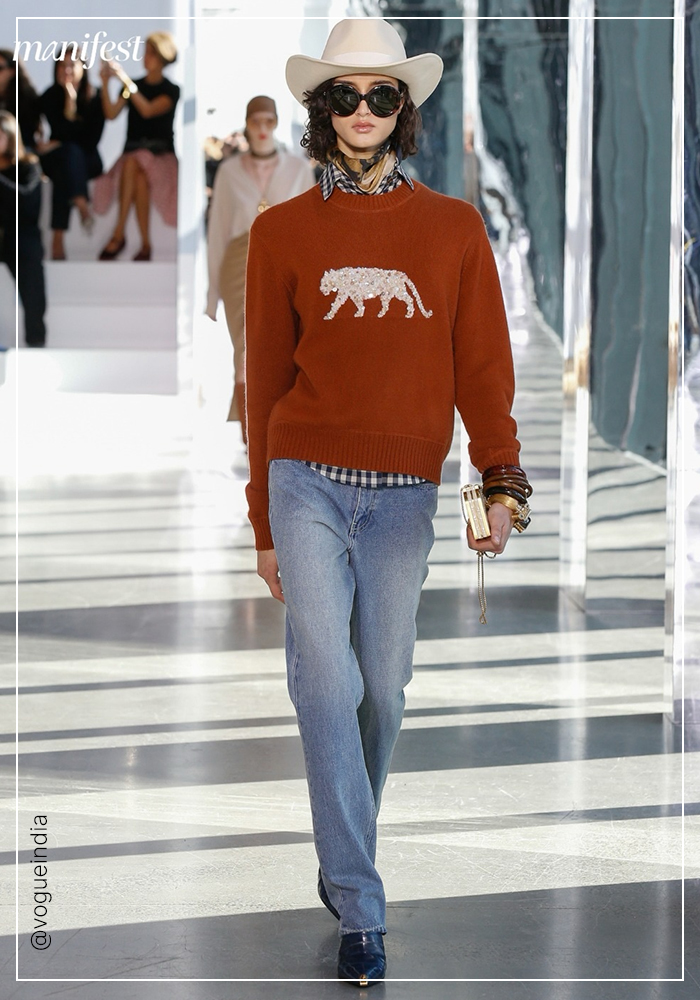
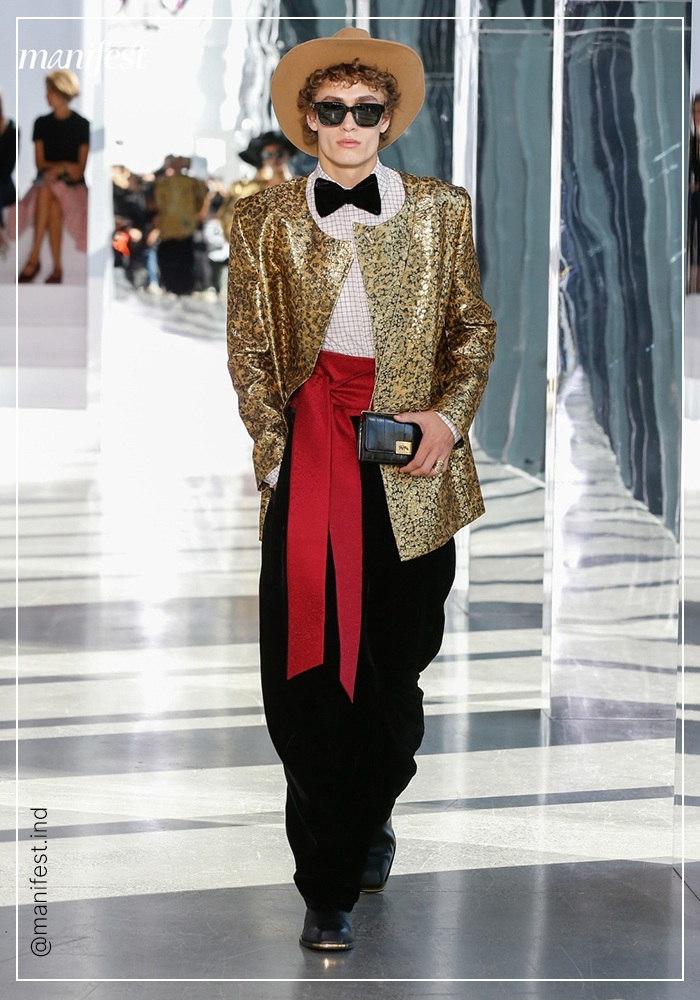
Tailoring throughout leaned masculine, structured, borrowed-from-the-boys — but never costume-y. It was tailoring as a texture, not a theme.
The Sabyasachi USP: Everything Is the Same Language
What made this show different from a designer simply "doing New York" was the completeness of it.
Oversized acetate sunglasses. Sculptural handbags. Metal-tipped shoes. The new high jewellery. None of it felt bolted on. All of it spoke the same design dialect.
That's deliberate. Sabyasachi has said, plainly, that he never wanted to build a fashion brand, he wants a complete luxury house, where fashion is just one expression among many. Jewellery, accessories, fragrance, eyewear, art — all meant to let one point of view live across a customer's entire world.
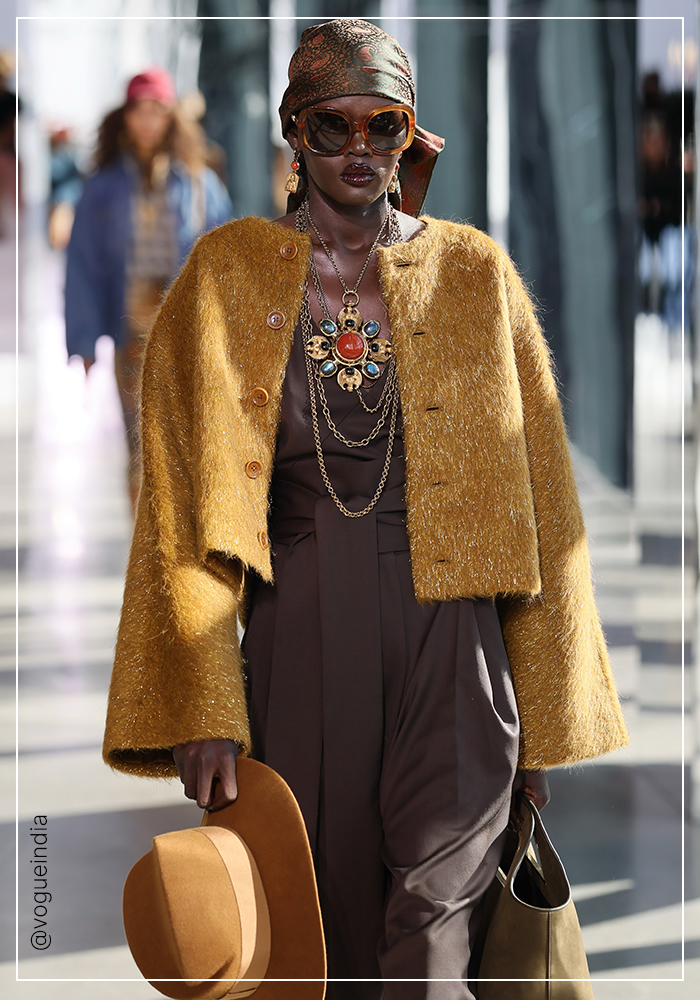
The materials backed up the philosophy. Cashmere sourced from Mongolia. Denim from Japan. Fine tissue fabrics from Italy. But every stitch of embroidery, every hand-finish — done at home, in Calcutta.
As he put it: Indian craftsmanship doesn't need to perform as ethnicity. It can simply exist as part of a modern, international wardrobe.
Why Bengal Byzantine Broadway Hit Different
The genius of this collection wasn't East meeting West. Design houses have chased that formula for decades.
It was that nothing here felt translated for an audience. The Indian-ness wasn't softened for New York's benefit — it was simply allowed to stand, unapologetically, next to Byzantine gold and Broadway theatrics, as an equal.
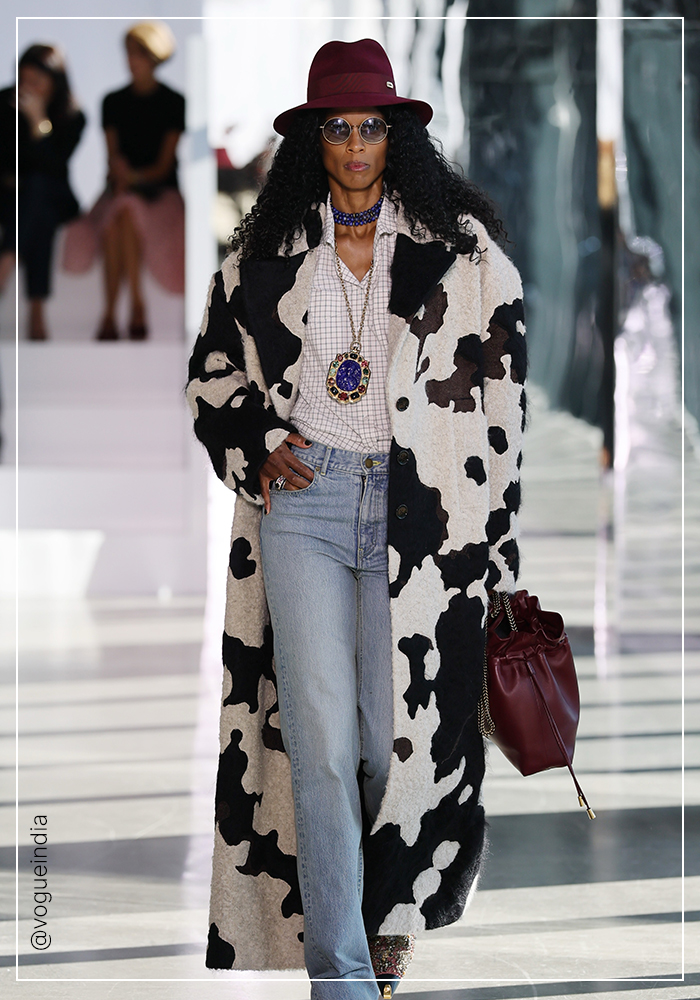
Silhouettes borrowed Western structure. Everything underneath — the colour instinct, the craft, the multicoloured stones, the metallic thread work — stayed entirely, unmistakably his own.
What's Next
Asked if the Middle East is the next chapter, Sabyasachi stayed characteristically coy: "There is a sophisticated luxury customer there with a strong understanding of jewellery, craftsmanship, ceremony... so there is a natural affinity with Sabyasachi."
No confirmed store yet. But pop-ups? He's open. And given how many of Bengal Byzantine Broadway's pieces, those long coats built like reimagined abayas, that draped modesty, that jewellery-first styling, seemed to speak directly to a Middle Eastern sensibility, the appetite is already there.
Twenty years after his first New York bow, Sabyasachi didn't just come back. He came back having built an entire universe in his absence — and this time, New York was only one stop on the map.