
Quiet luxury has been the fashion world's favorite phrase for a minute now, but somewhere between the muted beiges and the "stealth wealth" checklists, its meaning got a little too narrow. People started assuming quiet luxury only meant neutral colors and zero personality. Soha Ali Khan's latest Indianwear look says otherwise.
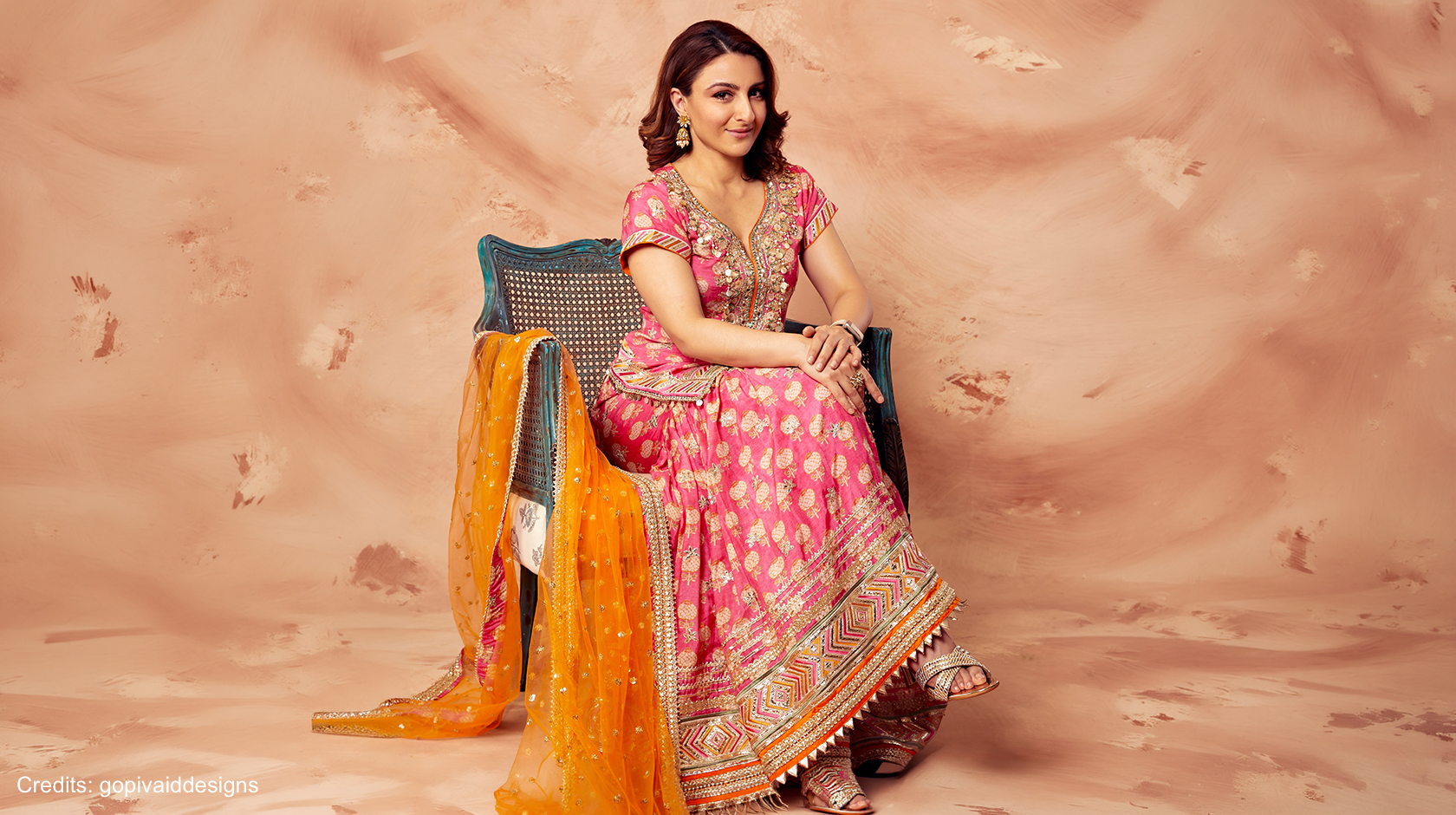
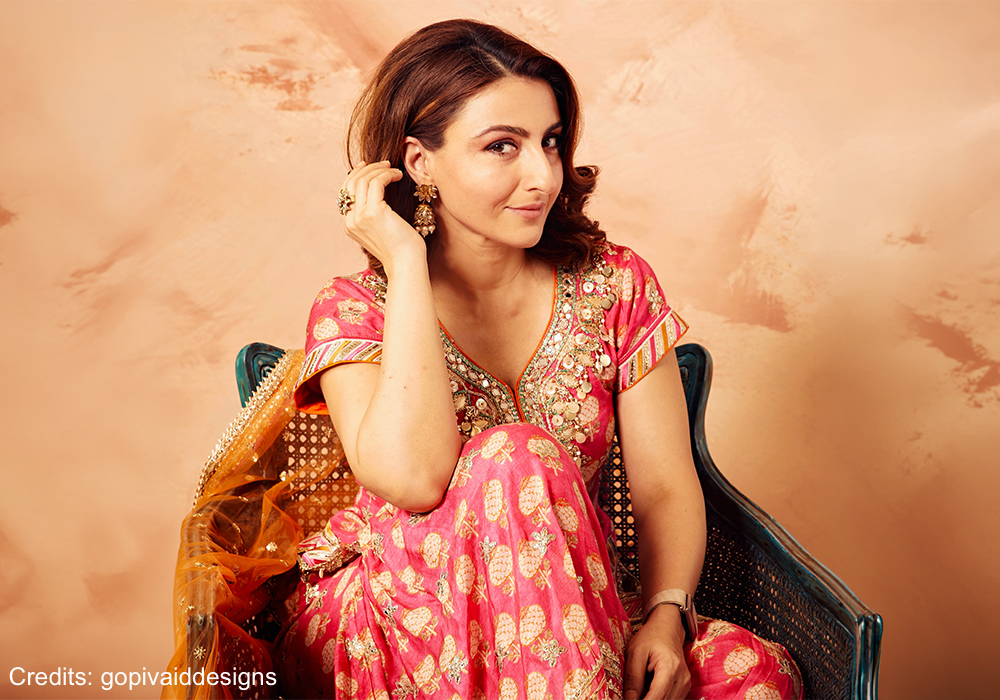
Her recent appearance in a fuchsia Gopi Vaid sharara set is a masterclass in what quiet luxury actually looks like when it's done right in Indian ethnic wear. It's not about dialing everything down. It's about knowing exactly which elements deserve the spotlight, and letting the craftsmanship do the talking instead of piling on embellishment for the sake of it.
Here's what made Soha Ali Khan's fashion moment worth studying, piece by piece.
What Makes Soha Ali Khan's Fuchsia Sharara Set So Striking?
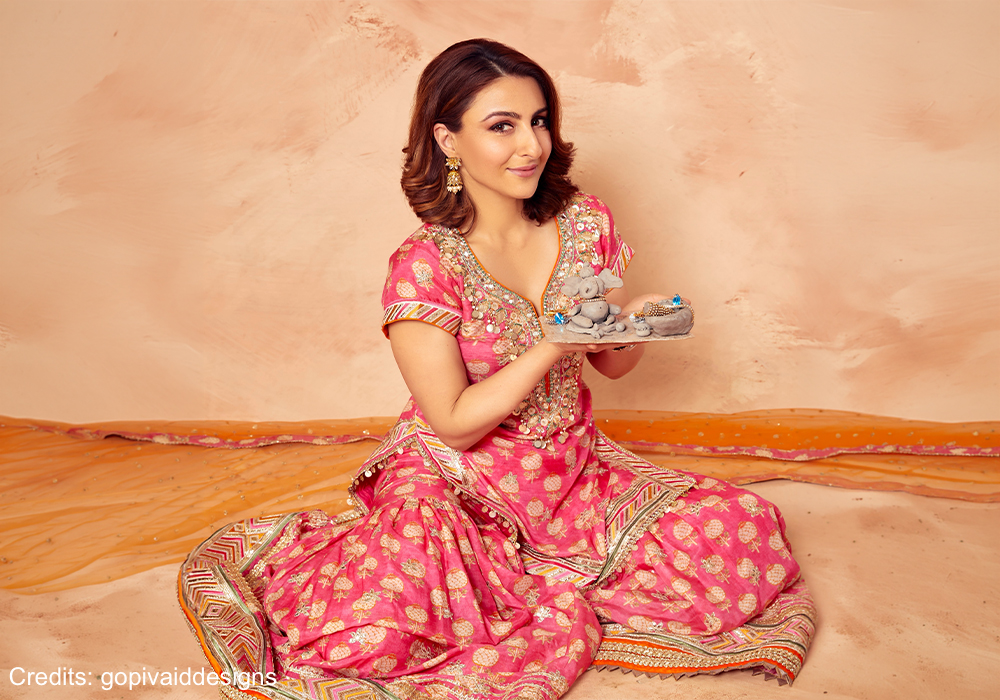
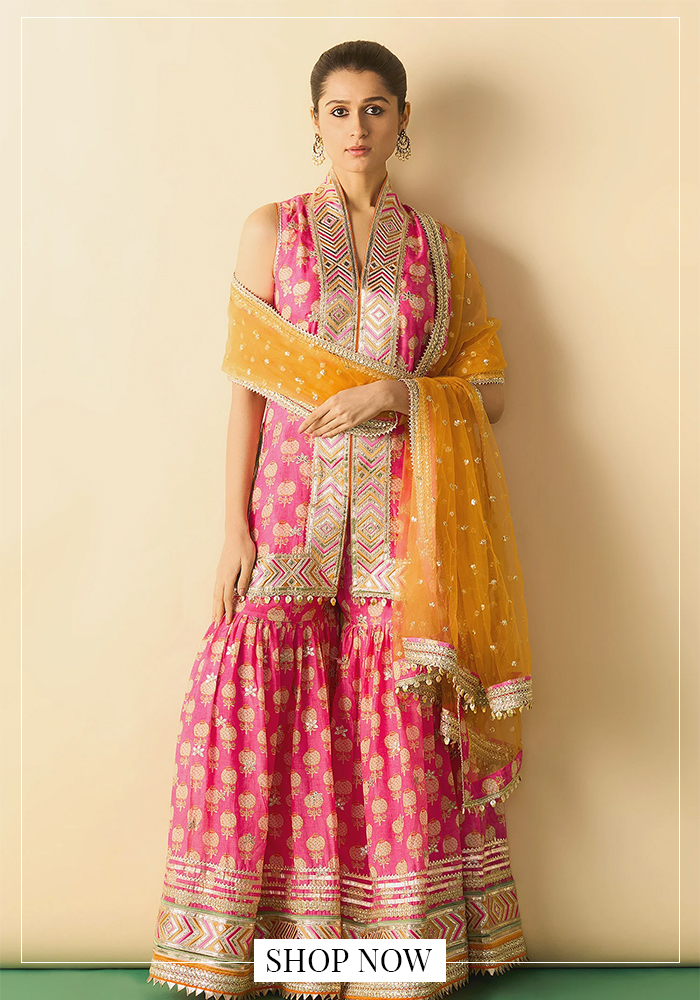
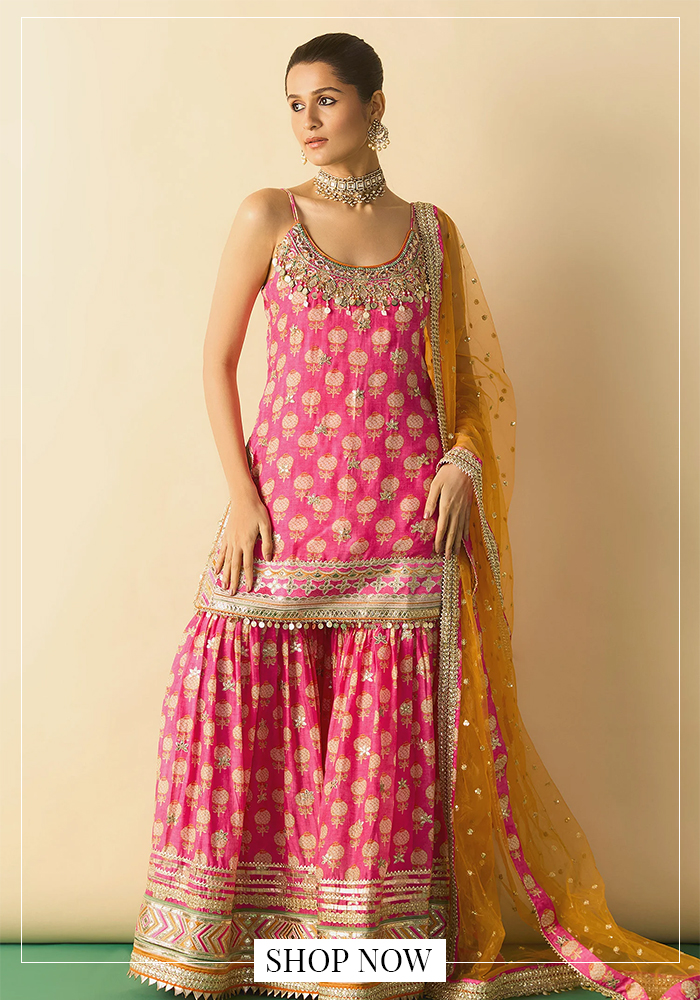
The centerpiece of the look is a vivid fuchsia kurta paired with a voluminous matching sharara, both from Gopi Vaid. At first glance, it reads as a bold, maximalist color choice. Look closer, though, and the real story is in the details: marigold block prints scattered across the fabric, intricate borders framing the silhouette, and gold gota patti and zardozi work adding texture without overwhelming the eye.
This is the trick behind good luxury Indianwear. The color can be loud, but the craftsmanship keeps it grounded. Gopi Vaid's sharara sets are known for this exact balance, where traditional techniques like gota patti and zardozi are used with restraint rather than piled on for maximum shine. The result feels rich and considered instead of costume-y, which is really the whole point of quiet luxury applied to Indian ethnic wear.

Why Did She Pair It With a Marigold Dupatta Instead of Matching Fuchsia?
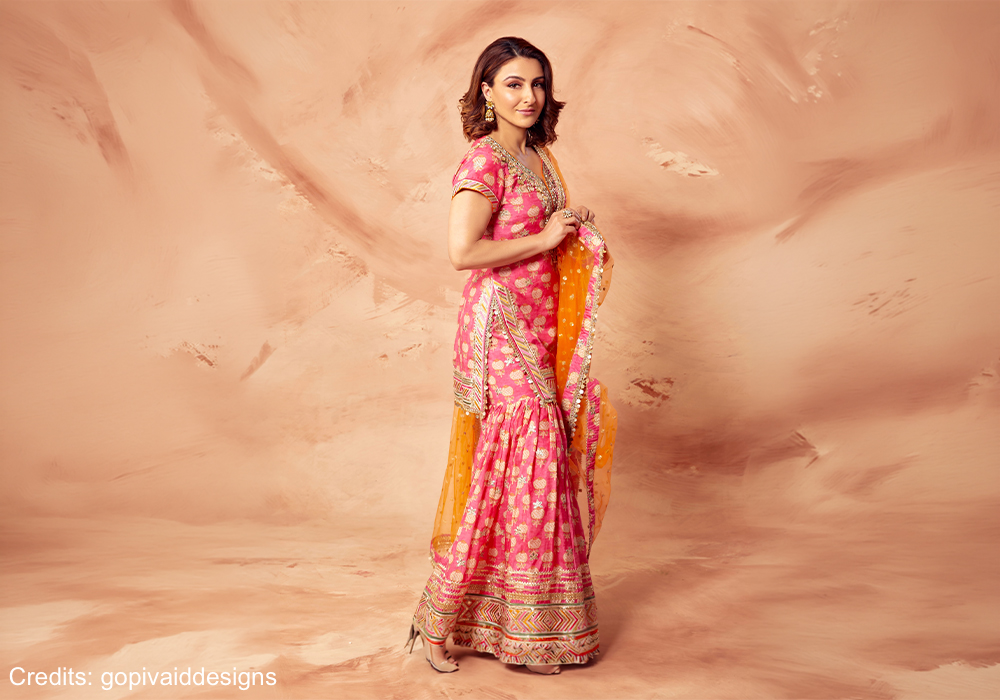
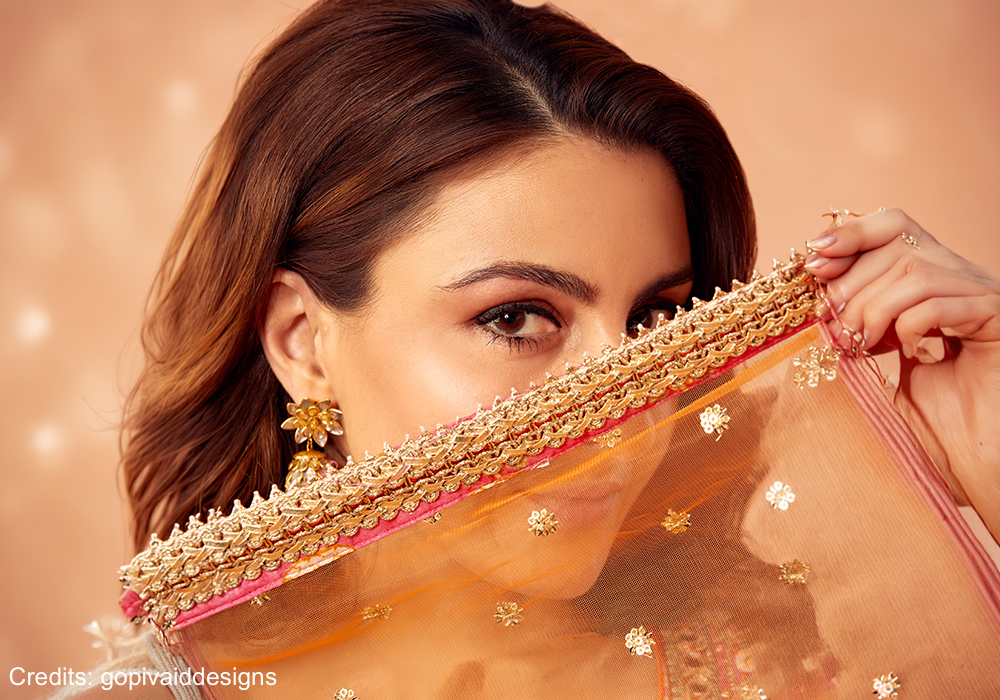
Soha Ali Khan didn't play it safe with a tonal dupatta. Instead, she chose a sheer marigold orange dupatta with delicate gold buttis and an ornately finished border. The contrast between fuchsia and marigold is a classic festive Indianwear combination, but it works here because neither piece is fighting for attention.
The sheerness of the dupatta keeps things light, and the gold buttis add just enough sparkle to feel festive without tipping into excessive embellishment. It's a reminder that color contrast, when done thoughtfully, can do more visual work than a dupatta loaded with heavy embroidery.
How Did Her Jewellery Choices Support the Quiet Luxury Effect?
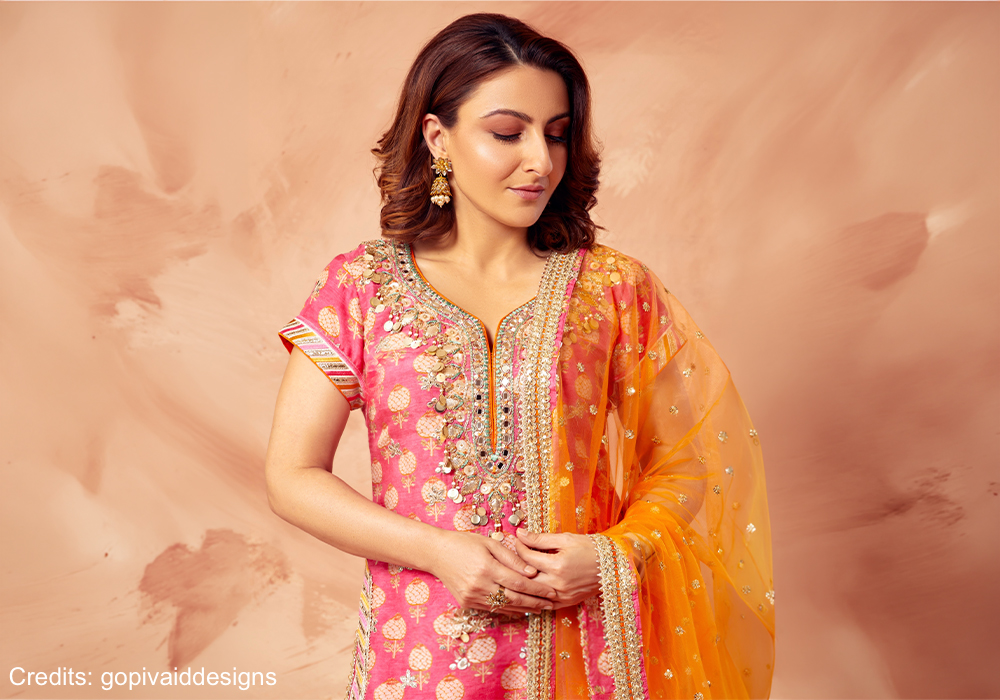
This is where the "quiet" part of quiet luxury really shows up. Soha kept her jewellery to two intentional pieces: traditional jhumka earrings and a statement cocktail ring. No layered necklaces, no stacked bangles, no competing for space with the sharara set's craftsmanship.
That restraint is deliberate. When your outfit already carries rich detailing like zardozi and gota patti, the jewellery doesn't need to shout. Choosing a single statement ring and a classic jhumka lets the Gopi Vaid ensemble stay the focal point, which is exactly the decision criteria worth borrowing: if your outfit is already detailed, minimal jewellery reads as more expensive, not less.
What Beauty Look Did Soha Ali Khan Pair With Her Festive Outfit?
Soft, cascading waves and warm, glowing makeup rounded out the look. No dramatic smoky eyes, no bold lip to compete with the fuchsia. Just a polished, lit-from-within finish that let the outfit remain the main event.
This is often the most overlooked part of celebrity festive looks. People obsess over the outfit and jewellery, but understated hair and makeup are what actually tie a quiet luxury look together. A soft glam finish signals ease, not effort, which is the entire vibe quiet luxury is going for.
Why Does Soha Ali Khan's Indianwear Look Actually Work?
Break it down and the formula is simple: one statement color, heritage craftsmanship, thoughtful accessories, and effortless beauty. None of these elements are new on their own. What makes Soha Ali Khan's latest look stand out is how deliberately they're balanced against each other.
Luxury Indianwear doesn't require head-to-toe heavy embellishment to feel special. In fact, the more embellishment you add, the harder it is to make anything look intentional. Soha's sharara set proves that a single well-crafted piece, styled with restraint everywhere else, reads far more luxurious than an outfit trying to do everything at once.
Choose this approach if you want your festive look to feel expensive without feeling like a costume. Save the heavier embellishment for occasions where drama is the goal, like a wedding reception, and reach for this formula when you want something festive but still wearable.
How Can You Recreate Soha Ali Khan's Indianwear Mood?
Recreating this look isn't about copying it piece for piece. It's about applying the same decision-making:
- Pick one richly crafted Indianwear silhouette. A sharara, gharara, or anarkali with detailed gota patti or zardozi work gives you the "wow" factor without needing extra layers.
- Pair it with a contrasting festive hue. Think fuchsia and marigold, or emerald and gold. Contrast does the visual heavy lifting.
- Add refined traditional jewellery, not a full set. One statement piece, like jhumkas or a cocktail ring, is often more effective than layering everything you own.
- Keep hair and makeup soft. Let the outfit be the star and let your beauty look support it, not compete with it.

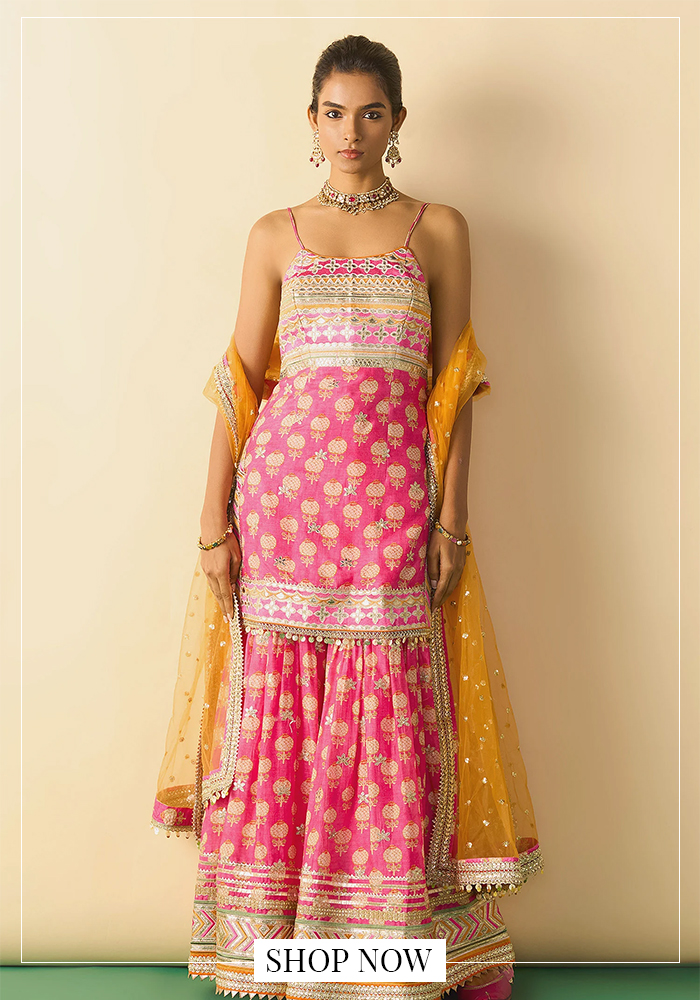
If you're hunting for pieces that hit this exact note, Aza is a solid place to start. From Gopi Vaid sharara sets to festive jewellery and occasionwear built around the same craftsmanship-first philosophy, Aza has become something of a go-to for anyone chasing elevated, luxury Indianwear without the over-the-top embellishment.
Soha Ali Khan's Indianwear moment is proof that fashion doesn't need to be loud to be memorable. Sometimes the most talked-about looks are the ones that know exactly when to stop.