


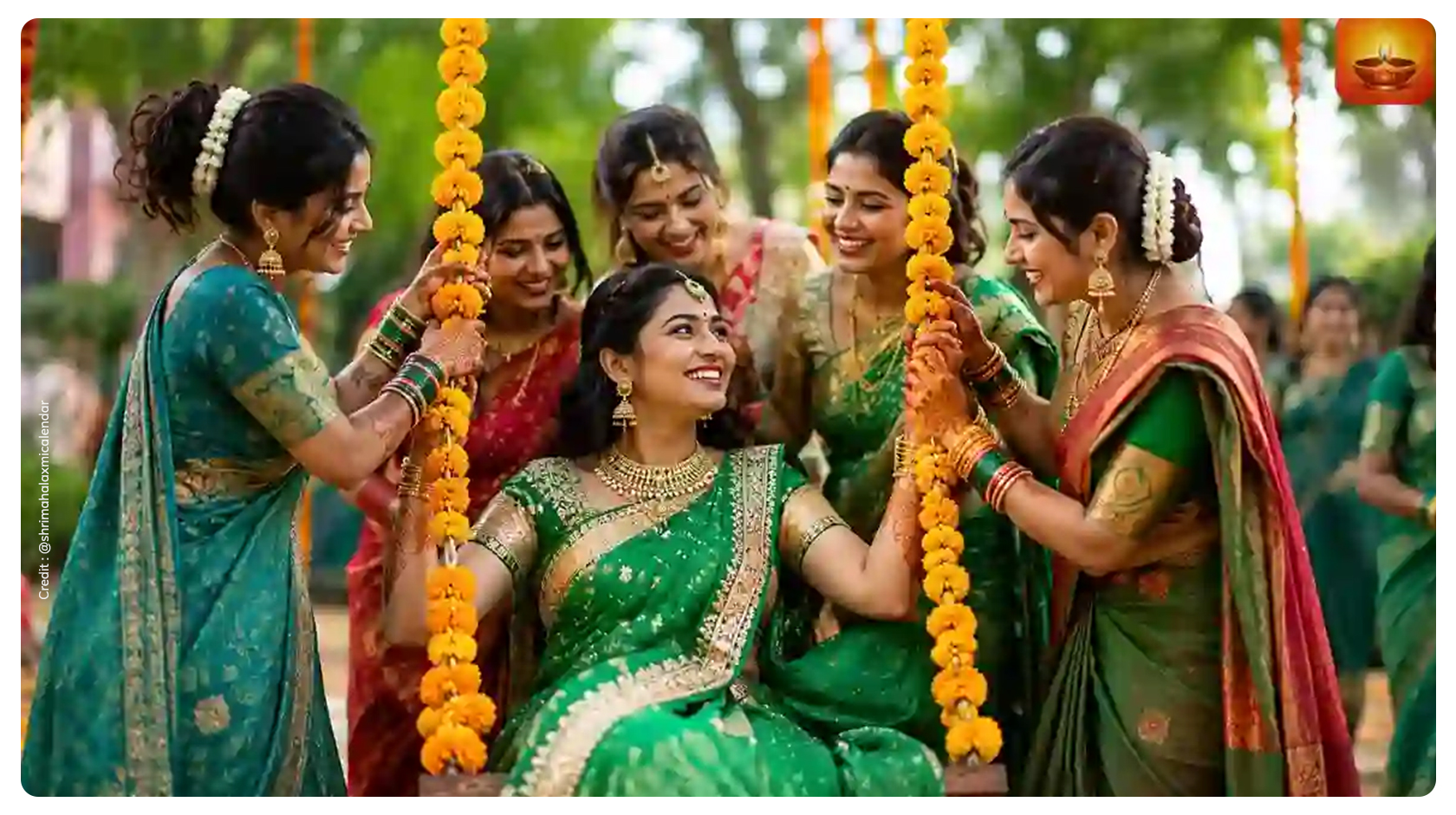
Teej 2026: What to Wear for Hariyali Teej and Kajari Teej
For Hariyali Teej 2026 (July 27), wear green — it's the definitive color of the festival. Bandhani lehengas, silk sarees, and embroidered Anarkali suits in shades of emerald, pistachio, and forest green are the most traditional choices. For Kajari Teej (August 11), the same palette applies with a slightly more intimate, traditional tone. Yellow, pink, and red are also traditional. Avoid black and white on both days.

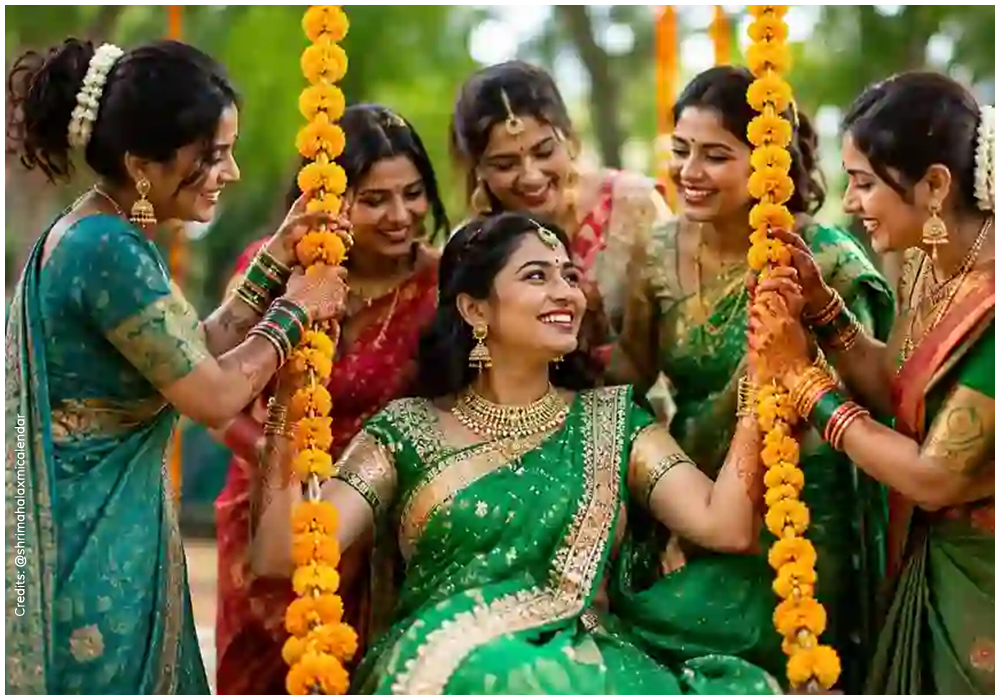
Teej is the festival that belongs to women. Celebrated across Rajasthan, Madhya Pradesh, Bihar, and North India, Teej honors the union of Shiva and Parvati — and marks the arrival of the monsoon with swings, mehendi, new clothes, and celebration. The city of Jaipur turns entirely green and pink for Hariyali Teej; melas fill public spaces; and women dress in the most festive outfits of the season.
In the USA, Teej has become a cherished cultural celebration among the Rajasthani, Bihari, and North Indian diaspora — marked by community gatherings, mehendi parties, and festive meals.
Teej 2026 dates:
- Hariyali Teej: July 27, 2026
- Kajari Teej (Badi Teej): August 11, 2026
Here's exactly what to wear for both.
The Teej Color Palette
Green is non-negotiable for Hariyali Teej. The word hariyali literally means greenery — the festival takes its name from the lush green landscape of the monsoon season. Green is not just a preferred color; it's a cultural statement.
The full Teej color palette includes:
- Emerald green, forest green, pistachio — the primary green spectrum
- Yellow and saffron — associated with the monsoon and auspiciousness
- Rani pink and fuchsia — Rajasthan's festive color, as traditional as green
- Red and sindoori — for married women, symbolizing suhaag (marital bliss)
- Turquoise — works beautifully alongside traditional Rajasthani jewelry
What to avoid: Black is considered inauspicious for Teej and should be avoided. White carries mourning associations. Both of these are traditionally discouraged across most North Indian festival dressing.
Hariyali Teej Outfit Ideas
Bandhani Lehenga (The Most Traditional Choice)
Bandhani — the ancient Rajasthani tie-dye technique — is the most culturally rooted fabric for Teej. The delicate dot patterns created by the resist-dyeing process are unmistakably festive and deeply tied to the region's identity. A bandhani lehenga in green with gold work is the quintessential Hariyali Teej outfit.
Look for: Bandhani in Gajji silk or Banarasi base fabric; embroidered gota or zari detailing on the hem and dupatta.
Silk Saree in Green
A green silk saree — particularly Banarasi, Chanderi, or Kanjivaram — is one of the most elegant Teej looks. The richness of silk picks up the festive energy of the day beautifully, and the saree silhouette photographs exceptionally well for the mehendi and mela photographs that define Teej.
Pair with: A gold or contrast-colored blouse, a maang tikka, and lac bangles.
Embroidered Anarkali Suit
For women who find a saree or lehenga impractical for a full day of Teej celebrations — which often involves swinging (jhula), mehendi application, and outdoor mela attendance — a floor-length Anarkali suit is the perfect middle ground. Elegant, festive, and easy to move in.
Choose: Georgette or crepe Anarkalis in green or rani pink with mirror work, gota, or threadwork embroidery.
Sharara Set
The sharara silhouette has made a significant comeback in festive fashion. Wide-legged pants with a short kurta in bandhani or printed silk feel both traditional and contemporary — ideal for younger women who want a festive look that doesn't feel costume-y.
[Internal link: The complete guide to Indian festive outfit silhouettes]
Kajari Teej Outfit Ideas
Kajari Teej (August 11, 2026) is more intimate than Hariyali Teej — focused on fasting, puja, and family gatherings rather than public melas. The energy is traditional and devotional rather than exuberant.
For Kajari Teej, go elegant and traditional:
- A silk kurta set in deep green, red, or maroon
- A cotton or Chanderi saree for a home puja
- The same green-and-pink palette applies, but slightly less embellished than Hariyali attire
Teej Outfit Ideas by Occasion
|
Occasion |
Recommended Outfit |
|
Teej Puja at Home |
Silk kurta set in green or yellow |
|
Teej Mela / Community Celebration |
Bandhani lehenga, embroidered Anarkali, silk saree |
|
Office / Casual Teej Celebration |
Chanderi or cotton kurta set in green tones |
|
Mehendi Party |
Colorful sharara or Anarkali — go festive |
Teej Accessories: The Essentials
The accessories are as important as the outfit for Teej:
- Green glass bangles — the most traditional Teej accessory, worn in a full arm stack
- Lac bangles — Rajasthani artisan-made lac bangles in green, pink, or red
- Gajra — fresh jasmine or mogra flowers for the hair. Nothing says Indian festival like a fresh gajra
- Maang tikka — essential for the formal Teej celebration
- Mehendi — many women apply fresh mehendi on Teej, just as they would for Karva Chauth
- Kundan or polki jewelry — the traditional jewelry style of Rajasthan, particularly beautiful with bandhani
Teej for the Modern Woman
If you're not traditionally inclined but want to honor the festival, here's how to participate without going fully festive:
- Wear something green — even a green dupatta over a neutral outfit reads as Teej-aware
- Green glass bangles are the simplest nod to Teej tradition
- A silk kurta set in sage or pistachio feels modern while being appropriate
- Apply a small mehendi design — it doesn't have to be full bridal-style hands
[Internal link: How to accessorize Indian festive outfits]
Frequently Asked Questions
When is Hariyali Teej 2026?
Hariyali Teej 2026 falls on July 27, 2026. Kajari Teej (also called Badi Teej) follows on August 11, 2026.
What is the difference between Hariyali Teej and Kajari Teej?
Hariyali Teej is the bigger, more public celebration — marked by swings, mehendi, community melas, and new festive clothes. Kajari Teej is more intimate, focused on fasting, puja, and family gatherings. For Hariyali, dress fully festive. For Kajari, lean toward elegant and traditional.
What color do you wear for Teej?
Green is the defining color of Hariyali Teej — hariyali literally means greenery. Yellow, rani pink, red, and saffron are also traditional. Black and white are avoided.
Can unmarried women celebrate Teej?
Yes. While Teej is particularly significant for married women (who fast for their husband's long life), unmarried women also celebrate and pray for a good partner. The outfit and color rules are the same for both.
What is a bandhani lehenga?
Bandhani is an ancient Rajasthani tie-dye technique that creates delicate dot patterns by tying tiny sections of fabric before dyeing. A bandhani lehenga in green or pink is one of the most culturally authentic Teej outfits.

