


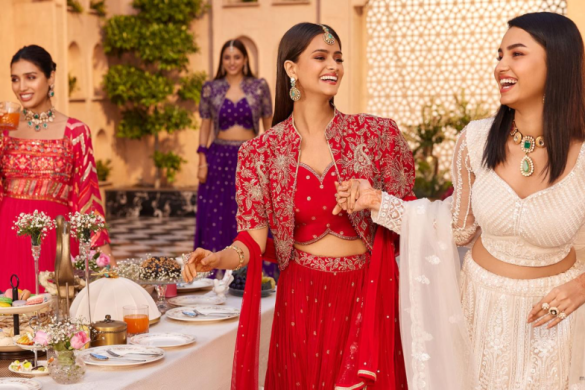
Indo-Western fashion is a style that blends traditional Indian clothing elements embroidery, handloom fabrics, Indian silhouettes, and cultural motifs with Western cuts, tailoring, and contemporary design sensibility. The result is clothing that honours Indian heritage while fitting seamlessly into modern, global wardrobes. In 2026, Indo-Western is no longer niche it is the fastest-growing segment of India's fashion industry.

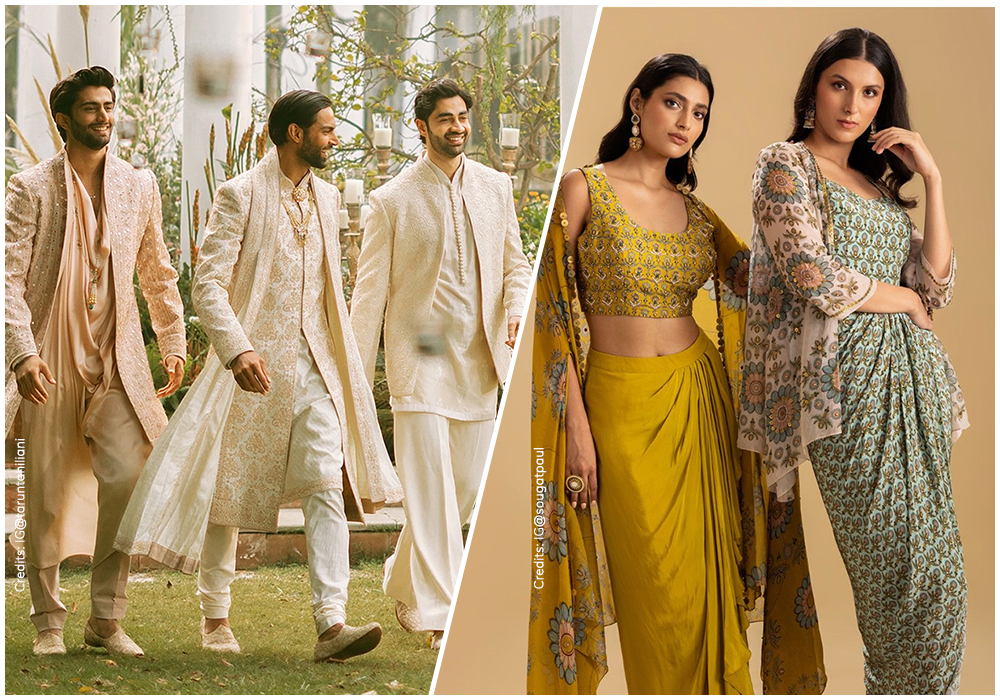
What Does Indo-Western Mean?
Indo-Western is a portmanteau of 'Indian' and 'Western' and the name is exactly what it describes. It is fusion clothing that draws from both traditions simultaneously, rather than replacing one with the other.
At its core, Indo-Western fashion takes one or more Indian elements a traditional silhouette, a handloom fabric, an embroidery technique, a cultural motif and pairs or reimagines them through a Western lens. That might mean a Banarasi brocade blazer worn with wide-leg trousers. A lehenga skirt styled with a structured Western crop top. A saree draped as a gown. A dhoti-style pant with an embellished jacket.
The defining quality of a great Indo-Western outfit is that it respects both traditions without diluting either. It does not simply stick Indian fabric on a Western garment it reimagines how Indian craft can shape contemporary silhouettes.
Mistake to avoid:
Assuming that any Indian outfit worn with a Western piece qualifies as Indo-Western. A kurta with jeans is casual fusion. True Indo-Western fashion is thoughtfully designed, with intention placed on how the two elements interact in silhouette, fabric, and detail.
What Is the History of Indo-Western Fashion?
Indo-Western fusion has roots that go back further than most people realise. The earliest forms emerged during the British colonial period, when Indian royalty and the elite classes began adopting elements of Western tailoring structured jackets, trousers, and waistcoats and combining them with Indian textiles like brocade, silk, and khadi.
The Nehru jacket, arguably India's most iconic Indo-Western garment, was born in this era. A structured collarless jacket inspired by the Western suit jacket but made in Indian fabrics and worn over kurtas it became a symbol of Indian modernity and global identity.
In the 1990s and 2000s, Bollywood accelerated the trend. Films and music videos showed Indian women in salwar suits with Western cuts, or saris draped over jeans, normalising fusion dressing for a generation of urban Indians. Designers like Manish Malhotra and Tarun Tahiliani began pushing Indo-Western onto the international runway, establishing it as a serious fashion language not just a styling trick.
In 2026, Indo-Western fashion has matured into something far more architectural and intentional. Structured capes, tailored jacket-sharara sets, asymmetric hemlines, and saree gowns now define the category pieces that could walk a runway in Milan as confidently as they appear at a mehendi in Jaipur.
What Are the Most Popular Indo-Western Styles for Women?
Cape Sets
The cape is the defining Indo-Western silhouette of 2026. A cape typically in organza, georgette, or net transforms a traditional blouse-and-sharara or blouse-and-lehenga combination into something theatrical and modern. It adds drama, covers the arms elegantly, and moves beautifully.
Outfit formula: Embroidered organza cape + fitted embellished blouse + straight-leg sharara + block heels = the signature 2026 Indo-Western wedding guest look.
Mistake to avoid:
Choosing a cape that is heavier than the outfit beneath it. The cape should enhance the look, not overwhelm it. Sheer or lightweight fabrics work best.
Jacket Lehenga Sets
A structured jacket worn over a lehenga skirt and blouse is one of the most versatile Indo-Western combinations. The jacket whether a long sherwani-style coat, a short boxy blazer in brocade, or an embroidered longline jacket adds a Western structure to the traditional lehenga silhouette.
Outfit formula: Short Banarasi brocade jacket + embroidered lehenga skirt + contrasting choli + statement earrings = a strong Indo-Western Reception look.
Saree Gown
A saree gown is a pre-stitched garment that mimics the look and drape of a traditional saree without requiring any actual draping. It combines the elegance of the saree aesthetic with the ease of a gown making it ideal for guests who love the saree look but prefer a simpler dressing experience.
Outfit formula: Embroidered organza saree gown in champagne + statement shoulder jewellery + barely-there strappy heels = the most effortless Reception look of 2026.
Mistake to avoid:
Choosing a saree gown that looks too much like a Western evening gown. The best saree gowns retain clear visual references to the saree a draped pallu panel, a traditional border, or a structured blouse that anchor the Indian identity of the piece.
Dhoti Pants and Palazzo Suits
Dhoti-style pants wide, draped, and gathered at the front in a silhouette drawn from traditional Indian menswear have been reinterpreted as a contemporary women's garment in Indo-Western fashion. Paired with embellished blouses, structured jackets, or long kurtas, dhoti pants create a dramatic, fashion-forward silhouette that is both deeply Indian in its references and thoroughly modern in its execution.
Outfit formula: Silk dhoti pants in deep teal + embellished short kurta + structured cape + embroidered juttis = a wedding guest look that balances tradition and modernity perfectly.
Coord Sets in Indian Fabrics
Co-ordinated two-piece sets a crop top with wide-leg trousers, a structured jacket with a skirt, a bralette with palazzo pants made in Indian fabrics like brocade, block-printed cotton, or embroidered georgette are one of the most commercial and accessible Indo-Western categories. They are endlessly versatile and work across a wide range of occasions from Mehendi functions to corporate events.
Embroidered Blazers and Bandhgalas
A Western blazer silhouette executed in Indian fabrics Banarasi brocade, hand-embroidered silk, block-printed cotton is one of the most powerful Indo-Western statements a woman can make. Worn over a kurta, a sari blouse, or even a Western top, an embroidered blazer immediately elevates any outfit into Indo-Western territory.
What Are the Most Popular Indo-Western Styles for Men?
Nehru Jacket Over Kurta
The Nehru jacket remains the most enduring Indo-Western garment for men. A structured, collarless jacket worn over a kurta-pyjama or kurta-trouser it bridges Indian and Western sensibilities effortlessly. In 2026, Nehru jackets appear in velvet, brocade, and structured cotton with clean minimal embellishment.
Bandhgala Suit
The bandhgala a closed-collar, structured jacket that falls at the hip is India's most sophisticated contribution to menswear. Worn with churidar or tailored trousers, a bandhgala suit is the most formal expression of Indo-Western dressing for men, appropriate for the wedding ceremony, reception, and black-tie events.
Kurta with Tailored Trousers
The most accessible Indo-Western look for men a well-cut kurta worn with slim or wide-leg tailored trousers rather than traditional churidar or pyjama. This combination works across almost every wedding function and requires minimal styling effort while delivering a consistently polished result.
Sherwani with Western Trousers
A traditional embroidered sherwani paired with straight-cut tailored trousers rather than the traditional churidar creates a cleaner, more contemporary silhouette. This is the dominant Indo-Western wedding look for grooms and male wedding guests in 2026.
What Fabrics Define Indo-Western Fashion?
The fabric is where Indo-Western fashion announces its Indian identity most clearly. The most commonly used fabrics in Indo-Western design are:
- Organza: Lightweight, structured, and beautiful in both solid and embroidered forms. Organza capes and overlays are central to 2026 Indo-Western fashion.
- Banarasi brocade: The most recognisable Indian luxury fabric, characterised by its silk base and gold or silver zari weaving. Brocade blazers, jackets, and lehenga skirts are a staple of Indo-Western occasion wear.
- Chanderi: A lightweight silk-cotton blend from Madhya Pradesh, characterised by its subtle transparency and fine texture. Chanderi coord sets and palazzo suits are among the most elegant Indo-Western daywear options.
- Georgette: A soft, flowing fabric that works across all silhouettes from saree gowns to sharara sets. Its movement is central to the fluid quality of many Indo-Western designs.
- Raw silk and dupion: Heavier, more structured silks with a natural slub texture. Often used in jacket sets, bandhgalas, and structured Indo-Western separates.
- Handloom fabrics ikat, ajrakh, block-printed cotton: Artisanal handloom textiles are increasingly central to Indo-Western fashion, particularly in sustainable luxury segments.
What Is the Difference Between Indo-Western and Fusion Fashion?
Indo-Western is a specific subset of fusion fashion that focuses exclusively on blending Indian and Western elements. Fusion fashion is a broader category that can include any cultural mixing Japanese-Scandinavian, African-European, and so on.
Every Indo-Western outfit is fusion fashion. Not every fusion outfit is Indo-Western.
Traditional ethnic wear a silk saree, a Banarasi lehenga, a classic Anarkali is rooted entirely in Indian tradition with no Western reference. Indo-Western fashion borrows deliberately from both traditions and sits in the creative space between them.
When Should You Wear Indo-Western Outfits?
Indian Weddings
Indo-Western is appropriate for every pre-wedding function. At the Sangeet, a cape set or jacket lehenga is a strong choice. At the Mehendi, a dhoti-pant set or coord set in Indian fabrics works beautifully. At the Reception, a saree gown or embellished blazer over a lehenga skirt is among the most fashion-forward options. For the main wedding ceremony, traditional dress is generally more appropriate.
Destination and Overseas Weddings
Indo-Western is particularly well-suited to destination weddings and Indian weddings held abroad. It bridges the gap between traditional Indian dress and the expectations of international venues photographing beautifully in both Indian and Western contexts.
Festive Occasions Diwali, Eid, Navratri
Coord sets, cape kurtas, and jacket sets in festive fabrics are the most popular Indo-Western choices for Indian festivals. They are easier to wear than full traditional dress while maintaining a strongly Indian aesthetic.
Corporate and Professional Settings
The most restrained end of Indo-Western dressing a Chanderi blazer over a Western outfit, a structured bandhgala jacket with tailored trousers, or a block-printed coord set translates seamlessly into professional Indian urban environments.
Casual and Social Occasions
At the accessible end, Indo-Western can be as simple as a printed cotton kurta worn with straight-leg jeans, or a structured blouse in Indian fabric paired with wide-leg trousers. This is everyday fusion dressing at its most effortless.
What Are the Indo-Western Trends for 2026?
- Muted maximalism: Rich embellishment in tonal, muted colours ivory-on-ivory embroidery, tonal beadwork on pastel bases. The drama is in the texture and detail, not the colour contrast.
- Power shoulders: Structured shoulders on kurtas, blazers, and cape tops. A nod to the Western power suit adapted through an Indian lens.
- Fluid geometry: Geometric prints in chevrons, grids, and abstract blocks executed in flowing Indian fabrics.
- Sustainable fusion: Handloom fabrics ikat, ajrakh, block-print in Western-inspired silhouettes.
- Metallic accents: Gold and copper metallic threads, buttons, and zips used as deliberate design elements.
- Saree gown evolution: Pre-stitched saree gowns becoming increasingly architectural with structured bodices, asymmetric hemlines, and deliberate drape construction.
How Do You Style an Indo-Western Outfit?
The most important styling principle for Indo-Western fashion is to let one element lead. Either the Indian element or the Western element should be the visual anchor of the outfit the other should support it.
If the Indian element leads for example, a Banarasi brocade jacket keep the rest of the outfit clean and Western in feeling. Slim trousers, minimal jewellery, simple footwear.
If the Western element leads for example, a structured Western-cut blazer silhouette let the Indian fabric or embellishment carry the cultural identity. Rich embroidery, traditional jewellery, Indian footwear like juttis.
- Jewellery: Indian jewellery kundan, polki, jhumkas, maang tikka works beautifully with Indo-Western outfits. Minimalist gold or silver fine jewellery also works for more Western-leaning outfits.
- Footwear: Juttis or embroidered mojris push the look toward the Indian end. Strappy heels or block heels keep it balanced. Sneakers or loafers push it toward the casual, contemporary Western end.
Frequently Asked Questions
Is Indo-Western appropriate for a traditional Indian wedding?
Yes, with some function-specific caveats. Indo-Western is appropriate for Sangeet, Mehendi, Haldi, and Reception. For the main wedding ceremony the pheras or Anand Karaj traditional ethnic wear is generally more appropriate, though a richly embellished Indo-Western piece can work depending on the family.
Can non-Indian guests wear Indo-Western fashion?
Absolutely. Indo-Western fashion is, by definition, a bridge between Indian and Western traditions. Non-Indian guests wearing Indo-Western outfits at Indian weddings is warmly appreciated it signals cultural curiosity and respect.
Is Indo-Western fashion expensive?
Indo-Western spans every price point. At the accessible end, coord sets and kurta-trouser combinations are available across all budgets. At the luxury end, designer Indo-Western pieces by labels like Tarun Tahiliani, Manish Malhotra, and Sabyasachi can reach the same price points as haute couture.
What is the difference between Indo-Western and a salwar suit?
A salwar suit is a traditional Indian garment kurta, salwar, and dupatta with no Western design references. An Indo-Western outfit deliberately incorporates Western silhouette or tailoring elements alongside Indian fabrics or embellishment. A salwar suit with a Western-cut jacket over it begins to move into Indo-Western territory.
Which Indian designers are known for Indo-Western fashion?
Tarun Tahiliani is widely credited as the pioneer of luxury Indo-Western fashion in India. Other influential names include Manish Malhotra, Amit Aggarwal, Kanika Goyal, Dev r Nil, and Anita Dongre's contemporary line. At Aza Fashions, curated Indo-Western collections from these and other designers are available across all price points.
The Aza Edit: Indo-Western at a Glance
- What it is: Clothing that blends Indian fabrics, embroidery, and cultural references with Western silhouettes and contemporary tailoring.
- Key styles for women in 2026: Cape sets, jacket lehengas, saree gowns, dhoti-pant sets, coord sets in Indian fabrics, embroidered blazers.
- Key styles for men in 2026: Nehru jacket over kurta, bandhgala suit, kurta with tailored trousers, sherwani with Western-cut trousers.
- Best fabrics: Organza, Banarasi brocade, Chanderi, georgette, raw silk, handloom ikat, ajrakh, block-printed cotton.
- When to wear it: Indian weddings (all pre-wedding functions and receptions), destination weddings, festivals, professional settings, and casual occasions.
- Styling rule: Let one element Indian or Western lead. The other should support it. Never let both compete for dominance.

