
Fashion rarely changes overnight. The moments we later call turning points almost never announce themselves. They arrive quietly - a hemline that sits differently, a fabric that catches light in a new way, a color that starts appearing where you least expect it. By the time a shift feels obvious, it has usually been building for seasons.
That's the interesting part. Real movement in fashion lives in the details: proportion, fabrication, color, styling, and context. Miss those early signals, and you're always reacting to what's already happened.
What's Next is Aza's lens for reading those signals before they become the mainstream. Rather than chasing trends, it looks at how Indian fashion is quietly rearranging itself and asks what those small movements tell us about where the industry is headed. What follows isn't a list of things to buy. It's a decoding of the shifts worth paying attention to, and why they matter.
What's Next in Indian Fashion Is About Reimagining the Familiar
Indian fashion isn't walking away from its visual vocabulary. The drapes, the weaves, the motifs, the craft traditions, none of that is being discarded. What's changing is context.
Think of it as a new expression of the familiar. A brocade you'd expect on a bridal lehenga now turns up on a structured jacket. A weave once reserved for heirloom saris becomes the quiet hero of a minimalist separate. The elements stay recognizable, but their meaning shifts depending on where and how they appear.
This is the thread running through every movement below. The future of Indian fashion isn't a rejection of heritage. It's a reimagining of it - familiar ideas placed in unfamiliar settings, which changes how we read them entirely.
Nothing to Hide Is Bringing Sheer Dressing into Focus
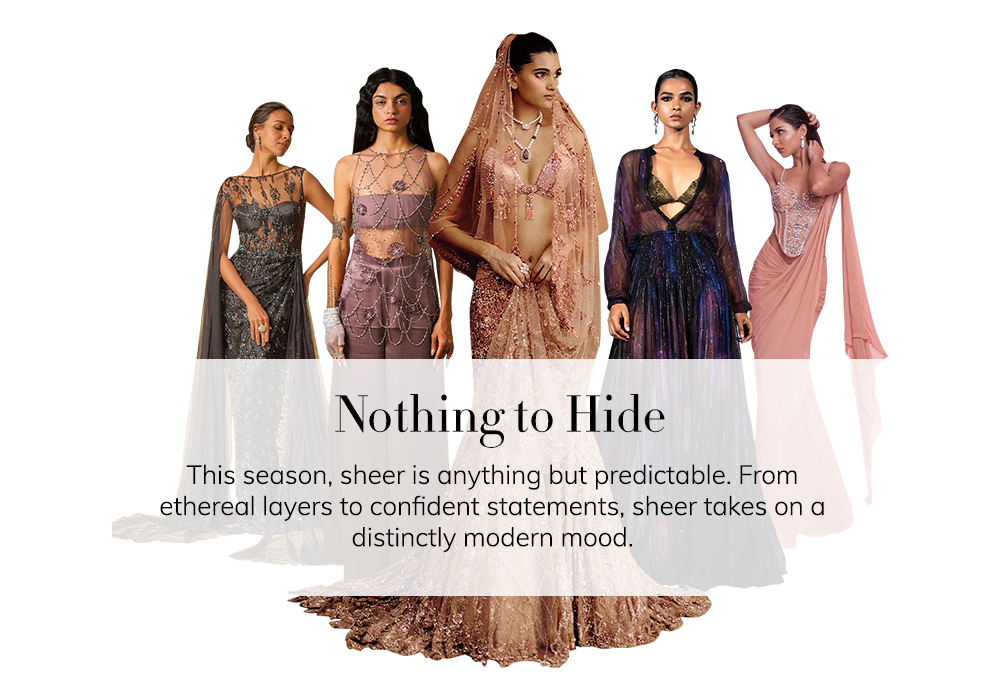
Transparency is doing something more interesting than trending. It's shifting in tone depending on who's wearing it and how.
On one end, sheer reads dainty and flirtatious - soft layers, delicate placement, a suggestion rather than a statement. On the other, it turns bolder and edgier, styled with intent and a harder confidence. The same fabric can whisper or declare, and that range is exactly what makes the Nothing to Hide edit worth watching.
The real story here isn't exposure. It's the balance between allure and intrigue. Sheer dressing works because it holds tension, revealing enough to draw the eye, concealing enough to keep it there. Calling it a trend undersells what's actually happening: a rethinking of how much a garment needs to say out loud.

Luminous Weaves Are Making Craft the Statement
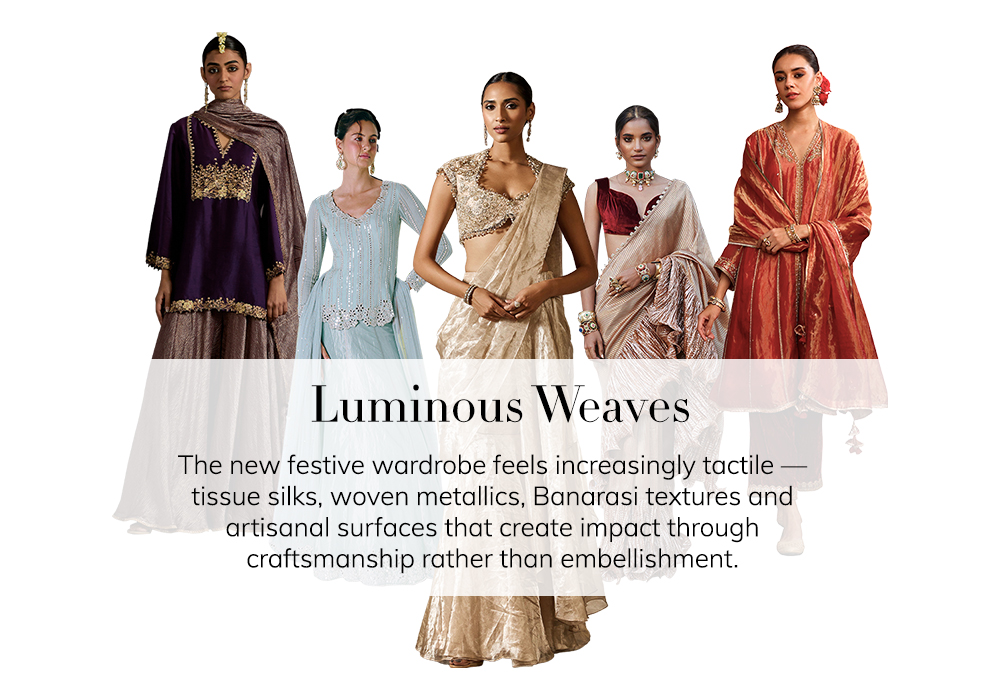
For years, "impact" in Indian occasionwear often meant embellishment—the heavier the work, the grander the piece. That equation is loosening.
The new emphasis falls on texture and craftsmanship. Tissue silks that shimmer as they move. Woven metallics that carry their own light. Banarasi textures and artisanal surfaces where the weave itself does the talking. These fabrics don't need layers of stonework to feel special. The craft is the statement.
This shift matters because it reframes value. Instead of measuring luxury by how much has been added to a surface, Luminous Weaves ask us to appreciate what's built into the cloth. It's a quieter kind of richness - one that rewards a closer look and honors the hands behind the loom.
Transformative Teal Signals a More Conscious Color Story
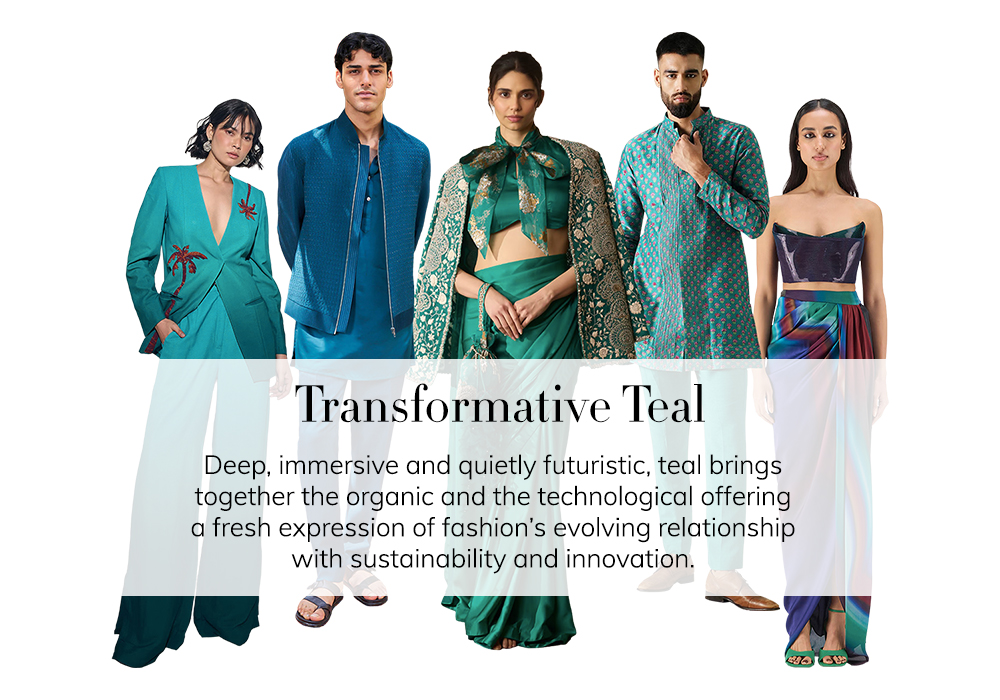
Teal is having a moment, but reducing it to a color trend misses the point. WGSN and Coloro named Transformative Teal their Color of the Year, and that choice carries weight beyond the swatch.
Teal sits at an intersection. It pulls from nature - water, forests, depth, while also feeling distinctly forward, almost technological. That duality is deliberate. The color has been positioned as a bridge between sustainability and innovation, between the natural world and the digital one.
For Indian fashion, that makes teal more than an aesthetic choice. It becomes part of a larger cultural conversation about where the industry is heading: toward materials and practices that acknowledge the environment, and toward a design language that feels current without losing meaning. When a color carries that much intention, wearing it becomes a small statement of values.
Brocade Is Stepping Beyond Bridalwear
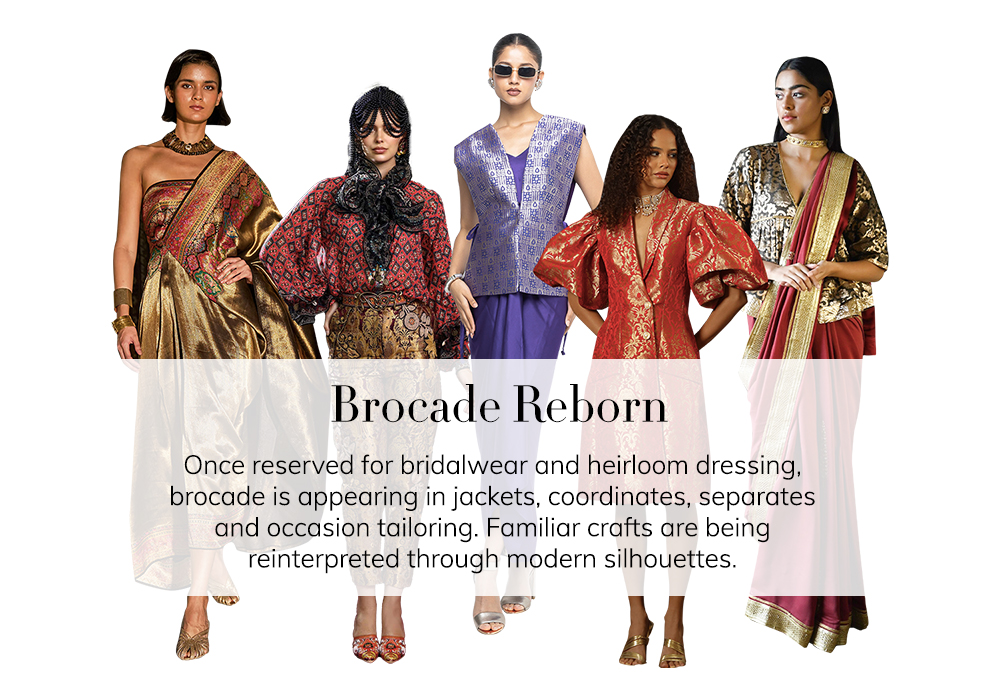
Brocade has long been shorthand for occasion and heritage, the fabric of bridal trousseaus and pieces passed down through generations. That association isn't disappearing. It's expanding.
Now brocade shows up in places it rarely used to go: tailored jackets, coordinated sets, sharp separates, and occasion wear that doesn't revolve around a wedding. The fabric stays as rich and storied as ever. What changes is how often, and how casually, you can wear it.
This is a contextual shift, and those tend to be the most lasting kind. When a fabric this loaded with meaning becomes wearable beyond its traditional lane, it doesn't lose its significance; it gains versatility. Brocade Reborn proves that heritage textiles can move fluidly through a modern wardrobe.
The Designers Giving These Shifts a New Shape
Ideas need makers. The movements above stay abstract until someone translates them into garments, and a handful of designers are doing exactly that, each in a distinct voice.

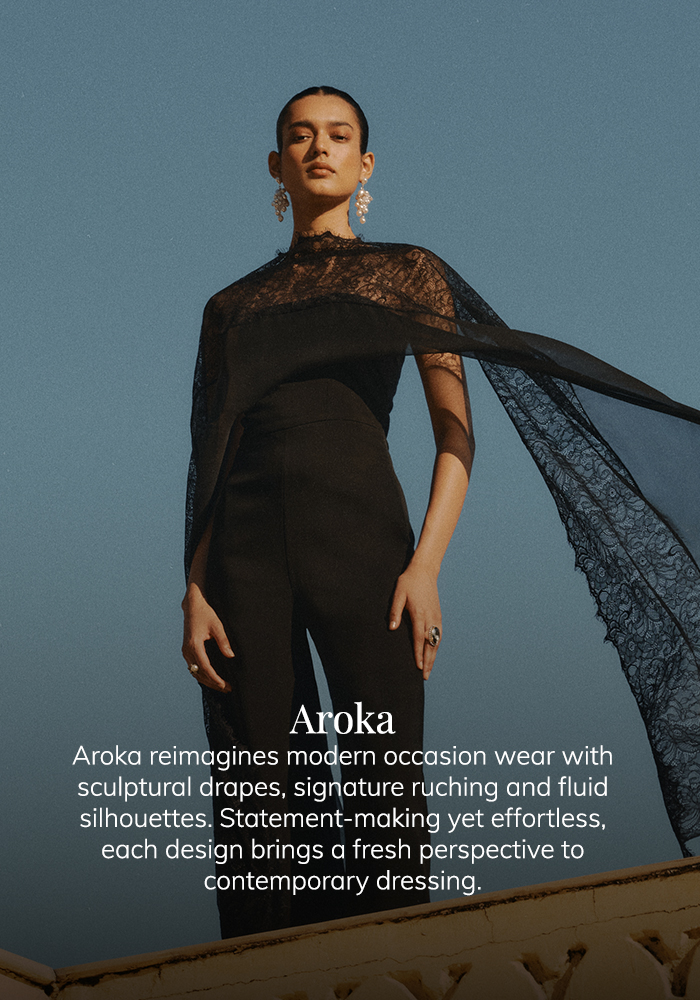
Aroka works in sculptural drapes and signature ruching, treating fabric almost like a material to be molded. The result feels architectural and fluid at once, giving familiar silhouettes a new sense of movement.
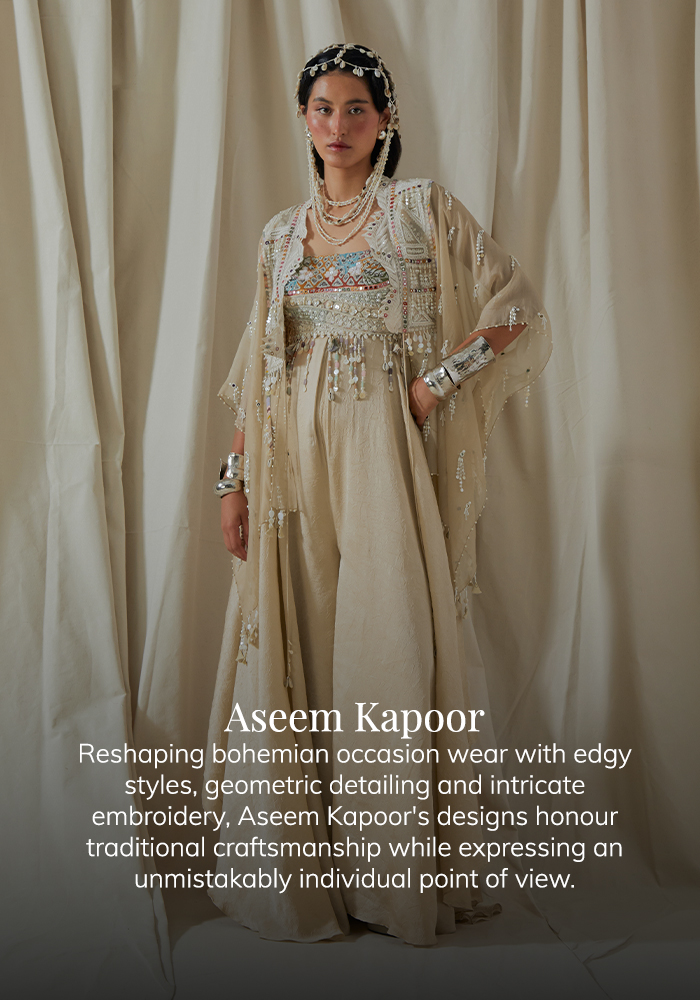
Aseem Kapoor brings a bohemian sensibility to occasion wear, layering geometric detailing and embroidery into pieces that feel personal rather than formulaic. His work shows how craft can stay expressive without turning ornamental for its own sake.
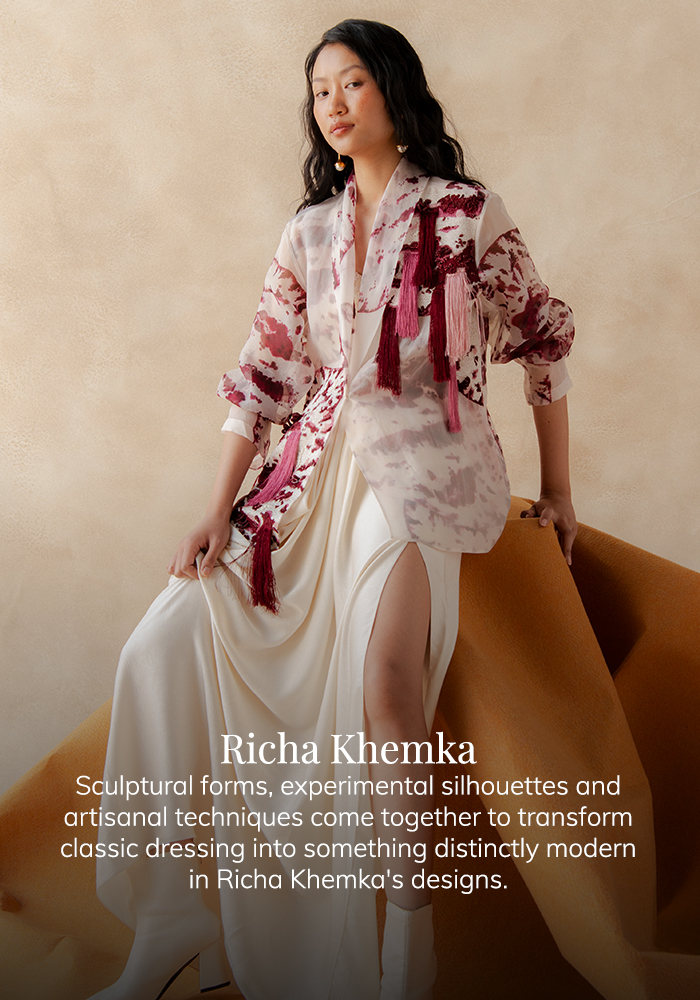
Richa Khemka experiments with sculptural forms and unexpected silhouettes, leaning on artisanal techniques to push shape into new territory. Her designs read as quiet arguments for what Indian fashion can become when it stops playing safe.
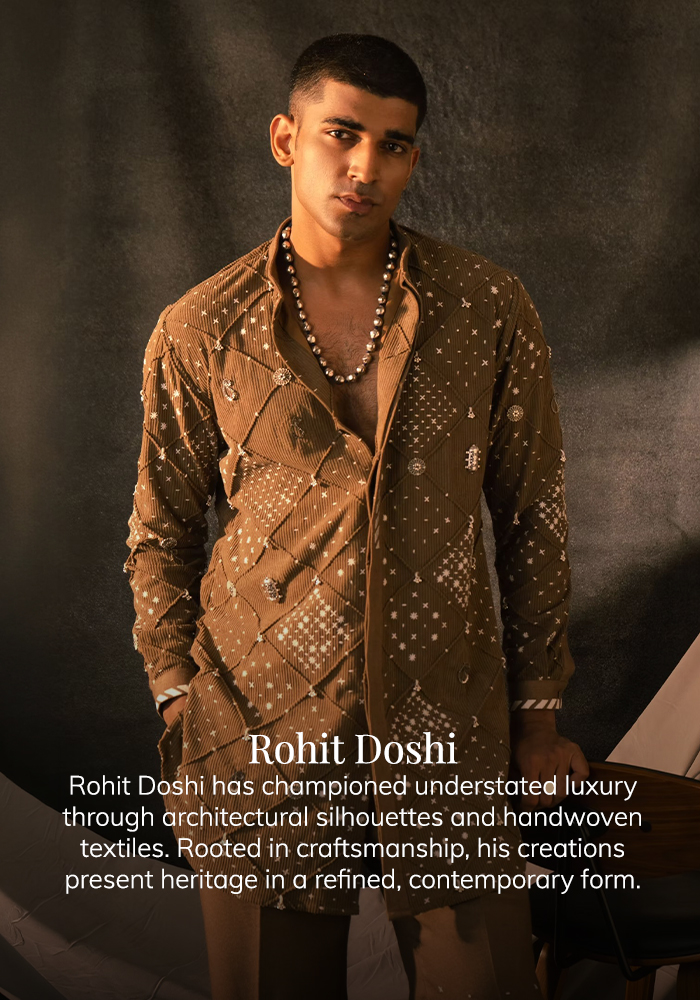
Rohit Doshi builds architectural silhouettes around handwoven textiles, letting structure and craft hold equal weight. His approach ties directly to the luminous-weave shift—proof that the cloth itself can anchor a modern, considered design.
Together, they demonstrate that these shifts aren't theoretical. They're being shaped, stitched, and worn.
What These Shifts Tell Us About the Future of Indian Fashion
Look at these movements side by side and a pattern emerges. The future of Indian fashion isn't defined by entirely new aesthetics. It's defined by new contexts for familiar ideas.
Craft is becoming more tactile valued for texture rather than sheer volume of ornamentation. Heritage is becoming more versatile, as fabrics like brocade slip out of their traditional roles. Silhouettes are becoming more expressive through drape, structure, and experimentation. And color is carrying cultural meaning, standing in for larger conversations about sustainability and progress.
None of this happens loudly. It happens in proportion, fabrication, and context—exactly where the earliest signals always live. Reading those signals early is what What's Next is built to do. The designers and shifts above aren't predictions so much as evidence of a direction already taking shape. The familiar isn't going anywhere. It's just learning to speak in new ways.