


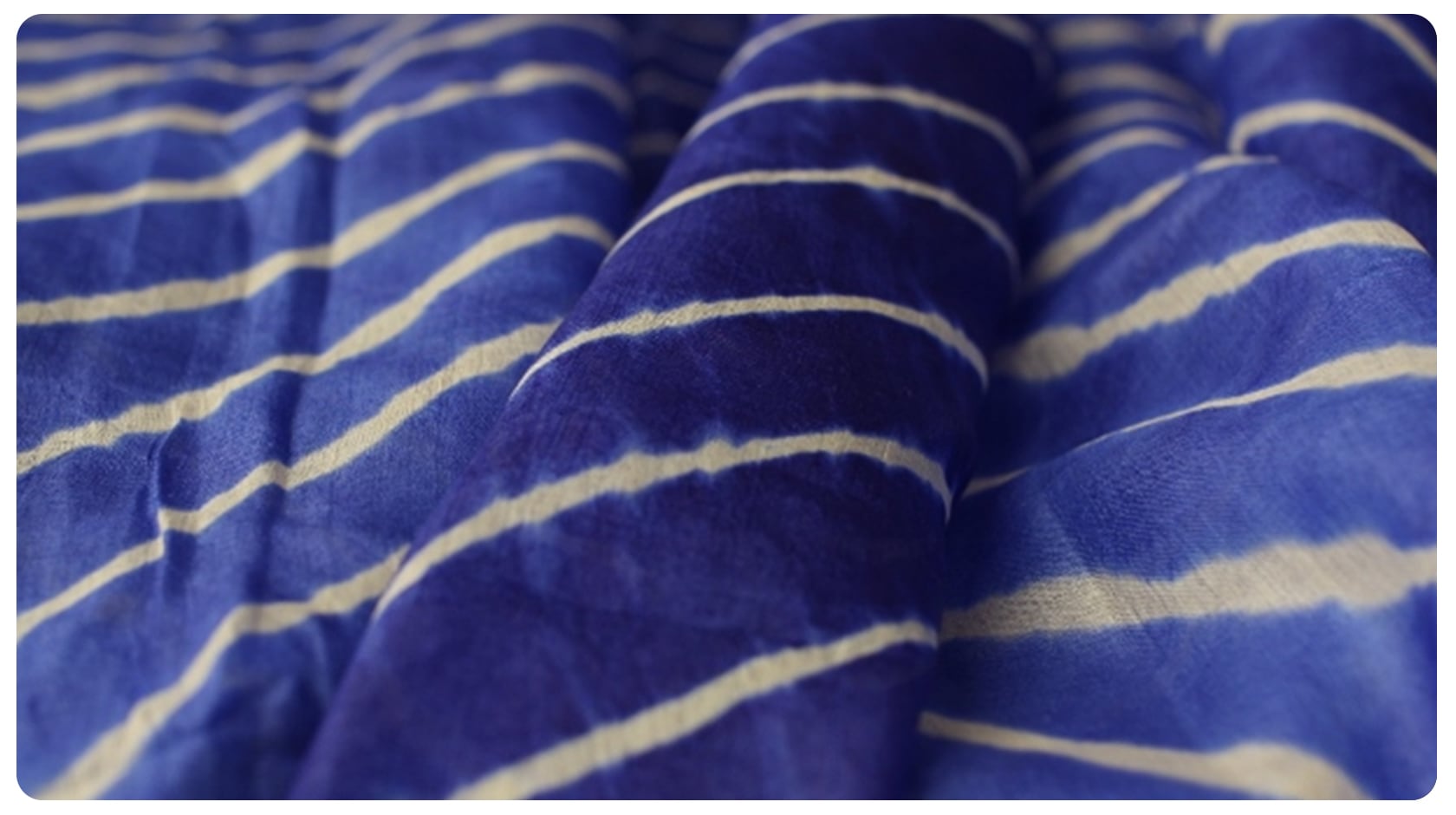

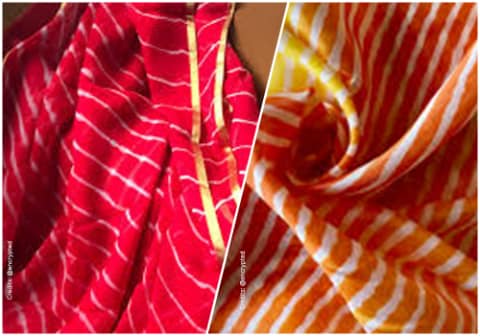
When the scorching winds of the Thar Desert blow across the sands of Rajasthan, they create shifting, rhythmic patterns on the dunes. It is said that these natural waves inspired the state's most fluid and vibrant textile art: Leheriya.
Derived from the Hindi word Leher, meaning "wave," Leheriya is a unique form of tie-and-dye that mimics the flow of water and wind. With its dazzling diagonal stripes and chevron patterns, it is a fabric that captures the joy and color of Rajasthani culture. Unlike the dot-based Bandhani, Leheriya is all about lines, flow, and movement.
This guide explores the colorful world of Leheriya, tracing its journey from the turbans of Rajput kings to the runways of global fashion.
What is Leheriya?
Leheriya is a traditional tie-resist dyeing technique practiced exclusively in Rajasthan, India. It results in a distinct pattern of brightly colored, irregular stripes that look like waves rippling across the fabric.
While often grouped with Bandhani (another tie-dye technique), the method of creating Leheriya is quite different. The fabric is rolled and tied to create diagonal or zigzag lines rather than small dots. Traditionally done on light, breathable fabrics like thin cotton, silk, chiffon, and georgette, it is the ultimate summer and monsoon textile.
Tracing the Roots: A 17th Century Legacy
The history of Leheriya is as colorful as the fabric itself. Historians trace its origins back to the 17th century.
A Symbol of Status: deeply patronized by the ruling elites of Rajasthan, Leheriya was initially a symbol of status. In the 19th and early 20th centuries, local merchants (Marwaris) and Rajput clans wore bright Leheriya turbans (safas) to showcase their heritage.
Five Colors: In ancient times, artisans typically used five distinct colors derived from natural minerals and plants to dye the fabric.
Cultural Identity: For a long time, specific colors and patterns of Leheriya turbans helped identify which community or region a person belonged to within Rajasthan.
Over time, the craft expanded beyond men's turbans to include cholis, dupatta, and sarees for women, becoming a staple of Rajasthani attire.
How It Is Made: The Art of the Diagonal Roll
Creating the perfect wave pattern requires a specialized skill set that has been passed down through generations of dyers. The process is distinct because it relies on "wrap-resist" dyeing.
1. The Prep
The process works best on thin, permeable fabrics that allow color to penetrate deep into the rolled layers. The fabric is first washed to remove impurities.
2. Rolling and Tying
This is the defining step of Leheriya.
The artisan folds the cloth diagonally from one corner to the other.
The fabric is then rolled tightly into a coil.
Cotton threads are tied tightly at regular intervals along the coil. These tied sections will "resist" the dye, remaining white (or the base color) after the process.
3. Dyeing
The rolled and tied fabric is dipped into dye baths.
Layering Colors: If a multi-colored pattern is desired, the fabric is unrolled, re-rolled, tied again, and dipped in a different color. This requires immense precision to ensure the lines don't muddy each other.
Finishing: Traditionally, indigo was used for blue tones and alizarin for reds. Finally, the dyed fabric is soaked in a salt solution overnight to fix the colors and prevent bleeding.
When the fabric is finally opened, the result is a mesmerizing ripple effect—a zig-zag of color that feels alive.
The Mothra Variation
A famous variation of Leheriya is called Mothra.
While Leheriya consists of diagonal stripes in one direction, Mothra creates a checkered pattern.
The Technique: After the first stage of Leheriya dyeing is complete (creating stripes in one direction), the artisan rolls the fabric again, but this time at a 90-degree angle to the original roll.
The Result: When dyed again, the intersecting lines create tiny rectangular spaces that resemble pulses (Moth in Hindi), giving the print its name.
Significance: The Fabric of the Monsoon
In Rajasthan, Leheriya is not just clothing; it is a celebration of the seasons. It is famously known as the fabric of the Monsoon.
When the rains finally arrive to quench the thirst of the desert, women dress in vibrant Leheriya sarees and dupattas to mimic the joy of nature.
1. Teej and Gangaur: Leheriya is the traditional attire for the festival of Teej, which falls during the rainy season (Saawan). It is a time of swings, songs, and celebration for women.
2. Sinjara: There is a beautiful tradition called Sinjara, where a mother-in-law gifts a Leheriya saree to her daughter-in-law (or a new bride) as a token of love, auspiciousness, and prosperity.
Leheriya Today: From Tradition to Trend
While it remains deeply rooted in tradition, Leheriya has found a new lease on life in the modern fashion world. Its geometric, abstract appeal makes it perfect for contemporary silhouettes.
Modern Adaptations
1. Western Wear: Designers are now using Leheriya fabrics to create kaftans, skirts, crop tops, and scarves. The diagonal lines are naturally slimming and flattering, making them popular in dresses.
2. Accessories: You can now find Leheriya on tote bags, potlis, and even shoes, adding a pop of ethnic color to neutral outfits.
3. Global Appeal: The "chevron" pattern is a classic design element globally, and Leheriya offers a handcrafted, organic version of this trend that appeals to international buyers looking for artisanal luxury.
Conclusion
Leheriya is a craft that refuses to be static. Like the waves it is named after, it flows through time, adapting and changing while keeping its essence intact.
Whether it is a traditional turban worn by a village elder or a chic chiffon scarf worn by a college

