Ajrakh Print: A Guide to India’s Star-Studded Textile
In the world of Indian textiles, some patterns are known for their vibrant simplicity, while others are revered for their complex, layered beauty. Ajrakh printi
In the world of Indian textiles, some patterns are known for their vibrant simplicity, while others are revered for their complex, layered beauty. Ajrakh printing belongs to the second category. It is a craft of such detail and precision that it feels almost celestial, as if the stars themselves were printed onto the fabric.
With its signature colors of deep indigo and crimson red, and its intricate geometric and floral motifs, Ajrakh is more than just a block-printed cloth. It is a tradition, a mathematical art form, and a testament to a community's enduring legacy. This craft tells a story of migration, nature, and the masterful use of natural dyes.
This guide will take you on a journey to the deserts of Kutch and Rajasthan to uncover the secrets of Ajrakh, from its ancient origins and painstaking creation process to its rising status in the world of sustainable fashion.
What is Ajrakh Printing?
Ajrakh (or Ajrak) is a unique form of block printing that involves a long and complex process of resist-dyeing and printing. The name itself is steeped in mystery and meaning. Some believe it comes from the Persian word azrak, meaning "blue," a nod to the deep indigo dye that is central to the craft. Others say it comes from the Hindi phrase aaj rakh, meaning "keep it today," referring to the patience required as the fabric rests between stages.
Whatever its origin, the result is unmistakable: a rich, dark fabric adorned with jewel-like symmetrical patterns. The designs are not just printed on the surface; they are embedded deep within the cloth through a 16-step process that can take up to three weeks to complete.
Tracing its Origins: The Khatri Legacy
The story of Ajrakh in India is a story of migration. The craft was brought to the Kutch region of Gujarat and the Barmer district of Rajasthan from Sindh (in modern-day Pakistan) around the 16th century. The artisans who carried this tradition were from the Khatri community.
For centuries, Ajrakh was an integral part of life for the pastoral Maldhari community of Kutch. The fabric was used for everything from turbans and lungis to shawls that could be used as cradles for babies or blankets at night. The colors and motifs were a part of their identity.
The Khatri printers developed a deep connection with the land. The quality of their printing depended on the local water, the plants used for dyes, and even the temperature. This harmony between nature and craft is what gives Ajrakh its soul.
The 16 Steps of Magic: How Ajrakh is Made
Creating an Ajrakh fabric is not a simple print-and-dry process. It is a marathon of washing, dyeing, printing, and resting that requires immense skill and knowledge of natural materials. While there are 16 distinct stages, here is a simplified overview of this incredible journey.
1. Preparing the Fabric (Saaj)
The process begins with a plain white cotton cloth. This cloth is first washed to remove any starch. It is then soaked in a mixture of castor oil, soda ash, and camel dung. This process, called Saaj, is repeated several times over a few days. It helps to soften the fabric and prepares it to absorb the natural dyes evenly.
2. The First Mordant (Kasano)
The fabric is then treated with a solution of Myrobalan powder (from the Harde fruit). This acts as a mordant, a substance that helps the dye to fix permanently to the fabric. This process also gives the cloth a yellowish tint.
3. The First Resist Print (Khariyanu & Kat)
This is where the design begins to take shape.
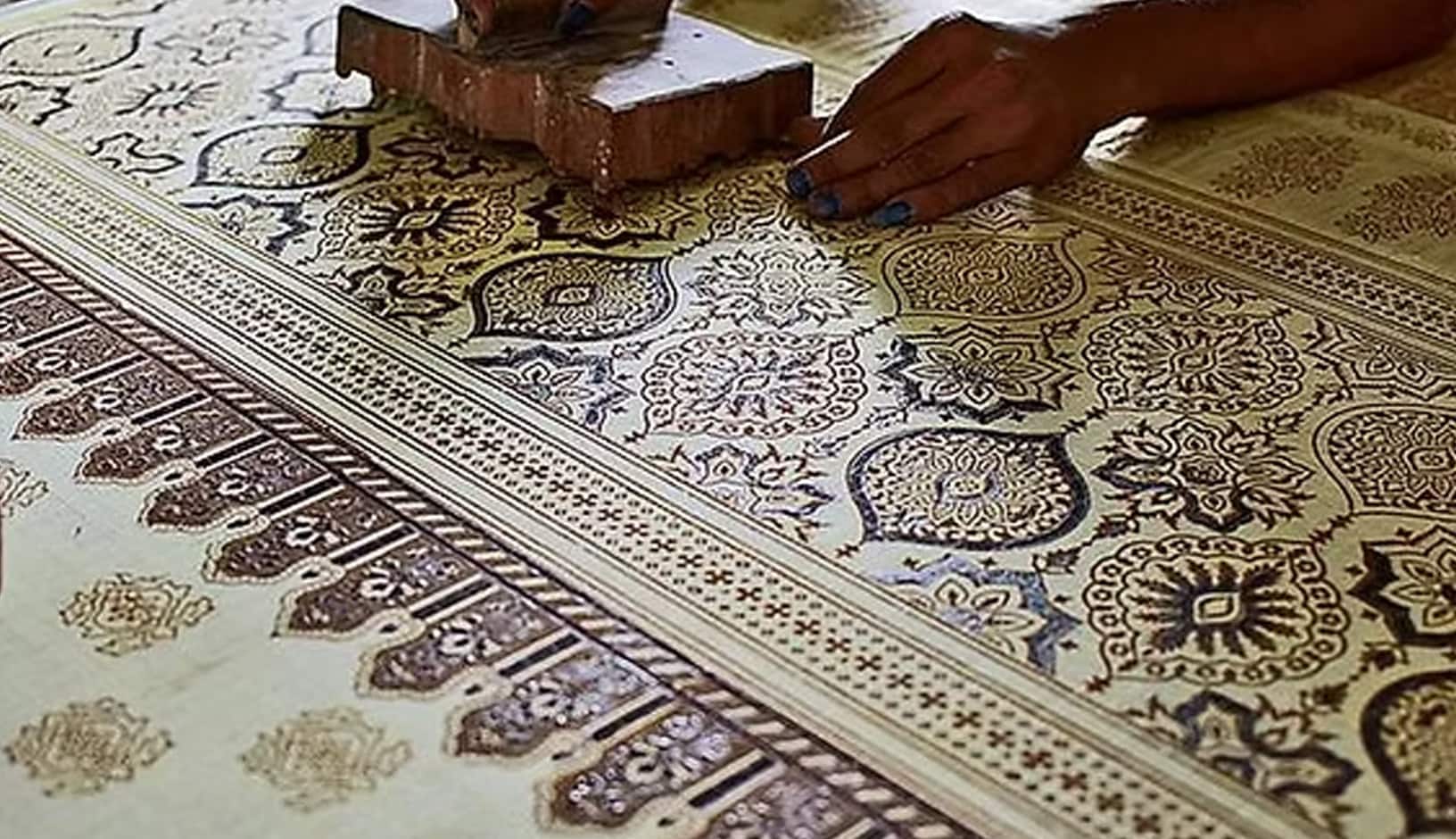
A resist paste made from lime and gum arabic is printed onto the fabric using intricately carved wooden blocks. This paste will protect these areas from the dye, creating the white outlines of the final design.
Next, a black paste made from fermented iron, jaggery, and tamarind is printed onto the areas that will become black.
4. Dyeing in Indigo
The fabric is then dipped into a vat of natural indigo dye. This is a magical moment. The fabric comes out of the vat green and slowly turns a deep blue as it oxidizes in the air. The areas covered by the resist paste remain white, while the rest of the fabric turns blue.
5. Washing and The Second Resist (Vichcharnu & Gach)
The fabric is thoroughly washed to remove the resist paste and any excess dye. After this, a second resist paste—a mixture of clay, alum, and gum arabic—is printed onto the areas that need to be protected from the next color, which is red. Sawdust is often sprinkled over the wet paste to prevent smudging.
6. The Final Color (Rang)
The fabric is then boiled in a solution of Alizarin (a natural red dye derived from madder root). The alum in the resist paste reacts with the alizarin, turning those areas a brilliant crimson red. The black areas become a deeper, richer black, and the parts protected by the clay resist remain blue.
Finally, the cloth is washed one last time. The result is a stunning fabric with layers of color—white, black, blue, and red—all perfectly aligned. The longer the fabric rests between stages, the richer and more vibrant the final colors will be.
Design Elements and Symbolism
Ajrakh patterns are a beautiful blend of Islamic geometry and motifs inspired by nature. They are not random; they are perfectly symmetrical and carry deep symbolic meaning.
The Colors: The traditional colors are indigo blue (representing the sky or twilight) and crimson red (representing the earth or fire).
Motifs: Common designs include stars, flowers, leaves, and intricate geometric lattices.
The Trefoil: A significant motif is the trefoil, which looks like three joined discs. It is believed to represent the sun, water, and earth, symbolizing the forces of nature that are essential to life and the Ajrakh process itself.
The patterns are always printed on both sides of the fabric, a hallmark of authentic Ajrakh that requires incredible precision.
Ajrakh in the Modern World
Despite its ancient roots, Ajrakh is facing modern challenges. The rise of screen printing and chemical dyes offers a faster, cheaper alternative, making it difficult for traditional artisans to compete. The process is also water-intensive, which is a major challenge in the arid regions where it is practiced.
However, there is a powerful movement to keep this craft alive.
The Sustainable Fashion Choice
As more people turn towards sustainable and eco-friendly fashion, Ajrakh has found a new audience.
Natural and Safe: It uses 100% natural dyes, making it safe for the skin and the environment.
Slow Fashion: The time-consuming process is the very definition of "slow fashion," encouraging people to invest in pieces that last a lifetime.
Empowering Artisans: Buying authentic Ajrakh supports the Khatri communities and helps preserve their unique knowledge.
Contemporary Applications
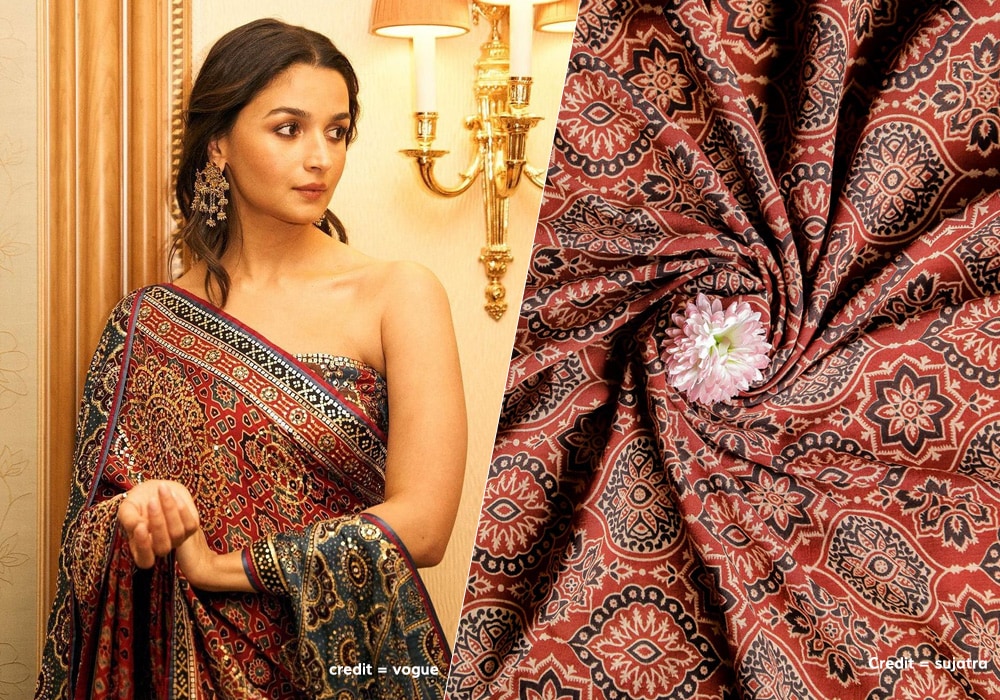
Designers in India and abroad are embracing Ajrakh, using the fabric to create modern garments. While it was traditionally used for turbans and shawls, you can now find Ajrakh on:
Home furnishings like bedspreads and cushion covers
Artisans are also experimenting with new color palettes and motifs to appeal to modern tastes, while staying true to the traditional process.
Conclusion
Ajrakh printing is a craft that beautifully balances complexity and harmony. It is a dance of water, plants, minerals, and human skill. Each piece of Ajrakh fabric is a small universe, filled with stars, geometry, and the stories of the artisans who made it.
In an age of instant gratification, Ajrakh reminds us of the value of patience, precision, and a deep connection to nature. By choosing to wear or use Ajrakh, you are not just acquiring a beautiful textile; you are helping to keep a 400-year-old tradition alive and supporting a community that has mastered the art of printing with the stars.
Aza Staff is a team of writers, creators, and industry insiders who live and breathe fashion. We explore the craft, culture, and creativity behind India’s luxury design scene, bringing you stories that are equal parts stylish and soulful.