


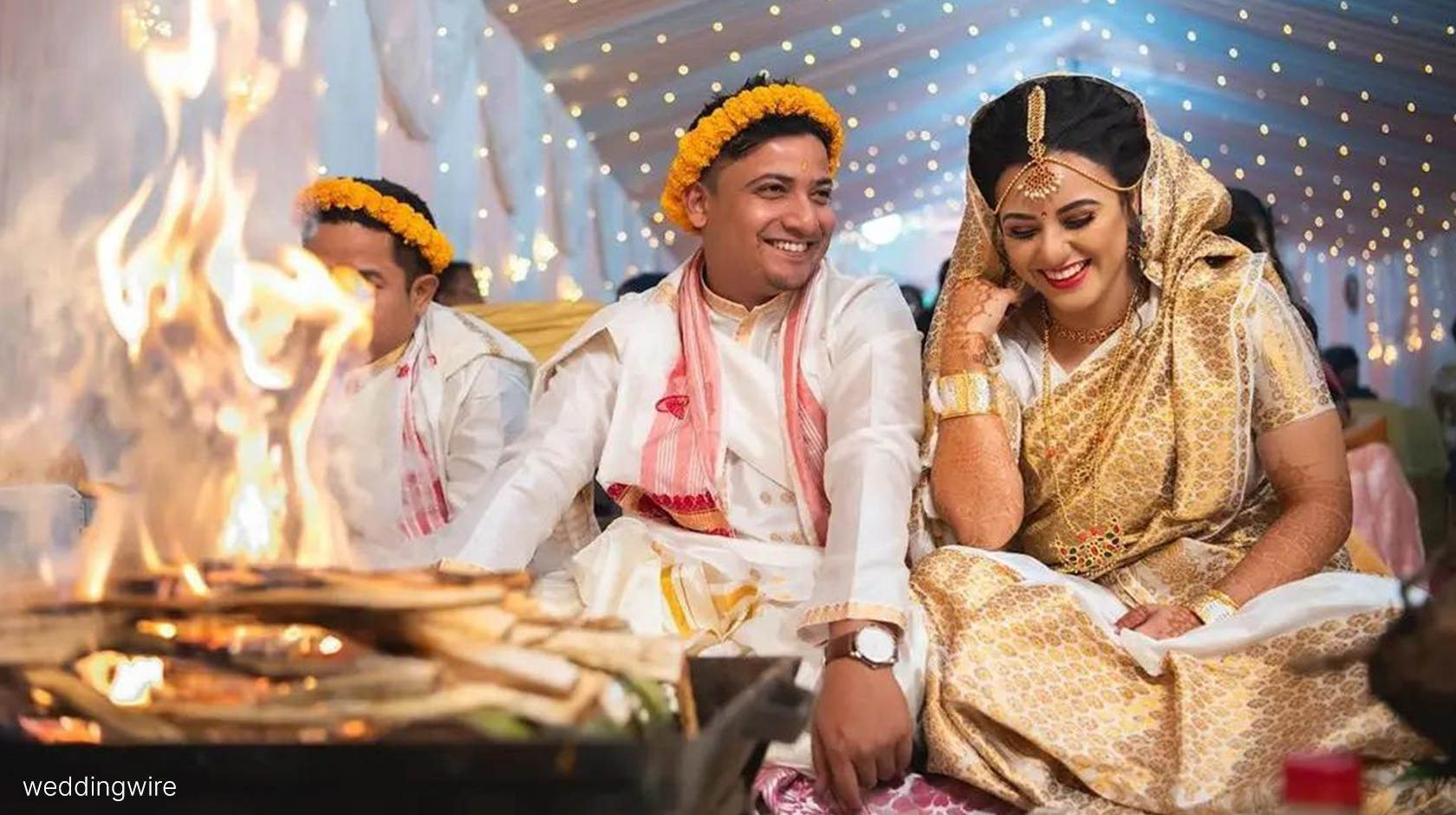
Weddings in Assam are not just celebrations they are living museums of culture, mythology, music, and emotion. Rooted in centuries of Vaishnavite traditions, indigenous tribal customs, and the natural beauty of the Brahmaputra valley, Assamese weddings carry a character that is entirely their own. If you are attending an Assam wedding in 2026, planning one, or simply curious about one of India's most culturally rich wedding traditions this complete guide covers every ritual, custom, and meaningful detail you need to know.

What Makes Assam Weddings Unique?
Assamese weddings are a beautiful blend of Hindu Vaishnavite practices, indigenous community customs (Bodo, Mising, Rabha, Tiwa, and others), and a strong influence of the Sattriya cultural tradition founded by the saint-scholar Srimanta Shankardev. Unlike the lavish, multi-day extravaganzas common in other parts of India, traditional Assamese weddings emphasize spiritual simplicity, community participation, and cultural authenticity over grandeur.
The ceremonies are guided by the Naam Ghar (community prayer hall) tradition, and the presence of Vaishnavite priests (called Satradhikars in some communities) is considered essential. Music, particularly the Bihu songs and Borgeet (devotional compositions), forms an inseparable part of the wedding atmosphere.
Pre-Wedding Rituals in Assam
Juron (Formal Acceptance Ceremony)
The wedding process formally begins with Juron the Assamese equivalent of an engagement ceremony. The groom's family visits the bride's home carrying gifts that typically include fish (considered highly auspicious in Assamese culture), betel nuts, betel leaves, coconut, and sweets. The exchange of these items between the two families marks the official acceptance of the marriage alliance.
Betel nut (tamul) and betel leaf (paan) hold profound cultural significance in Assam they are the primary symbols of respect, hospitality, and formal agreement in all ceremonial contexts. No Assamese wedding event begins without their presence.
Niyara (Purification Ritual)
A few days before the wedding, both the bride and groom undergo Niyara a period of ritual purification. During this time, they follow dietary restrictions, abstain from certain activities, and are not allowed to leave the house after sunset. This practice is rooted in the belief that the couple must enter marriage in a state of physical and spiritual purity.
Haldi (Pitoni) Ceremony
Similar to the Haldi ceremony in other parts of India, the Assamese version involves applying a paste of turmeric, mustard oil, and herbs to the bride and groom separately at their respective homes. This is called Pitoni in some Assamese communities. Women from the family apply the paste with prayers and songs, and the yellow color of turmeric is associated with auspiciousness, health, and the glow of a new beginning.
Tel Diya (Oil Application Ritual)
On the eve of the wedding, female relatives apply mustard oil on the bride's hair and body in a ritual called Tel Diya. This is accompanied by folk songs and is considered a deeply intimate family bonding moment a gentle farewell from the women of the bride's family as she prepares to transition into her new life.
The Main Wedding Day: Core Assamese Marriage Rituals
Doroha Sajai (Groom's Preparation)
On the wedding morning, the groom is ceremonially dressed and adorned by his family. He wears traditional Assamese attire a dhoti, kurta, and a traditional Assamese gamosa (a white cloth with red embroidered borders) draped over the shoulder. In many families, a xorai (a traditional bell metal offering stand) with betel nuts and leaves is presented to the groom as a blessing before he departs.
Bor Jiyanor Geet (Songs for the Groom's Procession)
As the groom's procession departs for the bride's home, women sing traditional Bor Jiyanor Geet folk songs composed specifically for the groom's journey. These songs, full of blessings and gentle teasing, are one of the most heartwarming elements of an Assamese wedding and are rarely witnessed at non-Assamese weddings.
Welcome of the Groom (Bor Borani)
Upon arriving at the bride's home, the groom is received in a ritual called Bor Borani. The bride's mother welcomes him with a sarai filled with tamul-paan, water, and flowers. She performs an aarti, circles the groom with a lit diya, and applies a tilak on his forehead. This welcome is considered sacred and sets the tone for the main ceremony.
The Wedding Ceremony (Biya)
The core Assamese wedding ceremony takes place under a decorated wedding canopy called the Biya Ghar or marriage pavilion. A Vaishnavite priest conducts the ceremony, chanting Vedic mantras and reading from texts associated with the Ek Sarana Naam Dharma tradition of Srimanta Shankardev.
Key rituals within the Biya include:
Lagna The priest determines and announces the auspicious moment (muhurat) for the main vows. Both families gather around as the ceremony officially begins.
Mala Bodol (Exchange of Garlands) The bride and groom exchange flower garlands three times, symbolizing their mutual acceptance and the public declaration of their union. This is equivalent to the Jaimala ceremony in North Indian weddings.
Haath Dhuwa (Hand Washing Ritual) The bride's parents ritually wash the groom's hands as a mark of honor and welcome, signifying that they are offering their daughter to a man they respect and trust.
Saptapadi (Seven Steps) As in most Hindu weddings, the bride and groom take seven steps together around the sacred fire, each step representing a vow of nourishment, strength, prosperity, happiness, progeny, health, and lifelong friendship. In Assamese tradition, this ritual is conducted with specific regional prayers and often accompanied by the playing of traditional instruments.
Sindoor Daan The groom applies sindoor (vermillion) in the bride's hair parting, the most powerful symbolic act of the entire ceremony, marking her transition into married life.
Xoru Sora In many Assamese families, the couple is ritually fed small amounts of rice and curd by the priest, symbolizing shared sustenance and their entry into domestic life together.
Post-Wedding Rituals in Assam
Bou Borani (Welcome of the Bride)
When the bride arrives at her new home for the first time, she is welcomed in a ceremony called Bou Borani. The groom's mother performs an aarti, offers tamul-paan, and the bride is asked to enter the home by stepping on a stone or wooden board as a symbol of firm, stable foundations for her new life.
Ashtamangala (Eighth Day Ritual)
Eight days after the wedding, many Assamese families perform the Ashtamangala ceremony a final post-wedding pooja that formally concludes the marriage rituals. The couple prays together, offerings are made to the family deity, and the bride is officially presented to the extended family and community as the new daughter-in-law.
Traditional Assamese Wedding Attire
Bride
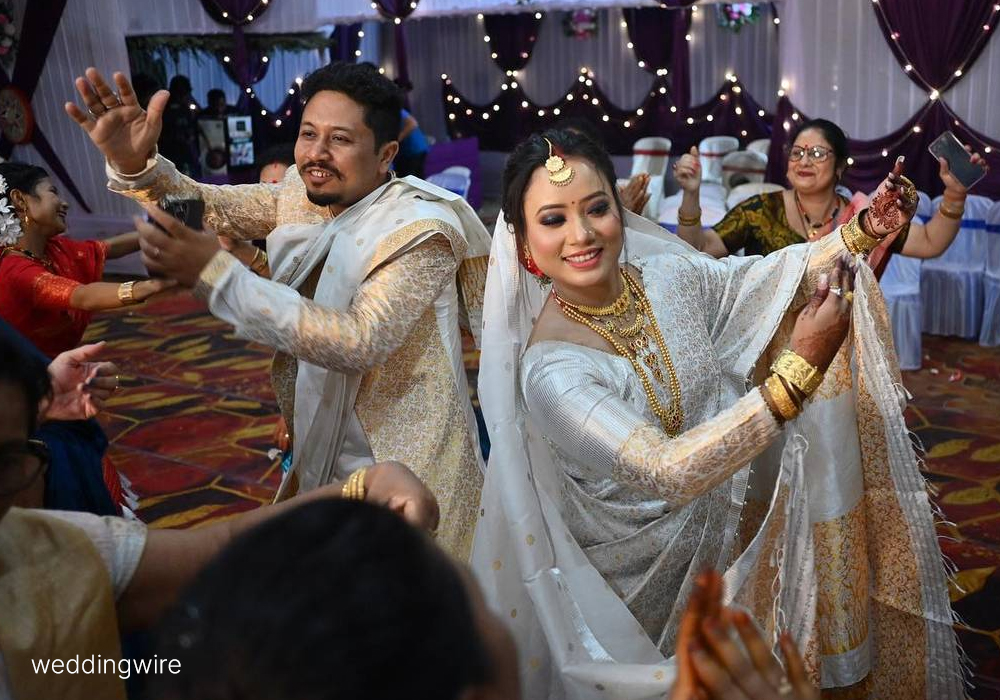
The traditional Assamese bride is a vision of elegance in handwoven silk. She typically wears a Mekhela Chador a two-piece silk garment woven in Assam's renowned Muga silk (golden silk) or Pat silk. The Mekhela Chador, adorned with traditional Assamese motifs like peacocks, elephants, and florals, is considered one of India's most graceful bridal garments.
Jewelry plays a key role the traditional bridal jewelry set includes the Junbiri (crescent-shaped gold earrings), Doogdoogi (a layered gold necklace), Gam Kharu (gold bangles), and Bena (a hair ornament). The bride's look is completed with fresh flowers particularly tube roses and marigolds woven into her hair.
Groom
The groom wears a white dhoti and kurta paired with the iconic Assamese gamosa. In many communities, a traditional turban or headgear is also worn. The gamosa a humble yet deeply symbolic white and red hand-woven cloth is the most recognizable symbol of Assamese cultural identity and its presence at the wedding carries immense significance.
Assamese Wedding Food: Traditional Delicacies
No Assam wedding guide is complete without a celebration of the food. Assamese wedding feasts are known for their wholesome, flavorful, and predominantly rice-based cuisine:
- Masor Tenga sour fish curry, a beloved staple
- Duck Curry with Ash Gourd a classic wedding special
- Pork with Bamboo Shoot popular in tribal and tea-garden communities
- Kosu Bhaji colocasia leaf preparation
- Til Pitha and Ghila Pitha traditional Assamese rice cakes served as sweets
- Jolpan a traditional breakfast platter of flattened rice, curd, and jaggery often served to guests
The feast is typically served on banana leaves or in traditional bell-metal utensils a practice that adds an authentic, earthy elegance to the dining experience.
Regional & Tribal Wedding Variations in Assam
Assam is home to over 30 indigenous communities, each with its own wedding customs:
|
Community |
Distinct Wedding Custom |
|
Bodo |
Bride price system; traditional Dokhona saree for the bride |
|
Mising |
Community feast (Dobur Uie) central to the wedding |
|
Rabha |
Nature-worship rituals integrated into wedding ceremonies |
|
Tiwa |
Ceremonial bamboo arch erected at the wedding entrance |
|
Tea Garden Communities |
Blend of Adivasi and Hindu rituals with folk music |
|
Assamese Muslim |
Nikah ceremony combined with local Assamese cultural elements |
Assamese Wedding Music & Dance
Music is the heartbeat of an Assam wedding. The Bihu dance and Bihu songs are performed at weddings as a celebration of joy and new beginnings. Women perform Husori a traditional group song during the bride's pre-wedding ceremonies. The dhol (drum), pepa (horn flute), and toka (bamboo clapper) are the primary instruments that fill the wedding atmosphere with rhythm and festivity.
In more traditional households, Borgeet the devotional compositions of Srimanta Shankardev are sung during the religious portions of the ceremony, adding a meditative spiritual depth to the celebration.
Frequently Asked Questions (FAQ)
Q1. What is a traditional Assamese wedding called? A traditional Assamese wedding is called Biya. It is conducted as per Hindu Vaishnavite traditions and is guided by a priest with regional customs specific to the community.
Q2. What do Assamese brides wear on their wedding day? Assamese brides traditionally wear a Mekhela Chador made of Muga silk or Pat silk, paired with traditional gold jewelry like Junbiri earrings, Doogdoogi necklace, and Gam Kharu bangles.
Q3. What is the significance of tamul-paan in Assamese weddings? Tamul (betel nut) and paan (betel leaf) are the most sacred symbols of hospitality and formal agreement in Assamese culture. They are offered at every stage of the wedding from the Juron engagement ceremony to the welcome of the groom and bride.
Q4. How many days does an Assamese wedding last? A traditional Assamese wedding spans three to five days, including the pre-wedding rituals (Juron, Pitoni, Tel Diya), the main wedding day (Biya), and the post-wedding ceremony (Ashtamangala on the eighth day).
Q5. What is the Ashtamangala ceremony in Assam? Ashtamangala is a post-wedding ritual performed eight days after the wedding. The couple prays together, offerings are made to the family deity, and the bride is formally introduced to the extended family and community.

