


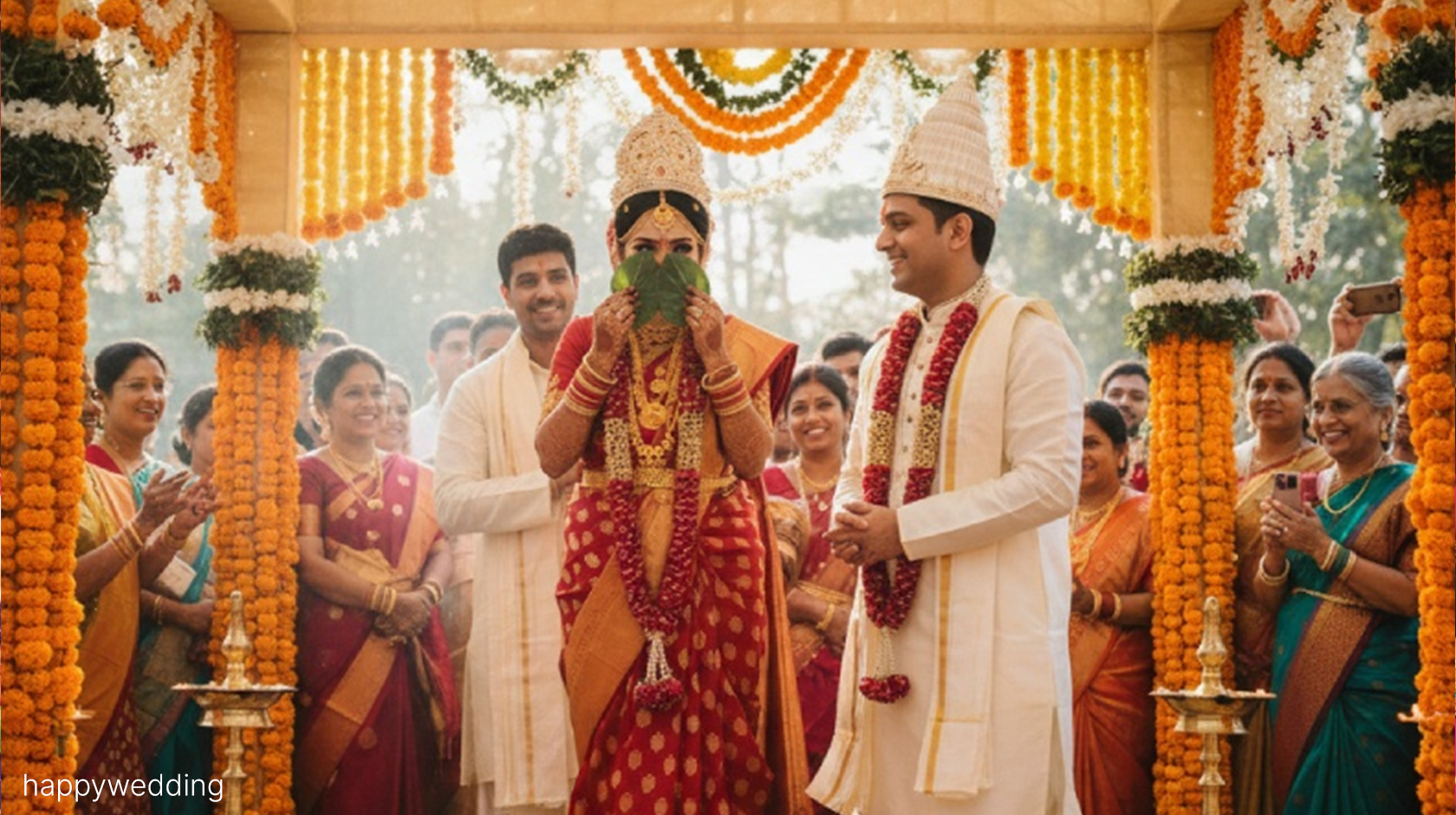
The wedding is over. The shehnai has gone quiet. The sindoor has been applied, the conch shells have been blown, and the bride has crossed the threshold of her new home. And yet for a Bengali family the most important celebration is still to come. The Boubhat Ceremony is the grand post-wedding reception hosted by the groom's family, where the bride is formally presented to the world as the newest member of her new household.

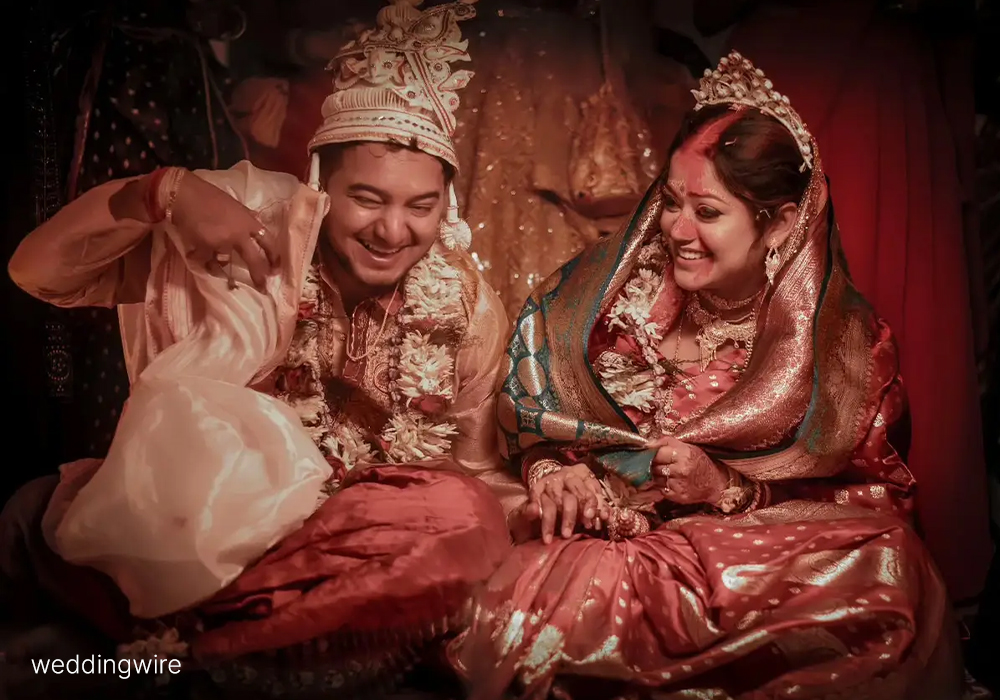
Warm, generous, deeply ritualistic, and centered around the one thing Bengalis love most food the Boubhat is not an afterthought to the wedding. In Bengali culture, it is the wedding's most anticipated final chapter. In 2026, as Bengali weddings continue to be celebrated with extraordinary cultural pride, this complete guide explains everything you need to know about the Boubhat ceremony its meaning, its rituals, its food, and its enduring significance.
What Is the Boubhat Ceremony?
Boubhat pronounced bow-bhaht is a compound Bengali word: "Bou" means bride or new daughter-in-law, and "Bhat" means cooked rice or a rice-based meal. Literally translated, Boubhat means "the bride's rice feast" a reception hosted by the groom's family in honor of the new bride, typically held one to three days after the main wedding.
The Boubhat is not simply a party. It is a deeply structured ceremonial event with its own set of rituals, gift exchanges, and symbolic acts all centered on formally integrating the bride into her new family and presenting her to the groom's extended community. It is simultaneously the bride's official social debut as a daughter-in-law and the groom's family's most significant act of hospitality toward the newly formed alliance.
The Boubhat is observed across Hindu Bengali communities of West Bengal, Bangladesh, Tripura, and the Bengali diaspora worldwide. It holds a position in Bengali weddings equivalent to what the Griha Pravesh holds in North Indian traditions and the Badhabhaat holds in Odia weddings but with its own distinctive Bengali character that makes it utterly unique.
Historical & Cultural Roots of Boubhat
The Boubhat tradition is rooted in Bengal's ancient culture of anna (rice) as the highest form of offering and hospitality. In Bengal, rice is not merely food it is sacred. It is the primary offering made to the gods, the central element of every festival, and the symbol of abundance, fertility, and domestic prosperity. For a new bride to be honored with a rice feast by her new family carries profound cultural and spiritual meaning.
Historically, the Boubhat also served a vital social function: in the days before digital communication, telephone, or even reliable postal service, the Boubhat was the formal occasion at which the groom's family announced the wedding to their own extended community. Relatives, neighbors, colleagues, and community elders who could not attend the main wedding were invited to the Boubhat making it the groom's family's primary celebration and the bride's introduction to her new social world.
This tradition of announcing the bride through a feast is deeply Bengali a culture where the table is the social center, and where feeding guests is the highest expression of welcome and love.
When Is the Boubhat Ceremony Held?
The Boubhat is traditionally held on the second or third day after the wedding once the bride has spent her first night and first full day in her new home and has begun adjusting to her new environment. The specific day is chosen in consultation with the family priest based on an auspicious muhurat.
In many contemporary Bengali families, the Boubhat has been merged with or replaced by a Western-style wedding reception held at a banquet hall on the evening of or the day after the wedding. However, traditional families still observe the Boubhat as a separate, ritual-filled ceremony distinct from any modern reception.
Rituals of the Boubhat Ceremony: Step-by-Step
Step 1 Bou Baran (Welcoming the Bride Again)
The Boubhat begins with a second, more elaborate Bou Baran a formal re-welcoming of the bride into the groom's home. The groom's mother and senior female relatives perform an aarti with a decorated plate containing a lit diya, flowers, and sweets. The bride stands at the threshold, dressed in full bridal attire typically the red Benarasi saree given to her by the groom's family and receives this second welcome as the lady of the house, not just as a guest.
A shankha (conch shell) is blown as the bride enters, and the sound of ululation (ulu dhwani) the high-pitched ceremonial call made by Bengali women fills the home. These sounds are considered deeply auspicious in Bengali culture and are used to invoke divine blessings at every significant ceremonial moment.
Step 2 Nandimukh Shraddha (Ancestral Blessing)
Before the feast begins, the groom's family performs a short Nandimukh Shraddha a Vedic ritual in which the souls of the family's ancestors are invoked and asked to bless the new couple and witness the Boubhat celebration. Offerings of sesame seeds, water, and flowers are made to the ancestors. This ritual grounds the Boubhat in the family's spiritual lineage and reflects the Bengali belief that no celebration is complete without the blessings of those who came before.
Step 3 Bou Bhaat (The Bride Serves Rice)
The most distinctive and symbolically significant ritual of the entire ceremony: the bride herself cooks or ceremonially serves rice to the assembled family and guests. In traditional households, the bride prepares a portion of the meal typically rice and at least one dish under the guidance of the groom's mother. This act is not about culinary skill; it is a deeply meaningful declaration that the bride has accepted her role as the keeper of her new household.
In many modern families, the full cooking responsibility has shifted to professional caterers, but the symbolic act of the bride serving rice at least to the senior-most family members is preserved as a non-negotiable ritual. The bride serves each elder guest personally, beginning with the groom's parents and moving through the family hierarchy. Each guest, upon receiving rice from the bride, offers her a blessing and often a gift.
Step 4 Mukhe Bhat (First Feeding of the Bride)
In some Bengali families, the Boubhat includes the ritual of Mukhe Bhat the groom's mother or mother-in-law feeding the bride the first morsel of rice in her new home. This act symbolizes the mother-in-law's acceptance of the bride as her own daughter and her responsibility for the bride's nourishment and well-being. It is one of the most emotionally resonant moments of the Boubhat a quiet, intimate act amid the larger celebration that carries enormous weight.
Step 5 Aashirwad (Blessings from Elders)
After the ritual serving of rice, the bride formally takes blessings from every elder member of the groom's family and the assembled guests. She touches the feet of each elder, who places a hand on her head and offers a blessing typically for health, happiness, and a long, harmonious marriage. Each elder also presents a gift: cash, jewelry, gold coins, or household items. The Aashirwad sequence can last a considerable time in large Bengali families and is both a spiritual and social ceremony.
Step 6 Boubhat Feast (The Grand Meal)
The heart of the Boubhat is the feast a multi-course Bengali spread of extraordinary variety and generosity. The meal is served to all guests by the groom's family, and no expense is spared. A traditional Boubhat feast follows the Bengali style of serving on kola pata (banana leaves) in the most traditional households, or in formal dining arrangements at modern venues.
Step 7 Narir Adda (Women's Gathering & Gifts)
After the main feast, the women of both families gather for an informal Narir Adda a beloved Bengali tradition of animated conversation, laughter, and socializing. Gifts presented to the bride are displayed and admired. The bride's relatives from her parental side share stories about her childhood; the groom's family shares their hopes for her. This gathering is the emotional heart of the Boubhat where two families truly begin to become one.
Significance of the Boubhat Ceremony
- The Bride's Official Social Introduction
The Boubhat is the bride's formal debut in her new social world. Every guest at the Boubhat neighbors, colleagues, extended family, community elders meets the new bride for the first time. The impression she makes and the warmth with which she is received sets the tone for her social standing in her new community.
- The Groom's Family's Greatest Act of Hospitality
In Bengali culture, feeding people is the highest expression of love, respect, and welcome. By hosting the Boubhat feast, the groom's family declares to everyone present that they are proud of their new daughter-in-law and that they welcome her with open arms and full plates.
- The Bride's Transition into Her New Role
The act of the bride serving rice to elders is the ceremonial crossing of a threshold. It is the moment the bride stops being a guest in her new home and begins being its mistress its Grihalakshmi (household goddess). This transition, marked by the simple act of offering rice, is one of the most powerful ritual moments in the entire Bengali wedding sequence.
- Strengthening the Bond Between Two Families
The Boubhat is one of the first occasions at which members of both families mingle freely and at length without the tension and formality of the wedding day itself. This relaxed, celebratory gathering allows relationships to form naturally, and many of the friendships between the two families that last a lifetime are forged at the Boubhat feast.
- Honoring Rice as Sacred
The centrality of bhat (rice) in the Boubhat reflects Bengal's ancient reverence for its primary crop. Rice has sustained Bengal for millennia through floods, famines, and empires. To honor the bride with a rice feast is to offer her the most sacred thing Bengali culture possesses.
Traditional Boubhat Menu: What Is Served?
The Boubhat feast is one of the great showcases of Bengali culinary tradition:
- Luchi and Alur Dom deep-fried flatbreads with spiced potato curry; typically served as the opening course
- Shorshe Ilish hilsa fish in mustard gravy; the most iconic Bengali dish and a Boubhat essential
- Chingri Malaikari prawns in coconut milk curry; a celebratory Bengali classic
- Kosha Mangsho slow-cooked mutton curry with deep, rich spices
- Begun Bhaja crispy fried eggplant; a beloved Bengali side
- Daal yellow lentils tempered with ghee and spices
- Mishti Doi sweetened yogurt set in earthen pots; the quintessential Bengali dessert
- Rasgulla and Sandesh Bengali sweets that are non-negotiable at any celebratory occasion
- Payesh rice pudding cooked in milk; the most auspicious Bengali sweet, served to mark new beginnings
The feast always culminates with mishti (sweets) reflecting the Bengali saying: "Bengalis sweeten every ending."
Boubhat vs. Modern Wedding Reception: Key Differences
|
Aspect |
Boubhat |
Modern Reception |
|
Timing |
1–3 days after wedding |
Same day or night as wedding |
|
Central ritual |
Bride serves rice to elders |
Couple cuts cake, first dance |
|
Religious element |
Nandimukh Shraddha, ancestral prayers |
Minimal or absent |
|
Host |
Groom's family exclusively |
Both families jointly |
|
Food style |
Traditional Bengali multi-course feast |
Buffet or plated modern menu |
|
Purpose |
Bride's ritual integration into new family |
Social celebration with all guests |
|
Gift giving |
Elder-to-bride; ritualized and sequential |
Open gift table or cash envelopes |
Many contemporary Bengali families now observe both a traditional Boubhat at home with close family, followed by a modern reception at a venue for a larger guest list.
What Does the Bride Wear at Boubhat?
The bride dresses in her most formal Bengali bridal attire for the Boubhat typically the red Benarasi silk saree presented to her by the groom's family as part of the wedding gifts. She wears her complete set of Bengali bridal jewelry:
- Mukut (bridal crown of shola or gold)
- Shankha and Paula (white conch shell and red coral bangles symbols of married Bengali women)
- Noa (iron bangle, worn alongside shankha-paula)
- Sindoor in the hair parting
- Alta (red dye applied to the feet and hands)
- Maang Tikka, Necklace, and Earrings in gold
The combination of red saree, white and red bangles, and alta-painted feet is one of the most iconic and immediately recognizable bridal looks in all of India and it reaches its most formal expression at the Boubhat.
Frequently Asked Questions (FAQ)
Q1. What is the Boubhat ceremony in Bengali weddings? Boubhat is a post-wedding ceremony hosted by the groom's family, typically one to three days after the wedding. The bride is formally welcomed, serves rice to the family elders as a symbol of her new role as daughter-in-law, receives blessings and gifts, and is introduced to the groom's extended community through a grand traditional Bengali feast.
Q2. What does "Boubhat" mean in Bengali? Boubhat is a compound Bengali word: "Bou" means bride or new daughter-in-law, and "Bhat" means cooked rice or meal. It literally translates to "the bride's rice feast" reflecting the ceremony's central act of the bride serving rice to family elders.
Q3. Who hosts the Boubhat ceremony? The Boubhat is hosted exclusively by the groom's family at their home or a chosen venue. It is the groom's family's primary celebration and their formal introduction of the bride to their social circle.
Q4. What is the most important ritual in the Boubhat? The most ritually significant moment of the Boubhat is Bou Bhaat the ceremonial act of the bride serving rice to the senior members of the groom's family. This act symbolizes her acceptance of her new role as the household's Grihalakshmi (domestic goddess) and is considered the ceremonial heart of the entire event.
Q5. Is the Boubhat the same as a wedding reception? No. While both are post-wedding celebrations, the Boubhat is a traditional ritual ceremony with specific religious elements (Nandimukh Shraddha), symbolic acts (bride serving rice), and a structured format. A modern reception is a social event without ritual structure. Many Bengali families today observe both.
Q6. What fish is traditionally served at a Boubhat feast? Hilsa fish (Ilish) particularly in the form of Shorshe Ilish (hilsa in mustard gravy) is the most iconic and non-negotiable Boubhat dish. Hilsa is considered the queen of Bengali fish and its presence at the feast is a mark of prestige and auspiciousness.
Q7. What bangles does a Bengali bride wear at Boubhat? The Bengali bride wears Shankha (white conch shell bangles), Paula (red coral bangles), and Noa (iron bangles) a set considered sacred to married Bengali Hindu women. These bangles are first worn at the wedding and displayed prominently at the Boubhat.

