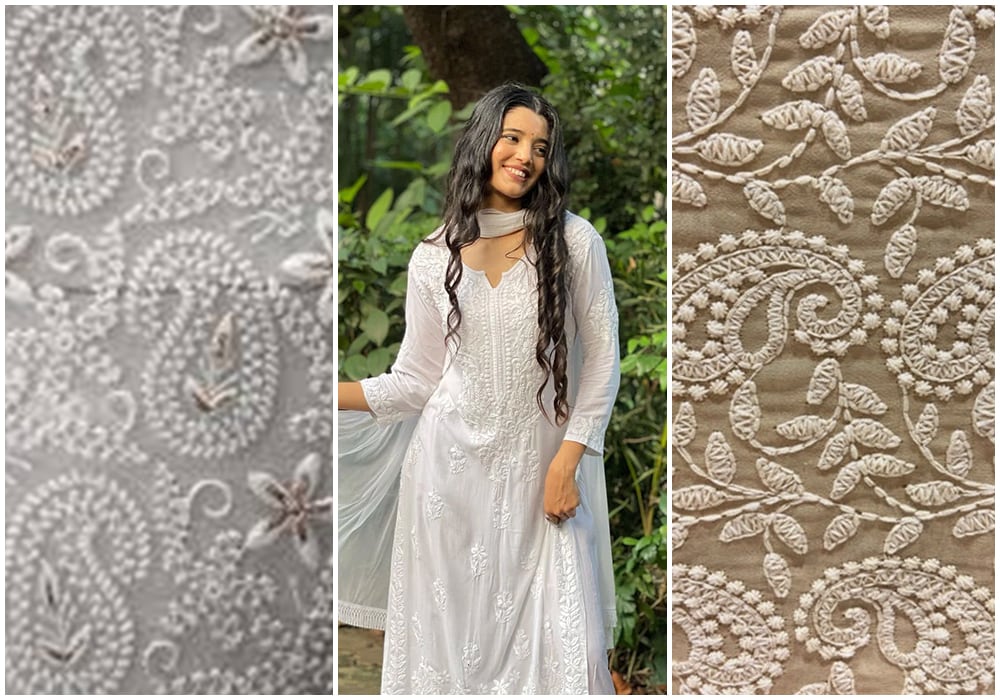
Imagine a fabric so light it feels like air, adorned with embroidery so delicate it looks like it was woven by magic. This is Chikankari.
Chikankari is more than just thread work; it is the pride of Lucknow and one of India’s most cherished art forms. Known for its elegance and sheer beauty, this traditional embroidery has won hearts all over the globe. Whether you see it on a breezy summer kurta or a heavy designer lehenga, Chikankari always stands out.
In this blog, we will take a journey through the lanes of Lucknow to understand the roots, the process, and the modern charm of this timeless craft.
What is Chikankari?
At its core, Chikankari is the art of hand embroidery done on fabric using white thread. The word comes from the Persian word ‘Chakin,’ which means intricate needlework.
Traditionally, artisans did this work on white muslin cloth using white cotton thread. This "white-on-white" look is the signature style of authentic Chikankari. However, fashion evolves. Today, you will find this embroidery on colorful fabrics like chiffon, georgette, silk, and organza, using threads of all colors.
A Royal History: Where Did It Begin?
The story of Chikankari is as royal as the art itself. While some historians trace its roots back to the 3rd Century BC, the most popular story takes us to the Mughal courts.
Legend says that Noor Jahan, the wife of Mughal Emperor Jahangir, introduced this Persian art form to India in the 17th Century. She was a talented embroiderer herself and loved the delicate floral patterns. The Emperor was so impressed that he set up workshops to promote the craft.
Since then, Lucknow (the City of Nawabs) has become the heartbeat of the Chikankari industry. Even after the Mughal empire faded, the artisans of Lucknow kept the tradition alive, passing the skills down from one generation to the next.
How is Chikankari Made? The 3-Step Process
Creating a single piece of Chikankari clothing is a labor of love. It is not done by machines; it requires skilled human hands. The process usually takes place in three main stages:
1. Block Printing (Chhapayi)
Before the needle touches the cloth, the design must be mapped out. Artisans use wooden blocks dipped in a washable blue dye to stamp the design onto the fabric. These blue lines guide the embroiderer.
2. Embroidery (Likhayi)
This is where the magic happens. Artisans stitch over the blue lines using needle and thread. This step is incredibly time-consuming. Depending on the complexity of the design, a single piece can take anywhere from ten days to several months to finish.
3. Washing (Dhulayi)
Once the embroidery is complete, the fabric goes for a wash. This removes the blue ink traces and cleans the fabric. Finally, the cloth is starched and ironed to give it a crisp, finished look.
The Art of the Stitch: Techniques and Jaali Work
Chikankari is famous because it is complex. There are roughly 36 different types of stitches used in this art form. Artisans often combine several stitches in one pattern to create texture and depth.
Here are a few popular techniques you might spot:
Shadow Work (Bakhiya): This is a unique technique where the embroidery is done on the back of the fabric. The thread is visible from the front through sheer fabric, creating a shadowy effect.
Embossed Stitch (Murri and Phanda): These stitches create raised, grain-like shapes. They are often used to fill the center of flowers.
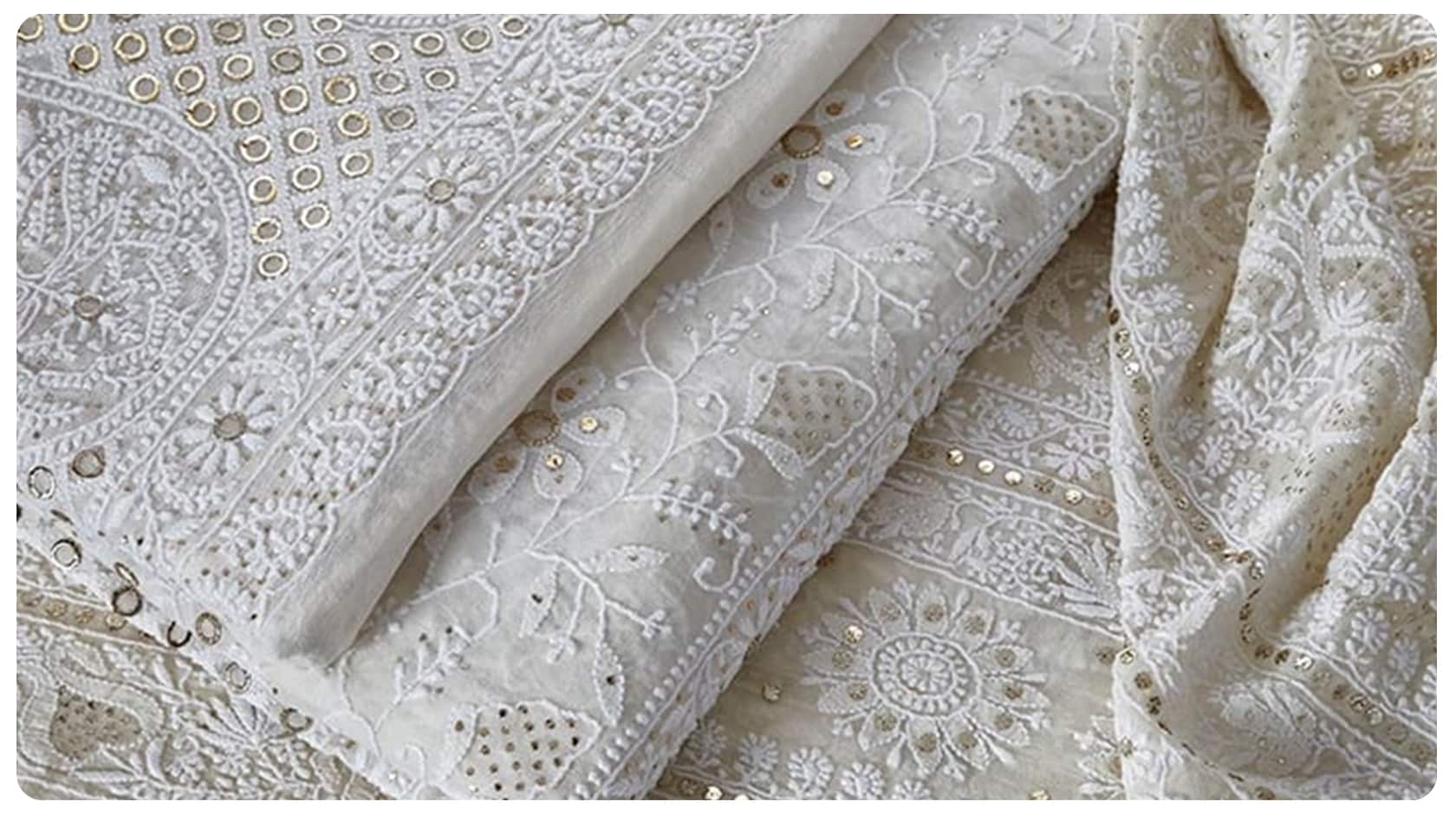
The Net Effect (Jaali): This is the most distinct feature of high-quality Chikankari. Artisans carefully pull the warp and weft threads of the fabric apart to create tiny holes. They do this without pulling any thread out of the fabric. The result looks like a delicate net or lattice, resembling the stone carvings of Mughal architecture.
Design Elements: Nature on Fabric
If you look closely at a Chikankari kurta, you will rarely see geometric shapes. The designs are almost exclusively inspired by nature and Mughal architecture.
Common motifs include:
Paisleys (Kairi): The mango shape is a staple in Indian design.
Creepers and Vines: Flowing lines of leaves connecting the flowers.
Flowers: Jasmine, rose, and lotus are popular choices.
Birds: Peacocks and parrots often feature in more elaborate pieces.
These motifs reflect the Persian love for floral beauty, which Noor Jahan brought to the Indian courts.
Chikankari in the Modern World
For a long time, Chikankari was seen as traditional summer wear for older generations. That has changed completely.
Today, Chikankari is a global fashion statement. Top Indian designers like Tarun Tahiliani and Abu Jani-Sandeep Khosla have taken this craft to international runways. You can now spot celebrities in Hollywood and Bollywood wearing Chikankari gowns, skirts, and even crop tops.
Why is it so popular now?
Versatility: You can wear a simple cotton Chikankari kurta to work, or a heavy sequin-embellished Chikankari saree to a wedding.
Comfort: Because it is usually done on lightweight fabrics, it is perfect for India’s hot climate.
Sustainability: In an age of fast fashion, people appreciate the slow, handmade nature of this craft.
Conclusion
Chikankari is a testament to the skill and patience of Indian artisans. It has survived centuries of change, moving from the courts of Emperors to the wardrobes of modern fashionistas.
When you wear Chikankari, you carry a piece of history. You support the artisans of Lucknow who work tirelessly to keep this delicate art alive. Whether you prefer the classic white-on-white look or modern pastel hues, this embroidery adds a touch of grace that no machine can replicate.
Next time you shop for ethnic wear, look for the shadow work or the tiny Jaali holes. You will know you are looking at a masterpiece.
Aza Staff is a team of writers, creators, and industry insiders who live and breathe fashion. We explore the craft, culture, and creativity behind India’s luxury design scene, bringing you stories that are equal parts stylish and soulful.