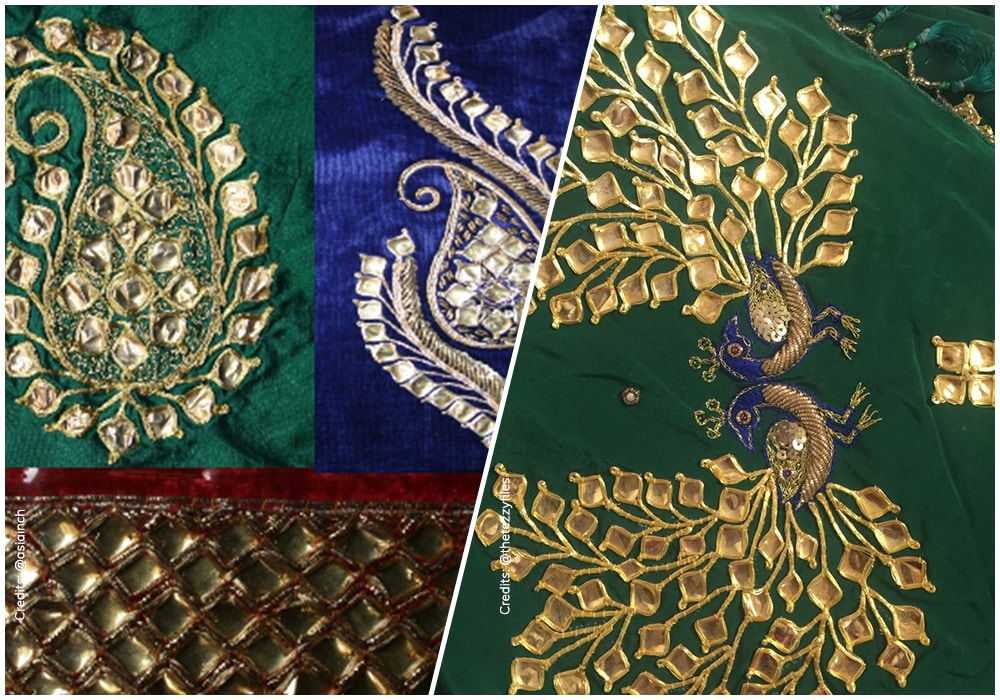
Using tiny, diamond-shaped metal pieces stitched onto luxurious fabrics with golden threads, this art form transforms cloth into a canvas of glittering motifs.
In the regal city of Udaipur, where majestic palaces reflect in shimmering lakes, a craft as ornate as the city itself has been quietly practiced for centuries. This is Danke-ka-Kaam, a unique and dazzling form of metal embroidery that once adorned the garments of Rajput royalty.
Using tiny, diamond-shaped metal pieces stitched onto luxurious fabrics with golden threads, this art form transforms cloth into a canvas of glittering motifs. It is a craft that speaks of opulence, precision, and a rich cultural heritage that is now fighting to survive.
This guide will take you into the world of Danke-ka-Kaam, exploring its 400-year-old history, the meticulous process behind its creation, and the efforts being made to ensure this royal art form does not fade into history.
What is Danke-ka-Kaam?
Danke-ka-Kaam, which translates to "work of the danka," is a form of metal embroidery unique to the Mewar region of Rajasthan, particularly Udaipur. The "danka" is a small, silver-plated metal piece, usually no bigger than 1.5 cm. These tiny plates are painstakingly stitched onto fabric by hand using fine zari (metallic) threads.
The result is a richly textured surface that glitters with every movement. The work is often combined with other embroidery styles like Zardozi and Kantha to create even more intricate designs. Traditionally, this embroidery was used on the poshaks (attires) of Rajput women, making it a staple for weddings and grand festivals.
A Legacy of Royalty: Tracing the Origins
The history of Danke-ka-Kaam dates back over 400 years to the 16th century. It is believed that the craft was brought to Rajasthan by the Bohra community, who migrated and settled in the region.
The craft soon found favor with the royal courts of Mewar. The rulers and nobility were patrons of fine arts, and the glittering danka work perfectly complemented their opulent lifestyle. It became an essential part of the traditional attire for royal women, which consisted of:
Kanchali: A form of blouse.
Ghagra: A full, gathered skirt.
Odhni: A traditional veil or head covering.
These garments, when embellished with danka work, were not just clothes; they were symbols of status and wealth. The price of a finished piece was often determined by its weight, due to the precious metals used.
The Making of a Masterpiece: How It's Done
Creating a danka-embroidered textile is a slow, multi-step process that requires immense skill and precision. It is a true labor of love, performed by a handful of master artisans.
1. Creating the Danka
The process begins with making the tiny metal pieces themselves.
The Metal: Originally, the danka was made from pure gold. To make the craft more affordable, artisans now use thin sheets of 98% pure silver, which are then electroplated with gold.
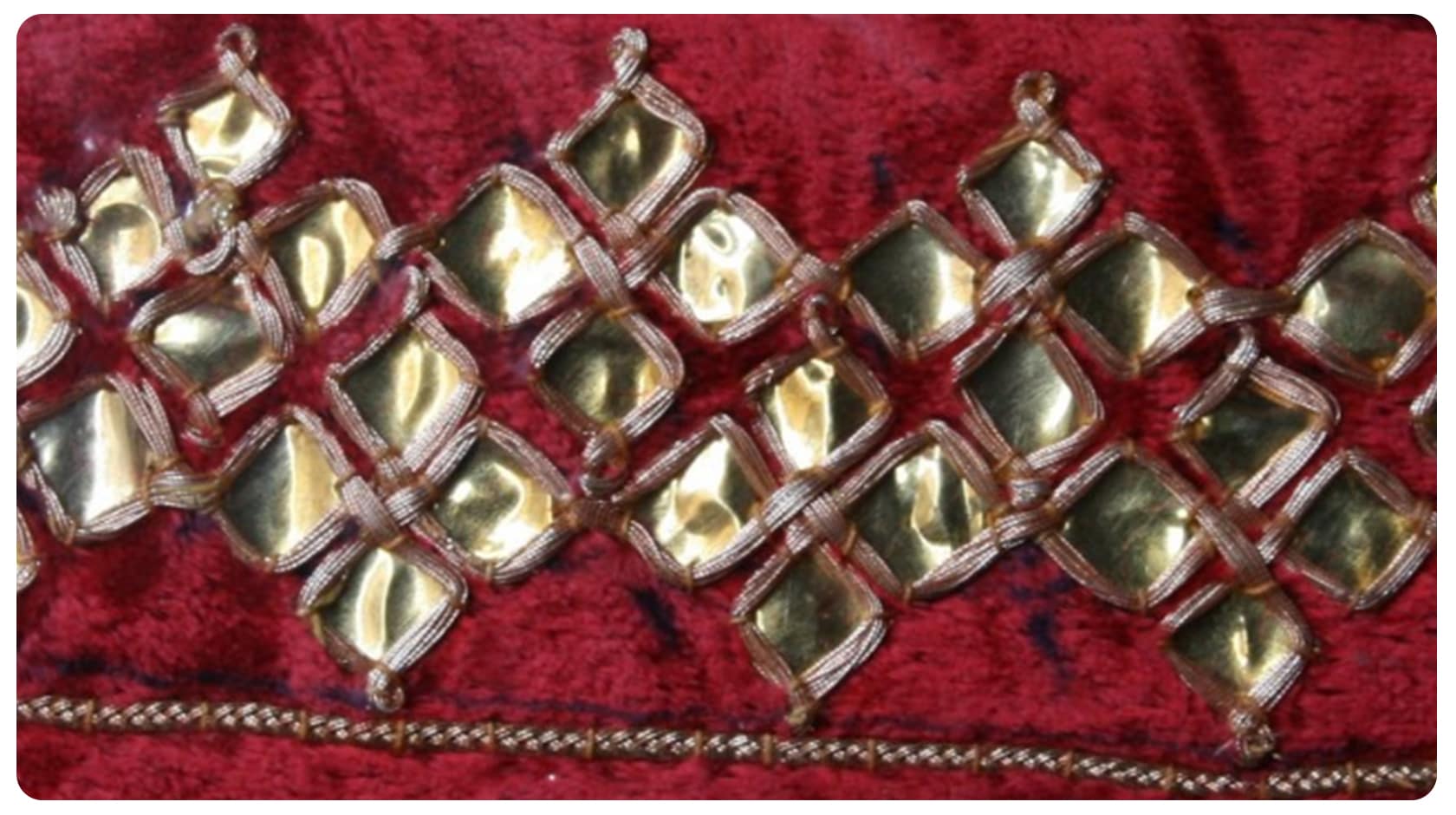
Shaping the Pieces: The gold-plated silver sheets are washed and polished. They are then cut into small strips and hammered with a special stone. This hammering process gives the danka its unique shape, often described as looking like the tip of an ice cream cone or a faceted diamond. This was once known as korpatti ka kaam.
2. Preparing the Fabric
The chosen fabric, typically a luxurious material like silk, satin, or velvet, is stretched tightly over a wooden frame, known as a khat. This ensures that the fabric does not pucker during the embroidery process.
3. The Embroidery
This is where the artisan's skill truly shines.
Applying the Motif: A design is first selected, and a stencil is used to trace the pattern onto the fabric.
Stitching the Danka: The artisan uses a sharp needle and kasab (fine metallic thread) to attach the danka to the fabric. Each danka is secured with about eight stitches, which are tied in a special knot. About 3-5 strands of thread are passed under and over the danka to hold it firmly in place.
The meticulous stitching ensures that the metal pieces lie flat against the fabric, creating a seamless, glittering surface.
Design Elements and Motifs
The designs used in Danke-ka-Kaam are deeply inspired by nature and the rich artistic traditions of Rajasthan.
Fabrics: The embroidery is almost always done on rich, lustrous fabrics like silk and velvet. The smooth surface of these materials provides the perfect backdrop for the glittering metalwork.
Motifs: Common motifs are drawn from the world around the artisans. These include:
The sun and the moon
Flowers, especially lotuses and roses
Paisleys (mango shapes)
Peacocks, a symbol of royalty and beauty
Vines and scrolls, which are often used for borders.
The combination of shimmering metal on deep-colored velvet or silk creates a dramatic and luxurious effect that is truly breathtaking.
Danke-ka-Kaam Today: A Craft on the Brink
Despite its glorious past, Danke-ka-Kaam is now a critically endangered craft. The number of artisans who possess the skills to practice it has dwindled alarmingly. It is believed that only a handful of authentic artisans, possibly as few as two, remain in Udaipur today.
The Challenges
Several factors have contributed to the decline of this art form:
High Cost: The use of precious metals makes the final product very expensive, limiting its market.
Time-Consuming: The process is extremely slow, and artisans struggle to compete with faster, machine-made embellishments.
Lack of New Artisans: Younger generations are often reluctant to take up a craft that requires years of training and offers uncertain financial returns.
A Glimmer of Hope
However, all is not lost. There are concerted efforts to revive this beautiful craft.
Training Workshops: Master artisans, with the support of local organizations, have conducted workshops to train younger people in the technique. While it is difficult to find committed students, these initiatives have managed to spark some interest.
Modern Applications: To make the craft more relevant to today's market, artisans are now using danka work on a wider range of products. Beyond traditional wear, you can now find this embroidery on:
Modern sarees
Blouses and jackets
Clutches and handbags
Decorative wall panels
By adapting to modern tastes, it is hoped that the demand for danka work will increase, providing a sustainable livelihood for the artisans and encouraging more people to learn the craft.
Conclusion
Danke-ka-Kaam is more than just an embroidery technique; it is a piece of Rajasthan's royal soul. It is a story of precious metals, skilled hands, and a legacy that has been passed down through generations. The glittering danka pieces are not just decorations; they are tiny monuments to a glorious past.
As consumers and patrons of art, supporting such endangered crafts is crucial. Choosing a product with danka work is not just buying a luxury item; it is an investment in preserving a 400-year-old heritage. With continued support and modern innovation, there is hope that the shimmer of Danke-ka-Kaam will not be lost to time but will continue to sparkle for the world to see.
Aza Staff is a team of writers, creators, and industry insiders who live and breathe fashion. We explore the craft, culture, and creativity behind India’s luxury design scene, bringing you stories that are equal parts stylish and soulful.