


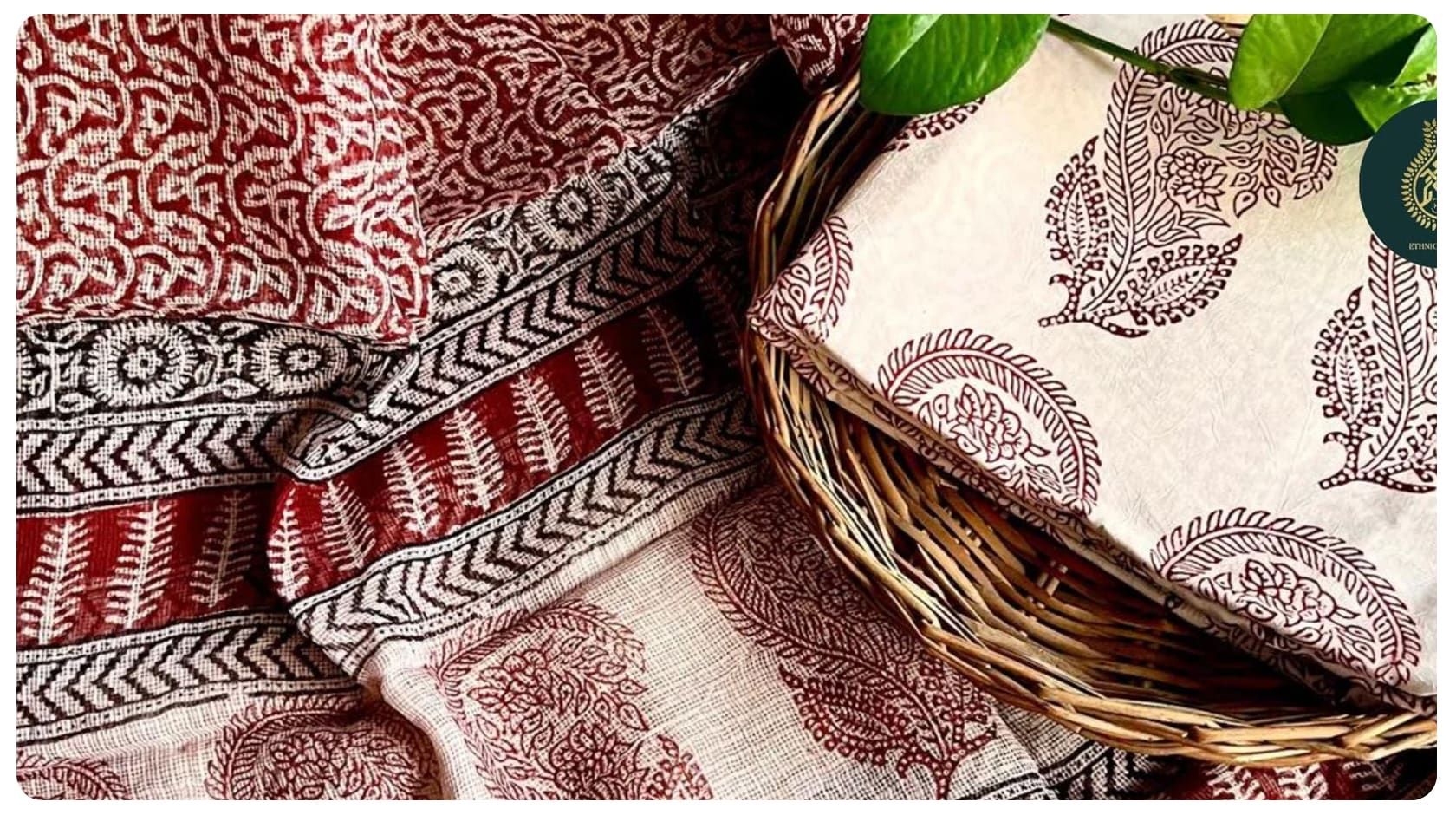

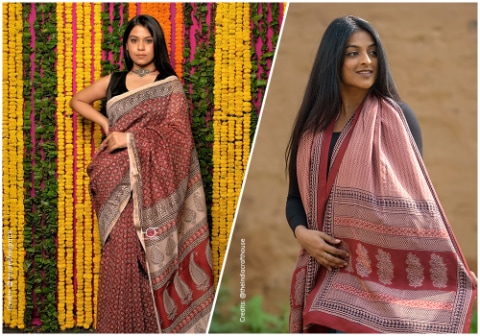
India is a land where fabric tells a story. Every weave, every knot, and every print holds centuries of tradition within its threads. Among these treasures lies the magnificent art of Bagh print. Originating from the heart of India, this textile art is not just a method of printing; it is a testament to the patience and skill of Indian artisans.
If you have ever admired the bold geometric patterns of Bagh print sarees or the deep, earthy reds and blacks of a hand-printed kurta, you have witnessed a craft that has survived over a thousand years. This blog explores the fascinating journey of Bagh printing, from the riverbanks of Madhya Pradesh to the luxury collections at Aza Fashions.
What is Bagh Print?
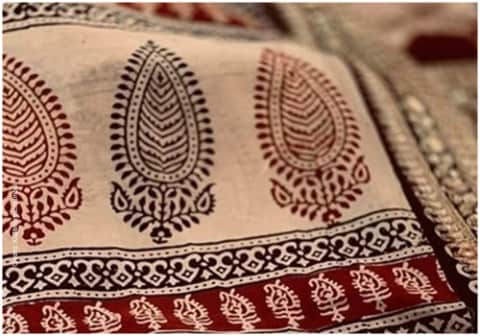
Bagh print is a traditional hand-block printing technique known for its geometric and floral motifs, typically printed in red and black on a white background. It gets its name from the small town of Bagh in the Dhar district of Madhya Pradesh.
Unlike modern chemical printing, this craft relies entirely on natural sources. The distinct visual character of Bagh comes from its use of vegetable dyes and a rigorous washing process in the local river waters. It is a labor-intensive art form practiced primarily by the Khatri community, who have guarded these secrets for generations.
Tracing the Roots: History and Origin
While we cannot pinpoint the exact birthday of this art form, historians believe Bagh printing is over 1,000 years old. The story of its origin is a tale of migration and survival.
It is believed that the Chhipas (a caste of printers) from the Muslim Khatri community brought this art to Madhya Pradesh. Some theories suggest they traveled from Larkana in Sindh (now in Pakistan), while others trace their journey from Rajasthan. They eventually settled near the Bagh River.
Why did they choose this spot? The answer lies in the water. The artisans discovered that the chemical composition of the Bagh River was rich in copper content. This unique property of the water enhanced the richness of the natural dyes, giving the fabrics a luminosity that could not be replicated anywhere else in the world.
The Secret Ingredient: The Bagh River
You cannot separate the art from the river. The Bagh River is not just a source of water; it is a co-creator of the fabric. The high copper content in the river water acts as a natural mordant. When the dyed fabric is washed in this specific water, the colors—especially the blacks and reds—develop a distinct, radiant sheen.
This dependency on the local environment makes traditional hand block printing in Bagh truly unique. If you were to take the same artisans, the same blocks, and the same dyes to a different city, the result would not be a true Bagh print. The geography is an essential part of the chemistry.
How Bagh Print is Made: A Labor of Love
Creating a single piece of Bagh printed fabric is a scientifically complex and physically demanding process. It involves multiple stages of washing, dyeing, and printing. Here is a step-by-step look at how these masterpieces come to life.
1. Preparation (Khara Karna)
The process begins with raw fabric, usually cotton, silk, or chiffon. The fabric is soaked in water for two hours and then beaten against river stones. This step, called Khara Karna, removes all starch and impurities, ensuring the cloth is soft and ready to absorb dye.
2. Treatment (Mengni Karna)
Next comes a vital step that gives the fabric its yellowish-white base. The cloth is soaked in a special solution made from rock salt, castor oil, and mengni (goat dung). The enzymes in the goat dung act as a bleaching agent and help the fabric absorb the dyes later. After soaking, the fabric is dried, rinsed, and dried again multiple times.
3. The Printing (Chapaai)
This is where the magic happens. Artisans use hand-carved wooden blocks known as bilals. These blocks are made from teak or sheesham wood and can take days to carve.
- The Dye Tray: The dye is placed in a wooden tray called a palea. Inside the tray, a bamboo mesh wrapped in wool floats on the dye. This acts like a stamp pad, ensuring the block picks up just the right amount of color.
- The Table: The fabric is laid out on a stone table called a Farsi, which is covered with layers of old cloth to provide a cushioned surface.
- The Action: The artisan presses the block onto the fabric with precision. A skilled printer can cover five yards of fabric in a few hours, aligning the intricate patterns perfectly by eye.
4. Washing and Developing (Bichalna and Bhatti)
Once printed, the fabric rests for at least a week to let the dye set. It is then taken back to the river for Bichalna—a rigorous washing and beating process to remove excess dye.
Finally, the fabric enters the Bhatti (furnace). It is boiled in large copper vats containing water, Alizarin, and Dhavda flowers. As the temperature rises, the dull colors suddenly bloom. The grey turns to deep black, and the pinkish tones turn to vibrant red. This dramatic transformation is the hallmark of authentic Bagh print.
The Palette of Nature: Understanding Natural Dyes
One of the most appealing aspects of Bagh print is its eco-friendly nature. In a world dominated by synthetic chemicals, natural dyes remain the soul of this craft.
- Red: Created using alum (phitkari) and tamarind seeds. When boiled with Alizarin, this turns into a rich red.
- Black: Made by fermenting iron filings (often from old horseshoes) with jaggery and water. This mixture oxidizes to create a deep, permanent black.
- Mustard and Khaki: Derived from pomegranate rinds and dhavdi flowers.
- Indigo: Sourced from the indigo plant for blue shades.
These natural ingredients ensure that the fabric is skin-friendly and sustainable, making it a perfect choice for conscious consumers.
From Traditional Sheets to Modern Runways
For decades, Bagh prints were used primarily for traditional items like bed covers and local attire. However, the art form has evolved beautifully. In 2008, Bagh prints received the Geographical Indication (GI) tag, protecting its identity and boosting its global fame.
Today, designers are reimagining this ancient craft for the modern wardrobe. You will find the print on:
- Contemporary Co-ord Sets: Perfect for a fusion look.
- Flowy Skirts and Lehengas: Adding heritage to festive wear.
- Scarves and Stoles: A touch of tradition for western outfits.
- Menswear: Kurtas and shirts featuring subtle geometric Bagh motifs.
The versatility of the geometric patterns makes Bagh print timeless. Whether draped as a saree or tailored into a chic jacket, it fits seamlessly into both ethnic and western aesthetics.
Discover Bagh Print at Aza Fashions
At Aza Fashions, we believe in bridging the gap between heritage craftsmanship and contemporary luxury. We collaborate with India's finest designers who are dedicated to reviving and sustaining traditional arts like Bagh printing.
When you shop for Bagh print styles at Aza Fashions, you aren't just buying a piece of clothing; you are supporting a lineage of artisans who have kept this fire alive against the odds. Our collection features designers who respect the authenticity of the process while bringing you silhouettes that fit the modern lifestyle.
From intricate Bagh print sarees by Rabani & Rakha to fusion sets by Siddhartha Bansal, our curated selection offers something for every fashion enthusiast who values culture.
Conclusion
Bagh print is more than just a textile; it is a celebration of nature, chemistry, and human skill working in harmony. The journey from the riverbanks of Dhar to your wardrobe is long and filled with effort, making every piece a unique work of art.
As we move towards sustainable fashion, embracing crafts like Bagh print is the best way to look stylish while preserving our rich cultural history.

