


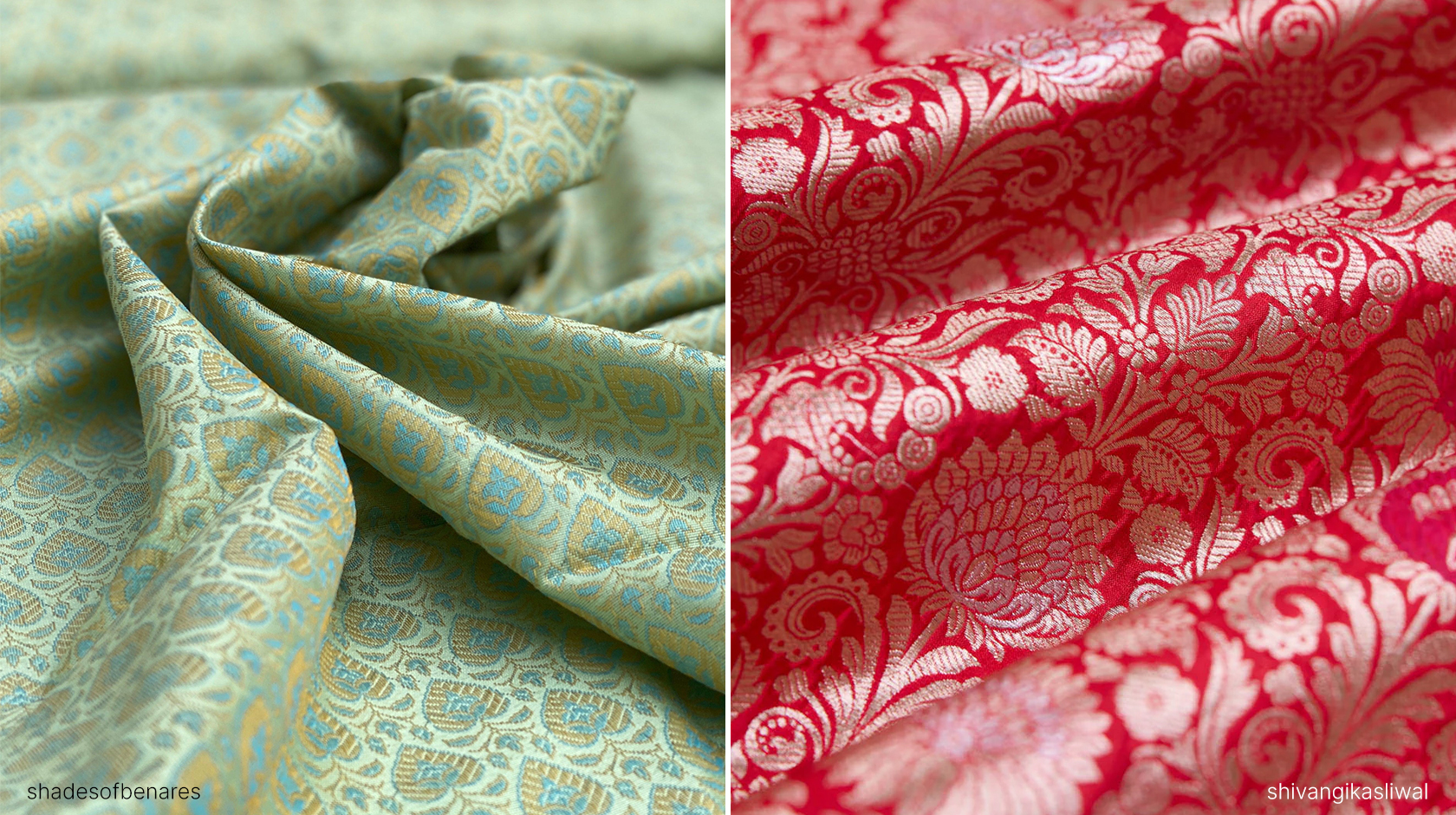
Step into any ethnic wear boutique, and you will hear a beautiful vocabulary of fabrics, weaves, and origins. Among these, two names frequently dominate the conversation: Katan silk and Banarasi silk. Both represent the pinnacle of Indian handloom artistry. Both conjure images of royal weddings, heavy gold zari, and timeless elegance.

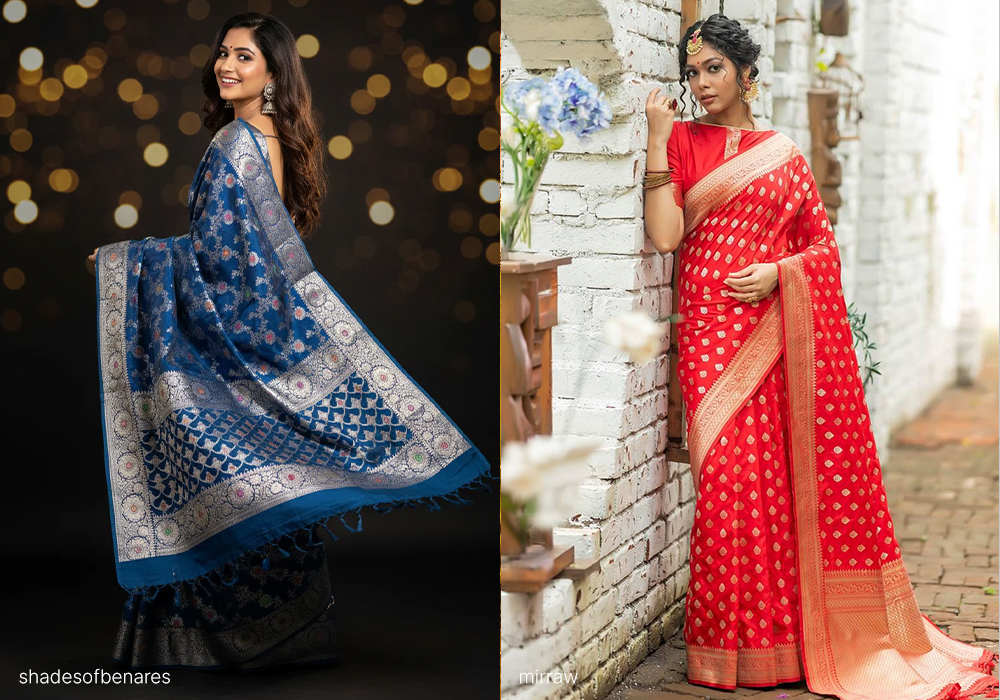
Because people often use these terms interchangeably, saree lovers frequently ask a very valid question. What exactly is the difference between the two?
To solve this textile mystery, we need to look closer at how these magnificent garments are made. The truth is, comparing them is a bit like comparing a square to a rectangle. One is a broad category of weaving, while the other is a highly specific type of silk yarn used within that category. Let us break down the origins, weaving techniques, and unique features of Katan and Banarasi silk so you can make an informed choice for your festive wardrobe.
Understanding the Roots: What is Banarasi Silk?
To understand the difference, you first must understand the umbrella term. Banarasi silk does not refer to a specific type of silk worm or a single fabric. Instead, it refers to the geographical origin and the distinct weaving style of the sarees produced in Varanasi (historically known as Banaras).
The art of Banarasi weaving flourished during the Mughal era. Artisans blended traditional Indian designs with Persian motifs to create highly intricate brocades. A true Banarasi weave is instantly recognizable by its heavy metallic visual weight. Weavers incorporate fine gold and silver zari threads into the fabric, creating elaborate patterns. You will often see motifs inspired by nature and Mughal architecture, such as intertwining floral vines (bel), upright leaves (kalga), and delicate jasmine motifs.
Because Banarasi is a regional weaving technique, weavers can use several different base materials to create the saree. They weave Banarasi designs on georgette, organza (known as Kora), Shattir, and, most famously, pure silk. When you browse premium collections of designer Banarasi sarees, you are looking at a weaving tradition rather than one single fabric type.
Decoding the Weave: What is Katan Silk?
Now that we know Banarasi is a regional style, where does Katan fit in? Katan is a specific type of pure silk yarn.
To create Katan silk, artisans take two or more pure silk filaments and twist them tightly together. This twisting process is crucial. It creates a remarkably sturdy, durable, and solid foundation for the fabric. Once these threads are twisted, weavers use them for both the warp (the vertical threads on a loom) and the weft (the horizontal threads) to weave the fabric.
Historically, weavers prepared Katan silk entirely by hand using traditional spinning wheels. Today, while handlooms still produce the most premium pieces, power looms also assist in twisting the yarns.
Because Katan is pure, twisted silk, it creates a soft, lustrous, and incredibly smooth surface. This sturdy base is absolutely perfect for holding the heavy, intricate gold and silver zari work that Varanasi is famous for. Therefore, a Katan saree is actually the purest, most luxurious variation of a Banarasi saree.
The Core Differences: Category vs. Material
While it is now clear that Katan is a subset of Banarasi, it helps to understand how Katan compares to the other types of Banarasi weaves on the market. Here are the unique features that set Katan apart from its sibling fabrics.
Texture and Weight
Katan silk is incredibly soft but has a substantial weight to it due to the tightly twisted double threads. It drapes beautifully, falling in crisp, structured pleats. In contrast, a Banarasi georgette saree is much lighter, featuring a slightly crinkled texture that flows softly over the body. A Banarasi organza (Kora) saree is stiff, sheer, and airy, lacking the solid opacity of Katan.
Durability and Strength
Thanks to the twisted yarn technique, Katan is one of the most durable silk fabrics available. The threads do not easily fray or snap, which is why these garments often survive for generations as cherished family heirlooms. Other Banarasi variants, particularly the sheer Kora, require much more delicate handling to prevent the fabric from tearing or snagging.
Sheen and Finish
Katan offers a brilliant, natural luster that catches the light beautifully from every angle. It serves as a glowing canvas for heavy brocade work. Other Banarasi fabrics offer different finishes. Georgette has a matte finish, while organza provides a translucent, glass-like sheen.
Ideal Occasions: When to Wear What
Because these fabrics behave differently, they serve different purposes in your ethnic wardrobe. Knowing when to wear each type will ensure you stay comfortable while looking your absolute best.
Styling Katan Silk
Katan is the undisputed king of winter weddings and grand evening receptions. Its heavy weight keeps you warm, while its brilliant luster and dense zari work demand attention. If you are a bride building your trousseau, investing in pure Katan silk sarees is essential. They look majestic when paired with heavy antique gold jewelry, uncut diamonds, and a classic slicked-back bun adorned with fresh flowers. Because the fabric holds sharp pleats, it gives you a highly structured, royal silhouette.
Styling Other Banarasi Weaves
If you are attending a daytime summer wedding, a heavy Katan drape might leave you feeling overheated and uncomfortable. This is the perfect time to explore lighter Banarasi variants. A Banarasi georgette or organza saree gives you the rich, traditional look of Varanasi craftsmanship without the heavy weight. These lighter traditional sarees are excellent for festive pujas, lively sangeet nights, and cocktail parties. You can style them with contemporary blouses, minimal jewelry, and soft, wavy hair for a modern fusion aesthetic.
Caring for Your Treasured Silks
Whether you choose a dense Katan or a breezy Banarasi georgette, handwoven silk requires careful maintenance to preserve its beauty. Always send these garments to a professional dry cleaner. Never attempt to hand wash them at home, as water can damage the pure silk fibers and cause the metallic zari to tarnish.
When storing your garments, fold them neatly and wrap them in unbleached cotton or muslin cloth. This allows the fabric to breathe while protecting it from moisture and friction. Make sure to take them out of your closet every few months, let them air out in a shaded room, and refold them differently to prevent permanent creases from forming.
Making Your Choice
The debate between Katan silk and Banarasi silk is ultimately a beautiful lesson in textile history. Remember that Banarasi is the glorious art form from the holy city of Varanasi, while Katan is the purest, strongest silk canvas used to bring that art to life.
By understanding this relationship, you can shop with confidence. You now know to look for Katan when you want an opulent, heirloom-quality piece for a grand celebration, and to explore other Banarasi weaves when you need something lighter and more playful. Embrace the rich heritage of Indian handlooms, appreciate the incredible skill of the weavers, and wear your six yards of magic with absolute pride.

