


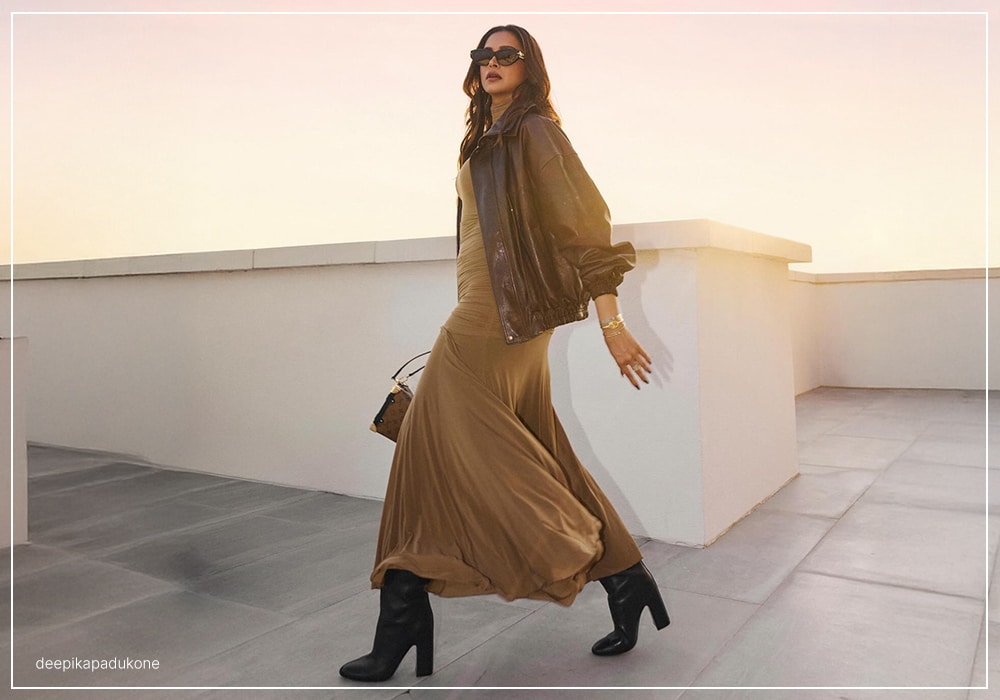
I say this not as an observer, but as someone living this moment. I’m a millennial too—raised on fashion magazines, mood boards torn from glossy pages, and the belief that style peaked young. I grew up idolising the supermodels of the ’90s, obsessing over Kate Moss’s slip dresses, Naomi Campbell’s power struts, and Cindy Crawford’s effortless glamour. I remember the thrill of flipping through Vogue, tearing out pages of Calvin Klein ads, and dreaming of the day I’d own a pair of Manolo Blahniks.
Somewhere between deadlines, life lessons, and learning who I am without the noise, I realised something quietly radical: I dress better now than I ever did in my twenties. Not trendier. Just truer.
This piece isn’t about trends or fleeting moments. It’s about a generation that has redefined what it means to age, to dress, and to live with intention. We’re not clinging to youth. We’re stepping into our prime—and doing it in style
Millennial Fashion at 40: Rewriting the Rulebook
Millennials grew up in transition. We straddled the analog and the digital — from physical stores and fitting-room mirrors to online carts and algorithm-driven inspiration. We learned desire slowly, then watched it accelerate.
That dual exposure shaped us into a generation that values both timelessness and immediacy. We understand restraint because we’ve experienced excess. For us, age isn’t a closing chapter — it’s an edit.
You see this evolution reflected in millennial Bollywood style today.
Deepika Padukone embodies composed elegance — clean lines, thoughtful silhouettes, and an ease that comes from self-trust rather than styling theatrics. Her fashion choices feel grounded, not performative.
Priyanka Chopra Jonas sits at the intersection of ambition and global polish. Her wardrobe is bold but intentional — power silhouettes, statement gowns, and confident tailoring that reflect a woman who knows exactly where she stands. Her evolution proves that scale and clarity can coexist.
Alia Bhatt represents modern millennial femininity — fluid, effortless, emotionally intelligent. Her wardrobe mirrors her evolution: unfussy, intuitive, and increasingly self-assured.
Katrina Kaif has refined her style into strength-led minimalism. Clean cuts, neutral palettes, and polished silhouettes speak to a confidence that doesn’t need excess.
Ranbir Kapoor brings quiet luxury to menswear — relaxed tailoring, lived-in layers, and pieces that feel chosen, not styled.
Ranveer Singh proves that maturity doesn’t mean muting personality. His maximalism today feels intentional, not impulsive — expressive without being chaotic.
Varun Dhawan reflects the millennial balance of comfort and polish — accessible, functional, yet sharp.
Shraddha Kapoor champions ease-led fashion — wearable, relatable, and emotionally resonant with her audience.
And Vicky Kaushal exemplifies grounded masculinity — understated, thoughtful, and deeply authentic.
The Millennial Hollywood Shift: Style as Personal Power
What’s unfolding globally mirrors what we see in Bollywood — a generation of millennial celebrities who no longer dress to chase approval, but to express authorship. Hollywood’s millennial fashion leaders aren’t just wearing clothes; they’re shaping visual culture.
Blake Lively stands as one of the most compelling examples of millennial fashion confidence. Known for styling herself, she has revived early-2000s silhouettes — power denim, structured tailoring, statement gowns — and filtered them through a modern, assured lens. Her style is nostalgic but never costume-like, bold yet remarkably controlled.
Then there’s Zoë Kravitz, whose wardrobe is defined by restraint rather than spectacle. Slip dresses, Saint Laurent suiting, sheer layers, and an “off-kilter” sensuality define her look. She represents the millennial move toward minimalism that feels intentional, not safe — quiet confidence sharpened by edge.
No conversation about millennial fashion is complete without Rihanna. A true fashion force, she has redefined what power dressing looks like in every phase of life — from red carpets to pregnancy. Her style rejects limitations entirely, embracing volume, provocation, and creativity as forms of authority.
In a similar vein of boundary-pushing expression, Doja Cat and Cardi B have turned fashion into performance art. Whether it’s avant-garde Met Gala moments or couture-level risk-taking, their style reflects a generation unafraid to be theatrical, ironic, or unapologetically extra.
Pop culture’s millennial tastemakers — Dua Lipa and Harry Styles — represent fashion as freedom. Their wardrobes blur gender lines, mix pop nostalgia with runway credibility, and remind us that style, at its best, is play informed by confidence.
On the other end of the spectrum lie millennial icons of polish and restraint. Emily Ratajkowski and Rosie Huntington-Whiteley define modern minimalism — clean lines, neutral palettes, and sculpted silhouettes that photograph effortlessly. Their street style has shaped an entire era of “effortless” millennial dressing, often imitated but rarely matched.
What We Unlearned Along the Way
Millennials didn’t just evolve their wardrobes; we unlearned an entire system. We stopped dressing for approval. We stopped apologizing for comfort. We stopped believing that relevance has an expiry date.
- We unlearned “dress your age”
Who decided that forty meant beige cardigans and sensible shoes? We’ve replaced that with fluid silhouettes, bold colors, and pieces that feel like us—no matter the number on our birth certificate. - We unlearned trend panic
Remember the days of chasing every micro-trend? Low-rise jeans, anyone? Now, we choose discernment over dopamine. We invest in pieces that last, both in quality and meaning. - We unlearned the idea that confidence must be loud
Confidence doesn’t need sequins or neon (though we’ll wear them if we want to). It’s in the way a perfectly tailored blazer fits, or the ease of a well-loved leather jacket.
What replaced all this was clarity, and clarity is always chic.
I say this not as an observer, but as someone living this moment. I’m a millennial too—raised on fashion magazines, mood boards torn from glossy pages, and the belief that style peaked young. I grew up idolising the supermodels of the ’90s, obsessing over Kate Moss’s slip dresses, Naomi Campbell’s power struts, and Cindy Crawford’s effortless glamour. I remember the thrill of flipping through Vogue, tearing out pages of Calvin Klein ads, and dreaming of the day I’d own a pair of Manolo Blahniks.
Somewhere between deadlines, life lessons, and learning who I am without the noise, I realised something quietly radical: I dress better now than I ever did in my twenties. Not trendier. Just truer.
This piece isn’t about trends or fleeting moments. It’s about a generation that has redefined what it means to age, to dress, and to live with intention. We’re not clinging to youth. We’re stepping into our prime—and doing it in style
Millennial Fashion at 40: Rewriting the Rulebook
Millennials grew up in transition. We straddled the analog and the digital — from physical stores and fitting-room mirrors to online carts and algorithm-driven inspiration. We learned desire slowly, then watched it accelerate.
That dual exposure shaped us into a generation that values both timelessness and immediacy. We understand restraint because we’ve experienced excess. For us, age isn’t a closing chapter — it’s an edit.
You see this evolution reflected in millennial Bollywood style today.
Deepika Padukone embodies composed elegance — clean lines, thoughtful silhouettes, and an ease that comes from self-trust rather than styling theatrics. Her fashion choices feel grounded, not performative.
Priyanka Chopra Jonas sits at the intersection of ambition and global polish. Her wardrobe is bold but intentional — power silhouettes, statement gowns, and confident tailoring that reflect a woman who knows exactly where she stands. Her evolution proves that scale and clarity can coexist.
Alia Bhatt represents modern millennial femininity — fluid, effortless, emotionally intelligent. Her wardrobe mirrors her evolution: unfussy, intuitive, and increasingly self-assured.
Katrina Kaif has refined her style into strength-led minimalism. Clean cuts, neutral palettes, and polished silhouettes speak to a confidence that doesn’t need excess.
Shraddha Kapoor champions ease-led fashion—wearable, relatable, and emotionally resonant with her audience. Her style speaks to a generation that values comfort, authenticity, and repeat wear over spectacle.
Ranbir Kapoor brings quiet luxury to menswear — relaxed tailoring, lived-in layers, and pieces that feel chosen, not styled.
Ranveer Singh proves maturity doesn’t mean muting personality. His maximalize today feels intentional, not impulsive — expressive without being chaotic.
Varun Dhawan reflects the millennial balance of comfort and polish — accessible, functional, yet sharp.
And Vicky Kaushal exemplifies grounded masculinity — understated, thoughtful, and deeply authentic.
The Millennial Hollywood Shift: Style as Personal Power
What’s unfolding globally mirrors what we see in Bollywood — a generation of millennial celebrities who no longer dress to chase approval, but to express authorship. Hollywood’s millennial fashion leaders aren’t just wearing clothes; they’re shaping visual culture.
Blake Lively stands as one of the most compelling examples of millennial fashion confidence. Known for styling herself, she has revived early-2000s silhouettes — power denim, structured tailoring, statement gowns — and filtered them through a modern, assured lens. Her style is nostalgic but never costume-like, bold yet remarkably controlled.
Then there’s Zoë Kravitz, whose wardrobe is defined by restraint rather than spectacle. Slip dresses, Saint Laurent suiting, sheer layers, and an “off-kilter” sensuality define her look. She represents the millennial move toward minimalism that feels intentional, not safe — quiet confidence sharpened by edge.
No conversation about millennial fashion is complete without Rihanna. A true fashion force, she has redefined what power dressing looks like in every phase of life — from red carpets to pregnancy. Her style rejects limitations entirely, embracing volume, provocation, and creativity as forms of authority.
In a similar vein of boundary-pushing expression, Doja Cat and Cardi B have turned fashion into performance art. Whether it’s avant-garde Met Gala moments or couture-level risk-taking, their style reflects a generation unafraid to be theatrical, ironic, or unapologetically extra.
Pop culture’s millennial tastemakers — Dua Lipa and Harry Styles — represent fashion as freedom. Their wardrobes blur gender lines, mix pop nostalgia with runway credibility, and remind us that style, at its best, is play informed by confidence.
On the other end of the spectrum lie millennial icons of polish and restraint. Emily Ratajkowski and Rosie Huntington-Whiteley define modern minimalism — clean lines, neutral palettes, and sculpted silhouettes that photograph effortlessly. Their street style has shaped an entire era of “effortless” millennial dressing, often imitated but rarely matched.
What We Unlearned Along the Way
Millennials didn’t just evolve their wardrobes; we unlearned an entire system. We stopped dressing for approval. We stopped apologizing for comfort. We stopped believing that relevance has an expiry date.
- We unlearned “dress your age”
Who decided that forty meant beige cardigans and sensible shoes? We’ve replaced that with fluid silhouettes, bold colors, and pieces that feel like us—no matter the number on our birth certificate. - We unlearned trend panic
Remember the days of chasing every micro-trend? Low-rise jeans, anyone? Now, we choose discernment over dopamine. We invest in pieces that last, both in quality and meaning. - We unlearned the idea that confidence must be loud
Confidence doesn’t need sequins or neon (though we’ll wear them if we want to). It’s in the way a perfectly tailored blazer fits, or the ease of a well-loved leather jacket.
What replaced all this was clarity, and clarity is always chic.
I say this not as an observer, but as someone living this moment. I’m a millennial too—raised on fashion magazines, mood boards torn from glossy pages, and the belief that style peaked young. I grew up idolising the supermodels of the ’90s, obsessing over Kate Moss’s slip dresses, Naomi Campbell’s power struts, and Cindy Crawford’s effortless glamour. I remember the thrill of flipping through Vogue, tearing out pages of Calvin Klein ads, and dreaming of the day I’d own a pair of Manolo Blahniks.
Somewhere between deadlines, life lessons, and learning who I am without the noise, I realised something quietly radical: I dress better now than I ever did in my twenties. Not trendier. Just truer.
This piece isn’t about trends or fleeting moments. It’s about a generation that has redefined what it means to age, to dress, and to live with intention. We’re not clinging to youth. We’re stepping into our prime—and doing it in style
Millennial Fashion at 40: Rewriting the Rulebook
Millennials grew up in transition. We straddled the analog and the digital — from physical stores and fitting-room mirrors to online carts and algorithm-driven inspiration. We learned desire slowly, then watched it accelerate.
That dual exposure shaped us into a generation that values both timelessness and immediacy. We understand restraint because we’ve experienced excess. For us, age isn’t a closing chapter — it’s an edit.
You see this evolution reflected in millennial Bollywood style today.
Deepika Padukone embodies composed elegance — clean lines, thoughtful silhouettes, and an ease that comes from self-trust rather than styling theatrics. Her fashion choices feel grounded, not performative.
Priyanka Chopra Jonas sits at the intersection of ambition and global polish. Her wardrobe is bold but intentional — power silhouettes, statement gowns, and confident tailoring that reflect a woman who knows exactly where she stands. Her evolution proves that scale and clarity can coexist.
Alia Bhatt represents modern millennial femininity — fluid, effortless, emotionally intelligent. Her wardrobe mirrors her evolution: unfussy, intuitive, and increasingly self-assured.
Katrina Kaif has refined her style into strength-led minimalism. Clean cuts, neutral palettes, and polished silhouettes speak to a confidence that doesn’t need excess.
Ranbir Kapoor brings quiet luxury to menswear — relaxed tailoring, lived-in layers, and pieces that feel chosen, not styled.
Ranveer Singh proves that maturity doesn’t mean muting personality. His maximalism today feels intentional, not impulsive — expressive without being chaotic.
Varun Dhawan reflects the millennial balance of comfort and polish — accessible, functional, yet sharp.
Shraddha Kapoor champions ease-led fashion — wearable, relatable, and emotionally resonant with her audience.
And Vicky Kaushal exemplifies grounded masculinity — understated, thoughtful, and deeply authentic.
The Millennial Hollywood Shift: Style as Personal Power
What’s unfolding globally mirrors what we see in Bollywood — a generation of millennial celebrities who no longer dress to chase approval, but to express authorship. Hollywood’s millennial fashion leaders aren’t just wearing clothes; they’re shaping visual culture.
Blake Lively stands as one of the most compelling examples of millennial fashion confidence. Known for styling herself, she has revived early-2000s silhouettes — power denim, structured tailoring, statement gowns — and filtered them through a modern, assured lens. Her style is nostalgic but never costume-like, bold yet remarkably controlled.
Then there’s Zoë Kravitz, whose wardrobe is defined by restraint rather than spectacle. Slip dresses, Saint Laurent suiting, sheer layers, and an “off-kilter” sensuality define her look. She represents the millennial move toward minimalism that feels intentional, not safe — quiet confidence sharpened by edge.
No conversation about millennial fashion is complete without Rihanna. A true fashion force, she has redefined what power dressing looks like in every phase of life — from red carpets to pregnancy. Her style rejects limitations entirely, embracing volume, provocation, and creativity as forms of authority.
In a similar vein of boundary-pushing expression, Doja Cat and Cardi B have turned fashion into performance art. Whether it’s avant-garde Met Gala moments or couture-level risk-taking, their style reflects a generation unafraid to be theatrical, ironic, or unapologetically extra.
Pop culture’s millennial tastemakers — Dua Lipa and Harry Styles — represent fashion as freedom. Their wardrobes blur gender lines, mix pop nostalgia with runway credibility, and remind us that style, at its best, is play informed by confidence.
On the other end of the spectrum lie millennial icons of polish and restraint. Emily Ratajkowski and Rosie Huntington-Whiteley define modern minimalism — clean lines, neutral palettes, and sculpted silhouettes that photograph effortlessly. Their street style has shaped an entire era of “effortless” millennial dressing, often imitated but rarely matched.
What We Unlearned Along the Way
Millennials didn’t just evolve their wardrobes; we unlearned an entire system. We stopped dressing for approval. We stopped apologizing for comfort. We stopped believing that relevance has an expiry date.
- We unlearned “dress your age”
Who decided that forty meant beige cardigans and sensible shoes? We’ve replaced that with fluid silhouettes, bold colors, and pieces that feel like us—no matter the number on our birth certificate. - We unlearned trend panic
Remember the days of chasing every micro-trend? Low-rise jeans, anyone? Now, we choose discernment over dopamine. We invest in pieces that last, both in quality and meaning. - We unlearned the idea that confidence must be loud
Confidence doesn’t need sequins or neon (though we’ll wear them if we want to). It’s in the way a perfectly tailored blazer fits, or the ease of a well-loved leather jacket.
What replaced all this was clarity, and clarity is always chic.
I say this not as an observer, but as someone living this moment. I’m a millennial too—raised on fashion magazines, mood boards torn from glossy pages, and the belief that style peaked young. I grew up idolising the supermodels of the ’90s, obsessing over Kate Moss’s slip dresses, Naomi Campbell’s power struts, and Cindy Crawford’s effortless glamour. I remember the thrill of flipping through Vogue, tearing out pages of Calvin Klein ads, and dreaming of the day I’d own a pair of Manolo Blahniks.
Somewhere between deadlines, life lessons, and learning who I am without the noise, I realised something quietly radical: I dress better now than I ever did in my twenties. Not trendier. Just truer.
This piece isn’t about trends or fleeting moments. It’s about a generation that has redefined what it means to age, to dress, and to live with intention. We’re not clinging to youth. We’re stepping into our prime—and doing it in style
Millennial Fashion at 40: Rewriting the Rulebook
Millennials grew up in transition. We straddled the analog and the digital — from physical stores and fitting-room mirrors to online carts and algorithm-driven inspiration. We learned desire slowly, then watched it accelerate.
That dual exposure shaped us into a generation that values both timelessness and immediacy. We understand restraint because we’ve experienced excess. For us, age isn’t a closing chapter — it’s an edit.
You see this evolution reflected in millennial Bollywood style today.
Deepika Padukone embodies composed elegance — clean lines, thoughtful silhouettes, and an ease that comes from self-trust rather than styling theatrics. Her fashion choices feel grounded, not performative.
Priyanka Chopra Jonas sits at the intersection of ambition and global polish. Her wardrobe is bold but intentional — power silhouettes, statement gowns, and confident tailoring that reflect a woman who knows exactly where she stands. Her evolution proves that scale and clarity can coexist.
Alia Bhatt represents modern millennial femininity — fluid, effortless, emotionally intelligent. Her wardrobe mirrors her evolution: unfussy, intuitive, and increasingly self-assured.
Katrina Kaif has refined her style into strength-led minimalism. Clean cuts, neutral palettes, and polished silhouettes speak to a confidence that doesn’t need excess.
Ranbir Kapoor brings quiet luxury to menswear — relaxed tailoring, lived-in layers, and pieces that feel chosen, not styled.
Ranveer Singh proves that maturity doesn’t mean muting personality. His maximalism today feels intentional, not impulsive — expressive without being chaotic.
Varun Dhawan reflects the millennial balance of comfort and polish — accessible, functional, yet sharp.
Shraddha Kapoor champions ease-led fashion — wearable, relatable, and emotionally resonant with her audience.
And Vicky Kaushal exemplifies grounded masculinity — understated, thoughtful, and deeply authentic.
The Millennial Hollywood Shift: Style as Personal Power
What’s unfolding globally mirrors what we see in Bollywood — a generation of millennial celebrities who no longer dress to chase approval, but to express authorship. Hollywood’s millennial fashion leaders aren’t just wearing clothes; they’re shaping visual culture.
Blake Lively stands as one of the most compelling examples of millennial fashion confidence. Known for styling herself, she has revived early-2000s silhouettes — power denim, structured tailoring, statement gowns — and filtered them through a modern, assured lens. Her style is nostalgic but never costume-like, bold yet remarkably controlled.
Then there’s Zoë Kravitz, whose wardrobe is defined by restraint rather than spectacle. Slip dresses, Saint Laurent suiting, sheer layers, and an “off-kilter” sensuality define her look. She represents the millennial move toward minimalism that feels intentional, not safe — quiet confidence sharpened by edge.
No conversation about millennial fashion is complete without Rihanna. A true fashion force, she has redefined what power dressing looks like in every phase of life — from red carpets to pregnancy. Her style rejects limitations entirely, embracing volume, provocation, and creativity as forms of authority.
In a similar vein of boundary-pushing expression, Doja Cat and Cardi B have turned fashion into performance art. Whether it’s avant-garde Met Gala moments or couture-level risk-taking, their style reflects a generation unafraid to be theatrical, ironic, or unapologetically extra.
Pop culture’s millennial tastemakers — Dua Lipa and Harry Styles — represent fashion as freedom. Their wardrobes blur gender lines, mix pop nostalgia with runway credibility, and remind us that style, at its best, is play informed by confidence.
On the other end of the spectrum lie millennial icons of polish and restraint. Emily Ratajkowski and Rosie Huntington-Whiteley define modern minimalism — clean lines, neutral palettes, and sculpted silhouettes that photograph effortlessly. Their street style has shaped an entire era of “effortless” millennial dressing, often imitated but rarely matched.
What We Unlearned Along the Way
Millennials didn’t just evolve their wardrobes; we unlearned an entire system. We stopped dressing for approval. We stopped apologizing for comfort. We stopped believing that relevance has an expiry date.
- We unlearned “dress your age”
Who decided that forty meant beige cardigans and sensible shoes? We’ve replaced that with fluid silhouettes, bold colors, and pieces that feel like us—no matter the number on our birth certificate. - We unlearned trend panic
Remember the days of chasing every micro-trend? Low-rise jeans, anyone? Now, we choose discernment over dopamine. We invest in pieces that last, both in quality and meaning. - We unlearned the idea that confidence must be loud
Confidence doesn’t need sequins or neon (though we’ll wear them if we want to). It’s in the way a perfectly tailored blazer fits, or the ease of a well-loved leather jacket.
What replaced all this was clarity, and clarity is always chic.
I say this not as an observer, but as someone living this moment. I’m a millennial too—raised on fashion magazines, mood boards torn from glossy pages, and the belief that style peaked young. I grew up idolising the supermodels of the ’90s, obsessing over Kate Moss’s slip dresses, Naomi Campbell’s power struts, and Cindy Crawford’s effortless glamour. I remember the thrill of flipping through Vogue, tearing out pages of Calvin Klein ads, and dreaming of the day I’d own a pair of Manolo Blahniks.
Somewhere between deadlines, life lessons, and learning who I am without the noise, I realised something quietly radical: I dress better now than I ever did in my twenties. Not trendier. Just truer.
This piece isn’t about trends or fleeting moments. It’s about a generation that has redefined what it means to age, to dress, and to live with intention. We’re not clinging to youth. We’re stepping into our prime—and doing it in style
Millennial Fashion at 40: Rewriting the Rulebook
Millennials grew up in transition. We straddled the analog and the digital — from physical stores and fitting-room mirrors to online carts and algorithm-driven inspiration. We learned desire slowly, then watched it accelerate.
That dual exposure shaped us into a generation that values both timelessness and immediacy. We understand restraint because we’ve experienced excess. For us, age isn’t a closing chapter — it’s an edit.
You see this evolution reflected in millennial Bollywood style today.
Deepika Padukone embodies composed elegance — clean lines, thoughtful silhouettes, and an ease that comes from self-trust rather than styling theatrics. Her fashion choices feel grounded, not performative.
Priyanka Chopra Jonas sits at the intersection of ambition and global polish. Her wardrobe is bold but intentional — power silhouettes, statement gowns, and confident tailoring that reflect a woman who knows exactly where she stands. Her evolution proves that scale and clarity can coexist.
Alia Bhatt represents modern millennial femininity — fluid, effortless, emotionally intelligent. Her wardrobe mirrors her evolution: unfussy, intuitive, and increasingly self-assured.
Katrina Kaif has refined her style into strength-led minimalism. Clean cuts, neutral palettes, and polished silhouettes speak to a confidence that doesn’t need excess.
Ranbir Kapoor brings quiet luxury to menswear — relaxed tailoring, lived-in layers, and pieces that feel chosen, not styled.
Ranveer Singh proves that maturity doesn’t mean muting personality. His maximalism today feels intentional, not impulsive — expressive without being chaotic.
Varun Dhawan reflects the millennial balance of comfort and polish — accessible, functional, yet sharp.
Shraddha Kapoor champions ease-led fashion — wearable, relatable, and emotionally resonant with her audience.
And Vicky Kaushal exemplifies grounded masculinity — understated, thoughtful, and deeply authentic.
The Millennial Hollywood Shift: Style as Personal Power
What’s unfolding globally mirrors what we see in Bollywood — a generation of millennial celebrities who no longer dress to chase approval, but to express authorship. Hollywood’s millennial fashion leaders aren’t just wearing clothes; they’re shaping visual culture.
Blake Lively stands as one of the most compelling examples of millennial fashion confidence. Known for styling herself, she has revived early-2000s silhouettes — power denim, structured tailoring, statement gowns — and filtered them through a modern, assured lens. Her style is nostalgic but never costume-like, bold yet remarkably controlled.
Then there’s Zoë Kravitz, whose wardrobe is defined by restraint rather than spectacle. Slip dresses, Saint Laurent suiting, sheer layers, and an “off-kilter” sensuality define her look. She represents the millennial move toward minimalism that feels intentional, not safe — quiet confidence sharpened by edge.
No conversation about millennial fashion is complete without Rihanna. A true fashion force, she has redefined what power dressing looks like in every phase of life — from red carpets to pregnancy. Her style rejects limitations entirely, embracing volume, provocation, and creativity as forms of authority.
In a similar vein of boundary-pushing expression, Doja Cat and Cardi B have turned fashion into performance art. Whether it’s avant-garde Met Gala moments or couture-level risk-taking, their style reflects a generation unafraid to be theatrical, ironic, or unapologetically extra.
Pop culture’s millennial tastemakers — Dua Lipa and Harry Styles — represent fashion as freedom. Their wardrobes blur gender lines, mix pop nostalgia with runway credibility, and remind us that style, at its best, is play informed by confidence.
On the other end of the spectrum lie millennial icons of polish and restraint. Emily Ratajkowski and Rosie Huntington-Whiteley define modern minimalism — clean lines, neutral palettes, and sculpted silhouettes that photograph effortlessly. Their street style has shaped an entire era of “effortless” millennial dressing, often imitated but rarely matched.
What We Unlearned Along the Way
Millennials didn’t just evolve their wardrobes; we unlearned an entire system. We stopped dressing for approval. We stopped apologizing for comfort. We stopped believing that relevance has an expiry date.
- We unlearned “dress your age”
Who decided that forty meant beige cardigans and sensible shoes? We’ve replaced that with fluid silhouettes, bold colors, and pieces that feel like us—no matter the number on our birth certificate. - We unlearned trend panic
Remember the days of chasing every micro-trend? Low-rise jeans, anyone? Now, we choose discernment over dopamine. We invest in pieces that last, both in quality and meaning. - We unlearned the idea that confidence must be loud
Confidence doesn’t need sequins or neon (though we’ll wear them if we want to). It’s in the way a perfectly tailored blazer fits, or the ease of a well-loved leather jacket.
What replaced all this was clarity, and clarity is always chic.

