Muga Silk Saree: A Guide to Assam’s Golden Treasure
Distinguished by its natural golden-yellow sheen, a Muga silk saree is a symbol of Assamese culture, heritage, and luxury. It is a fabric that literally gets be
In the lush green valleys of Assam, a special kind of magic is spun—a magic that results in a fabric so rare and beautiful it is often called "liquid gold." This is Muga silk, one of the most prized silks in the world, and the heart of the exquisite Muga silk saree.
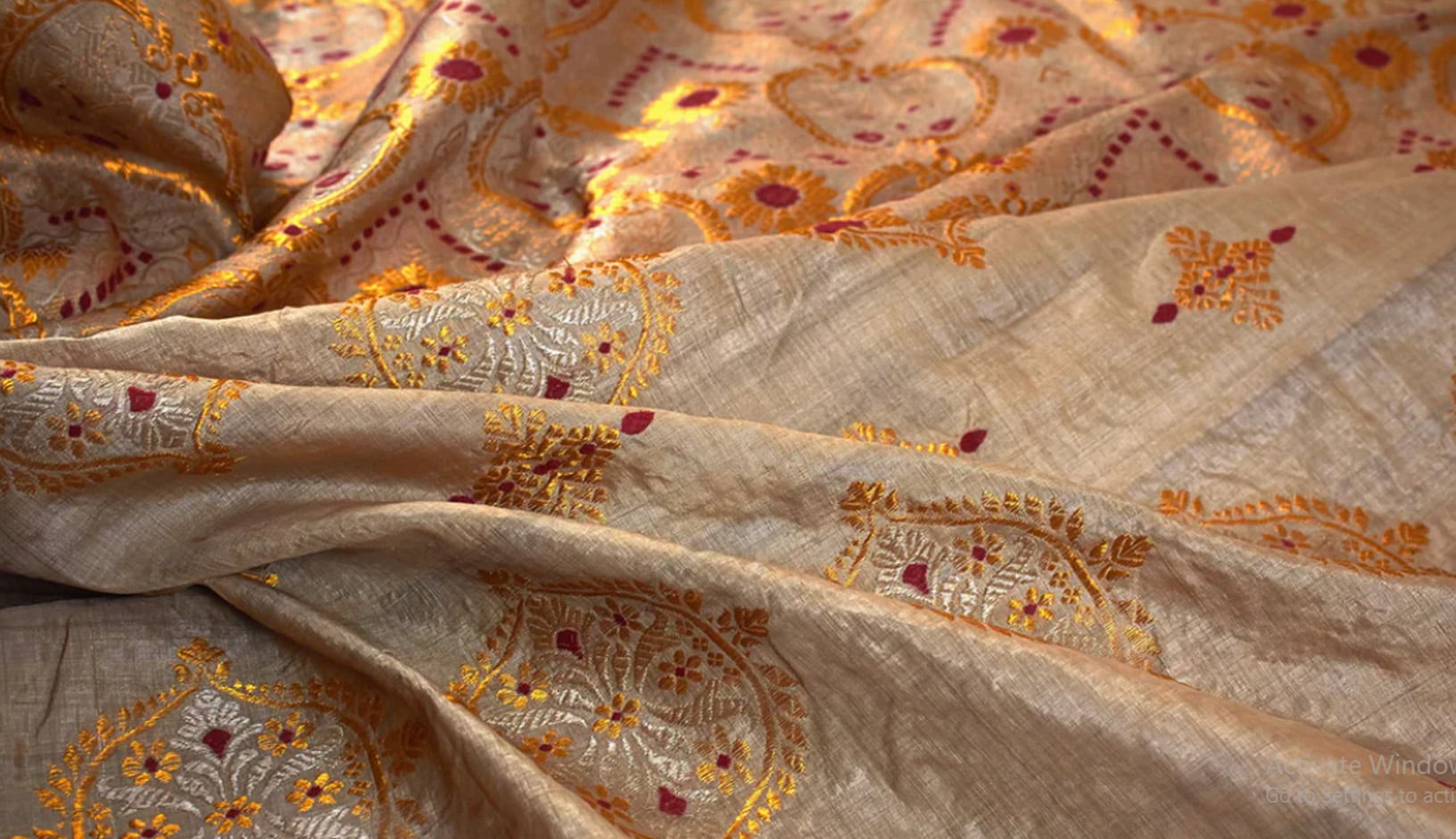
Distinguished by its natural golden-yellow sheen, a Muga silk saree is a symbol of Assamese culture, heritage, and luxury. It is a fabric that literally gets better with age, its luster increasing with every wash. For centuries, it was reserved for the royalty of the Ahom kingdom, and even today, it holds a place of honor in every Assamese family.
This guide will take you through the incredible story of Muga silk, from the unique silkworm that produces it to the skilled hands that weave it into a timeless masterpiece.
What is Muga Silk?
Muga silk is an extremely rare and durable variety of wild silk found exclusively in the state of Assam in India. The name "Muga" means "yellowish" in Assamese, perfectly describing the fabric's natural golden tint.
What makes Muga silk unique is the silkworm that produces it: the Antheraea assamensis. This is a semi-domesticated silkworm that is not found anywhere else in the world. Unlike the more common mulberry silkworms, the Muga silkworm is incredibly sensitive and cannot be completely domesticated. It feeds on the leaves of specific local trees, like the 'Som' and 'Sualu' trees, which give the silk its characteristic color and strength.
This silk is known for several remarkable qualities:
Natural Golden Luster: It has a rich, shimmering golden color that requires no dyeing.
Durability: Muga is one of the strongest natural fibers known to man. A Muga silk saree can last for generations, often becoming a cherished family heirloom.
UV Protection: It is said to have natural UV-blocking properties.
Gets Better with Age: Unlike other fabrics that fade, the golden sheen of Muga silk actually deepens and improves with each hand wash.
Because of its rarity and exceptional properties, Muga silk has been granted a Geographical Indication (GI) tag, meaning authentic Muga silk can only come from Assam.
The Royal History of Muga Silk
The story of Muga silk is deeply connected to the Ahom dynasty, which ruled Assam for nearly 600 years (1228-1826). The Ahom kings and queens were great patrons of this craft.
During their reign, Muga silk was strictly reserved for the royal family and high-ranking officials. The fabric was a symbol of social status, and its use was controlled by the monarchy. Several looms, known as Rajaghoria looms, operated under direct royal supervision to produce the finest Muga fabrics for the court.
The fame of this "golden silk" was not just limited to India. Records show that European explorers, like the French traveler Jean-Joseph Tavernier, wrote about the magnificent Muga silk during their expeditions to Assam in the 17th century. This early exposure introduced the world to Assam's best-kept secret.
The Intricate Process: From Cocoon to Saree
The journey of creating a Muga silk saree is a long and fascinating one, deeply rooted in tradition. The entire process, from rearing the silkworms to weaving the final garment, can take up to two months.
1. Rearing the Silkworms
The process begins with the semi-wild Muga silkworms. Farmers place the larvae on the host trees, where they feed on the aromatic leaves. The farmers must constantly protect the worms from predators and weather changes. This semi-wild nature makes the rearing process challenging and the yield unpredictable.
2. Harvesting the Cocoons
Once the worms have spun their golden cocoons, they are collected. It takes an incredible number of cocoons to produce a single saree.
It takes around 1,000 cocoons to produce just 125 grams of raw silk.
A single Muga silk saree requires approximately 1,000 grams of silk, meaning at least 8,000 cocoons are needed.
3. Spinning the Silk Thread
The cocoons are boiled in a mild alkaline solution to soften them and find the end of the filament. The silk is then carefully reeled from the cocoon. This raw silk is cleaned and hand-spun into yarn, a process that requires great skill to maintain the thread's evenness.
4. Weaving the Saree
The weaving is done on traditional Assamese handlooms. The process of setting up the loom is complex, and the weaving itself can take anywhere from a week to ten days, depending on the complexity of the design. The weavers, mostly women, work with incredible precision to create the saree. Each handwoven Muga saree is unique, like a painting brought to life with thread.
Design Elements and Motifs
A traditional Muga silk saree is a canvas of nature-inspired designs, often reflecting the flora and fauna of Assam.
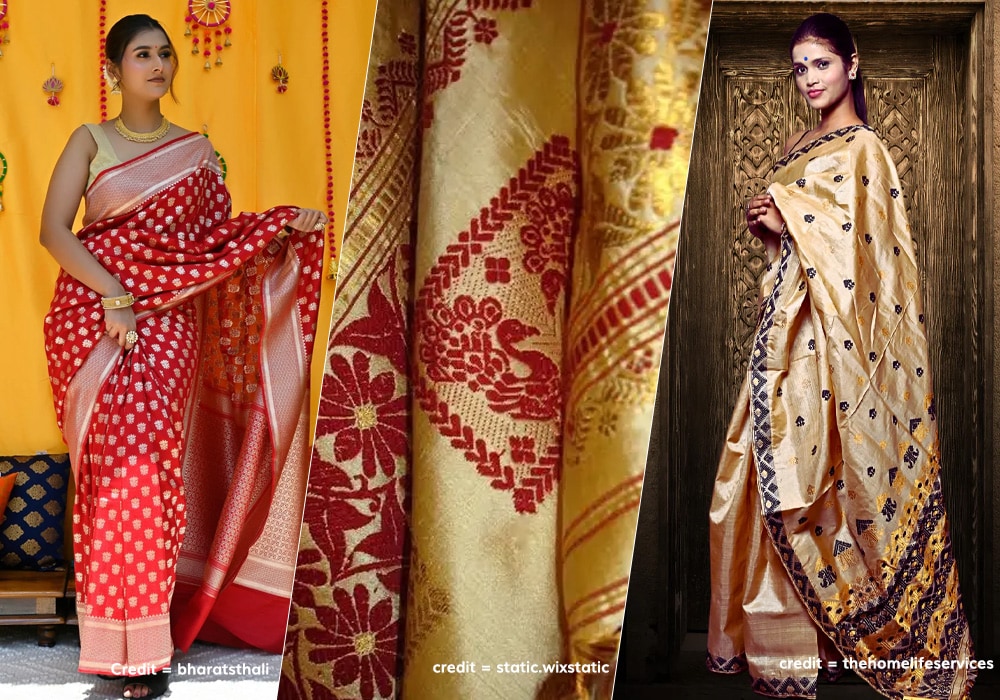
The Color Palette: The body of the saree is the beautiful natural gold of the silk. The motifs are traditionally woven using threads in contrasting colors, most commonly red and green, which stand out beautifully against the golden background.
Traditional Motifs: Designs are often geometric and stylized. Common motifs include:
Japi (a traditional Assamese conical hat)
Miri Gos (a pattern of mini trees)
Peacocks, butterflies, and diamonds
Jaapi-Phool (a combination of the Japi and floral motifs)
The Structure: A typical Muga saree has a plain or subtly patterned body, a decorative border, and a more heavily designed pallu. The elegance lies in the balance between the shimmering plain body and the intricate woven patterns.
Muga Silk in the Modern World
Muga silk remains one of the most expensive and sought-after fabrics in the world. Its high cost is a direct result of its rarity, the labor-intensive production process, and the fact that the Muga silkworm is vulnerable to climate change and habitat loss.
A Prized Possession
In Assam, a Muga silk saree or a Mekhela Chador (the traditional two-piece Assamese dress) is an essential part of a bride's trousseau. It is worn during important ceremonies, festivals like Bihu, and weddings. It is not just clothing; it is a symbol of cultural identity and pride.
Modern Fashion and Global Recognition
While it remains deeply traditional, Muga silk has caught the eye of international fashion designers.
Fusion Wear: Designers are creating contemporary garments like jackets, stoles, and gowns from Muga silk, showcasing its versatility on global runways.
New Designs: Modern weavers are experimenting with new color combinations and lighter-weight Muga fabrics to appeal to a broader audience.
A Statement of Sustainable Luxury: In a world increasingly conscious of sustainability, Muga silk stands out as an eco-friendly, organic, and entirely handmade product. This has boosted its appeal among discerning global consumers who value craftsmanship and natural materials.
Conclusion
The Muga silk saree is a true treasure of India's textile heritage. It is a fabric that carries the golden light of the Assam sun, the dedication of its farmers, and the artistic soul of its weavers. Its journey from a tiny silkworm to a shimmering saree is a testament to the beautiful harmony between nature and human craftsmanship.
Owning a Muga silk saree is more than just a fashion choice; it is an investment in a living tradition. As it is passed down through generations, its golden glow only deepens, making it a timeless symbol of elegance, legacy, and the enduring magic of Assam's golden silk.
Aza Staff is a team of writers, creators, and industry insiders who live and breathe fashion. We explore the craft, culture, and creativity behind India’s luxury design scene, bringing you stories that are equal parts stylish and soulful.