Paithani Saree: The Queen of Silks from Maharashtra
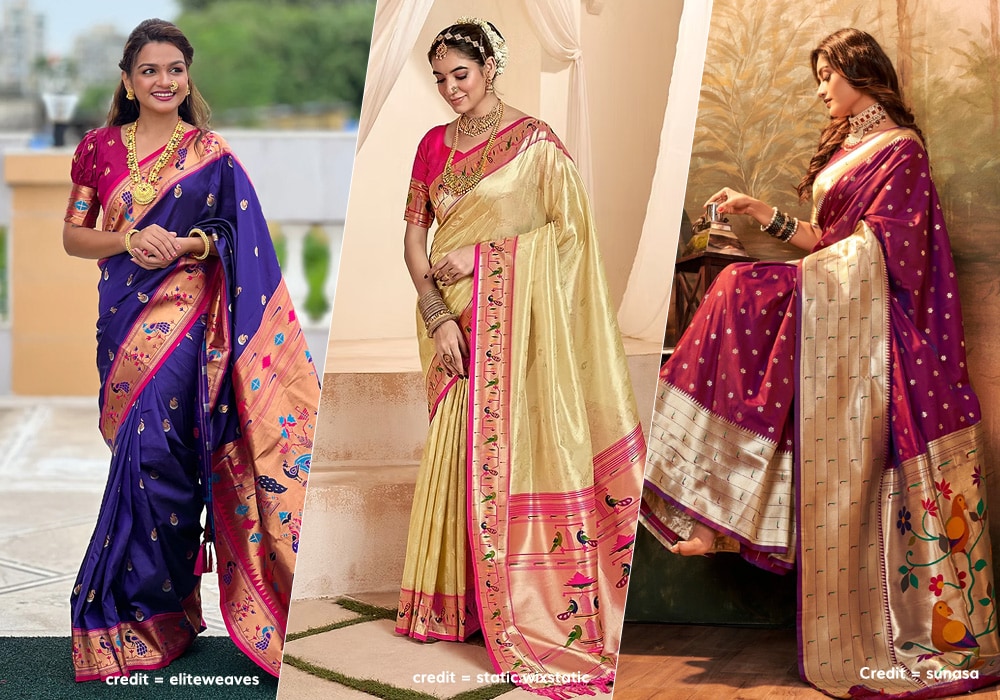
With its shimmering gold borders and vibrant peacock motifs, a Paithani is instantly recognizable. It is a symbol of status and tradition, often passed down fro
If there is one saree that every Maharashtrian bride dreams of wearing, it is the Paithani. Often called the "Queen of Silks," the Paithani saree is not just a garment; it is an emotion. It represents a rich legacy of royalty, art, and exquisite craftsmanship that has thrived for over 2,000 years.
With its shimmering gold borders and vibrant peacock motifs, a Paithani is instantly recognizable. It is a symbol of status and tradition, often passed down from grandmothers to granddaughters as a precious heirloom.
In this guide, we will journey to the heart of Maharashtra to uncover the story behind this magnificent saree. We will explore its ancient roots, the painstaking art of making it, and why it remains a timeless favorite in the world of Indian fashion.
What is a Paithani Saree?
The Paithani saree gets its name from the historic town of Paithan in the Aurangabad district of Maharashtra, where it was first created.
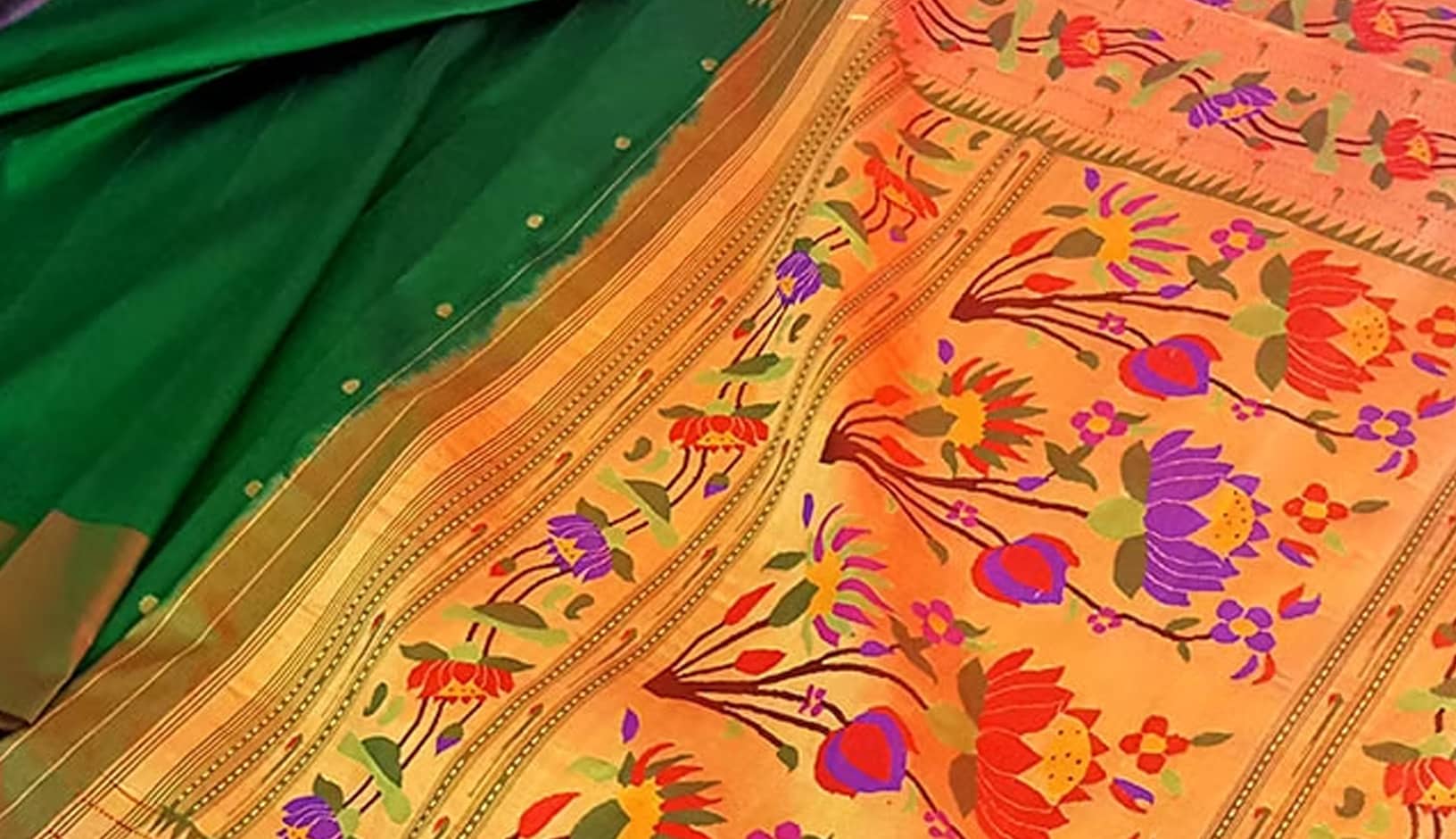
It is a handwoven silk saree known for its rich, lustrous texture and its distinctive pallu (the loose end of the saree). What makes a Paithani truly special is that it is dyed in vibrant jewel tones and features designs woven with pure gold or silver zari threads. Unlike many other sarees where the design is printed or embroidered on top, in a Paithani, the design is woven directly into the fabric, making it look identical on both sides.
The finish is so smooth and glossy that the fabric often looks like a mirror, reflecting light beautifully.
A Royal History: From the Satavahanas to the Peshwas
The history of the Paithani saree is as grand as its look. Its origins can be traced back to the Satavahana dynasty (2nd Century B.C. to 2nd Century A.D.). During this era, Paithan was a bustling trade center. The sarees woven here were so exquisite that they were exported to the Roman Empire in exchange for gold.
For centuries, Paithani was the fabric of royalty. However, it was during the 17th and 18th centuries, under the patronage of the Peshwas (the prime ministers of the Maratha Empire), that the art truly flourished. The Peshwas had a deep love for these silks. It is said that the craze was so high that special motifs, like the Asawali (flowering vine), were developed specifically during their reign.
Today, while Paithan remains the spiritual home of the saree, the town of Yeola in Nashik has become the largest manufacturing hub, keeping the tradition alive.
How is a Paithani Saree Made?
Creating a Paithani is a test of patience and precision. It is purely a handloom craft, meaning no power looms are used in the authentic process.
1. The Materials
Authentic Paithani sarees are made using fine silk and zari.
Silk: Historically, fine silk threads were imported from China. Today, high-quality mulberry silk, often from Bangalore, is used.
Zari: The real magic lies in the zari. Originally, pure gold and silver threads were used. To make it more affordable today, artisans often use silver threads coated with gold. A standard six-yard saree uses about 500 grams of silk and 250 grams of zari.
2. The Dyeing Process
The silk threads are dipped in hot water and salt to remove impurities and then dyed in brilliant colors. The characteristic feature of a Paithani is that it does not use bleach; the colors are raw and intense. Popular shades include magenta, peacock blue, purple, and parrot green.
3. The Weaving
The weaving takes place on a handloom. The most challenging part is the tapestry weaving technique used for the pallu. The weaver uses a shuttle to weave the body but switches to small bobbins for the intricate designs on the border and pallu. This is similar to the technique used in making Persian rugs.
Because of this complexity, a simple Paithani can take a month to weave, while an elaborate one can take anywhere from six months to a year.
Design Elements: Nature and Ajanta Caves
The designs on a Paithani are heavily influenced by the nature surrounding the region and the ancient art of the nearby Ajanta and Ellora caves.
The Pallu
The pallu is the hero of the saree. The most famous motif is the Mor (Peacock). You will often see a pair of peacocks woven into the pallu, symbolizing beauty and royalty. Another popular design is the Muniya (Parrot), usually found on the border in bright green and red.
Other Traditional Motifs
Lotus (Kamal): Inspired by murals in the Ajanta caves, symbolizing purity.
Swan (Hans): Representing grace.
Flowering Vine (Asawali): A beautiful creeper design often seen on the border.
Narali (Coconut): A geometric pattern resembling a coconut, often used on the border.
The body of the saree is usually filled with small butis (dots or motifs) like stars, circles, or flowers, giving it a rich but balanced look.
Types of Paithani Sarees
While the classic peacock design is the most famous, Paithani sarees come in various traditional styles based on weaving techniques and colors.
Based on Weaving
Kadiyal Paithani: This is the most popular type where the border and the body are of contrasting colors. The interlocking of the two colors happens seamlessly.
Ekdhoti Paithani: In this style, a single shuttle is used for weaving. The warp and weft yarns are of different colors, creating a beautiful dual-tone or "dhoop-chhaon" (light and shadow) effect.
Based on Color
Traditional Paithanis have specific names based on their dominant color:
Kali Chandrakala: A striking black saree with a red border.
Raghu: A parrot green colored saree.
Shirodak: A pure white Paithani, often worn on specific ceremonial occasions.
Paithani in the Modern World
In a world dominated by fast fashion, the Paithani stands tall as a beacon of slow, sustainable luxury.
The Bridal Essential
For a Maharashtrian bride, the wedding trousseau is incomplete without a Paithani. It is considered an auspicious garment, worn during the wedding ritual or the reception. The richness of the gold zari against bright silk makes it perfect for the grandeur of Indian weddings.
Contemporary Adaptations
Designers are now experimenting to make Paithani accessible to a younger audience.
Fusion Wear: You can now find Paithani clutches, dupattas, and even jackets.
Lighter Fabrics: While traditional Paithanis are heavy, weavers are experimenting with lighter silk blends to make the saree easier to drape for office parties or lighter events.
New Motifs: While peacocks remain a favorite, modern weavers are introducing geometric patterns and abstract floral designs to suit contemporary tastes.
Conclusion
The Paithani saree is not just a piece of fabric; it is a canvas where history, art, and culture meet. Every thread tells a story of the Satavahanas, the Peshwas, and the skilled artisans of Yeola who have dedicated their lives to this craft.
Owning a Paithani is like owning a piece of jewelry. It is an investment in tradition. Whether draped for a wedding or treasured in a wardrobe, the "Queen of Silks" continues to reign supreme, dazzling the world with its golden glory and timeless elegance.
Aza Staff is a team of writers, creators, and industry insiders who live and breathe fashion. We explore the craft, culture, and creativity behind India’s luxury design scene, bringing you stories that are equal parts stylish and soulful.