



In the arid landscapes of the Kutch region in Gujarat, art blooms in the most unexpected ways. Among the myriad of vibrant textile crafts that this region is famous for, one stands out for its sheer precision and ritualistic cleanliness: Soof Embroidery.
Unlike other embroidery styles that rely on traced patterns or drawings, Soof is a feat of mental mathematics. It is an art form where the artisan counts the threads of the fabric and stitches entirely from memory and imagination. The result is a stunning display of geometric perfection that looks so neat, it is often mistaken for machine work.
This guide will take you into the heart of the Sodha and Meghawaad Maaru communities to explore the meticulous world of Soof, a craft that celebrates patience, skill, and the beauty of geometry.
What is Soof Embroidery?
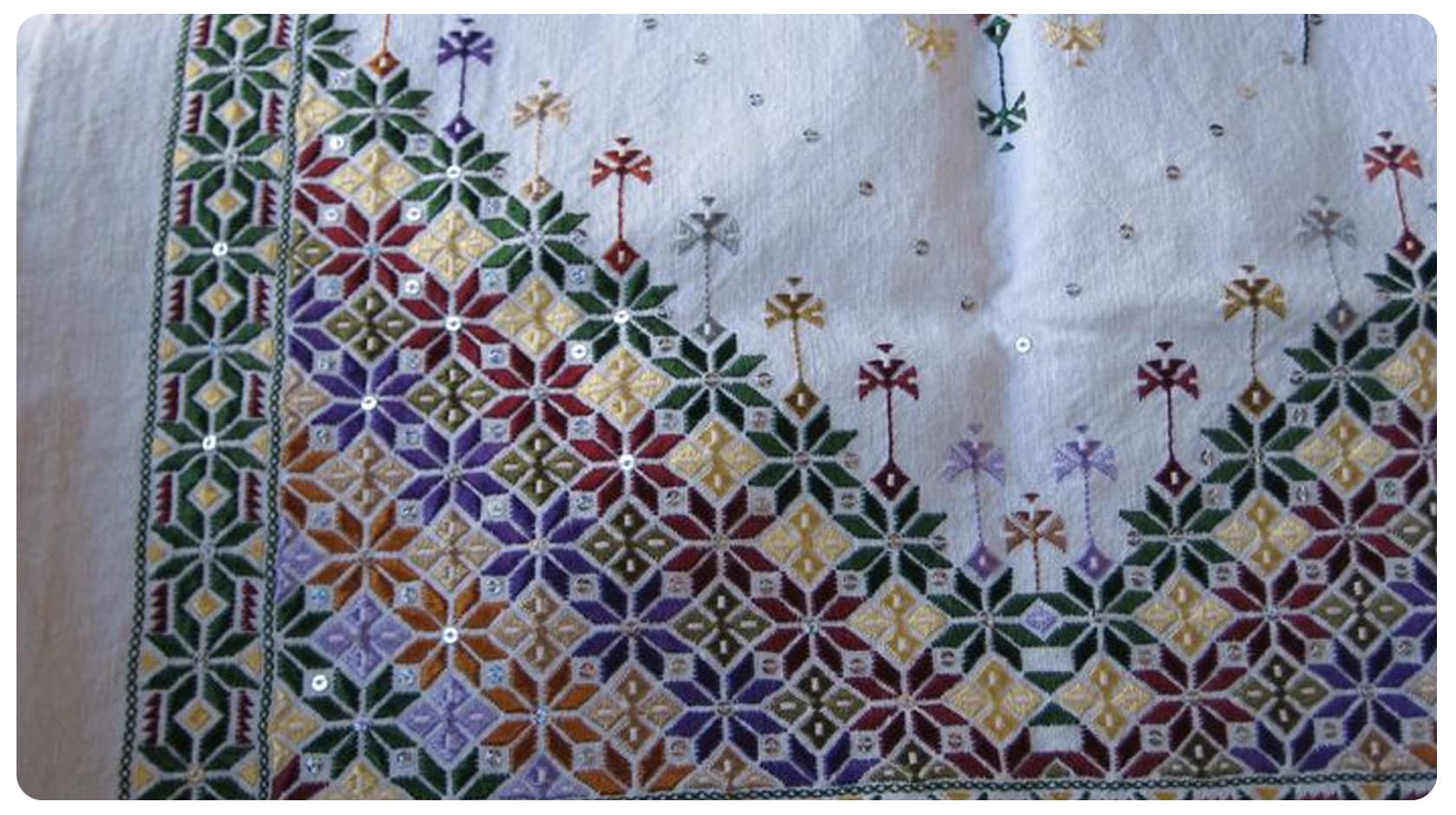
The word "Soof" is derived from the word Saaf, which means "clean" or "neat." One look at a finished piece, and you will understand why. The embroidery is incredibly precise, with sharp lines and perfect symmetry.
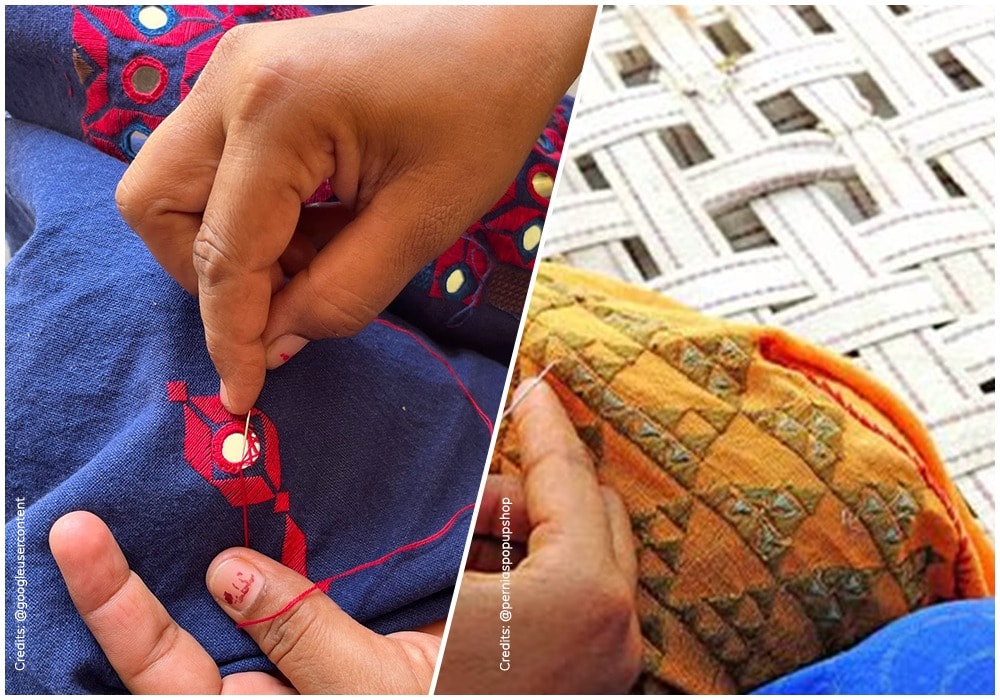
Soof is a type of counted-thread embroidery. This means the artisan does not draw the design on the fabric beforehand. Instead, she mentally visualizes the pattern and counts the warp and weft threads of the fabric to place each stitch exactly where it needs to be. It is a slow, meditative process that requires immense concentration and a deep understanding of the fabric's structure.
Tracing the Origins: A Journey Across Borders
The story of Soof is one of migration and resilience. The craft is practiced primarily by the women of the Sodha and Meghawaad Maaru communities.
The Migration of 1971
While the roots of these communities stretch back centuries, a significant chapter in the history of Soof began in 1971. Following the Indo-Pak War, many families from these communities migrated across the border from the Tharparkar district of Sindh (in present-day Pakistan) to India. They settled in the Kutch district of Gujarat, specifically in villages like Zura, Pachcham, and Mundra.
These women brought with them their distinct cultural heritage, including their exquisite embroidery skills. For them, Soof was not just a pastime; it was a ritual, a way to decorate their homes and clothing, and a skill passed down from mother to daughter.
How It Is Made: The Reverse Stitch Technique
The technique used in Soof embroidery is unique and incredibly complex. It challenges the common perception of how embroidery is done.
1. No Drawings, Just Counting
Most embroidery starts with a traced outline. Soof starts with a blank canvas. The artisan uses a basket-weave fabric (where the grid of threads is visible) and counts the threads to determine the length and placement of each stitch. If she miscounts by even one thread, the symmetry of the entire design can be thrown off.
2. The Surface Satin Stitch
Soof uses a single stitch: the Surface Satin Stitch. However, there is a twist. The embroidery is done from the reverse side of the fabric. The artisan works on the back, inserting the needle from behind to create the pattern on the front. This reverse method ensures that the front of the fabric remains exceptionally clean, with the threads lying flat and smooth against the surface.
3. The Challenge of Diagonals
The designs are based on a horizontal and vertical grid. However, skilled artisans create complex diagonal patterns by carefully stepping the stitches. The more diagonal elements a design has, the more difficult it is to execute, as it requires complex mental calculations.
Design Elements: The Triangle as a Building Block
If you look closely at a piece of Soof embroidery, you will notice that almost every motif is built using triangles.
- The Triangle (Chevrons): The triangle is the fundamental unit of Soof. By arranging triangles in different ways, artisans create elaborate shapes.
- Motifs: A series of triangles are combined to form peacocks, mandalas, mangoes (keri), and intricate borders. The designs are often stylized and abstract rather than realistic.
- The Mandal: One of the most common and revered motifs is the Mandal or Mandala, a circular geometric design representing the universe or a lotus.
Color Palette
Traditionally, Soof is vibrant but grounded.
- Threads: Artisans use silk floss threads (heer) which give the work a glossy, rich finish. It is said that the thinner the thread, the finer the quality of the work.
- Colors: Deep reds, greens, blacks, and yellows are the most common colors, contrasting beautifully against the often lighter background of the fabric.
Cultural Significance and Usage
Soof embroidery is deeply embedded in the cultural life of the Sodha and Meghawaad Maaru communities. It is not just decorative; it serves a social and ritualistic function.
Trousseau and Gifts
Like many Indian crafts, Soof plays a huge role in weddings. Mothers and grandmothers spend years creating embroidered pieces for a bride's trousseau. These items are seen as a reflection of the bride's skill and her family's status.
Traditional Items
You can find Soof embroidery on a variety of traditional items:
- Ghagras and Cholis: The skirts and blouses worn by women.
- Bukanis: Long, embroidered scarves worn by men over their turbans, often used to cover the mouth and nose in the dusty desert.
- Torans: Decorative door hangings that welcome guests.
- Chaklas: Square embroidered pieces used to decorate walls or cover ceremonial items.
Soof Today: A Craft in Need of Revival
In the modern world, the slow, painstaking art of Soof faces challenges. The process is time-consuming—a single piece can take months to complete—and it requires a level of patience that is rare in the age of fast fashion.
Today, Soof is often listed among the "dying crafts" of India. The younger generation, with access to education and other employment opportunities, is sometimes less inclined to take up such labor-intensive work.
However, there is hope. Several NGOs, fashion designers, and craft revivalists are working with the artisans of Kutch to bring Soof to a wider audience. By incorporating Soof onto contemporary garments like sarees, stoles, and home decor items, they are helping to create a new market for this exquisite art.
Conclusion
Soof embroidery is a testament to the power of the human mind and hand working in unison. It is mathematics made beautiful, a ritual of counting and stitching that results in geometric perfection.
When you hold a piece of Soof, you are holding hours of silent calculation and months of dedicated craftsmanship. It is a craft that reminds us that true beauty often lies in precision, patience, and the clean, honest work of skilled hands. Supporting Soof is not just about buying a textile; it is

