


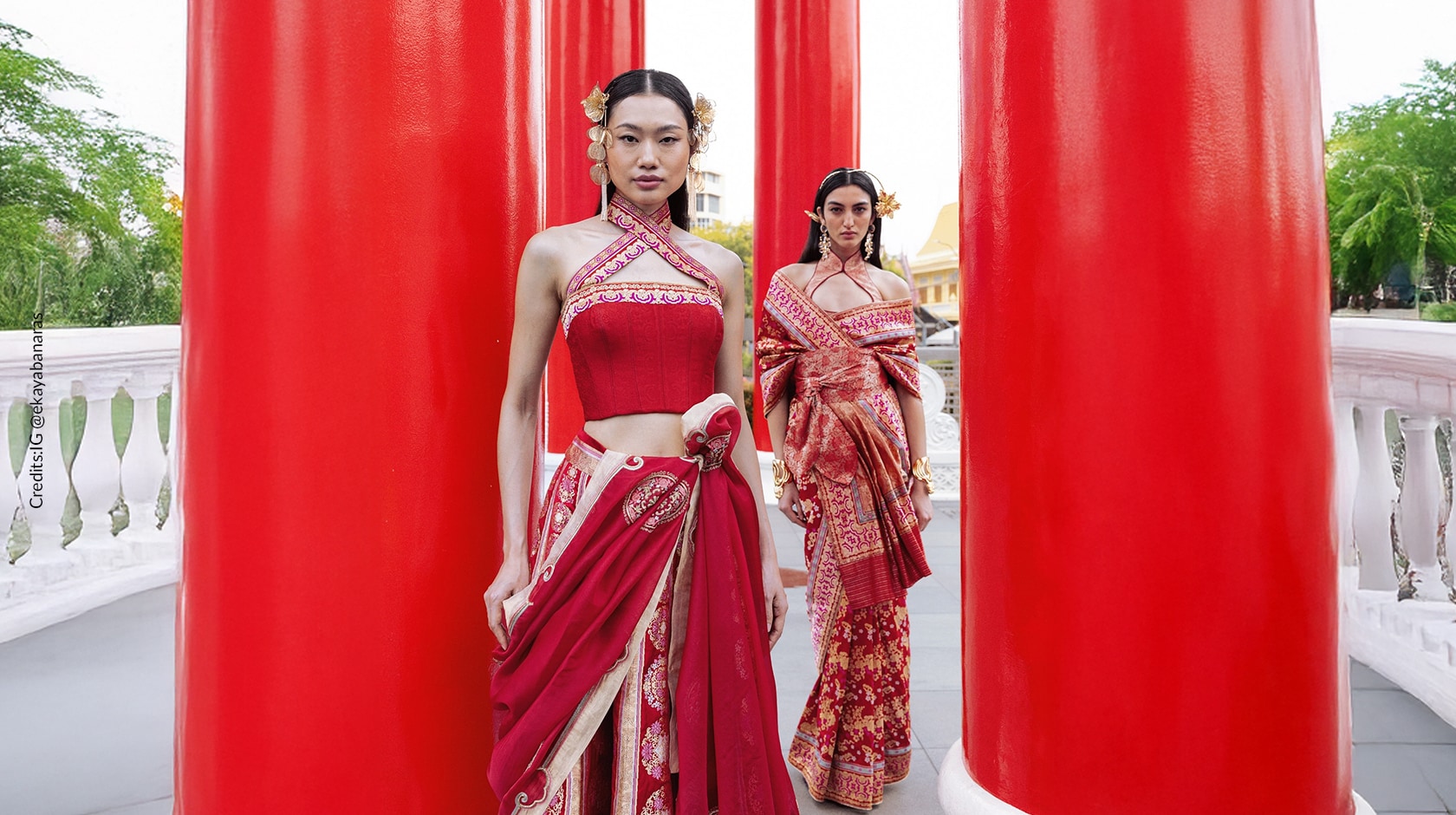
A Banarasi saree is more than just a piece of fabric; it's a legacy woven in silk and gold. Revered as one of India's most splendid handloom treasures, these sarees are a symbol of luxury, heritage, and timeless elegance. Their global appeal has only grown, with celebrities and designers showcasing their intricate beauty on international stages. At the heart of this craft is the ancient city of Banaras (Varanasi), a weaving hub that has perfected the art over centuries, making each saree a masterpiece.
A Glimpse into the History of Banarasi Sarees
The story of the Banarasi saree is a rich tapestry of cultural fusion and artistic evolution.
From Mughal Patronage to Indian Heritage
The intricate designs we associate with Banarasi sarees today were heavily influenced by Mughal aesthetics. During the Mughal era, around the 14th century, Persian and Indian artistry merged, introducing motifs like intricate floral patterns (jaal), leaf designs (bel), and the now-iconic use of gold and silver threads (zari). What began as a craft patronized by royalty soon became an integral part of Indian heritage, cherished by generations.
Weaving Communities & Traditions
The soul of the Banarasi saree lies with its weavers. For centuries, these artisans in and around Varanasi have passed down their skills from one generation to the next. This generational knowledge ensures that the complex techniques and traditional patterns are preserved. While modern power looms have emerged to create faster, more affordable versions, the traditional handloom remains the gold standard, producing a saree for women with unparalleled quality and detail.
Original Banarasi vs. Modern Variants
An original handwoven Banarasi is a labor of love, often taking weeks or even months to create. It uses pure silk and real zari. Modern variants, often made on power looms, may use synthetic fabrics and imitation zari. While they offer accessibility, they lack the intricate detail, durability, and unique charm of a handloom original.
Why Are Banarasi Sarees So Famous?
The enduring fame of Banarasi sarees can be attributed to several key factors.
- Exquisite Zari Work: The use of real gold and silver threads gives the saree its signature opulence.
- Intricate Weaving Techniques: Complex methods like Kadhwa (where each motif is woven separately) create stunning, detailed patterns.
- Royal & Cultural Significance: Historically worn by royalty, they are now a staple for brides and are considered auspicious for special occasions.
- Durability & Timeless Appeal: A genuine Banarasi is an heirloom piece that can be passed down through generations without losing its charm.
- Bridal & Festive Importance: No Indian wedding is complete without the bride or her family donning a magnificent Banarasi saree.
- Global Popularity: Endorsements from international celebrities and their feature in global fashion have amplified their fame.
Types of Banarasi Sarees: A Comprehensive Look
Banarasi sarees come in a stunning variety of fabrics and weaves, each with its unique character.
Katan Banarasi: The classic choice. Woven from pure silk threads twisted together, Katan silk is known for its smooth texture, sturdiness, and lustrous finish. It is the most popular choice for bridal wear.

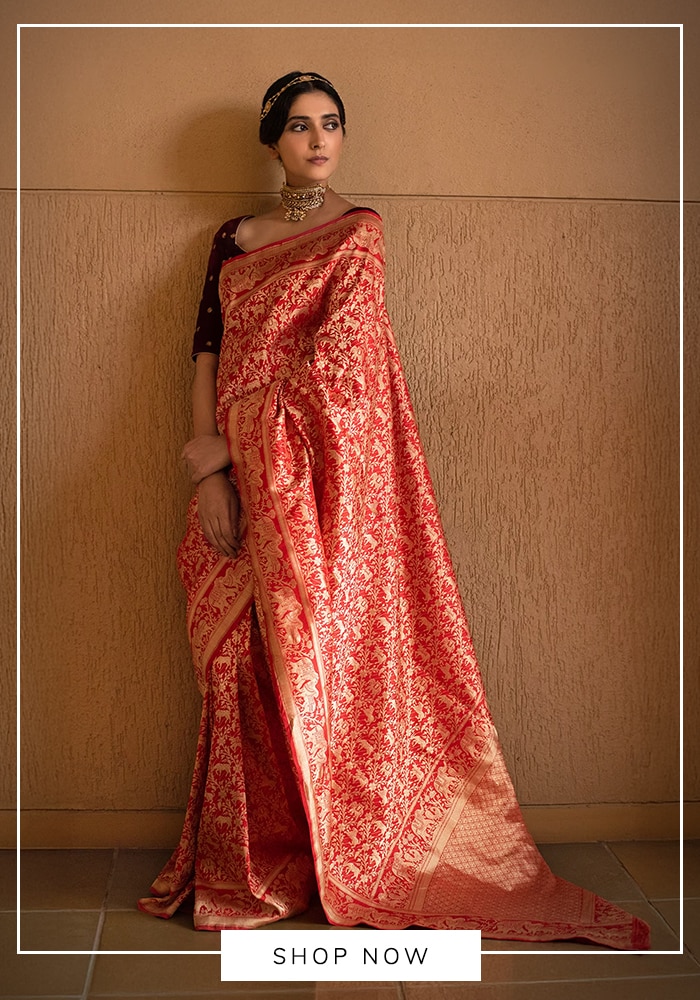
Kora (Organza) Banarasi: Lightweight and ethereal, Kora Banarasi sarees are crafted from silk organza. They have a delicate sheen and a crisp texture, making them a favorite for modern, elegant occasions.
Georgette Banarasi: Known for its beautiful drape and lightweight feel, Georgette Banarasi is a contemporary favorite. The fabric holds color well and is perfect for festive gatherings and parties.
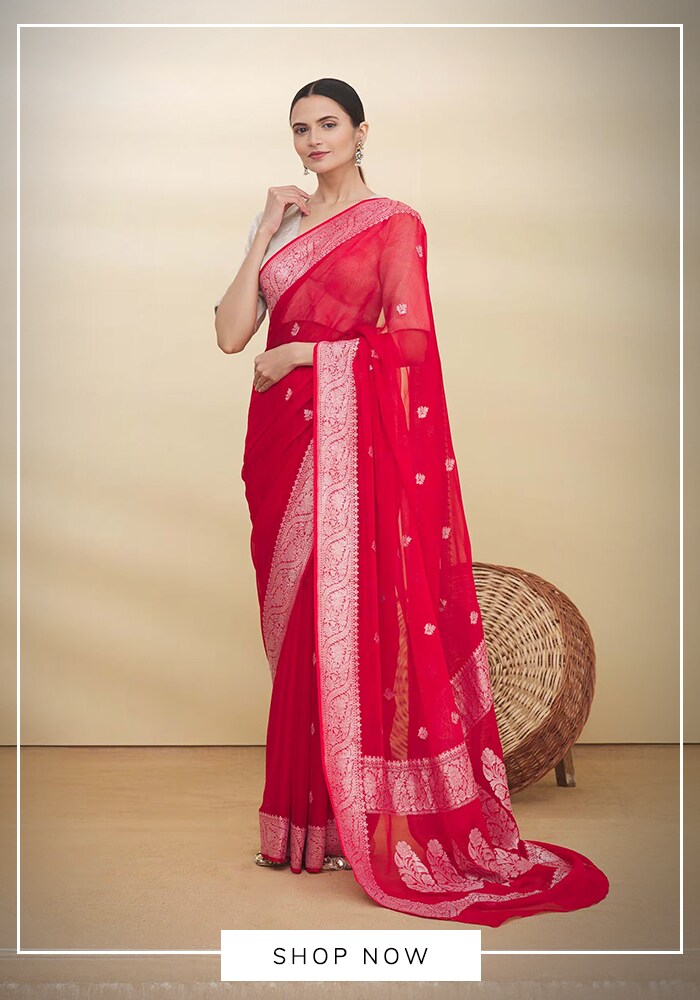
Shattir Banarasi: This is a more modern and affordable variant. Shattir is a lighter, simpler fabric used as a base for contemporary Banarasi designs, making them accessible for everyday elegance.
Tissue Banarasi: These sarees are prized for their golden, paper-like sheen. Woven with extremely fine silk and zari threads, they are delicate, luxurious, and perfect for creating a statement look.
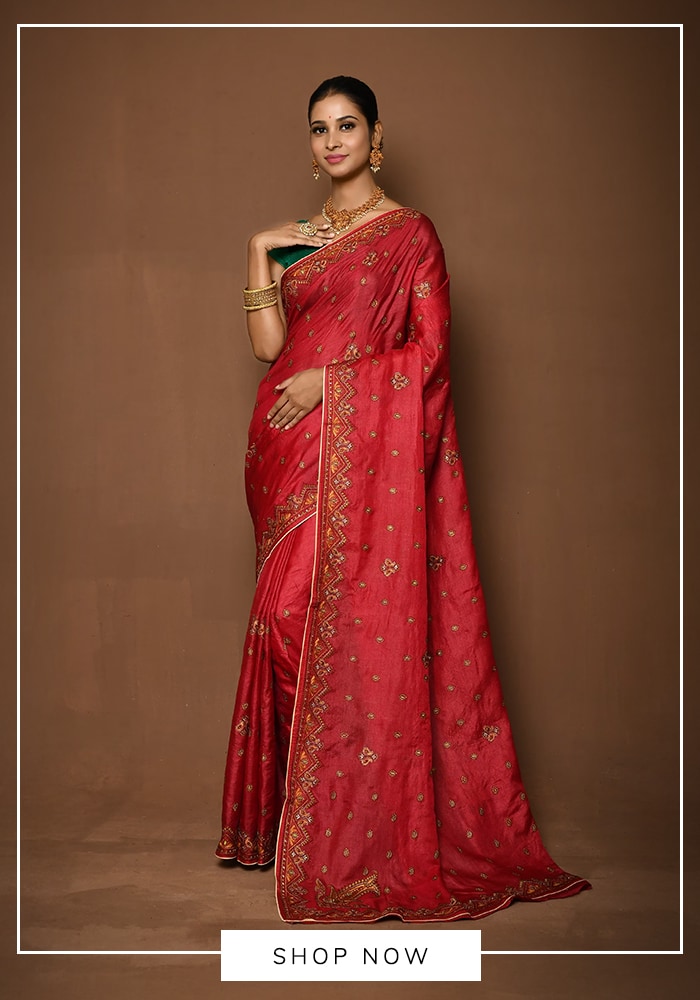
Tussar Banarasi: Made from wild Tussar silk, these sarees have a rich, coarse texture and an earthy, natural gold sheen. They are known for their handcrafted, elegant appearance.
Jangla Banarasi: Characterized by dense, all-over floral and vine motifs (the jangla pattern), these are some of the most heavily embroidered and traditional sarees. They are often chosen for bridal trousseaus.
Tanchoi Banarasi: Unique for its lack of zari work, Tanchoi sarees feature intricate, satin-weave patterns. The technique, inspired by Chinese craftsmanship, creates delicate, multi-colored motifs.
Jamdani Banarasi: An incredibly premium and artistic weave, Jamdani involves hand-weaving motifs directly into the sheer cotton or silk base. This 'figure-weaving' technique is time-consuming and results in a beautiful, translucent fabric.
Cutwork Banarasi: A lighter, more budget-friendly alternative. In this technique, the pattern is woven along with the base fabric, and loose threads on the back are trimmed by hand. It creates a light, airy look.
Brocade Banarasi: Brocades are defined by patterns woven with raised metallic threads. These sarees are rich, heavy, and display elaborate designs, making them a classic festive choice.
Meenakari Banarasi: This technique involves adding colorful silk threads to the zari motifs, creating a vibrant, enamel-like effect. It adds a pop of color to the traditional gold and silver weave.
Butidar Banarasi: A timeless favorite, these sarees are characterized by scattered small motifs, or butis (dots), made of gold and silver zari. The patterns are often dense and create a rich, shimmering effect.
Signature Banarasi Motifs & Designs
The patterns on a Banarasi saree tell a story, drawing from centuries of artistic influences.
- Mughal-Inspired Motifs: Kalga (paisley), bel (creeping vine), and jaal (all-over lattice pattern) are classic designs that reflect Mughal grandeur.
- Folklore & Nature Motifs: Motifs of elephants, peacocks, and parrots are woven into the fabric, symbolizing prosperity and nature.
- Floral & Foliage Motifs: Roses, lotuses, and other intricate floral vines are perennial favorites, giving the sarees a delicate, feminine touch.
- Geometric & Modern Motifs: Trending designs now include minimalist geometric patterns and fusion motifs that blend traditional art with contemporary style.
How to Identify an Original Banarasi Saree
With so many copies in the market, identifying a genuine Banarasi is crucial.
- The Six-Month Weaving Rule: While not a strict rule, remember that a complex handloom Banarasi can take anywhere from three weeks to six months to weave.
- Pin Test for Pure Silk: A genuine silk thread, when burned, will smell like burnt hair, leave a black ash, and stop burning once the flame is removed.
- Zari Authenticity Check: Real zari is made of silk thread wrapped in fine silver, which is then gold-plated. It will not be overly shiny and will tarnish over time, which is a sign of purity. Fake zari is often plastic-based and has a harsh glitter.
- Handloom Mark & Silk Mark: Look for the government-authorized Handloom Mark and Silk Mark certifications, which guarantee authenticity.
- Signature Characteristics: A handwoven saree will have a slightly uneven texture and may have loose threads or floats on the reverse side from the weaving process.
Banarasi Sarees by Occasion
Choosing the right Banarasi can elevate your look for any event.
- Bridal: A classic red Katan silk with heavy gold zari, a dense jaal weave, or a rich Meenakari pattern is the ultimate choice.
- Wedding Guest: Opt for lightweight Georgette, Tissue, or Organza Banarasi sarees in vibrant or pastel shades.
- Festive Functions: Rich Brocade, earthy Tussar, or shimmering Butidar sarees are perfect for traditional celebrations.
- Office & Elegant Daywear: A minimalist Tanchoi or a light Meenakari saree in a subtle color offers understated elegance.
- Party & Evening Wear: A metallic Tissue Banarasi or a modern Organza design will ensure you stand out.
Trending Banarasi Sarees Right Now
The Banarasi saree is constantly evolving to meet modern tastes.
- Pastel Banarasi Sarees: Shades of mint, lavender, and powder blue are hugely popular for day weddings and elegant events.
- Banarasi Organza: Millennials and Gen Z are embracing the lightweight, chic appeal of Organza Banarasi sarees.
- Banarasi Lehenga & Fusion Drapes: Designers are repurposing old sarees into stunning lehengas, and fusion draping styles are trending.
- Sustainable Handloom Revival: There is a growing appreciation for authentic, sustainably made handloom sarees that support artisan communities.
- Celebrity Favorites: Stars like Deepika Padukone, Vidya Balan, and Alia Bhatt frequently champion Banarasi sarees, inspiring new trends.
Styling Tips for Banarasi Sarees
Perfect styling completes the regal look.
- Best Blouses: Pair your saree with a high-neck or elbow-sleeve blouse for a classic look. A modern contrast blouse in a bold color or a brocade pattern can also create a stunning effect.
- Jewelry Pairing: Avoid over-accessorizing. Let the saree be the star. Match the metal tone of your jewelry to the saree's zari (gold or silver).
- Footwear & Pallu Styling: Choose elegant heels or traditional juttis. For a formal look, the open pallu drape showcases the intricate work, while a neat pleated Nivi drape is classic and manageable.
- Draping Styles: Experiment with different drapes like the traditional Nivi, the elegant open pallu, the festive Gujarati drape, or the trendy Lehenga style.
Saree Care & Maintenance Tips
A Banarasi is an investment. Proper care will ensure it lasts a lifetime.
- Storage: Store it wrapped in a muslin or cotton cloth in a cool, dark place. Avoid plastic bags.
- Ironing: Iron on a low heat setting with a cloth over the saree. Never spray water directly on it.
- Tackling Tarnish: If the zari darkens, it's a sign of purity. To clean, gently rub the zari with a soft cloth. Do not use harsh chemicals.
- Long-Term Care: Always dry-clean your Banarasi saree. Refold it every few months to prevent creases from becoming permanent.
Banarasi Sarees: FAQs
Which type of Banarasi saree is best for weddings?
Katan silk Banarasi sarees with heavy zari work, like Jangla or Meenakari Jaal, are considered the best for brides.
How to know if a Banarasi saree is original?
Look for the Silk Mark, check for weaving irregularities on the reverse side, and perform a burn test on a loose thread to verify the silk's purity.
Which Banarasi saree is lightweight?
Kora (Organza), Georgette, and Cutwork Banarasi sarees are the most lightweight and easy to drape.
What are the different types of Banarasi sarees?
The main types are based on fabric, including Katan (pure silk), Kora (Organza), Georgette, and Tussar, and on weaving style, like Jangla, Tanchoi, and Jamdani.
Why are Banarasi sarees so famous?
They are famous for their luxurious pure silk, intricate real gold and silver zari work, rich history of royal patronage, and timeless appeal as heirloom pieces.

