


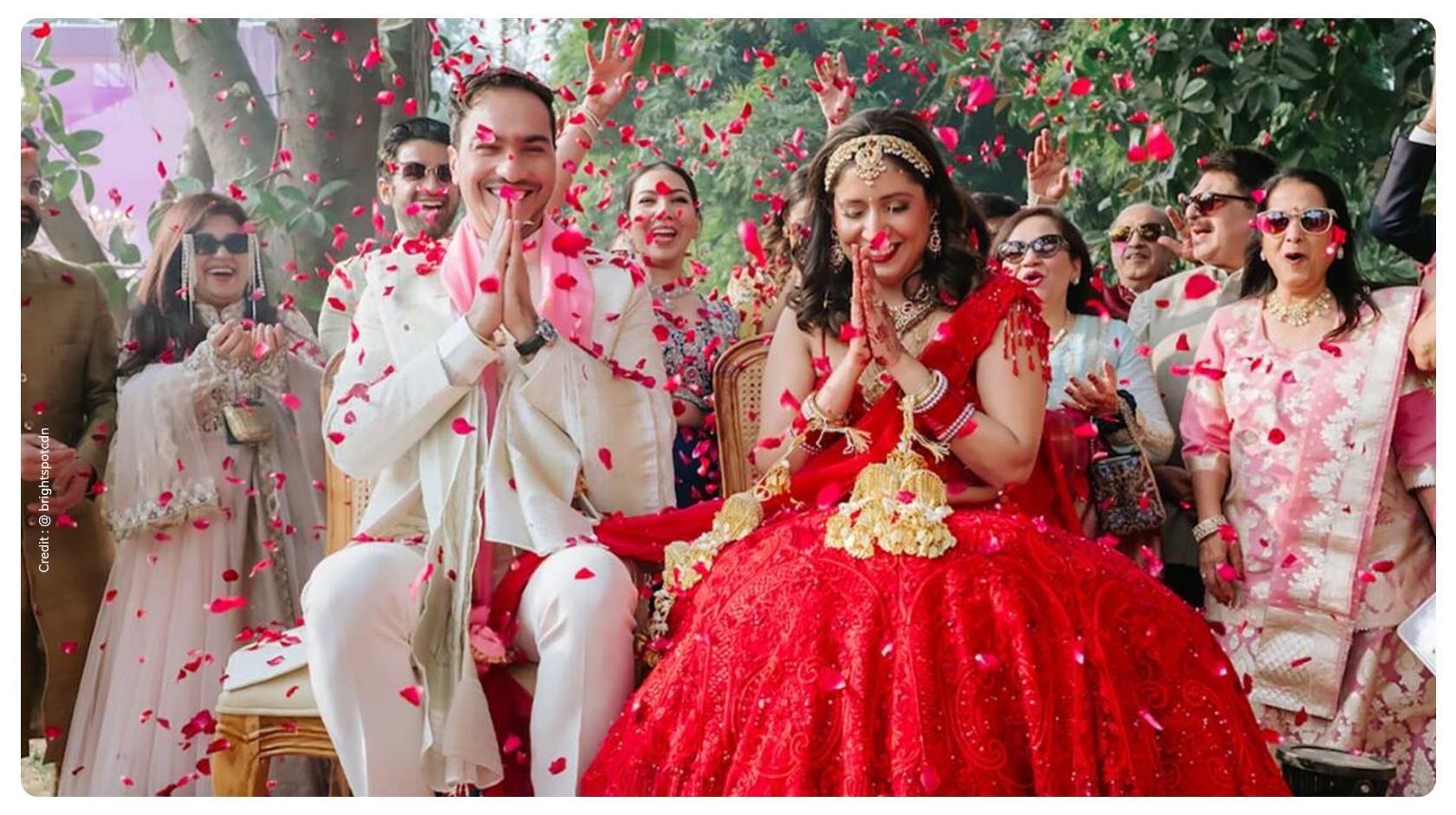
As an Indian wedding guest, avoid wearing white, black, and bridal red. White symbolises mourning in most Hindu traditions. Black is considered inauspicious at religious ceremonies. Bridal red belongs to the bride wearing it risks upstaging her on one of the most important days of her life. Beyond these three, neon shades and very pale pastels that read as white are also best avoided.

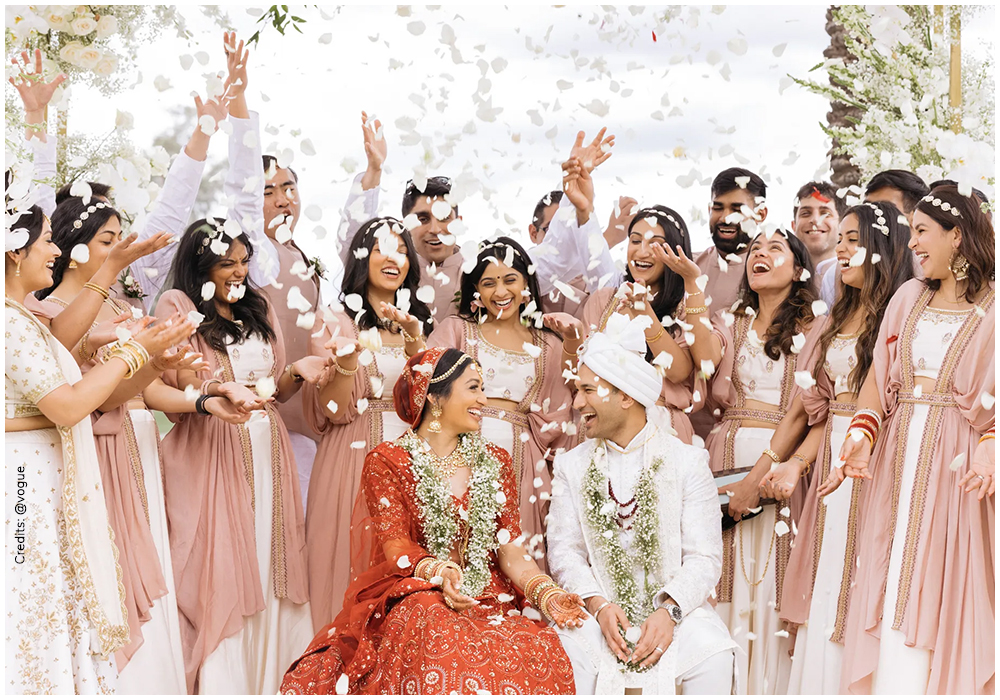
Why Color Rules Matter at Indian Weddings
Color at an Indian wedding is never just aesthetic it carries deep cultural, religious, and symbolic meaning. Every shade worn by every guest, family member, and the couple has significance rooted in tradition, region, and religious practice. Getting color right as a guest is one of the most important ways to show respect for the couple and their families.
Unlike Western weddings where 'don't wear white' is the single rule, Indian wedding color etiquette is more layered. It varies by region, religion, and even the specific function you are attending. Understanding the why behind each color rule helps you make confident, culturally informed choices.
For guest-appropriate colours done properly, Lashkaraa's wedding guest edit at Aza is a safe place to begin.
What Colors Should You Never Wear to an Indian Wedding?
White The Most Important Color to Avoid
White is the single most important colour to avoid at an Indian wedding. In most Hindu traditions, white is the colour of mourning and grief. It is worn at funerals and during periods of bereavement not at celebrations of new beginnings. Showing up in a white outfit, however beautiful, sends completely the wrong cultural message at a traditional Indian ceremony.
White is also the colour associated with widowhood in several Indian communities, which makes it particularly inappropriate at a wedding.
What to wear instead:
Any colour will serve you better. Pastels in blush, mint, or powder blue; jewel tones in emerald or sapphire; or warm earthy tones in mustard or terracotta.
Mistake to avoid:
Assuming that a 'small amount of white' is acceptable. A predominantly white outfit with coloured embroidery is still a predominantly white outfit. If white is the main colour of your garment, change it.
Black Inauspicious at Religious Ceremonies
Black carries strong associations with inauspiciousness and bad luck in many Indian cultural and religious traditions. It is considered the wrong energy to bring into a sacred, celebratory ceremony like a wedding. At the main wedding ceremony the pheras, the Anand Karaj, or the Nikah black is best avoided entirely.
That said, the rules around black have shifted considerably at urban, modern Indian weddings. A black sequinned lehenga or an embellished black Anarkali is increasingly acceptable at Sangeet nights and evening receptions particularly in metropolitan cities and at destination weddings.
What to wear instead:
Midnight blue, deep plum, charcoal, or deep forest green carry the same sophistication as black without the cultural weight.
Mistake to avoid:
Wearing black to the main wedding ceremony or religious rituals. Save it, at most, for the evening reception and only if the family's sensibility seems open to it.
Bridal Red The Bride's Colour
Red is the most sacred and iconic bridal colour in Indian weddings, particularly in Hindu and Sikh traditions. It symbolises love, prosperity, fertility, and new beginnings. Brides wear red or shades of it like crimson, scarlet, and deep maroon as a mark of their transition into married life.
Arriving in a head-to-toe red outfit as a guest is not offensive per se, but it is deeply awkward. Guests may confuse you with the bride in photographs and videos. You risk unintentionally competing with her for visual attention on the one day that belongs entirely to her.
What to wear instead:
Wine, burgundy, rust, coral, and burnt orange all carry the warmth of red without crossing into bridal territory.
Mistake to avoid:
Wearing any head-to-toe bridal red to the wedding ceremony. If you love red tones, use them as an accent a red border on a saree, a red dupatta over a contrasting lehenga rather than as the dominant colour of your entire outfit.
Neon and Fluorescent Shades Too Casual for the Occasion
Neon pinks, highlighter greens, fluorescent yellows, and electric oranges are best left out of your Indian wedding wardrobe. Indian weddings are built around grace, grandeur, and rich tradition. Neon colours clash with this aesthetic they read as casual and sporty, not festive and refined.
What to wear instead:
If you love bold colour, channel it through classic Indian hues royal blue, rani pink, mustard, emerald green, or deep teal. These are vibrant, celebratory, and deeply appropriate.
Mistake to avoid:
Confusing 'bright and festive' with 'loud and neon.' Indian wedding colour should feel rich and intentional, not attention-seeking.
Very Pale Pastels That Read as White
Extremely pale colours ice grey, barely-there blush, ultra-pale yellow, white-adjacent ivory can photograph as white under certain lighting conditions, particularly in bright outdoor settings. This creates the same problem as wearing white, even unintentionally.
What to wear instead:
Medium-depth pastels with clear undertones blush pink, mint green, powder blue, lavender, and peach all work beautifully for daytime and pre-wedding functions.
Mistake to avoid:
Choosing an outfit in-store under warm interior lighting, only to find it reads almost white in daylight. Always check how your outfit looks in natural light before committing.
Does Color Etiquette Vary by Wedding Type?
Yes and significantly. Indian weddings span dozens of regional, religious, and cultural traditions, and colour rules shift accordingly.
Hindu Weddings
The strictest rules apply here. White and black should be avoided at the ceremony. Bridal red is the bride's colour and should not be worn head-to-toe. Rich jewel tones emerald, sapphire, royal blue, deep pink and warm festive shades gold, mustard, orange are always appropriate.
Sikh Weddings (Anand Karaj)
Similar rules to Hindu weddings. All guests must cover their heads inside the Gurudwara with a dupatta or scarf. Avoid black at the religious ceremony. Bridal red is widely worn by both the bride and her family, so steer clear of head-to-toe red.
South Indian Weddings
White holds different significance in some South Indian traditions a white saree with a gold border is considered auspicious and bridal in certain communities, particularly in Kerala. Your safest colour choices are silk sarees in jewel tones, gold, or rich greens. Kanjivaram silk in emerald, ruby, or peacock blue is always appropriate.
Muslim Weddings (Nikah and Walima)
The colour rules are slightly more relaxed, but modesty is paramount. Avoid very pale colours and opt for rich, celebratory tones. Embellished shararas, Anarkalis, and sarees in jewel tones or pastel florals are all appropriate.
Modern and Destination Indian Weddings
Contemporary Indian weddings particularly destination weddings and those hosted by cosmopolitan families often have more relaxed colour rules. Black at the reception may be accepted; pastels at the ceremony are common. When in doubt, ask the couple or a mutual friend.
Color Rules by Wedding Function
Haldi Ceremony
Yellow, mustard, marigold, saffron, and orange are the most appropriate colours. Avoid white (stains badly with turmeric and sends the wrong cultural signal) and pale pastels. Avoid expensive or heavily embellished outfits in any colour turmeric will stain anything it touches.
Mehendi Function
Greens of all shades are traditional and expected emerald, pista, mint, sage. Florals, teals, pinks, and turquoises are also beautiful. Avoid very dark colours and all-black, which clash with the daytime garden-party energy of a Mehendi.
Sangeet Night
Jewel tones navy, emerald, wine, sapphire and metallics gold, silver, champagne, rose gold are ideal. Black in sequinned or embellished formats is increasingly acceptable at modern Sangeet events.
Wedding Ceremony
The strictest colour rules apply here. Avoid white, black, and bridal red entirely. Maroon, gold, royal blue, emerald, mustard, and blush pink are all beautiful and appropriate. Always carry a dupatta for religious ceremonies.
Reception
The most relaxed in terms of colour etiquette. Metallics, midnight blue, champagne, and contemporary palettes all work. Some modern families are comfortable with black at the reception but when in doubt, default to a rich jewel tone.
What Are the Best Colors to Wear to an Indian Wedding?
Jewel Tones Always Safe, Always Stunning
Emerald green, royal blue, deep pink (rani pink), sapphire, ruby, and teal all photograph beautifully, complement the rich wedding decor, and signal festivity and respect. These are the safest, most universally appropriate colours for any Indian wedding function.
Gold and Champagne Celebratory and Luxurious
Gold represents wealth, auspiciousness, and the blessings of Goddess Lakshmi in Hindu tradition. A champagne or gold outfit is deeply appropriate for evening functions the Sangeet and Reception in particular.
Pastels Fresh and Modern for Daytime
Blush pink, powder blue, mint green, peach, and lavender are beautiful for daytime functions like Mehendi and Haldi. Choose saturated versions that read clearly as coloured, not white-adjacent.
Earthy Tones Rich and Regional
Terracotta, burnt orange, rust, copper, and deep mustard are having a major moment in 2026 Indian wedding fashion. These warm, earthy shades are culturally rooted, photograph beautifully, and stand out without competing with the bride.
Trending Colors for Indian Weddings in 2026
Sage green, dusty rose, cobalt blue, mauve, lilac, and metallic gold are the standout trending colours for the 2026 wedding season. These hues blend modern sensibility with traditional warmth perfect for the contemporary Indian wedding guest.
Quick Color Guide by Skin Tone
- Deep skin tones: Jewel tones emerald, cobalt, ruby, and gold are particularly striking. Avoid very pale pastels that may wash out against deeper skin.
- Medium skin tones: Almost every colour works beautifully. Warm earthy tones terracotta, mustard, rust and jewel tones both perform well.
- Fair skin tones: Rich jewel tones and deep pastels photograph well. Avoid very pale ivory or white-adjacent shades that may not read as clearly coloured.
What to Do if You're Unsure
If you are attending an Indian wedding for the first time and genuinely uncertain about colour choices, these three rules will keep you safe every time:
- Avoid white, black, and bridal red. These are the three non-negotiables across almost all Indian wedding traditions.
- Default to a jewel tone. Emerald, royal blue, deep pink, or teal will be appropriate at virtually any Indian wedding function in any region.
- When genuinely unsure, ask. A quick message to the bride, groom, or a mutual friend is always appreciated it shows cultural awareness and consideration.
Mistake to avoid: Assuming Western colour rules apply. At an Indian wedding, 'wearing black is always safe' and 'white is the colour of purity' are not helpful frameworks. Start fresh with Indian colour traditions.
Frequently Asked Questions
Can I wear red to an Indian wedding?
Avoid head-to-toe bridal red, particularly to the wedding ceremony. Deep wine, burgundy, rust, and crimson accents are perfectly appropriate they carry the warmth of red without competing with the bride's bridal look.
Can I wear white to an Indian wedding?
Avoid white in traditional and religious settings. White is associated with mourning in most Hindu traditions. At very modern or destination Indian weddings, some families are relaxed about white at the reception but the safest approach is always to choose colour.
Can I wear black to an Indian wedding?
Avoid black at the main ceremony and religious rituals. A black sequinned or embellished outfit is increasingly accepted at modern Sangeet events and evening receptions. When in doubt, choose midnight blue or deep plum instead.
Can I wear cream or ivory to an Indian wedding?
Cream and ivory are white-adjacent and can read as white under certain lighting. Avoid cream and ivory for the same reasons as white. Choose a clear, saturated pastel or a warm earthy tone instead.
Can I wear the same colour as the bride?
Avoid it if you know what the bride is wearing. If the bride is wearing a red lehenga, avoid red entirely. If you are genuinely unsure, default to a jewel tone emerald, royal blue, or deep teal will never clash with a bride's look.
Do color rules apply to men too?
Yes. Male guests should also avoid white kurtas at the main ceremony, all-black sherwanis at religious rituals, and bridal red sherwanis or kurtas. Safe choices for men include pastels, jewel tones, ivory with coloured embroidery, and classic navy or emerald.
The Aza Edit: Color Rules at a Glance
- Never wear to any function: White, all-black at religious ceremonies, head-to-toe bridal red.
- Avoid: Neon and fluorescent shades; very pale pastels that read as white; cream and ivory.
- Always safe: Jewel tones emerald, royal blue, deep pink, sapphire, teal. Gold and champagne for evening events. Saturated pastels for daytime functions.
- Trending in 2026: Sage green, dusty rose, cobalt blue, mauve, burnt orange, and metallic gold.
- When in doubt: Default to emerald green, royal blue, or deep pink. These colours are appropriate at every Indian wedding function, in every region, across every religious tradition.

