


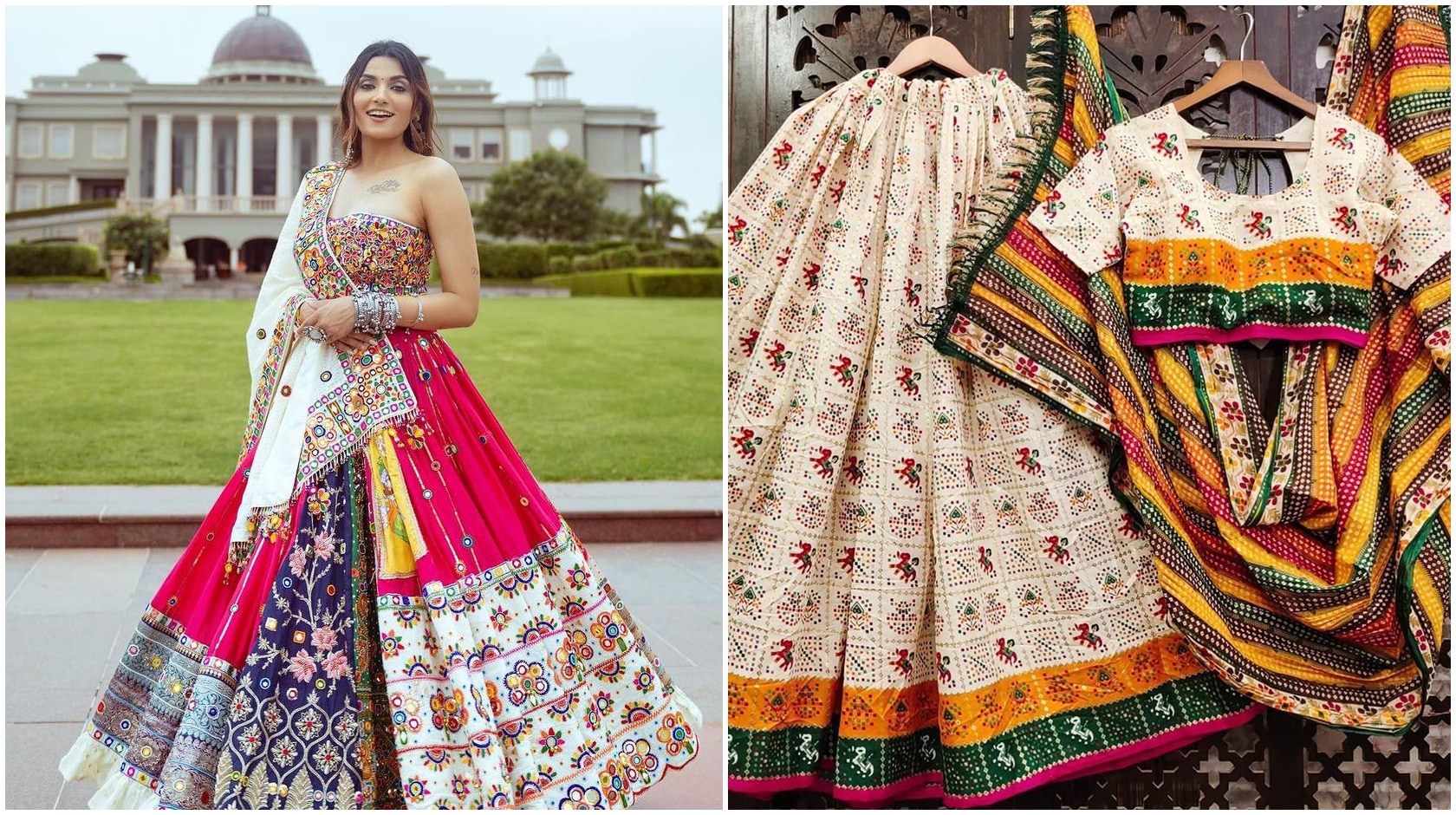

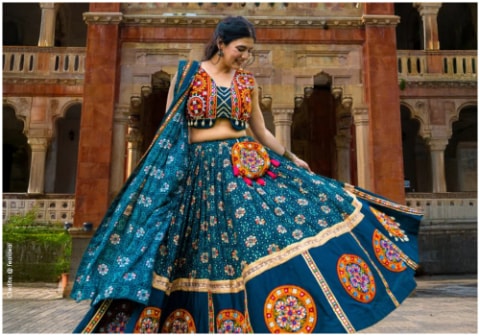
When you picture the vibrant festivals of India, especially the nine nights of Navratri, a spectacular image often comes to mind: dancers twirling in a kaleidoscope of color, their skirts flaring out in perfect circles. This iconic image is brought to life by the Chaniya Choli, a traditional outfit that embodies the spirit of celebration, culture, and craftsmanship. Rooted in the heritage of Gujarat and Rajasthan, this three-piece ensemble is more than just clothing; it is a canvas for the rich Gujarati textile heritage.
This post will explore the colorful world of the Chaniya Choli. We will uncover its origins, break down its components, and delve into the intricate designs that make it so captivating. We'll also see how this beloved traditional Indian attire has evolved from a rural staple into a global fashion statement, becoming the quintessential Navratri outfit for millions.
What is a Chaniya Choli? The Anatomy of an Icon
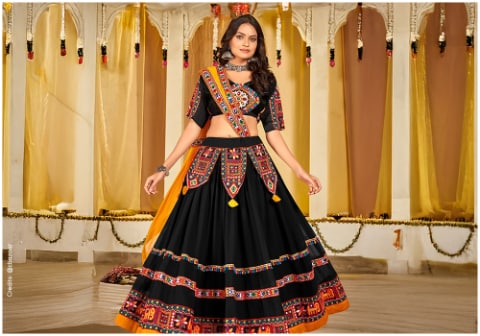
A Chaniya Choli is a three-piece outfit that combines grace, comfort, and elaborate artistry. Each component plays a crucial role in creating its signature look:
- The Chaniya (Skirt): This is the soul of the outfit. The Chaniya is a long, flared skirt, often voluminous and paneled to create a dramatic circular swirl when the wearer spins. Its expansive surface serves as the primary canvas for embroidery, mirror work, and appliqué.
- The Choli (Blouse): This is a fitted, cropped blouse. The Choli can vary in style, from traditional backless designs with tie-up strings to more modern, structured cuts. It complements the flared Chaniya by creating a balanced silhouette.
- The Dupatta (Scarf): Also known as an odhni, the dupatta is a long scarf that completes the ensemble. It can be draped in various styles—over the head, across the shoulders, or tucked into the skirt. The dupatta is often as ornately decorated as the skirt and blouse.
Together, these three pieces create a harmonious and dynamic outfit that allows for freedom of movement, making it perfect for folk dances like Garba and Dandiya Raas.
Origins: A Garment Woven from Rural Life
The story of the Chaniya Choli begins in the arid landscapes of Gujarat and Rajasthan. Originally, it was the daily attire for women in rural and tribal communities. The practical design was suited to the climate and the active lifestyle of the region. The full, ankle-length skirt provided coverage and ease of movement for daily chores, while the breathable cotton fabric offered comfort in the desert heat.
The vibrant colors and mirror work, now a hallmark of the style, also had practical origins. In the vast, sandy expanse of the desert, bright colors made people more visible from a distance. The tiny mirrors, or shisha, were believed to deflect the evil eye and bring good luck. Over time, what started as a functional garment transformed into a symbol of cultural identity, worn with pride during festivals and ceremonies.
A Canvas of Color: Designs and Embellishments
The true magic of a Chaniya Choli lies in its breathtaking embellishments. It is a celebration of the rich textile traditions passed down through generations.
Intricate Embroidery and Patchwork
The embroidery found on a Chaniya Choli is a testament to the skill of the artisans. Different communities in Gujarat, like the Kutch and Saurashtra regions, have their own distinct embroidery styles. These can range from chain stitch and herringbone stitch to the intricate Aari work. Often, you will see patchwork, where pieces of different colored and patterned fabrics are stitched together to create a vibrant mosaic. This technique, born out of a need to be resourceful, has become a celebrated design element.
The Sparkle of Mirror Work (Shisha)
No Navratri outfit is complete without the signature shimmer of mirror work. Tiny pieces of reflective glass or mica are meticulously embroidered onto the fabric, creating a dazzling effect as they catch the light. This shisha work is not just decorative; it adds weight and structure to the fabric, enhancing the flare of the Chaniya as it moves.
Vibrant Color Palette
Chaniya Cholis are known for their bold and joyous use of color. You will find a riot of reds, oranges, yellows, greens, and blues, often used together in striking combinations. These colors reflect the festive spirit of occasions like Navratri and are deeply symbolic. Red, for example, signifies energy and passion, while yellow represents happiness and knowledge.
Fabrics: From Humble Cotton to Luxurious Silk
The choice of fabric plays a significant role in the look, feel, and occasion for wearing a Chaniya Choli.
- Cotton: The original and most traditional fabric, cotton is prized for its breathability and comfort. Cotton Chaniya Cholis are lightweight and perfect for long nights of dancing. They are often dyed using natural methods like bandhani (tie-dye) or feature block prints.
- Gaji Silk and Mashru: For more formal occasions, fabrics like Gaji silk (a heavy, satin-weave silk) and Mashru (a blend of silk and cotton) are used. These fabrics have a rich sheen and a beautiful drape, making them ideal for wedding-related festivities.
- Georgette, Chiffon, and Crepe: Modern interpretations of the Chaniya Choli often use lightweight synthetic fabrics like georgette and chiffon. These materials offer a fluid drape and are easy to embellish, making them a popular choice for contemporary designs.
Evolution: From Village Fairs to Global Runways
The journey of the Chaniya Choli is a fascinating story of cultural evolution. What was once a humble garment for rural women has become a high-fashion statement.
In the past few decades, its popularity has surged, largely thanks to the festival of Navratri becoming a global phenomenon and the influence of Bollywood films. Designers have taken the traditional silhouette and reimagined it for a modern audience. Today, you can find Chaniya Cholis in a vast array of styles, from traditional designs that honor the craft's roots to contemporary versions with minimalist aesthetics, modern prints, and unconventional cuts.
The outfit has broken free from its traditional context and is now worn at weddings, parties, and cultural events worldwide. This evolution has not only kept the garment relevant but has also provided a sustainable livelihood for the artisan communities that are the keepers of this traditional Indian attire.
A Celebration of Heritage and Joy
The Chaniya Choli is far more than just a festive outfit. It is a vibrant expression of identity, a masterpiece of craftsmanship, and a symbol of joyful celebration. Its swirling colors and sparkling mirrors tell a story of a culture that finds beauty in tradition and strength in community.
Whether you are stepping onto the Garba floor or simply admiring the intricate artistry, the Chaniya Choli invites you to be part of a living legacy. It reminds us that clothing can be a powerful connection to our heritage, carrying stories, prayers, and the unbridled joy of life in every thread.

