
Indian weddings in the west are nothing short of a grand celebration. From the beautiful décor to delicious delicacies, nuptials when done the South Asian way are a majestic experience. But here’s the thing, the intricate tapestry of these weddings is not holistic but diverse with varied hues of traditions and rituals. From the loud echoes of baraat music to the early morning Kashi Yatra, North Indian weddings differ vastly from the south when it comes to customary flavours, food and fashion.
If you are attending an Indian wedding in the US, then knowing the difference between the two is crucial. This is because almost all the rituals, traditions, pre-wedding festivities, food, outfits, and more are distinguishable between a North Indian Wedding vs South Indian wedding. As these myriads of contrasting customs reflect the rich diversity of India.
Get ready as we dive into the unique rituals, fashion, and celebrations that set a South Indian wedding apart from a North Indian wedding.
The Diverse Nature of Indian Weddings: Significance

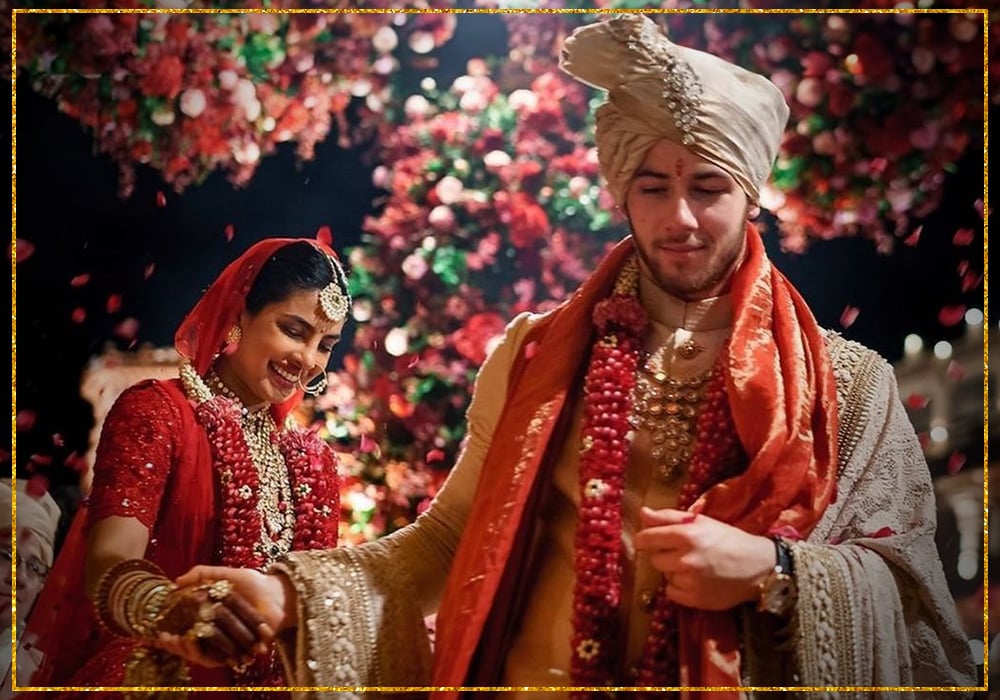
India is no doubt the land of diversity. With dialects changing with every kilometer, each region has its own unique customs and traditions. The most evident factor being its wedding celebrations. With every land covered, you will find new rituals, altered to make this grand celebration personalised for them. These contrasting cultures following a glorious celebration paves the way for a unique celebration you will certainly enjoy.
In North India, weddings are often a grand affair. With celebrations spread over several days, each pre-wedding festivity adds its own distinctive flavour to the mix. Starting with the engagement (roka) ceremony, mehendi (henna) event, sangeet (dance and music ceremony), haldi, ceremony, the grand D-day and the reception, north Indian wedding rituals are a league of its own. Centered around being a fanfare, for instance, during the wedding (an evening affair) starts with the groom making a grand entrance(baarat) with his friends and family dancing on shehnai.
Down the south, weddings are more focused on traditions and rituals. Beginning at the break of dawn, the rituals are conducted during the muhuratam (auspicious time). The focus is on following religious rituals, with each custom holding a deep symbolic meaning behind it. For instance, during the Kanyaadan, the bride sits on her father’s lap while performing the act of handing her over to the groom, a deep emotional ritual that represents the father parting with his baby daughter while seeking the groom’s promise to take care of her.
While done differently, North and South Indian weddings have the same essence, that is to honor the couple while making sure that the ceremony is about celebrating the new bond in their own way.
Indian Wedding Attires: North Meets South
Not just rituals, but wedding attire also differs between South Indian and North Indian weddings. From bridal lehengas to pattu sarees, you will find a vast difference between the two.
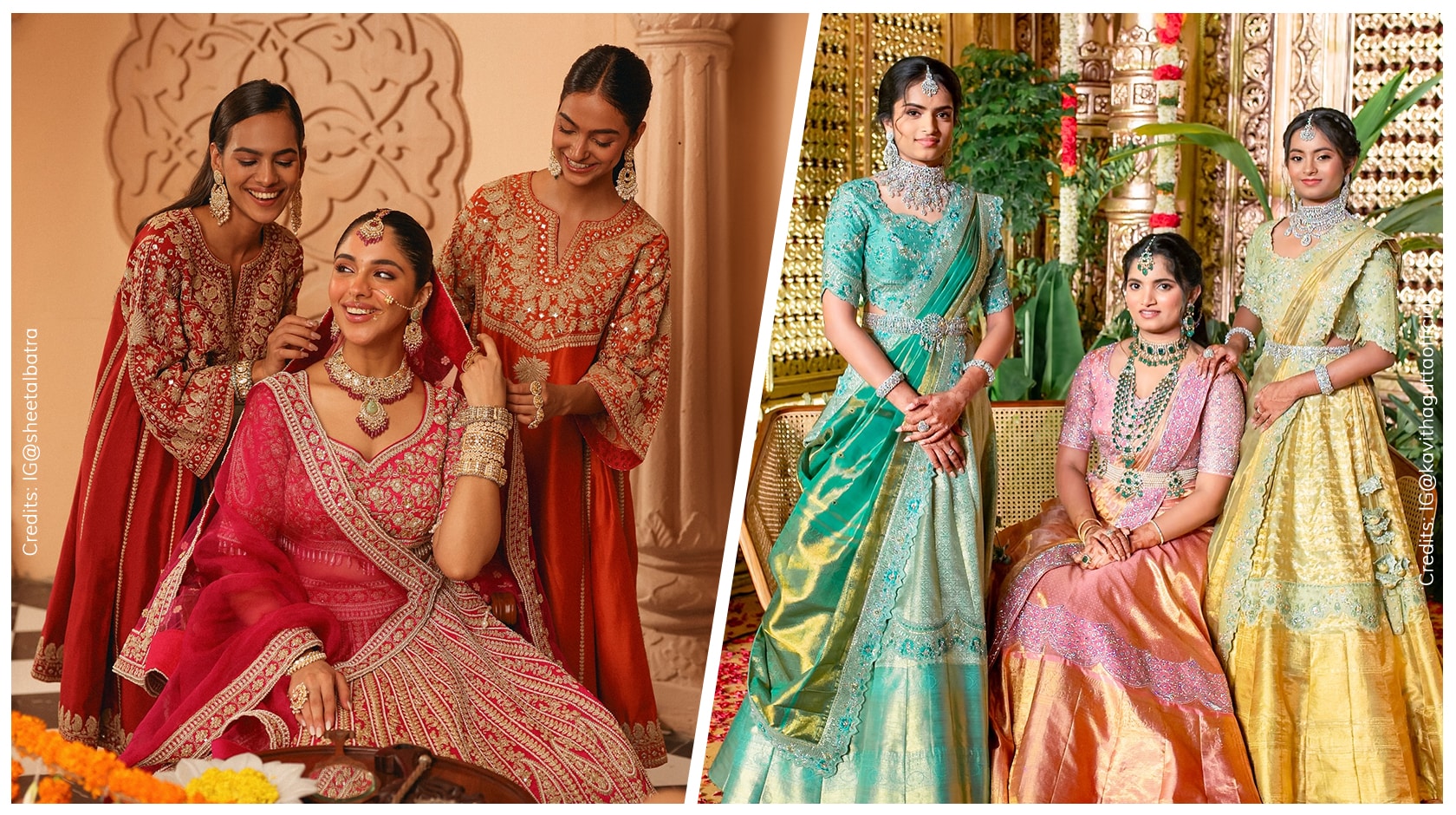
The North Indian brides are usually decked up in heavy embroidered lehenga or saree. Often in the vibrant hues of red, maroon, pink and orange, the trope is accompanied by blouse/choli and dupatta(veil). The look is completed by weighted jewellery like necklace, earrings, maangtikkas and nose rings.
In contrast, South Indian brides choose pure silk sarees, usually in gold, white & green hues. The saree is often paired with an embellished fitted blouse accessorized with gold jewellery like layered necklaces, bangles up until the elbow, earrings with ear chain and a kamarband.
A Glimpse into North Indian Wedding Celebrations

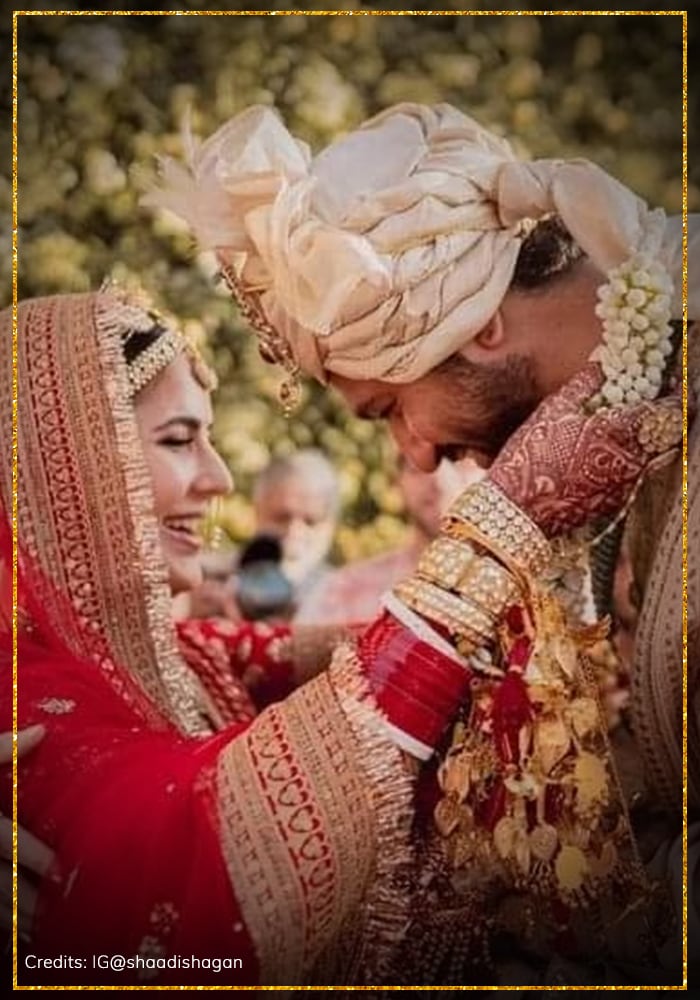
North Indian weddings are known for their extravagance. The festivities span over 3-5 days marked by varied of pre-wedding festivities. Starting with the engagement (roka), where the couple renounces their union, followed by the mehendi ceremony. A henna event where the bride’s arms and feet and decorated with intricate designs, is a dance and music fest. As the older ladies in the family sing traditional songs indicating that the bride is going to her groom’s house with funny anecdotes.
Next is the sangeet ceremony. A key event that is all about dancing to popular Bollywood songs or sometimes to music that resonate with the soon-to-be married couple. This fun-filled riot is all about choreographed dances, unsynchronized co-ordination, fun moments that celebrate the couple.
North Indian Wedding Fashion: From Lehengas to Sherwanis
You will see a heavy significance of banarasi in these weddings. With most north Indian women opting for banarasi sarees with intricate zari embroidery, heavy embellishments and gold hues. This is since the age-old silk tailoring is associated with royalty and is thus worn by the groom’s mother.
The groom opts for a sherwani or an angarkha for his big day. Accompanied with a long coat, the set is weaved in silk or brocade adorned with fine embroidery of gold or silver. It is paired with a churidar or pants along with a turban or pagdi (a traditional headwear wrapped around the groom’s head.
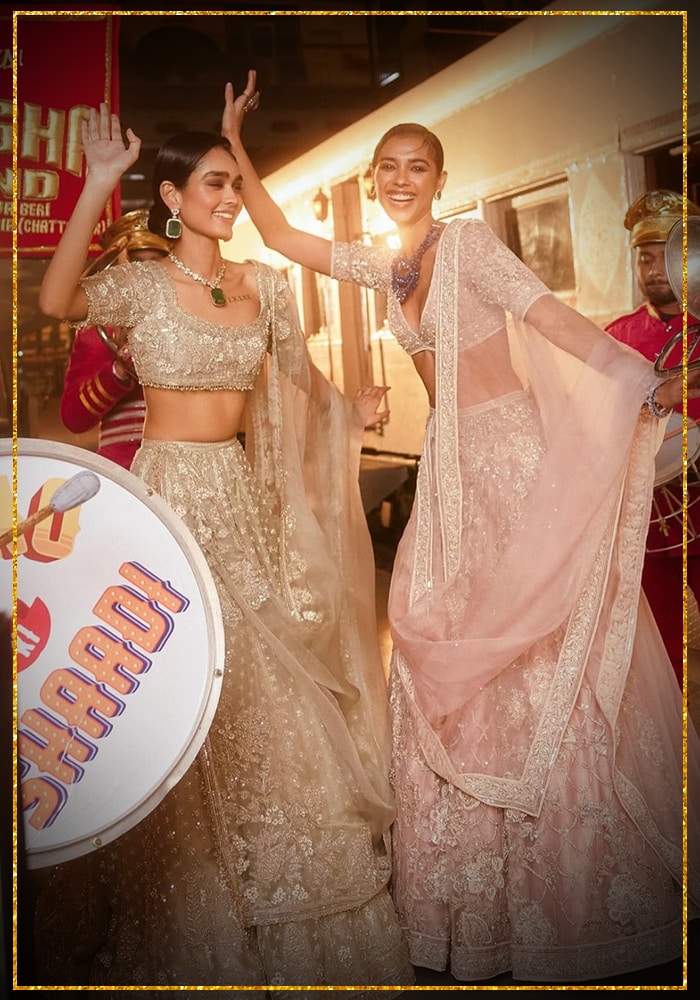
Indian wedding guests opt for comfortable and trendy kurta sets with Nehru jackets or bandhgalas for larger events. Women, on the other hand have plethora of options which they choose to wear wisely according to the pre wedding festivity. For example, wearing a light printed lehenga for mehendi, indo-western look for sangeet, saree for the wedding day and a saree gown or heavy embroidered lehenga for the reception. Modern day women often fluctuate around these options while adding their own mix in accordance with the recent trends.
Sacred Traditions of South Indian Wedding Festivities
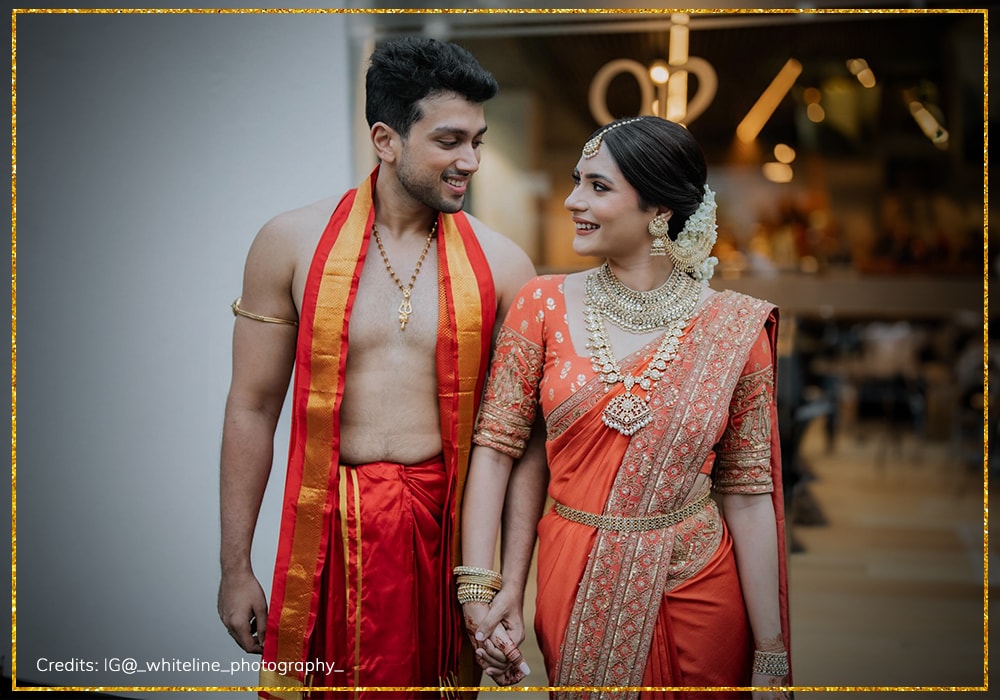
In contrary to the lavishness of North Indian weddings, nuptials down south are often an elegant affair. As the focus is more on honoring the religious traditions and ceremonies, each carrying deep sacred symbolism. But what are the exact differences that sets south Indian weddings apart from the north? Let’s check them out.
Sarees, Silks & More: South Indian Wedding Attire Guide
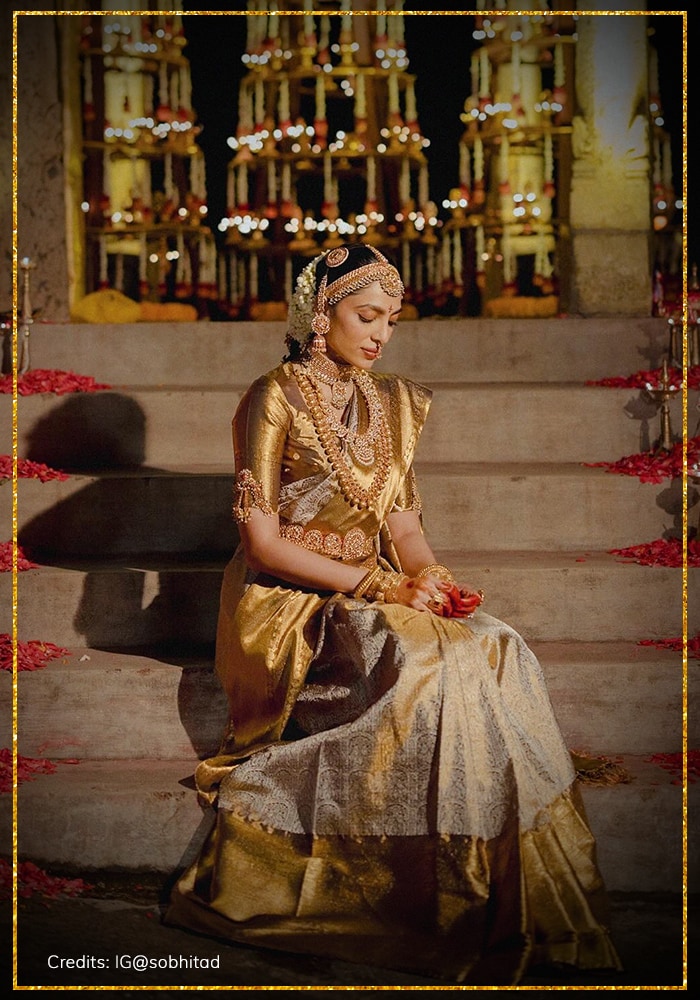
Silk sarees are a staple for a south Indian bride. With rich color combinations ranging from white, gold, orange and red, the six yards of grace is accompanied with intricate borders and gold embroidery. The look is elevated with layers of temple jewellery and an embellished blouse. Together the attire reflects not just grace, but centuries old fashion passed down through generations.
Grooms on the other hand, choose a silk kurta with delicate enhancements over a dhoti (veshtis) for the wedding.
For guests attending in the US, traditional south indian bridesmaids usually opt for elegant silk sarees, for instance a lightly draped pattu saree adorned with dainty gold jewellery. Meanwhile, men wear a kurta or a shirt over dhoti or lungi (a long cotton cloth wrapped around the waist).
The Rise of Indo-Western Fashion in Indian Weddings
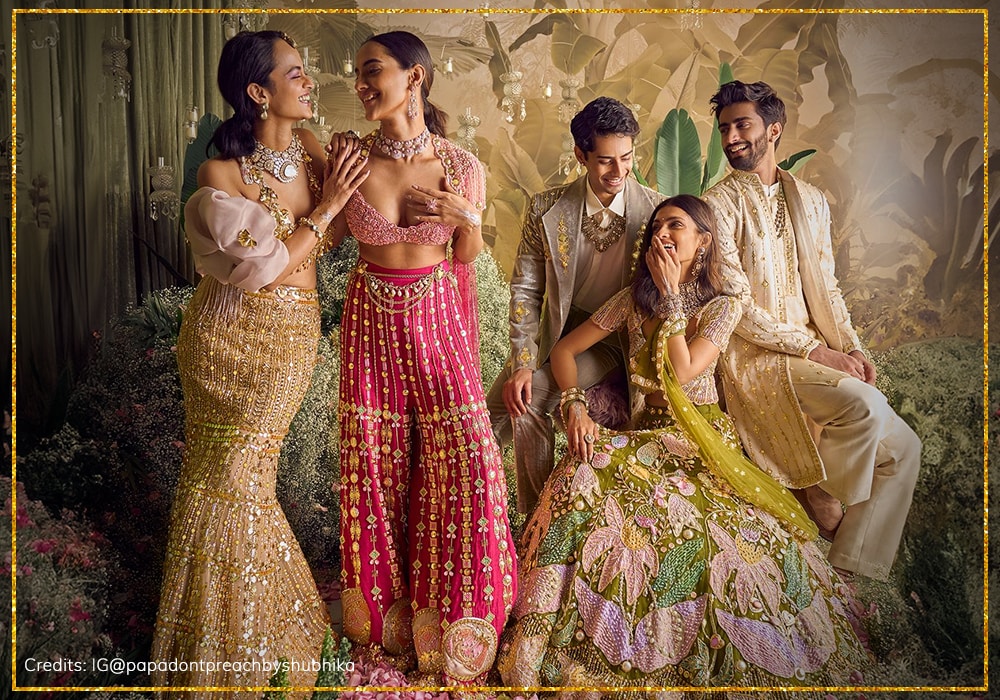
In the US, where Indian weddings are often stretched over several days and bring together diverse cultures, Indo-western outfits are gaining popularity. As they are versatile, trendy and are perfect for pre-wedding festivities. Think of embellished capes, lehengas with pockets, ethnic jumpsuits and chic palazzo sets that offer not just flair but also comfort so you can dazzle on the dance floor without any worries.
A Tale of Two Weddings: North India vs South India
Indian weddings share the same spirit of celebrations but the way they unfold in North and South India is beautifully different. Now that we have covered the wedding fashion for you, let’s look at some other distinctions.
Timings:
- South Indian wedding rituals start in the morning (around 7 AM) and ends with a hearty lunch.
- In North India, the nuptials begin in the evening and are followed by a reception or dinner.
Food:
- Food in South Indian weddings are often done in a traditional sit-down banana leaf meal.
- While in North, people have grand buffet spreads with multi-variety cuisines.
Ambience:
- The ambience for nuptials in the south is more graceful, modest and ritualistic.
- North Indian weddings are festive, musical, grand and entertainment focused.
Ceremony:
- Down south, the matrimonial rituals tend to be longer as every tradition is followed strictly.
- While North Indian weddings are shorter as some opt to do the complete seven rounds of fire (saath phere) while the others follow the 7 steps for 7 vows rituals.
The differences are as common as the similarities between the two weddings, that is celebrating the couple’s new journey with full earnest and joy. Whether it is the glory of North Indian weddings or the spiritual grace of South Indian weddings, each festive affair is the mirror of the cultural legacy that has shaped the lives of people through years.
If you are looking forward to being part of one these celebrations in the US, then do visit Aza Fashions. With access to over 2,000 Indian designers, we curate authentic ethnic collections that combine traditional heritage with contemporary trends. From bridal lehengas, south Indian saree looks for weddings to sherwanis and dhoti kurta sets Aza ensures you find styles that fit every ritual, regions and mood.