


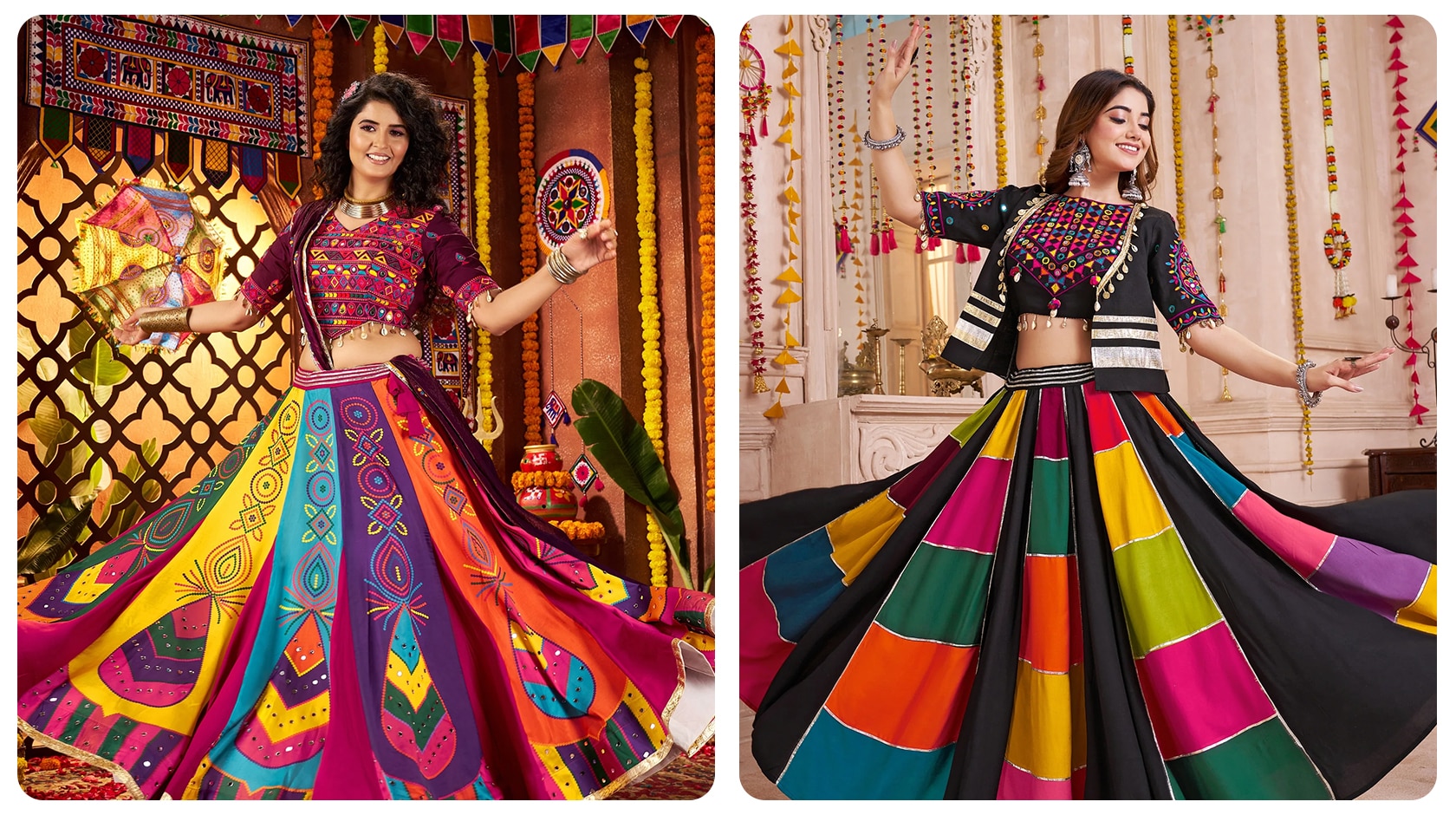

The rhythm of the dhol beats, the kaleidoscope of colors swirling in a circle, and the shimmer of intricate embroidery under festive lights—nothing captures the essence of Indian celebration quite like the Ghagra Choli. This iconic ensemble is not just a piece of clothing; it is a vivid expression of India's rich heritage, a garment that has graced royalty and rural women alike for centuries.
Whether you see it twirling on a dance floor during Navratri or adorning a bride on her wedding day, the Ghagra Choli commands attention. But what exactly makes this outfit so special? How does it differ across the vast cultural landscape of India?
In this comprehensive guide, we will explore the anatomy of this beloved traditional Indian attire, dive into its regional variations from the deserts of Rajasthan to the plains of Uttar Pradesh, and settle the debate on the difference between a ghagra and a lehenga choli. Get ready to unravel the threads of one of India's most stunning fashion legacies.
The Anatomy of an Icon
A Ghagra Choli is a three-piece ensemble that balances modesty with sensuality, volume with structure. Each component plays a vital role in creating the silhouette that defines Indian ethnic wear.
The Ghagra: A Symphony of Volume
The term Ghagra (or Ghagri) refers to the skirt. Unlike a simple maxi skirt, a traditional ghagra is defined by its immense volume and flare. Historically, these skirts were designed with numerous pleats or panels (called kalis) to allow freedom of movement for women working in the fields or performing folk dances. Secured at the waist with a drawstring (nada), a ghagra can be simple cotton for daily wear or heavy silk embellished with zari for special occasions. The sheer circumference of a traditional ghagra is what creates that breathtaking swirl when the wearer spins.
The Choli: The Artistic Bodice
The Choli is the fitted blouse worn on the upper body. It complements the voluminous skirt by providing a structured silhouette. Cholis come in endless varieties. Some are modest and long, reaching the waist or hips (common in Gujarat and parts of Rajasthan), while others are short, exposing the midriff (often seen in Bollywood and modern lehenga choli designs). The back of the choli is often a canvas for creativity, featuring intricate tie-up strings (dori), deep cuts, or heavy embroidery.
The Dupatta: The Finishing Touch
No Ghagra Choli is complete without the Dupatta (or Odhni). This long scarf serves both a functional and decorative purpose. Traditionally used to cover the head as a sign of respect, today it is draped artistically over the shoulder or across the chest. The dupatta ties the whole look together, often mirroring the embroidery of the skirt or providing a contrasting pop of color.
A Cultural Tapestry: Regional Variations
While the basic components remain the same, the style, fabric, and embellishment of the Ghagra Choli change dramatically as you travel across India.
The Royal Vibrance of Rajasthan
In Rajasthan, the Ghagra Choli is a riot of color and tradition. Here, the outfit is often called a Kanchli-Ghagra.
Fabric and Design: Cotton is preferred for comfort in the desert heat, often dyed in vibrant bandhani (tie-dye) or lahariya (wave) prints.
Embellishment: The skirts are adorned with Gota Patti work—strips of gold or silver ribbon stitched into patterns. Mirror work is also prevalent, reflecting the sun and adding a dazzling sparkle.
Style: The Rajasthani choli often covers the chest fully but may be backless, secured with strings. The ghagra is often shorter than the ankle-length versions seen elsewhere, allowing for heavy silver anklets (payals) to be shown off.
The Festive Spirit of Gujarat
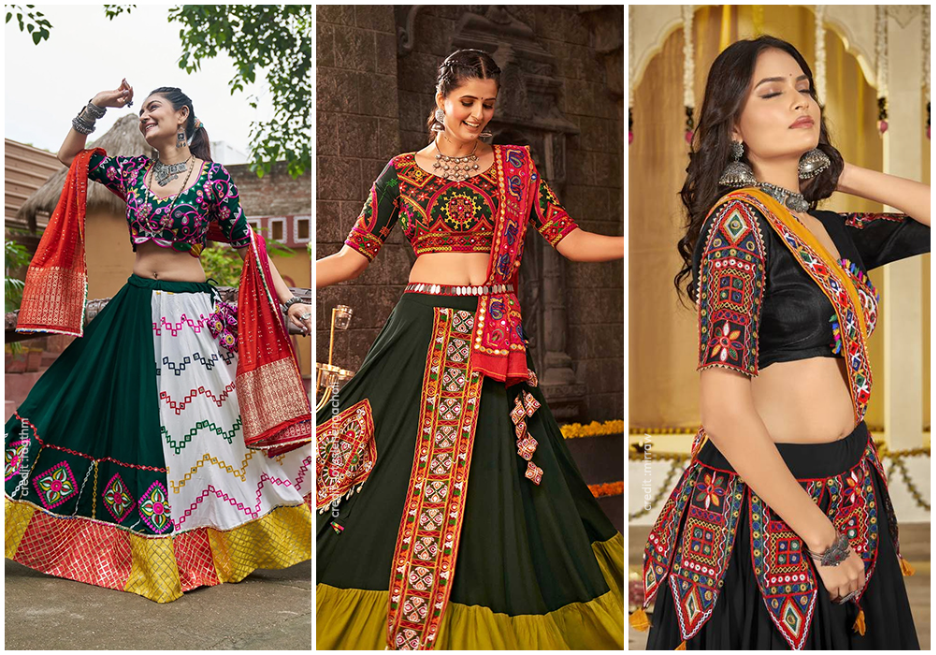
In Gujarat, the ensemble is widely known as Chaniya Choli, particularly associated with the Navratri festival.
The Look: These are perhaps the most colorful variations. They feature heavy patchwork, intricate thread embroidery (Kutch work), and an abundance of mirrors (shisha).
Draping: The dupatta is often draped from the back to the front over the right shoulder, a style known as the seedha pallu, which showcases the intricate work on the front of the dupatta.
Occasion: While worn by rural women daily, the heavily embroidered versions are the uniform of choice for Garba and Dandiya nights.
The Classical Elegance of Uttar Pradesh and Punjab
Moving north, the Ghagra evolves into a garment of celebration and bridal grandeur.
Uttar Pradesh: Here, the influence of Mughal aesthetics is visible. The embroidery is often Zardozi or Chikankari. Brides in this region traditionally wore heavy ghagras made of silk or brocade, often paired with a longer kurta-style choli.
Punjab: The traditional Punjabi Ghagra is lighter and often made of satin or crepe. It was once everyday attire but is now mostly reserved for folk dance performances like Giddha. The skirt is voluminous but paired with a longer kurta (tunic) rather than a short choli.
Ghagra vs. Lehenga: Is There a Difference?
This is the most common question enthusiasts of Indian ethnic wear ask. The terms Ghagra Choli and Lehenga Choli are often used interchangeably, but there are subtle nuances rooted in history and usage.
The Ghagra
The term "Ghagra" typically refers to the more traditional, rural, or folk version of the outfit.
Characteristics: It usually has more pleats and volume (up to 20 meters of fabric in some Rajasthani styles!).
Vibe: It is often made of cotton or printed fabrics and is associated with comfort, folk dance, and daily wear in villages. It has a raw, authentic ethnic charm.
The Lehenga
"Lehenga" is the term more commonly used in high fashion, bridal wear, and urban settings.
Characteristics: Lehengas are cut to specific shapes—A-line, mermaid cut, or straight cut—rather than just being gathered pleats. They focus more on silhouette and fit.
Vibe: They are made from luxury fabrics like velvet, silk, and net, heavily embellished with crystals, sequins, and heavy zari. A bridal outfit is almost always referred to as a "Bridal Lehenga" rather than a ghagra.
In essence, all ghagras are skirts, but the modern "lehenga" is a stylized, couture evolution of the humble ghagra.
Occasions: When to Wear a Ghagra Choli
The versatility of this outfit makes it a staple in every Indian woman's wardrobe.
Weddings
The Ghagra Choli (in its bridal lehenga avatar) is the quintessential wedding outfit for brides across North India. Red, maroon, and gold are traditional colors, symbolizing prosperity and fertility. Guests also favor this attire, though in lighter pastels or jewel tones.
Festivals
Festivals like Diwali, Teej, and Navratri are incomplete without this attire. For Navratri, lightweight cotton Ghagra Cholis with mirror work allow for hours of energetic dancing. For Diwali, silk versions with rich borders add a touch of regality to the festivities.
Folk Performances
From the Ghoomar of Rajasthan to the Garba of Gujarat, the Ghagra Choli is the uniform of Indian folk dance. The flare of the skirt accentuates the spinning movements of the dancers, creating a visual spectacle that simple trousers or sarees cannot match.
Styling Your Ghagra Choli for the Modern Age
While deeply traditional, the Ghagra Choli has adapted beautifully to contemporary fashion trends. Here is how modern fashionistas are keeping the legacy alive:
Fusion Tops: Instead of the traditional fitted choli, women are pairing their ghagras with crisp white shirts, crop tops, or even denim jackets for a bohemian fusion look.
Dupatta Drapes: The dupatta is no longer just a head covering. It is belted at the waist, worn like a cape, or even ditched entirely in favor of a heavy statement necklace.
Minimalism: While traditional designs are maximalist, modern trends favor pastel shades, floral prints, and lighter fabrics like organza, making the outfit suitable for summer weddings and day events.
Conclusion
The Ghagra Choli is more than just fabric stitched together; it is a canvas where stories of Indian culture are painted. From the golden sands of Rajasthan to the vibrant dance grounds of Gujarat, it adapts, evolves, and endures. Whether you choose a heavy bridal lehenga or a breezy cotton ghagra, you are donning a piece of history that celebrates the feminine spirit in its most joyous form.
So, the next time you look for the perfect traditional Indian attire, look beyond the saree. Step into a Ghagra Choli and experience the grace, the swirl, and the timeless beauty of India.

