


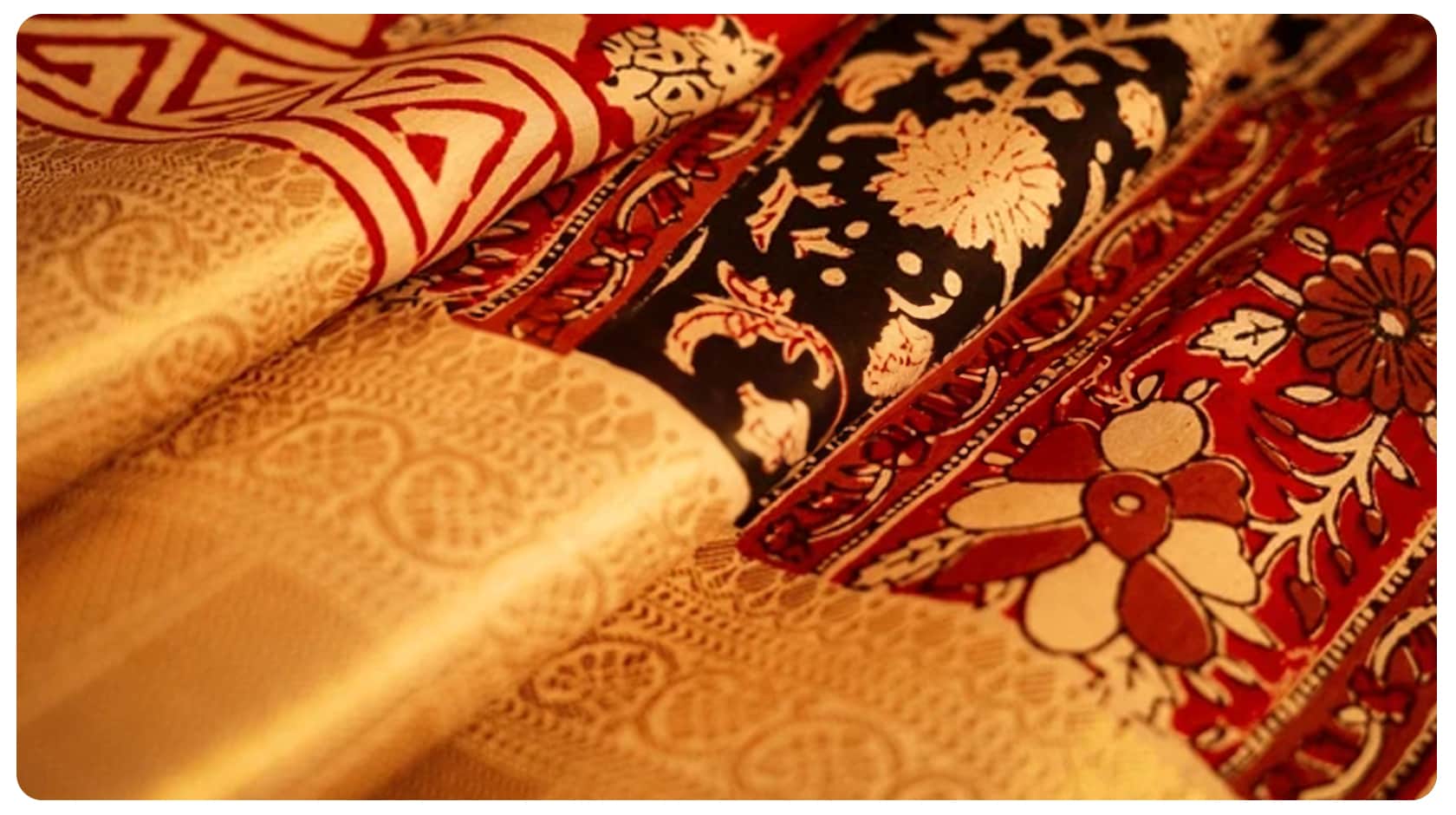

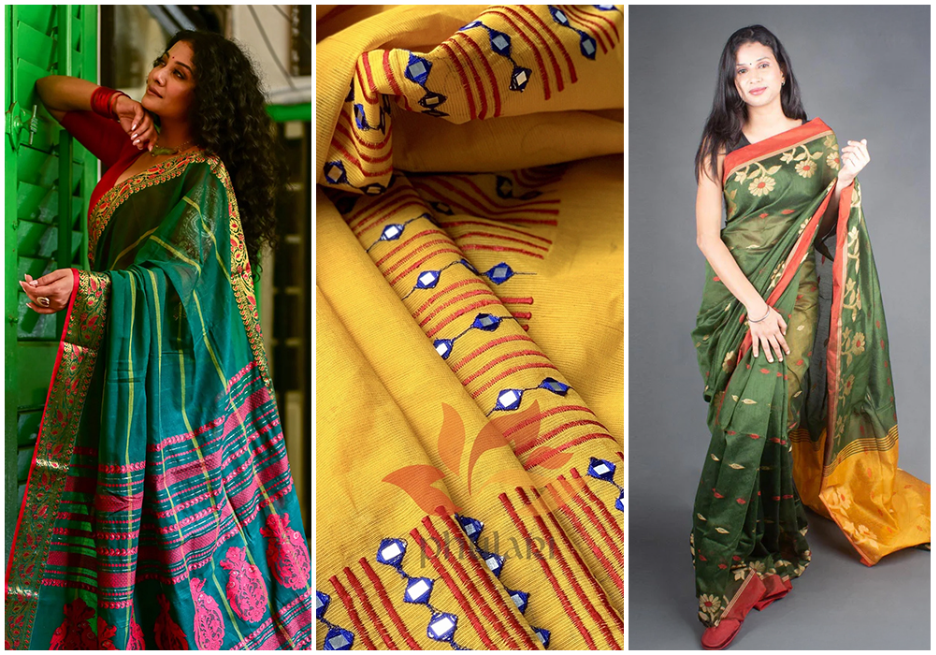
When you picture the quintessential Bengali woman, the image often involves a crisp, cotton saree with a wide, decorative border. This isn't just any piece of cloth; it is likely a Tant Saree.
Known for being incredibly light and airy, the Tant saree is the lifeline of fashion in West Bengal's humid climate. It is elegant enough for a festival yet comfortable enough for daily wear. But beyond its comfort, the Tant saree carries a legacy that is over 500 years old.
In this post, we will explore the rich history of this handloom wonder, understand the hard work that goes into weaving it, and see how it holds a special place in Indian culture today.
What is a Tant Saree?
The word "Tant" literally refers to the handlooms used to weave cloth. So, a Tant saree is essentially a handloom cotton saree.
What makes it special is its texture. These sarees are woven from cotton threads that are treated to be transparent and light. This transparency allows air to flow freely, making it the perfect garment for the sticky, hot summers of Eastern India. They are famous for their thick borders and decorative pallus (the loose end of the saree), often featuring traditional motifs like flowers and paisleys.
A Legacy 500 Years in the Making
The story of the Tant saree begins in the 15th century in a small village called Shantipur in the Nadia district of West Bengal.
The Mughal Boost
While weaving existed in Bengal for centuries, the craft truly blossomed under the Mughal emperors. During the Mughal era, Bengal was famous for its Muslin—a fabric so fine it could pass through a ring. The weavers who made Muslin also developed the techniques for Tant. The royal families encouraged this art, and it became a symbol of sophistication.
Surviving the British Raj
The industry faced a dark period during British rule. The British wanted to sell their own machine-made textiles from Manchester, so they tried to suppress India's handloom industry. Despite these efforts, the weavers of Bengal persisted. They kept their looms running in secret if necessary, ensuring the knowledge was passed down to the next generation.
The Partition Effect
When India was partitioned in 1947, many skilled weavers from Tangail (in modern-day Bangladesh) migrated to West Bengal. They settled in places like Phulia and Shantipur. They brought their own weaving styles, which mixed with the local traditions. This fusion gave birth to the modern Tant saree we see today—a beautiful blend of techniques from both sides of Bengal.
The Art of Making a Tant Saree
Creating a Tant saree is not a quick job. It is a labor of love that involves the entire weaver family. From preparing the thread to the final weave, the process is meticulous and entirely manual.
Here is a simple breakdown of how these sarees are made:
1. Preparing the Cotton
The process starts with bundles of cotton threads. These are washed thoroughly with water to remove any chemicals or dirt. After washing, the threads are dried in the sun. This sun-drying is crucial for bleaching and preparing the cotton for dyeing.
2. Dyeing and Spooling
Once dry, the threads are dipped in boiling colored water to dye them. After they are colored and dried again, they need to be made strong. The threads are wound onto bamboo bobbins. This is often done by the women in the weaver's family.
3. Setting the Loom
The dyed threads are then carefully arranged on a large wooden log to create the warp (the lengthwise threads). This is the backbone of the saree. Setting up the loom is a complex mathematical task; one wrong thread can ruin the design.
4. Weaving the Magic
The actual weaving takes place on a handloom. The weaver uses a shuttle to pass the weft (horizontal thread) through the warp. This rhythmic motion creates the fabric.
For the intricate designs on the border and pallu, the weaver uses a technique called distinct discontinuous weft. This means they use small, separate spools of colored thread to create motifs like flowers or paisleys directly into the cloth, almost like embroidery.
5. The Finishing Touch
Have you ever noticed how a new Tant saree is slightly stiff and crisp? That comes from the final step. The weavers apply a paste made of sago or popped rice (khoi) to the fabric. This starch gives the saree a glossy sheen and a crisp texture that Bengali sarees are famous for.
A simple Tant saree takes about 10 to 12 hours to weave, but intricate ones can take almost a week!
Popular Varieties and Motifs
Not all Tant sarees are the same. Depending on where they are made, they have distinct styles:
- Shantipur: Known for soft textures and fine yarn.
- Dhaniakhali: Famous for tighter weaves and bold stripes.
- Begampur: Known for loose weaves and vibrant, deep colors.
Design Elements:
The motifs are heavily inspired by nature. You will often see:
- Bhomra: Bumblebees
- Tabij: Amulets
- Rajmahal: Royal palaces
- Chandmala: Garlands of moons
- Paisleys and Florals: The most common decorative elements.
Significance in Culture and Festivals
In West Bengal, a Tant saree is not just clothing; it is an emotion.
During Durga Puja, the biggest festival in Bengal, women of all ages drape themselves in Tant sarees. The classic look is the white saree with a red border (often called Lal Paar), which is considered auspicious for offering prayers to the Goddess.
Because they are affordable compared to silk, they are also the go-to gift for weddings and festivals. Elders often gift Tant sarees to younger women as a blessing.
Challenges and Revival
Like many traditional crafts, the Tant industry faces challenges.
1. Fast Fashion Competition: Power looms and synthetic fabrics can produce sarees much faster and cheaper than handlooms. This makes it hard for traditional weavers to compete on price.
2. Low Wages: The weavers work long hours in tin sheds, often for very little profit. This discourages the younger generation from taking up the profession.
The Revival:
However, there is hope. Modern designers and government initiatives are stepping in to help. Designers are experimenting with the Tant fabric, using it to make scarves, kurtas, and even home furnishings like curtains and bedspreads. By marketing Tant as a premium, eco-friendly, and sustainable fabric, they are opening new markets globally.
Conclusion
The Tant saree is a testament to the resilience of Indian craftsmanship. It survived empires, colonization, and partition, yet it remains as fresh and relevant as ever.
When you wear a Tant saree, you are wearing a piece of history. You are embracing a fabric that breathes, a design that tells a story, and a tradition that supports thousands of rural artisans. So, the next time you are looking for an outfit that combines elegance with comfort, look no further than the humble, hand-woven Tant saree of Bengal.

