


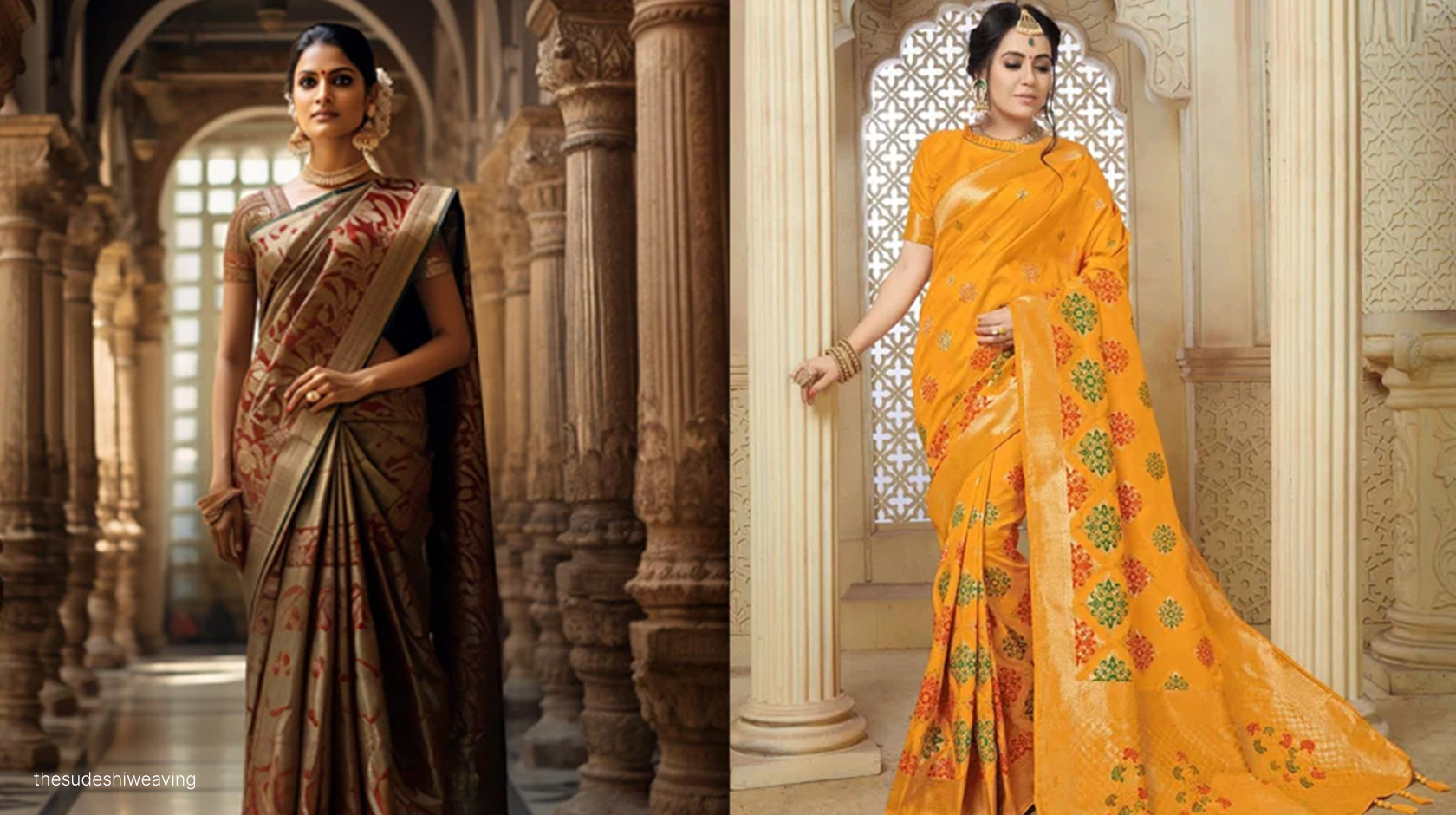
Banarasi and Kanjeevaram sarees are India's two most celebrated silk weaves—but they differ significantly in weight, weave structure, and occasion suitability. Banarasi sarees are lighter with Mughal-inspired motifs and suit formal events and cooler climates. Kanjeevaram sarees are heavier, with bold contrast borders and temple motifs, and are the traditional choice for South Indian weddings and grand celebrations. Aza Fashions carries both styles across a range of designers and price points.
The debate comes up at nearly every major occasion. One cousin insists the Kanjeevaram is the only choice for a wedding. Another says a Banarasi is more versatile. Both are right—depending on who's wearing it and where.
These two silk sarees come from different weaving traditions, different parts of India, and different cultural histories. Understanding those differences makes choosing between them a lot simpler.

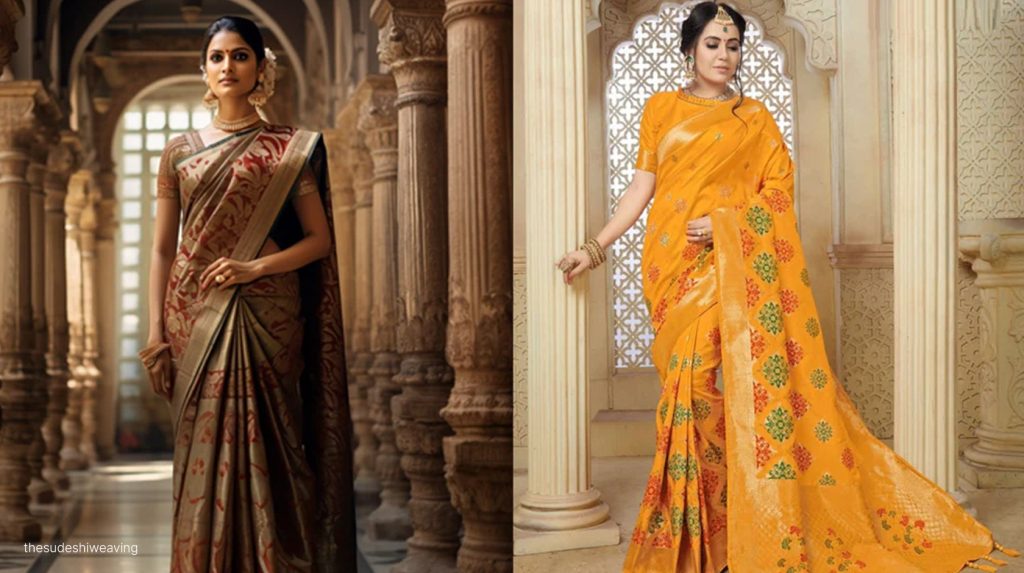
How Do Banarasi and Kanjeevaram Sarees Differ in Weave and Fabric?
Banarasi sarees are woven on handlooms in Varanasi using fine mulberry silk interlaced with gold or silver zari thread. The brocade patterns—florals, mango motifs, delicate jalis—reflect centuries of Mughal influence on North Indian textile tradition. The resulting fabric is relatively lightweight with a soft sheen.
Kanjeevaram sarees use a heavier mulberry silk and a distinct interlocked weaving technique where the body and border are woven separately before being joined. This gives Kanjeevaram sarees their defining structural quality: the border sits firmly and doesn't shift. The motifs draw from South Indian temple architecture—wide geometric borders, rudraksha chains, and checked patterns in bold contrast colors.
Which Saree Is Better Suited to Your Occasion?
Weddings (as a guest): Either works, but the choice often comes down to regional context. A Banarasi signals refinement at North Indian celebrations; a Kanjeevaram is the expected choice at South Indian ceremonies—and will be noticed for the right reasons.
As a bride: Kanjeevaram sarees remain the traditional bridal choice in Tamil, Telugu, and Kannada weddings. Banarasi sarees are preferred for North Indian bridal looks, particularly for the reception or mehendi. Browse Aza's saree collection for bridal-weight options in both weaves.
Formal events and evening occasions: A Banarasi's lighter drape and lustrous zari work make it a strong choice for dinners, corporate events, and festive occasions where you'll be on your feet for hours.
Milestone celebrations and pujas: Kanjeevaram sarees carry significant cultural weight for religious ceremonies and milestone events like naming ceremonies, housewarmings, and anniversaries—particularly within South Indian families.
How to Choose Based on Climate and Comfort
Weight is a practical consideration that often gets overlooked. Kanjeevaram sarees can be heavy—particularly older or more densely woven pieces. In warm, humid climates, a lighter Banarasi is easier to wear through a full day's event.
For those based in the US ordering for events back home or for diaspora celebrations, a Banarasi also travels better. It folds more easily, creases less severely, and requires less steaming on arrival. Kanjeevaram sarees benefit from being stored flat and handled carefully during transit.
If you're ordering from outside India, check Aza's Celebration Closet for curated occasion-ready options in both styles, with clear fabric and occasion guidance included.
Frequently Asked Questions
Is a Banarasi or Kanjeevaram saree more expensive?
Price varies widely based on the quality of silk, zari content, and whether the piece is handwoven or power-loom. Authentic handwoven versions of both can range from moderate to very high price points. As a general rule, genuine Kanjeevaram sarees with dense zari borders tend to cost more than comparable Banarasi pieces, but exceptions exist at both ends of the market.
How can I tell if a Banarasi or Kanjeevaram saree is authentic?
For Banarasi sarees, check the reverse side of the fabric—genuine handwoven pieces show a clean back with no loose threads. For Kanjeevaram, the interlocked border is the key indicator: in an authentic piece, the border won't separate from the body even when held up to light. Both weaves now carry Geographical Indication (GI) tags in India, which manufacturers and retailers can verify.
Can I wear a Banarasi or Kanjeevaram saree to a non-Indian event?
Both translate well to multicultural formal occasions. A Banarasi in a neutral palette—ivory, champagne, or deep jewel tones—reads as elegant evening wear in any context. A Kanjeevaram in a bold contrast color makes more of a cultural statement and works best when that's the intent.
How far in advance should I order from Aza Fashions for an event?
Order at least 6–8 weeks ahead for international shipping. This allows time for customs processing and any blouse alterations needed after delivery.

