
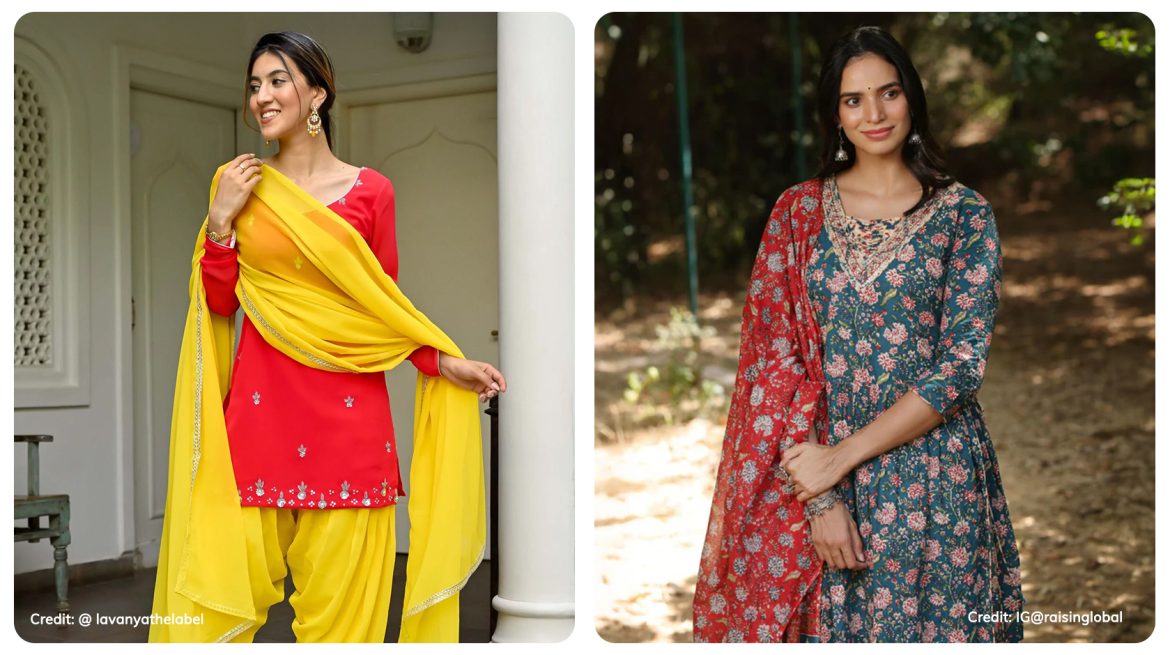
The most flattering colour combinations for salwar suits and kurta sets are: navy blue with orange or gold, white with any contrast border colour, mustard with deep green or maroon, mint green with ivory or coral, and powder pink with grey or gold.
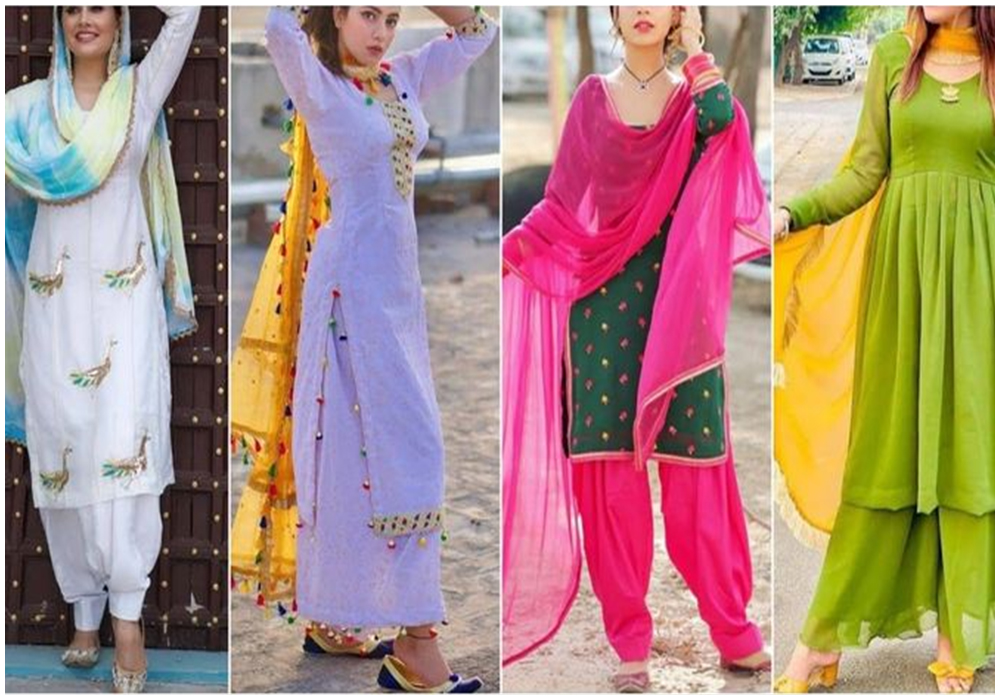
Classic Ethnic Colour Pairing Rules
Complementary Colours (Opposite on the Colour Wheel)
- Blue and orange — high energy, very festive
- Green and red/maroon — traditional and auspicious
- Yellow and purple — vibrant, festive combination
- Pink and green — fresh, feminine, very popular in Indian fashion
Neutral with One Bold Accent
A neutral base (white, ivory, grey, beige) paired with one bold dupatta colour is the most elegant approach:
- White kurta + any contrast dupatta (navy, emerald, red, gold)
- Ivory kurta + rust or teal dupatta
- Beige kurta + deep green or burgundy dupatta
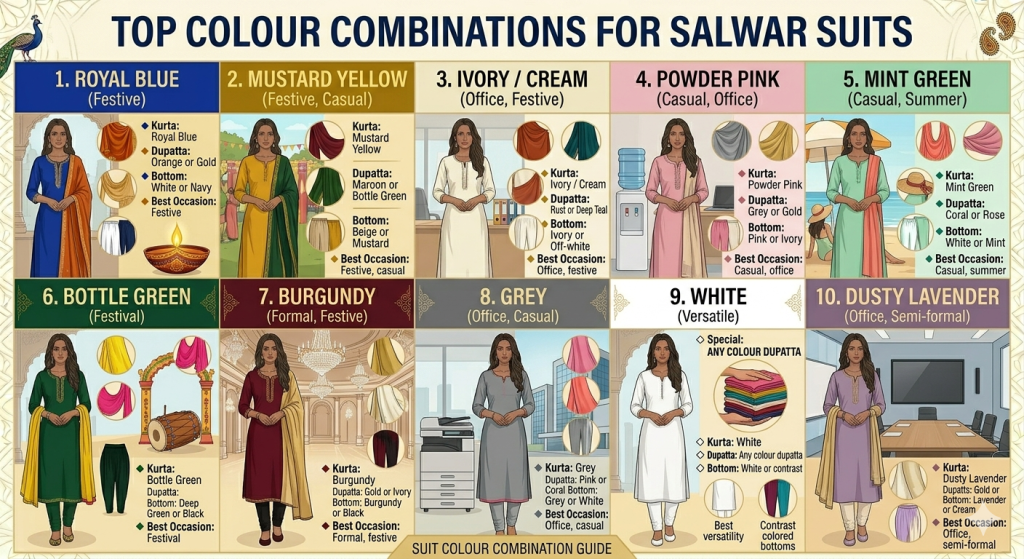
Colour Combinations by Skin Tone
For Warm Skin Tones (Golden/Peachy Undertone)
- Mustard with maroon dupatta and ivory bottoms
- Rust/terracotta with deep green dupatta
- Warm orange with teal or bottle green
- Olive green with burnt orange or gold
For Cool Skin Tones (Pink/Blue Undertone)
- Royal blue with white or gold dupatta
- Powder pink with grey or silver
- Mint green with ivory or lavender
- Lavender with rose or gold
For Neutral Skin Tones (Work with Both)
- Jewel tones with gold accents (emerald, sapphire, ruby)
- Classic navy with any contrast
- Deep wine or burgundy with ivory or gold
Dupatta Colour Guide
- Match the dupatta to the bottom Creates a coordinated, clean look; the kurta becomes the accent
- Match the dupatta to the kurta Monochromatic and sophisticated; choose textures to add dimension
- Contrast the dupatta with both The most vibrant and festive approach; the dupatta becomes the statement piece
- Use a printed dupatta on a solid outfit Adds visual interest to a simple kurta-bottom combination
Frequently Asked Questions
Q: What is the best colour combination for a salwar suit?
A: The most popular and universally flattering salwar suit colour combinations are: navy blue with orange or gold dupatta, mustard yellow with deep green or maroon dupatta, white or ivory with any contrast dupatta colour, powder pink with grey or gold, and bottle green with yellow or coral.
Q: How do I choose a dupatta colour for my kurta?
A: There are three main approaches: (1) Match the dupatta to the bottom creates a coordinated look. (2) Match the dupatta to the kurta creates a monochromatic, elegant look. (3) Choose a contrast dupatta the most festive and impactful option.
Q: What colour kurta set is best for a fair complexion?
A: Fair skin tones look beautiful in a wide range of colours. Particularly flattering are: deep jewel tones (royal blue, emerald, burgundy), rich pastels (powder pink, lavender, mint), bold brights (fuchsia, cobalt, coral), and classic whites and ivories.
Q: What colour suits a dusky skin tone in ethnic wear?
A: Dusky and deeper skin tones look radiant in: bright jewel tones (royal blue, magenta, emerald), warm earthy colours (terracotta, mustard, burnt orange), deep rich tones (burgundy, deep plum, navy), and striking metallics (gold, bronze).
Q: Can I wear all-white for ethnic occasions?
A: Yes an all-white or ivory kurta set looks beautiful and is increasingly popular in contemporary ethnic fashion. A white kurta with a contrast dupatta (deep navy, emerald, or red) and white bottoms creates an elegant, high-contrast look.
