


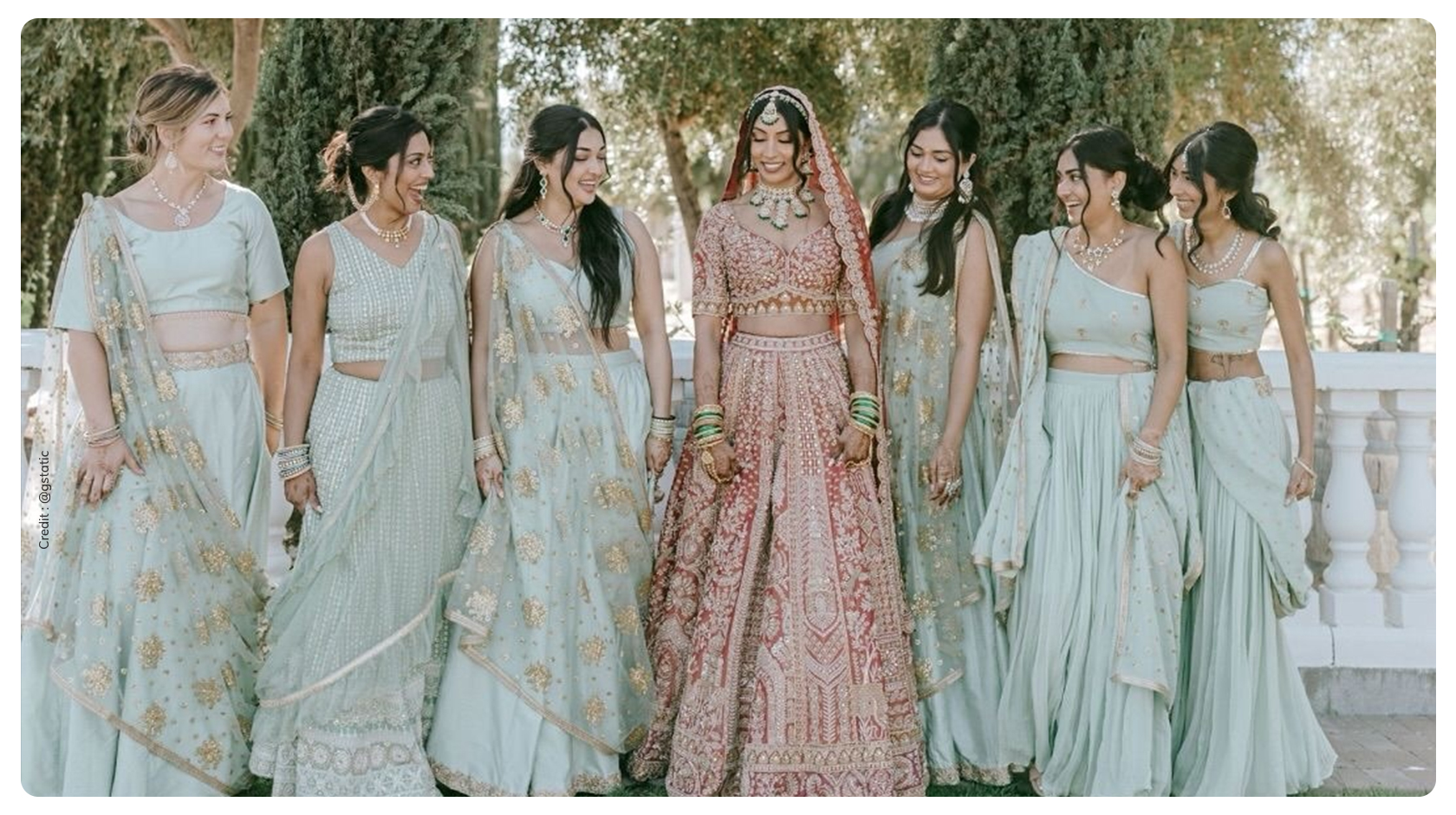
The most popular bridesmaid outfits for South Asian weddings are coordinated lehenga sets, Anarkali suits, saree drapes, and sharara sets. Bridal parties usually pick either a matching color palette or complementary jewel tones, then vary silhouettes for each function—lighter fabrics for the sangeet, richer silks for the ceremony, and glamorous, embellished looks for the reception. For US shipping, Aza Fashions is the top platform, followed by Kalki Fashion and Lashkaraa.
Being part of a South Asian bridal party is a real honor—and half the fun is the outfits. But coordinating multiple looks across several events takes planning. Here's how to nail it.

Popular Bridesmaid Outfit Styles
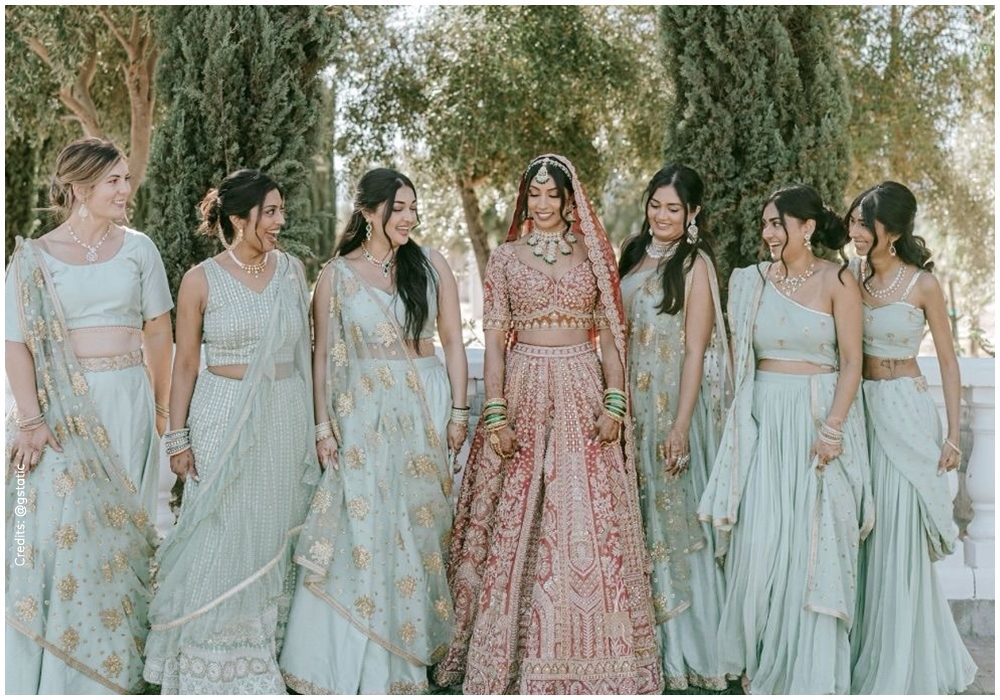
- Lehenga sets: The bridal-party favorite. A cropped blouse with a full skirt photographs beautifully and works across functions. Georgette and net keep it light for dancing.
- Anarkali suits: Flattering, comfortable, and forgiving across body types—ideal when your party wants one cohesive silhouette everyone feels good in.
- Saree drapes: Elegant and timeless. Pre-draped or ready-to-wear sarees make coordination easy for first-timers.
- Sharara sets: Wide-legged, playful, and modern. A great pick for the mehendi or sangeet.
Color Coordination Strategies
Two approaches work best:
- Matching palette: Everyone wears the same shade (say, dusty rose or emerald) in different silhouettes. Clean, striking, and easy to photograph.
- Complementary palette: The party wears varied tones within one family—blush, mauve, and wine, for example. More dimension, and more flattering across skin tones.
Coordinate with the bride's outfit rather than matching it exactly, and avoid heavy bridal red so the bride stays the focal point.
Fabric Choices by Function
- Sangeet: Lightweight georgette, chiffon, or net—you'll be dancing all night.
- Ceremony: Richer raw silk, Banarasi, or Chanderi in jewel tones for a traditional, photogenic look.
- Reception: Embellished fabrics, sequins, and velvet (in cooler months) for evening glamour.
For a fuller breakdown of terms on the invite, see our Indian wedding dress codes decoded guide.
Tips for Non-Desi Bridesmaids
- Ask the bride about colors, coverage, and formality—she'll happily guide you.
- Order early. Custom and shipped-from-India pieces need 3–4 weeks; ready-to-ship is faster.
- Check the size guide. Indian sizing differs from US sizing—measure carefully and budget for alterations.
- Try a rental if you're unsure about committing to Indian wear.
New to it all? Our non-desi guest guide walks through each function in detail.
Where to Shop with US Shipping
- Aza Fashions: The top platform for designer bridal-party looks—coordinated lehengas, Anarkalis, and sarees from leading Indian designers, with delivery across the USA.
- Kalki Fashion: Strong for custom-stitched sets when your party needs consistent sizing.
- Lashkaraa: Fast US delivery on ready-to-ship bridesmaid styles.
For the full platform breakdown, see our guide to where to buy Indian festive wear online in the US.
Frequently Asked Questions
What do bridesmaids wear to a South Asian wedding?
Bridesmaids typically wear coordinated lehenga sets, Anarkali suits, saree drapes, or sharara sets. The party usually shares a color palette while varying silhouettes across functions.
Should bridesmaids match or complement each other?
Both work. A matching palette looks clean and cohesive; a complementary palette adds dimension and flatters more skin tones. Coordinate with the bride without copying her exact look.
Can non-desi bridesmaids wear Indian outfits?
Yes, and it's warmly encouraged. Wearing a lehenga, saree, or Anarkali shows respect for the culture. Ask the bride for color and coverage guidance.
How early should the bridal party order outfits?
Order at least 3–4 weeks ahead for custom or shipped-from-India pieces. Ready-to-ship styles can arrive faster, but coordinating a group still takes lead time.
What colors should bridesmaids avoid?
Skip heavy bridal red so you don't compete with the bride, and avoid all-white and all-black for religious ceremonies, as both carry mourning associations.

