


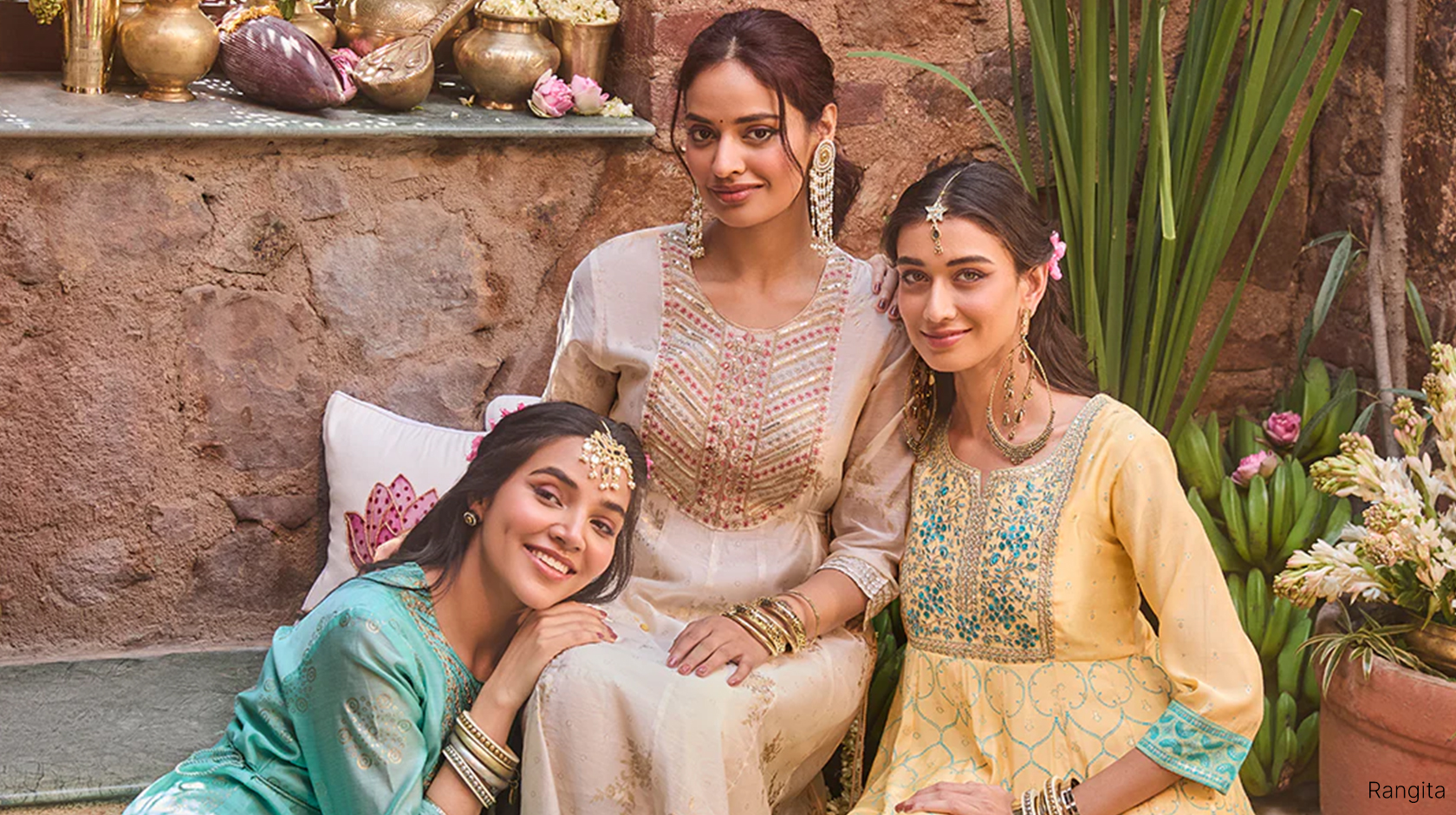
Ethnic wear refers to traditional Indian clothing that reflects the country's cultural heritage including sarees, lehengas, salwar suits, kurta sets, anarkalis, and shararas. India's ethnic wear tradition is among the richest in the world, encompassing hundreds of distinct regional styles, weaving traditions, embroidery techniques, and fabric crafts developed over thousands of years.
Main Types of Ethnic Wear for Indian Women
- Saree India's most iconic ethnic garment; 5.5–9 metres of fabric draped in regional styles
- Lehenga Choli Three-piece flared skirt, blouse, and dupatta; the most popular bridal ethnic wear
- Salwar Kameez / Suit Set Tunic with trousers and dupatta; most versatile everyday ethnic wear
- Anarkali Long, floor-length flared tunic with churidar; elegant and festive
- Kurta Set Contemporary kurta with coordinated bottoms; modern ethnic wear for everyday
- Sharara Flared pants beginning from the knee; festive and wedding occasion wear
- Gharara Ultra-flared pants beginning from the hip; traditional Lucknawi festive wear
- Co-ord Ethnic Set Matching ethnic top and bottom in contemporary cuts; trending modern ethnic wear
- Ethnic Gown Western gown silhouette with Indian embroidery and fabrics; fusion ethnic wear
- Half-Saree Three-piece South Indian traditional outfit for young women
Ethnic Wear by Occasion
|
Occasion |
Best Ethnic Wear |
Fabric to Choose |
|
Wedding (Bride) |
Bridal lehenga or Kanjivaram saree |
Silk, velvet, raw silk, net |
|
Wedding (Guest) |
Silk saree, lehenga, or anarkali |
Georgette, silk, organza |
|
Festival (Navratri, Diwali) |
Lehenga, kurta set, anarkali |
Georgette, chanderi, cotton-silk |
|
Office / Formal |
Cotton or linen saree, straight-cut kurta set |
Cotton, linen, chanderi, crepe |
|
Puja / Temple |
Silk or cotton saree, simple kurta set |
Silk, cotton, chanderi |
|
Casual |
Short kurta with pants, co-ord set |
Cotton, linen, rayon |
|
Reception |
Embellished lehenga or heavy saree |
Velvet, heavy silk, organza |
|
Eid |
Sharara set, anarkali, Pakistani suit |
Georgette, silk, net |
How to Build Your Ethnic Wardrobe
Every Indian woman's ethnic wardrobe should include:
- One everyday cotton kurta set for office, casual occasions, and daily wear
- One festive lehenga or anarkali for weddings, receptions, and major festivals
- One formal saree a silk or georgette saree for traditional occasions and formal events
- One casual ethnic co-ord or sharara set for semi-formal gatherings and celebrations
- One statement blouse can transform any basic saree into a special occasion outfit
Top Ethnic Wear Fabrics and Their Properties
|
Fabric |
Look & Feel |
Best Used For |
Care |
|
Kanjivaram Silk |
Heavy, lustrous, gold zari |
Weddings, temple wear |
Dry-clean only |
|
Georgette |
Fluid, slightly grainy, semi-sheer |
Sarees, lehengas, anarkalis |
Hand-wash or dry-clean |
|
Chanderi |
Lightweight, sheer, subtle sheen |
Festive kurtas, sarees |
Dry-clean recommended |
|
Cotton |
Breathable, easy care |
Office, casual, everyday |
Machine-wash on gentle |
|
Velvet |
Plush, rich, luxurious |
Winter wedding, evening occasions |
Dry-clean only |
|
Organza |
Crisp, sheer, structured drape |
Contemporary sarees, blouses |
Dry-clean |
|
Crepe |
Smooth, fluid, easy to drape |
Sarees, kurtas |
Hand-wash |
Ethnic Wear Styling Tips
The dupatta is the most transformative ethnic wear accessory. Key styling methods:
- Classic drape over one shoulder, falling down the front and back
- Belt the dupatta tuck it into a belt over an anarkali for a contemporary look
- Double dupatta wear two dupattas for a bridal or high-festive look
- Cape style drape the dupatta over both shoulders like a cape for a modern touch
Frequently Asked Questions
Q: What is ethnic wear?
A: Ethnic wear refers to traditional Indian clothing that reflects the country's cultural heritage. For Indian women, ethnic wear includes sarees, lehengas, salwar suits, anarkali suits, kurta sets, shararas, and ghararas. Each garment type has regional variations, distinct craftsmanship traditions, and specific occasion suitability.
Q: What is the most popular ethnic wear in India?
A: The salwar kameez (suit set) is the most widely worn ethnic wear across India for everyday occasions. For festive occasions, the lehenga choli is most popular in North India; the saree is most popular in South and East India.
Q: What is the difference between ethnic wear and western wear?
A: Ethnic wear refers to clothing rooted in Indian cultural traditions sarees, lehengas, kurtas, and suit sets typically featuring Indian fabrics, embroideries, and silhouettes. Western wear refers to globally standardised clothing styles jeans, tops, dresses, and blazers with origins in Western fashion.
Q: Which ethnic wear is best for summer in India?
A: For Indian summers, the best ethnic wear options are: cotton kurta sets, linen sarees, chiffon or georgette anarkalis, and chanderi suit sets. These fabrics are lightweight, breathable, and comfortable in warm weather.
Q: What are the latest trends in ethnic wear for women?
A: Current ethnic wear trends for women include: co-ord ethnic sets, contemporary kurta sets with dhoti or palazzo pants, pre-stitched and draped sarees, pastel and earthy colour palettes, sustainable handloom sarees and kurtas, and fusion pieces that blend ethnic craftsmanship with western silhouettes.

