


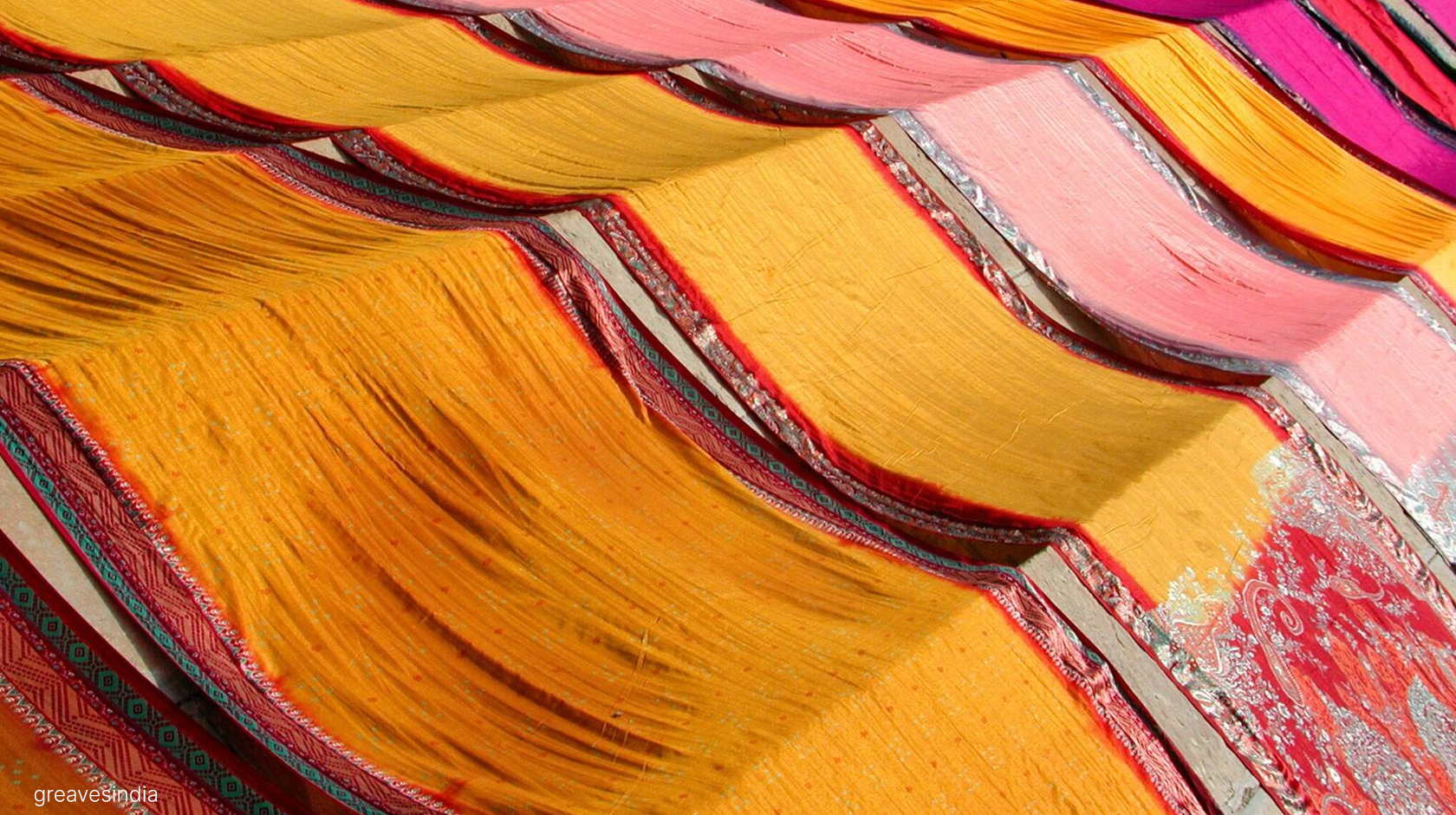
The fabric of your ethnic wear determines how the garment drapes, photographs, and how long it lasts. The main fabrics used in Indian ethnic wear are: silk (in several varieties), georgette, chiffon, chanderi, organza, crepe, cotton, velvet, and net.
Silk Varieties in Indian Ethnic WearGeorgette vs Chiffon: Key Differences
|
Silk Type |
Origin |
Characteristics |
Best For |
|
Kanjivaram (Kanchipuram) |
Tamil Nadu |
Heavy, lustrous, real gold zari |
Weddings, formal occasions |
|
Banarasi |
Varanasi |
Rich brocade, gold/silver zari patterns |
Bridal, festive occasions |
|
Mysore Silk |
Karnataka |
Soft, lightweight, bright colours |
Everyday formal, temple visits |
|
Chanderi Silk |
Madhya Pradesh |
Lightweight, sheer, delicate motifs |
Festive, summer occasions |
|
Muga Silk |
Assam |
Golden hue, extremely durable |
Special occasions, heirlooms |
|
Tussar Silk |
Eastern India |
Textured, natural gold colour |
Puja, semi-formal occasions |
|
Feature |
Georgette |
Chiffon |
|
Texture |
Slightly grainy, textured |
Extremely smooth and sheer |
|
Weight |
Medium-light |
Very light |
|
Drape |
Structured yet fluid |
Extremely fluid and flowy |
|
Transparency |
Semi-transparent |
More transparent |
|
Best for |
Sarees, dupattas, overlays |
|
|
Photography |
Holds shape, structured look |
Floats beautifully in motion |
Other Key Ethnic Wear Fabrics
Chanderi
A blend of silk and cotton lightweight, semi-transparent with a beautiful sheen. Ideal for summer and festive wear. Known for its subtle woven motifs (bootis) and delicate texture.
Organza
A thin, sheer fabric with a crisp body. Unlike chiffon, it holds its shape rather than dripping. Used extensively for sarees, blouses, and dupatta layers in contemporary ethnic fashion.
Velvet
A heavy, luxurious fabric with a plush pile. Used for winter lehengas, velvet blouses, and heavily embellished occasion wear. Velvet in jewel tones emerald, burgundy, midnight blue is especially popular for winter wedding season.
Cotton
The most comfortable everyday fabric. Used for casual and semi-formal kurtas, handwoven cotton sarees (Khadi, Jamdani), and suit sets. Ideal for daily puja, office ethnic days, and casual festive occasions.
Fabric by Occasion Quick Reference
|
Occasion |
Best Fabric |
Reason |
|
Wedding (as bride) |
Kanjivaram or Banarasi silk |
Structured, prestigious, photographs perfectly |
|
Wedding guest |
Georgette or silk blends |
Comfortable for long events, elegant appearance |
|
Festive occasion |
Chanderi or organza |
Lightweight, festive sheen, comfortable |
|
Formal puja |
Tussar or Mysore silk |
Appropriate gravitas, comfortable for prayer |
|
Daily ethnic wear |
Cotton or crepe |
Breathable, low maintenance |
|
Winter occasion |
Velvet or heavy silk |
Warmth and richness |
Frequently Asked Questions
Q: Which fabric is best for a saree for a wedding?
A: Kanjivaram silk and Banarasi silk are the best fabrics for wedding sarees. Both have real gold zari, rich weight, and extraordinary durability. For wedding guests, georgette or silk-blend sarees are more comfortable for long events.
Q: What is the difference between georgette and chiffon sarees?
A: Georgette has a slightly grainy, textured surface, is medium-light weight, and has a more structured drape. Chiffon is smoother, sheerer, and extremely lightweight with a very fluid fall. Georgette holds embellishment better; chiffon flows beautifully and looks particularly stunning in motion.
Q: What fabric is best for a lehenga?
A: For bridal lehengas, raw silk, net, or velvet (for winter) are most popular. They hold heavy embroidery well and create a grand silhouette. For festive or guest lehengas, georgette, crepe, or silk blends are comfortable and elegant.
Q: Is chanderi fabric expensive?
A: Genuine handwoven Chanderi fabric is moderately to highly priced depending on the complexity of the weave and proportion of silk. Pure silk Chanderi is more expensive; cotton-silk Chanderi blends are more accessible.
Q: How do I know if a silk saree is genuine?
A: The burn test is most reliable genuine silk burns slowly, smells like burnt hair, and leaves a crushable ash. Synthetic silk burns rapidly, smells like plastic, and leaves hard beads. Genuine silk also feels cool to the touch and has a natural lustre.

