


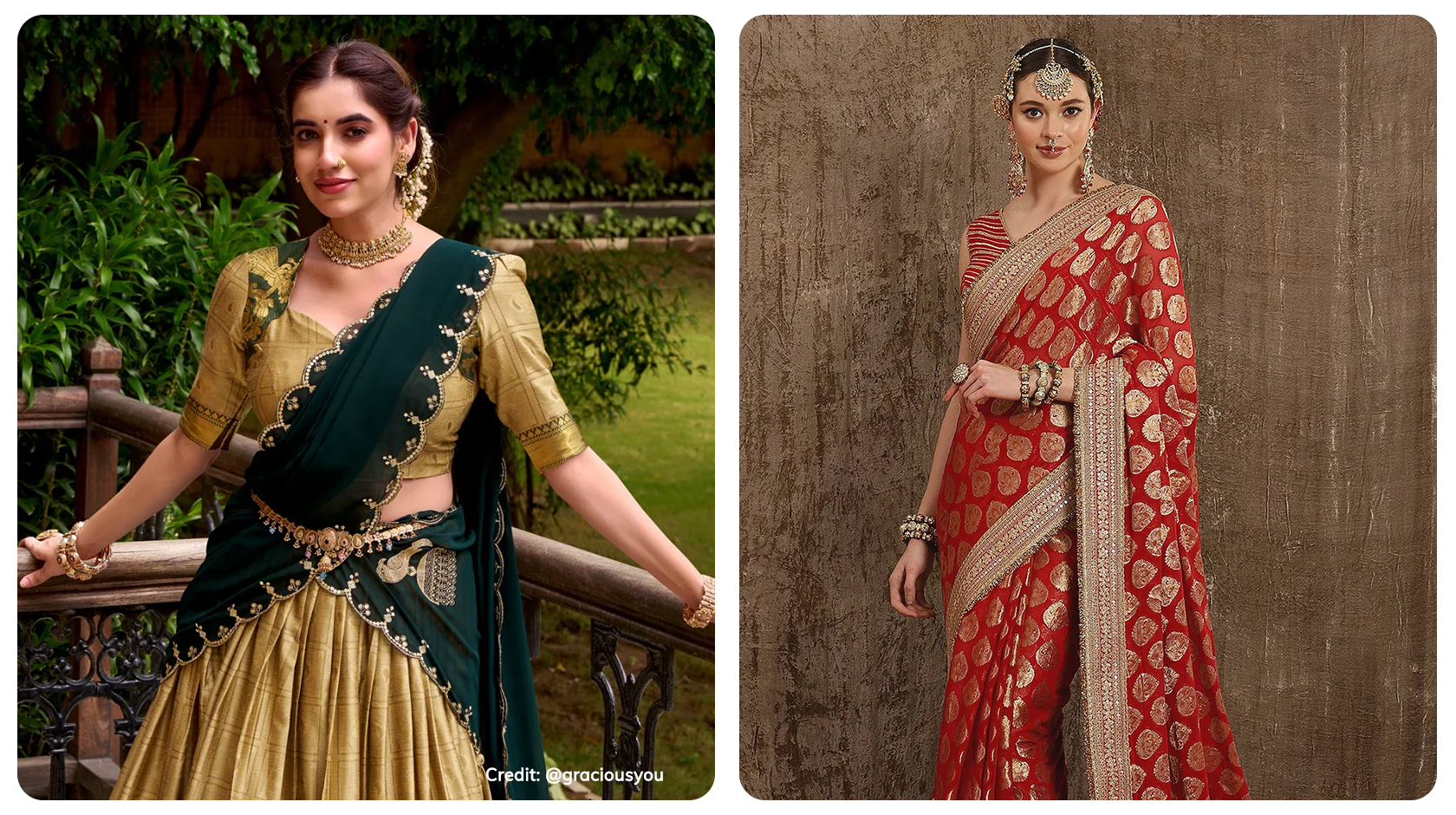
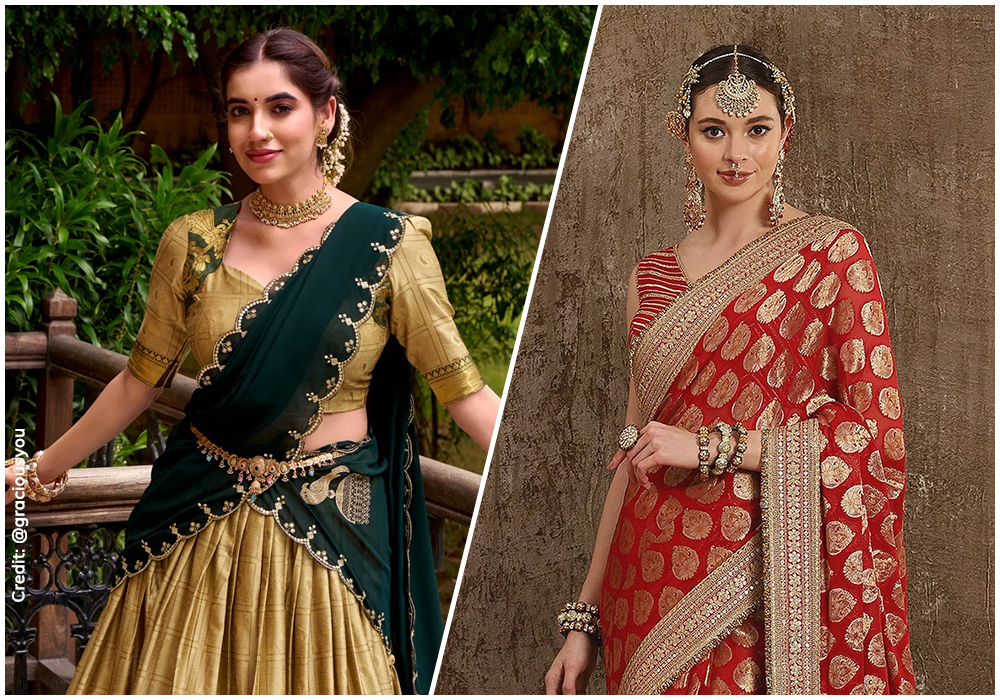
A half saree (also called Langa Voni or Pattu Pavadai Davani) is a three-piece outfit made of a long skirt, a blouse, and a separately draped dupatta. A full saree is a single five-to-nine-yard cloth draped over a blouse and petticoat. Choose a half saree for youthful, festive, and easy-to-wear looks; choose a full saree for weddings, formal events, and timeless elegance.
Sarees carry centuries of culture, but picking between a half saree and a full saree can feel confusing. Both are beautiful, yet they differ in structure, draping, and the occasions they suit best. This short guide breaks down the key differences, offers body type guidance, and gives you a simple way to choose the right style for your next event.

What is a half saree?
A half saree is a three-piece ensemble popular across South India. It includes a long skirt (called a lehenga or pavadai), a fitted blouse (choli), and a dupatta (voni) draped like a saree pallu.
In Telugu and Tamil traditions, the half saree is known as Langa Voni or Pattu Pavadai Davani. It carries deep cultural meaning, often marking a young girl's transition into womanhood during ceremonies like the Half Saree Function or puberty rituals. Because it's lighter and easier to wear than a full saree, it remains a favorite for teens and young women at festive events.
What is a full saree?
A full saree is a single piece of unstitched fabric, usually five to nine yards long, draped elegantly over a blouse and petticoat. One end, the pallu, falls over the shoulder.
The full saree suits women of every age and works across regions, from the Nivi drape of Andhra Pradesh to the Bengali style of the east. It represents grace, maturity, and tradition, making it the go-to choice for weddings, religious functions, and formal gatherings.
Which one should you choose?
Your decision comes down to the occasion, your age, and your comfort:
- Choose a half saree if you're attending a festival, a family gathering, or a coming-of-age ceremony, or if you're a beginner who wants an easy drape.
- Choose a full saree if you're going to a wedding, a religious event, or a formal celebration where timeless elegance matters most.
For body type guidance, a full saree offers more drape control, so you can angle pleats and the pallu to flatter your shape. If you have a curvier frame, lighter fabrics with a structured pallu draw the eye upward. Petite women often suit a half saree, since the defined skirt and blouse create a balanced silhouette.
Styling tips for both styles
A few simple touches elevate either look:
- Half saree: Pick contrast colors between the skirt and dupatta, add jhumkas and bangles, and finish with fresh flowers in your hair.
- Full saree: Choose silk or georgette for special events and pair it with temple jewelry or a statement necklace.
- For both: Match your footwear and earrings to the saree's accent colors, and remember that confidence completes any drape.
Make the choice that fits you
Both the half saree and the full saree celebrate Indian heritage in their own way. The half saree shines with youthful energy, while the full saree carries timeless grace. Let the occasion guide you, then add your own personality to the look. Whichever you pick, wear it with confidence and you'll never go wrong.
Frequently asked questions
Which saree style is best for young girls or teens?
A half saree is the better choice. Its bright colors, lighter fabric, and easy drape make it ideal for younger girls and beginners.
What is the difference between a half saree and a Langa Voni?
There is no real difference. Langa Voni (also called Pattu Pavadai Davani) is the South Indian name for a half saree, made up of a long skirt, blouse, and draped dupatta.
Which saree is more traditional?
The full saree is the more traditional form, draped from a single long cloth and worn across India for weddings and formal occasions.
Is one style better for a specific body type?
Both styles can flatter any body type. The full saree offers more draping control, so you can adjust pleats and the pallu to suit your shape.
When should you wear a half saree instead of a full saree?
Wear a half saree for festivals, casual family events, or coming-of-age ceremonies. Choose a full saree for weddings, religious functions, and formal gatherings.

