

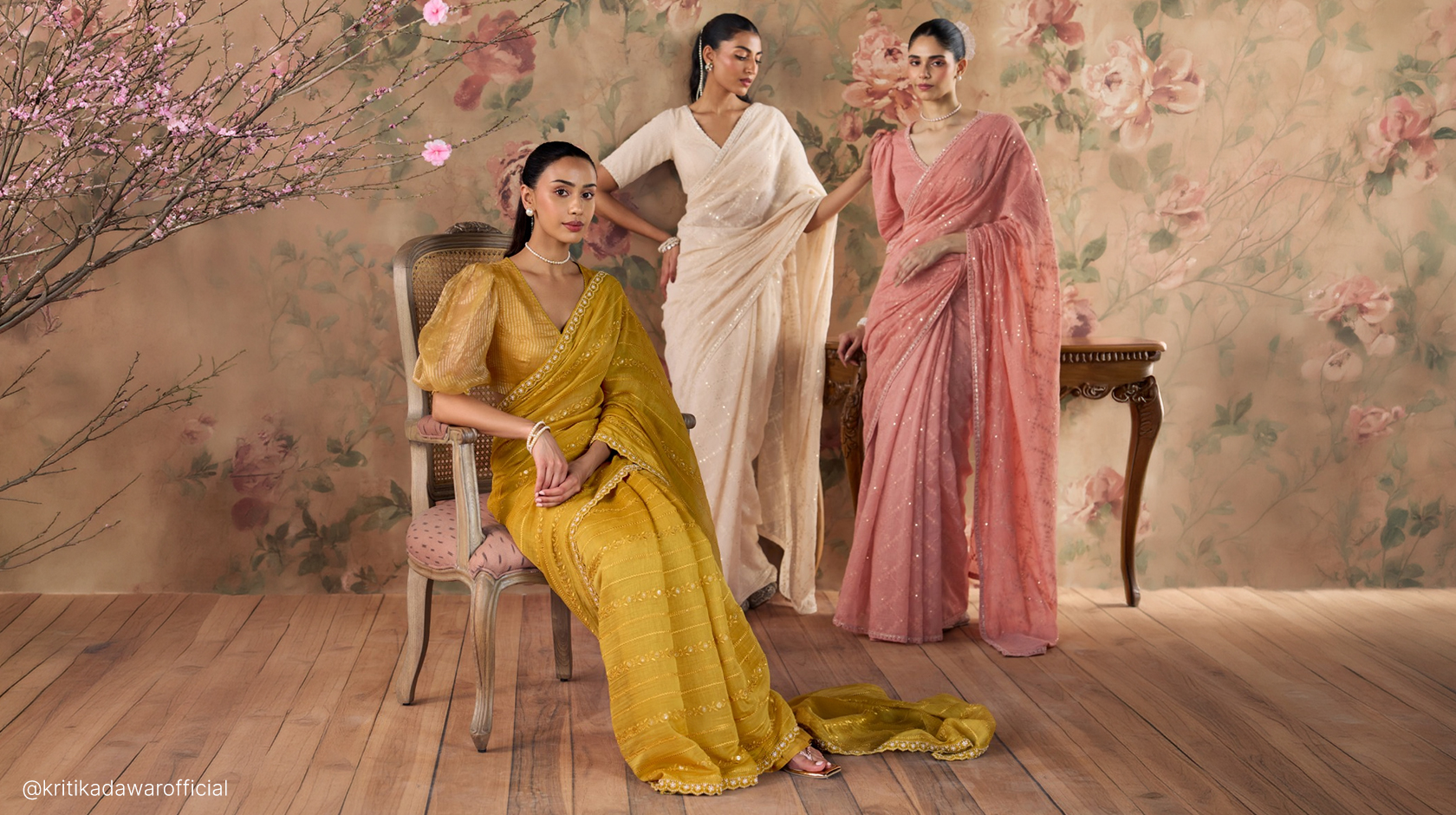
There is something deeply moving about wearing handloom sarees. Each thread tells a story of a regional tradition and a craft passed down through generations. India’s handloom heritage stands as a testament to cultural pride and resilience, aligning with the celebratory spirit of Independence Day.
The Indian handloom industry is one of the largest in the world, employing millions of weavers across the country. Every weave carries the identity of its region—the grandeur of Varanasi, the precision of Kanjeevaram, the delicate lightness of Chanderi. These are textiles that carry culture in their construction.
Woven Into History: The Value of a Timeless Craft

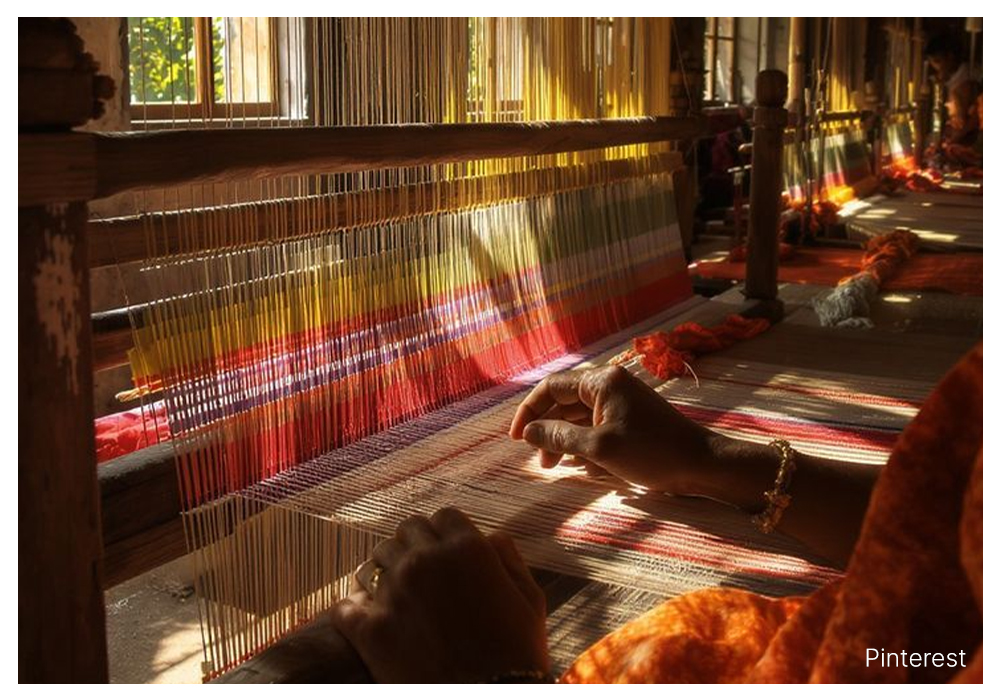
Handloom weaving is one of the oldest art forms. Unlike power-loom textiles produced by machines, handloom sarees are woven entirely by hand, often on traditional wooden looms. The process is slow, precise, and skilled. It is intertwined with the freedom movement, serving as a powerful symbol of self-reliance and resistance against colonial rule. By boycotting foreign goods and embracing indigenous weaves, the handloom sector became an economic and revolutionary force.
Different states have developed their own distinct styles over centuries. Uttar Pradesh gave the world Banarasi silk. Tamil Nadu refined the temple-inspired Kanjeevaram. Madhya Pradesh perfected the sheer elegance of Chanderi. Maharashtra's Paithani became the signature saree of Maharashtrian brides. West Bengal's Jamdani, a UNESCO-recognised craft, turned fine muslin into something almost ethereal.
Choosing a handloom saree today is a meaningful decision. It supports weavers directly, preserves a living tradition, and connects you to something far older than any trend.
Banarasi Sarees: The Jewel of Varanasi
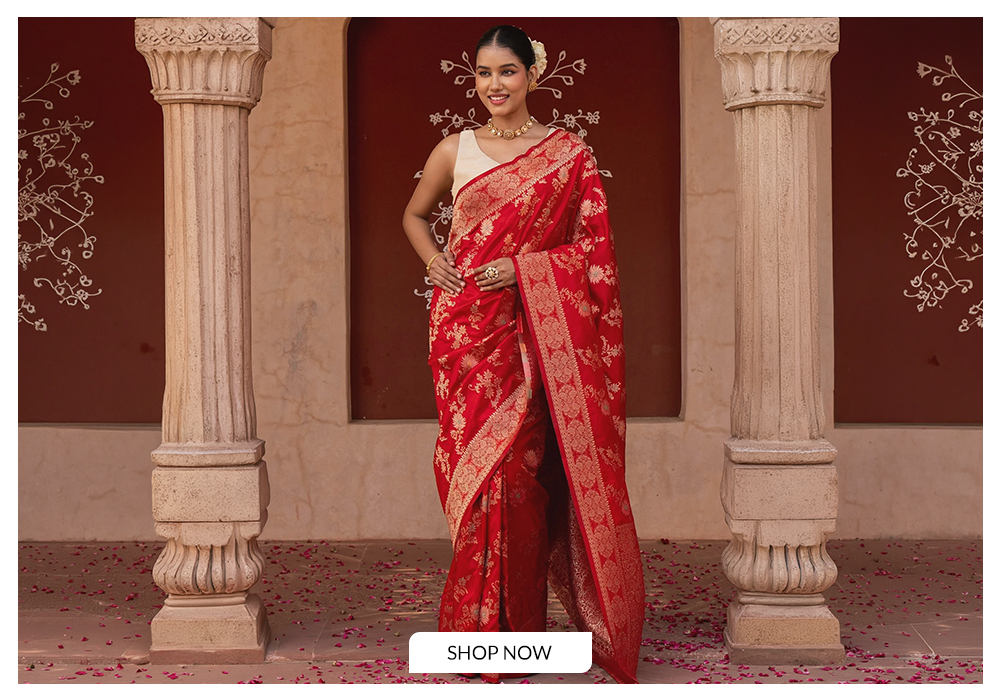
Few textiles carry as much cultural weight as the Banarasi saree. Woven in Varanasi, the craftsmanship is unmistakable: rich silk, dense weaves, and patterns that seem to glow from within. This red handloom saree crafted in Katan silk showcases the intricate hand-weaving technique that has made Banarasi sarees iconic. The rich red colour makes it ideal for weddings and festive occasions, and the fabric drapes with an effortless weight.
Kanjeevaram Sarees: The Pride of Tamil Nadu

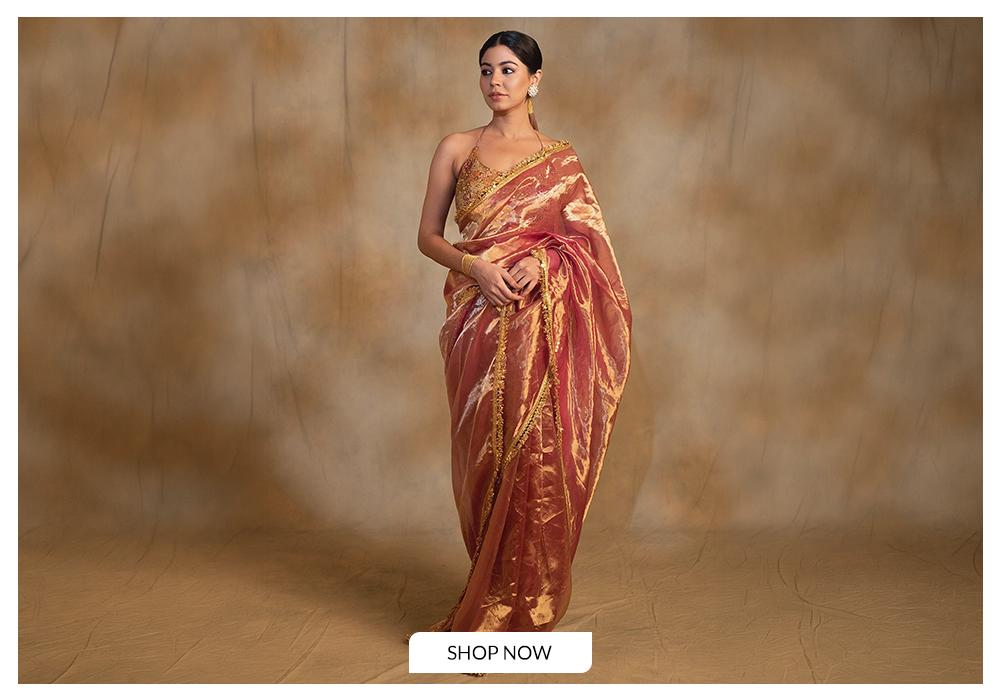
Kanjeevaram sarees originate from the silk-weaving town of Kanchipuram in Tamil Nadu. These sarees are known for their heavy silk, broad borders, and intricate zari work drawn from temple architecture. The gold Kanjeevaram saree brings this legacy into sharp focus. Woven in silk with elaborate zari detailing and temple-inspired motifs, it is a celebration in itself. The hand-weaving details and dual-toned gold and off-white palette make it ideal for grand weddings and formal celebrations.
Chanderi Sarees: The Splendour of Madhya Pradesh
Chanderi is a small town in Madhya Pradesh with a time-honoured weaving tradition. The fabric it produces, a blend of silk and fine cotton, is celebrated for its translucent quality and feather-light drape. It catches light in a way that feels almost luminous. The pink Chanderi silk saree captures this quality perfectly. In a rose pink with lace border detailing and sequin work, it strikes the right balance between understated and celebratory.
Paithani Sarees: Maharashtra's Heirloom in Silk

Paithani is Maharashtra's most beloved handloom tradition. Woven in Paithan near Aurangabad, these sarees are distinguished by their vibrant colours, rich silk, and intricately woven pallus featuring peacocks and floral motifs. The teal blue silk saree features woven floral motifs across the body and an intricate woven pallu. Ideal for festive and wedding events.
Jamdani Sarees: Bengal's Masterpiece

Jamdani is one of the world's finest handwoven textiles. Originating in the Dhaka and Bengal region, it involves a complex supplementary weft technique where motifs are woven directly into the fabric. UNESCO recognised Jamdani weaving as an Intangible Cultural Heritage of Humanity in 2013. This Jamdani saree offers a contemporary take on this ancient craft. Handwoven in organza mulberry silk, it features dual-toned stripes across the body and Jamdani floral motifs on the pallu.
India's Expansive Handloom Traditions
The sarees above represent a portion of India's extraordinary handloom heritage. Across the country, dozens of other weaving traditions continue to thrive:
- Pochampally (Ikat) Sarees – from Telangana, known for their tie-dye resist patterns woven in geometric precision
- Sambalpuri Sarees – from Odisha, featuring traditional ikat motifs like conch shells, flowers, and wheels
- Kantha Sarees – from West Bengal, distinguished by running-stitch embroidery on soft cotton or silk
- Maheshwari Sarees – from Madhya Pradesh, lighter than Chanderi with a distinctive reversible border
- Kasavu Sarees – from Kerala, the iconic off-white sarees with gold zari borders worn during Onam and weddings
- Tant Sarees – the everyday handloom cotton saree of Bengal, prized for its fine weave and comfort
- Gadwal Sarees – from Telangana, known for their cotton body and silk pallu combination
Wear the Craft, Keep the Tradition Alive
In a world dominated by mass production, choosing handloom sarees is a conscious act of preservation. It bridges the gap between our rich past and a sustainable future, ensuring that the intricate knowledge passed down through generations of weavers does not vanish. This Independence Day, as we embrace these textiles, we honour the hands that create them. To wear the craft is to keep the tradition alive, ensuring that the timeless art of the loom continues to thrive for generations to come.