


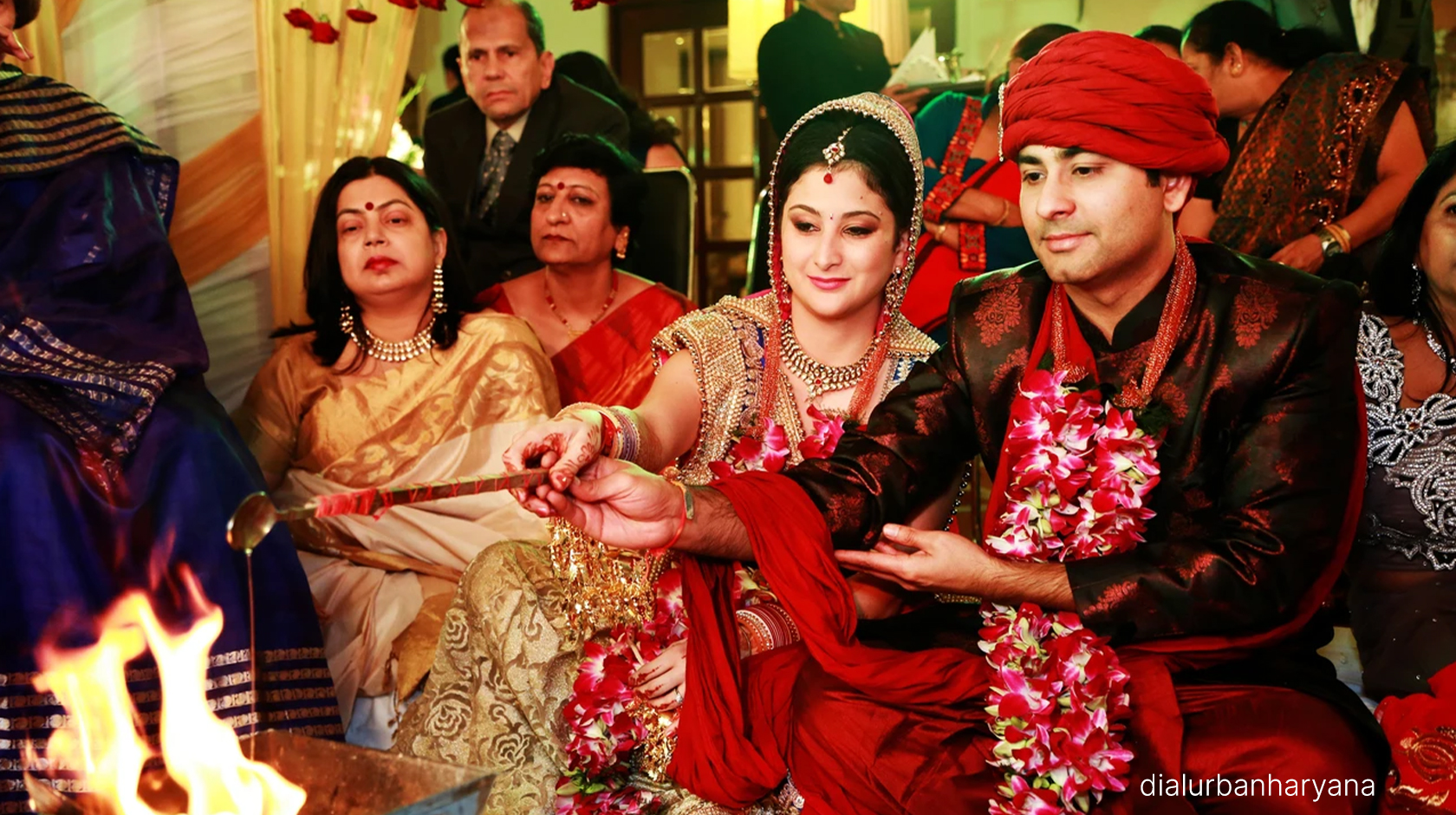
If you have ever attended a Haryanvi wedding, you already know: there is nothing quite like it anywhere in India. Raw, joyful, deeply rooted in the soil of the Indo-Gangetic plain, and animated by a folk culture that has survived empires, partitions, and modernity without losing a single beat a Haryana wedding is one of the most authentic and exhilarating wedding experiences in the entire subcontinent.

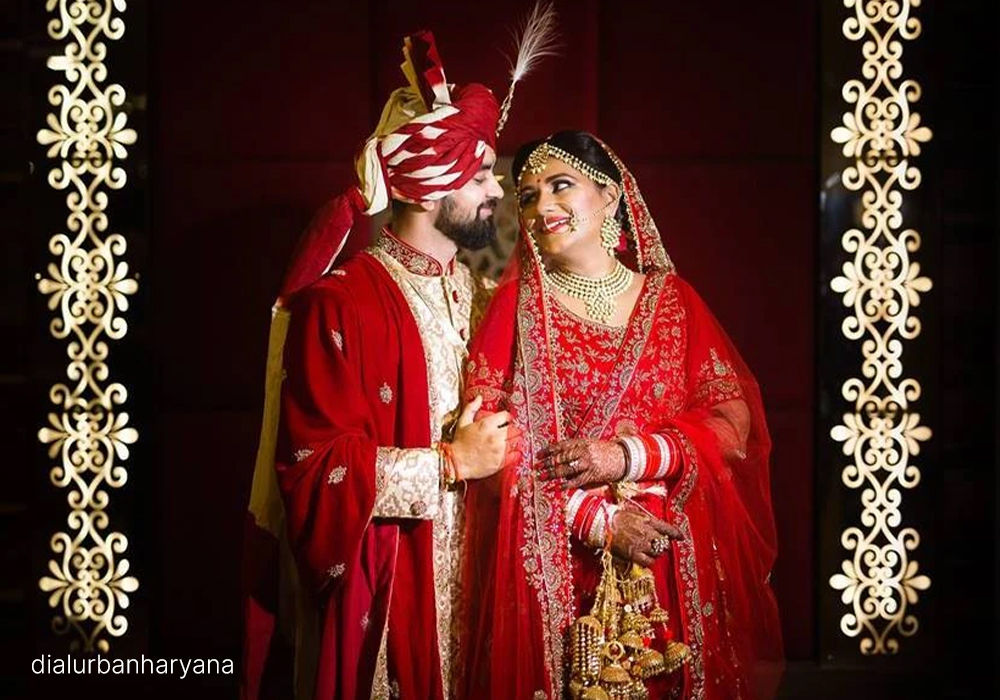
From the ancient rhythms of the Khoria Geet sung by women at dawn to the thunderous celebration of the Baraat, from the sacred fire of the Pheras to the tearful departure of Vidaai Haryanvi weddings carry the full weight and full joy of a civilization that has never forgotten where it came from. In 2026, this complete guide covers every tradition, ritual, and cultural insight that defines a Haryana wedding.
What Makes Haryana Weddings Unique?
Haryana occupies a geography that has shaped its soul the ancient Kurukshetra (battlefield of the Mahabharata), the fertile plains of the Ghaggar-Hakra river system, and the cultural corridor between Punjab and Delhi. Haryanvi weddings reflect this geography in their character: agricultural in their rhythms, martial in their pride, and communal in their spirit.
Three forces shape the Haryanvi wedding experience:
Agrarian Community Identity Haryana's dominant communities Jat, Ahir (Yadav), Brahmin, Rajput, Gujjar, and Bishnoi are rooted in agricultural tradition. Weddings are not just family events; they are community harvests of joy, where entire villages participate, contribute labor, food, and celebration as a collective act of solidarity.
Folk Music as Ceremony Haryanvi folk music is not background entertainment at a wedding it is the ceremony itself. The Khoria, Sati, Faggan, and Vigyan Geet traditions are sung by women at every stage of the wedding from the first pre-wedding rituals to the last farewell songs of Vidaai. These songs carry the prayers, the teasing, the blessings, and the laments that written rituals cannot contain.
Masculine Valor & Feminine Grace Haryanvi weddings hold in beautiful tension the culture's twin values: the masculine culture of valor, honor, and physical strength (reflected in the groom's procession, the welcome rituals, and the community feast) and the feminine culture of song, emotion, and domestic ceremony (reflected in the women's folk rituals that run parallel to every official ceremony). Together, they create a wedding experience of extraordinary depth and humanity.
Pre-Wedding Rituals in Haryana
Sagai (Engagement Ceremony)
The wedding journey formally begins with Sagai the engagement ceremony where the two families meet in the presence of elders and community witnesses to formally agree to the marriage. The groom's family presents the bride with a gold ring or necklace and exchanges sweets, fruits, and dry fruits with the bride's family. The community pandit recites the auspicious details of both families and consecrates the alliance with mantras.
In Haryana's Jat community the state's largest and most culturally influential group the Sagai also involves the formal exchange of saropas (ceremonial shawls) between the two family heads, signaling mutual respect and the beginning of a relationship between equals.
Misri Khilana (Sweetening of the Alliance)
Following the Sagai, a beloved Haryanvi custom called Misri Khilana takes place the groom's family feeds the bride misri (crystallized sugar) with their own hands, and the bride's family does the same for the groom. This simple act of sweetness-sharing is one of the most humanly touching moments in the pre-wedding sequence a declaration that the relationship between the two families will be sweet, generous, and mutually nourishing.
Nai Rasm (Barber's Announcement Ceremony)
One of Haryana's most distinctive and historically significant pre-wedding traditions is the Nai Rasm the barber (Nai) ceremony. The family's traditional barber who has served the family for generations as a social intermediary is sent by the groom's family to the bride's village carrying formal wedding invitations and gifts. The Nai's arrival at the bride's home officially announces the wedding to her community and initiates the pre-wedding rituals at her household.
This tradition reflects the ancient social role of the barber caste as messengers, negotiators, and community connectors in Haryanvi rural society a role that has survived into 2026 in many traditional families even as printed invitations and WhatsApp groups have taken over.
Haldi (Ubtan) Ceremony
The Haldi ceremony called Ubtan in Haryanvi tradition is performed at both the bride's and groom's homes, separately, in the days leading up to the wedding. The Ubtan paste is made from turmeric, chickpea flour (besan), mustard oil, and sandalwood applied by female relatives while the air fills with Khoria Geet (pre-wedding folk songs sung specifically for the Ubtan ritual). The yellow of turmeric is considered auspicious and protective, and the Ubtan session is typically one of the most emotionally animated pre-wedding gatherings with women singing, laughing, and sometimes weeping as they apply the paste.
Khoria Geet (Pre-Wedding Folk Songs)
Khoria Geet deserves a dedicated mention because it is not merely a musical tradition it is the ceremonial language of the Haryanvi wedding. Sung exclusively by women, Khoria Geet are composed in the Haryanvi dialect and cover every aspect of the wedding journey from the groom's beauty to the bride's sadness at leaving home, from the teasing of the in-laws to the prayers for the couple's happiness.
The songs are memorized across generations and passed from mother to daughter. A village woman who knows many Khoria Geet is respected as a custodian of culture. The singing begins days before the wedding and continues through every ceremony until the final Vidaai creating a continuous musical narrative that is the emotional spine of the entire event.
Ghara Pooja (Vessel Worship)
Ghara Pooja is a distinctly Haryanvi pre-wedding ritual in which a new clay pot (ghara) is filled with water and worshipped. The pot represents fertility, abundance, and the domestic sphere that the bride and groom are about to enter together. Female relatives decorate the pot with turmeric, sindoor, and flowers, and it is carried on the head of a married woman to a nearby water source and back a ceremony symbolizing the bringing of auspiciousness into the wedding home.
Mehendi Ceremony
The Mehendi night in Haryana is a women-only celebration held at the bride's home on the eve of the wedding. Professional mehndi artists or skilled female relatives apply henna to the bride's hands and feet. In Haryanvi tradition, the groom's name is hidden within the mehendi pattern a custom where the groom searches for his name on the wedding night. The Mehendi night is accompanied by Faggan Geet a specific genre of Haryanvi folk songs associated with festivity and joy.
Barat Preparations (Dholi & Ghodi)
On the morning of the wedding, the groom undergoes his own preparation rituals. He is bathed, dressed, and ceremonially seated on a decorated mare (ghodi) for the Baraat procession. The family's dholi (drummer) plays the first beats of the wedding day a sound that announces to the entire neighborhood that the Baraat is about to begin. Women ululate, flowers are showered, and the procession sets off with music, dancing, and a joy that is unmistakably Haryanvi.
The Main Wedding Day: Core Haryanvi Rituals
Baraat (Groom's Procession)
The Baraat is the Haryanvi groom's grand entrance a procession of family and friends accompanying him to the bride's home or wedding venue, led by dhol players and sometimes a brass band. In rural Haryana, the groom arrives on horseback; in urban settings, he arrives in a decorated car. Both families' reputations are on display during the Baraat the size of the procession, the quality of the music, and the energy of the dancing are all carefully noted by community witnesses.
Dwar Puja (Welcome at the Gate)
Upon arriving at the bride's home, the groom is received in the Dwar Puja (gate worship) ceremony. The bride's mother performs an elaborate aarti with a decorated thali containing diya, flowers, akshat, and sweets. She applies tilak on the groom's forehead and feeds him a small sweet. In many Haryanvi families, the bride's brothers and male cousins playfully block the gate the Dwar Rokai demanding a token payment from the groom (called Neria or Juta Churai money) before allowing the procession to enter. This tradition leads to much laughter and negotiation and is one of the most beloved moments of any Haryanvi wedding.
Jai Mala (Exchange of Garlands)
The bride and groom exchange flower garlands in the Jai Mala ceremony at the wedding mandap. As in many North Indian traditions, the brothers and cousins of both sides attempt to prevent the garlands from being exchanged lifting the groom high, holding back the bride creating a delightfully chaotic and photogenic moment before the garlands are finally exchanged to cheers from both families.
Gotra Puja (Lineage Declaration)
Before the main ceremony begins, the priest performs a Gotra Puja a recitation and worship of both families' ancestral lineages. In Haryana, where gotra (lineage) identity is taken with extraordinary seriousness particularly in Jat communities, where same-gotra marriage is strictly prohibited this declaration is both a spiritual act and a social verification. The priest announces the gotras of both families, confirms their distinctness, and invokes the blessings of both lineages for the new union.
Kanyadaan (Giving Away the Bride)
Kanyadaan in Haryanvi weddings is one of the most emotionally powerful moments of the ceremony. The bride's father takes his daughter's right hand, pours sacred water over her hand joined with the groom's, and formally gives her away with Vedic mantras. The bride's maternal uncle (Mama) stands beside the father as co-guardian and witness.
In Jat tradition, the Kanyadaan is preceded by a community elder formally addressing both families summarizing the terms of the alliance, acknowledging the families' clan identities, and blessing the union in the presence of the assembled community. This community witness dimension gives the Haryanvi Kanyadaan a public, social weight that is particularly distinctive.
Saat Phere (Seven Sacred Rounds)
The Saat Phere seven sacred rounds around the holy fire are the spiritual heart of the Haryanvi Hindu wedding. With each round, a specific vow is declared by the priest and accepted by the couple. In Haryanvi tradition, women from both families sing Vigyan Geet (ceremonial songs specific to the Phera ritual) as the couple circumambulates making the Saat Phere a uniquely musical ceremony in which the folk tradition and the Vedic tradition sing simultaneously.
Sindoor Daan (Vermillion Application)
The groom applies sindoor in the bride's hair parting completing the wedding ceremony and marking the bride as a married woman. In Haryana, this moment is met with joyful noise dhol beats, ululation from women, and celebration from both families before the solemnity of the moment settles in and the bride receives the first blessings of her new family.
Post-Wedding Rituals in Haryana
Vidaai (Bride's Farewell)
Vidaai in Haryana is accompanied by some of the most moving Vidaai Geet in all of Indian folk music tradition. The women of the bride's family sing farewell songs of extraordinary emotional depth describing the bride's childhood, her mother's love, and the sorrow of parting as the bride departs weeping, throwing handfuls of rice backward over her head. The entire village typically gathers for the Vidaai in rural Haryana, making it a community farewell as much as a family one.
Grihapravesh (Entry into the New Home)
The bride enters her new home with her right foot first, tips over a vessel of rice at the threshold, and is welcomed by the groom's mother with an aarti. She is taken to offer prayers at the family's home altar before being formally introduced to the household.
Munh Dikhai (Bride's Unveiling)
On the morning after the wedding, the Munh Dikhai ceremony takes place the formal unveiling of the bride to the groom's extended family. Each elder removes the bride's ghunghat (veil) slightly, meets her face to face, offers a blessing, and presents a gift. This sequential introduction of the bride to every member of her new family is both a social ceremony and a warm, humanizing welcome.
Pag Phera (First Return Visit)
Three to seven days after the wedding, the bride returns to her parental home for her first visit as a married woman the Pag Phera ritual. She brings gifts from her new household for her parents, and her parents send her back with food, gifts, and blessings. This visit formally concludes the wedding rituals and reassures the bride's family that she is well-settled and happy in her new home.
Traditional Haryana Wedding Attire
Bride
The traditional Haryanvi bride is draped in a red lehenga or ghagra-choli heavily embroidered with Phulkari (floral embroidery) and mirror work in the traditional North Indian style. Her bridal jewelry includes:
- Borla or Maang Tikka forehead ornament
- Nath large nose ring, often connected to the ear by a gold chain
- Hansli a rigid gold or silver collar necklace
- Kangan gold bangles
- Chura red and ivory ceremonial bangles worn after the wedding
- Payal silver anklets
- Bichiya silver toe rings
The ghunghat (veil) is an essential element of Haryanvi bridal attire pulled low over the face throughout most of the wedding ceremony and maintained for days or even weeks after in traditional households as a mark of respect for the new family.
Groom
The Haryanvi groom wears a white or cream dhoti-kurta or sherwani paired with a safa (turban) in traditional community colors often saffron, pink, or red. A sehra (floral veil) cascades over the turban. In some communities, the groom carries a ceremonial sword during the Baraat a vestige of the martial traditions of the region.
Haryanvi Wedding Music & Folk Traditions
Music is the ceremonial oxygen of a Haryanvi wedding. The folk traditions are rich, distinct, and irreplaceable:
- Khoria Geet pre-wedding songs sung by women covering every ritual from Ubtan to Vidaai
- Faggan Geet festive songs sung during Mehendi and celebrFFation nights
- Vigyan Geet ceremonial songs sung specifically during the Saat Phere ritual
- Sati Geet devotional songs invoking the blessings of ancestral women
- Hichki a genre of longing songs sung by the bride's female relatives during the Vidaai
- Dhol and Nagara the primary percussion instruments of Baraat and celebration
- Sarangi and Algoza traditional string and wind instruments used in folk performances
The Haryanvi folk dance traditions including Dhamal and Swang are performed at wedding celebrations, alongside the more modern Haryanvi Ragni (a call-and-response folk song form) that has become one of the defining sounds of Haryanvi cultural identity.
Regional & Community Variations in Haryana Weddings
|
Community |
Distinctive Wedding Custom |
|
Jat |
Strict gotra rules; community elder as co-witness; sabha (village assembly) consultation |
|
Ahir (Yadav) |
Krishna devotion integrated into rituals; Yadav community gathering |
|
Brahmin |
Extended Vedic rituals; more elaborate fire ceremony; Gotra Puja prominent |
|
Rajput |
Clan honor rituals; sword procession; warrior-class customs |
|
Gujjar |
Extended Baraat procession; distinct folk music traditions |
|
Bishnoi |
Eco-conscious ceremony; no decoration from living trees; community simplicity |
|
Saini |
Horticultural community traditions; flower-heavy decoration; garden weddings |
Haryana Wedding Food: The Community Feast
A Haryanvi wedding feast reflects the agrarian abundance and generous hospitality of the state:
- Dal Baati wheat balls baked in fire, served with ghee and lentil curry
- Bajra Khichdi pearl millet and lentil porridge; a Haryanvi staple at community feasts
- Kadhi Pakora yogurt-based curry with gram flour fritters
- Sarson ka Saag with Makki ki Roti mustard greens with corn flatbread; a winter wedding essential
- Aloo Puri spiced potato curry with deep-fried flatbreads
- Churma sweet crushed wheat with ghee and jaggery; served as a sacred dessert
- Halwa and Kheer semolina pudding and rice pudding; non-negotiable at every Haryanvi celebration
- Lassi thick, sweet buttermilk; the quintessential Haryanvi welcome drink for all guests
The feast in rural Haryana is typically served in the pangat style all guests seated together in long rows on the ground, served simultaneously by community volunteers a practice that reflects the deep egalitarian spirit of Haryanvi village culture.
Frequently Asked Questions (FAQ)
Q1. What are the main rituals in a Haryana wedding? A Haryana wedding includes pre-wedding rituals (Sagai, Nai Rasm, Haldi/Ubtan, Ghara Pooja, Mehendi), main wedding ceremonies (Baraat, Dwar Puja, Jai Mala, Gotra Puja, Kanyadaan, Saat Phere, Sindoor Daan), and post-wedding rituals (Vidaai, Grihapravesh, Munh Dikhai, Pag Phera).
Q2. What is the Nai Rasm in Haryanvi weddings? Nai Rasm is a traditional Haryanvi custom in which the family's hereditary barber (Nai) is sent by the groom's family to the bride's village carrying formal wedding invitations and gifts. The Nai's arrival officially announces the wedding to the bride's community reflecting the ancient role of barbers as social intermediaries and messengers in Haryanvi village culture.
Q3. What is Khoria Geet in Haryana weddings? Khoria Geet are traditional pre-wedding folk songs sung exclusively by women in the Haryanvi dialect. They cover every stage of the wedding journey from the Ubtan ceremony to the Vidaai farewell and serve as the ceremonial language of Haryanvi weddings, carrying prayers, blessings, teasing, and laments that formal rituals cannot express.
Q4. What is the Ghara Pooja ritual in Haryana? Ghara Pooja is a pre-wedding ritual in which a new clay pot (ghara) filled with water is worshipped by female relatives. The pot symbolizes fertility and domestic abundance. It is decorated with turmeric and sindoor, and carried to a water source and back as a ceremony of auspiciousness before the wedding.
Q5. Why is gotra so important in Haryana weddings? Gotra (lineage) identity is critically important in Haryana particularly in Jat communities because same-gotra marriage is strictly prohibited as it is considered equivalent to marriage between siblings. The Gotra Puja at the wedding formally verifies and announces the distinct lineages of both families, making it both a spiritual ritual and a social safeguard.
Q6. What does a Haryanvi bride wear on her wedding day? A Haryanvi bride traditionally wears a red ghagra-choli or lehenga embroidered with Phulkari (floral embroidery) and mirror work. Her jewelry includes a Borla (maang tikka), Nath (nose ring), Hansli (collar necklace), Chura (ceremonial bangles), and Payal (anklets), completed with a heavily embroidered ghunghat (veil).
Q7. What is the Dwar Rokai tradition in Haryana? Dwar Rokai is the playful tradition in which the bride's brothers and male cousins block the entrance of the wedding venue when the groom's Baraat arrives, refusing to let him enter without a token payment. This light-hearted negotiation called Neria or gate-blocking is one of the most beloved and humorous moments of any Haryanvi wedding.

