


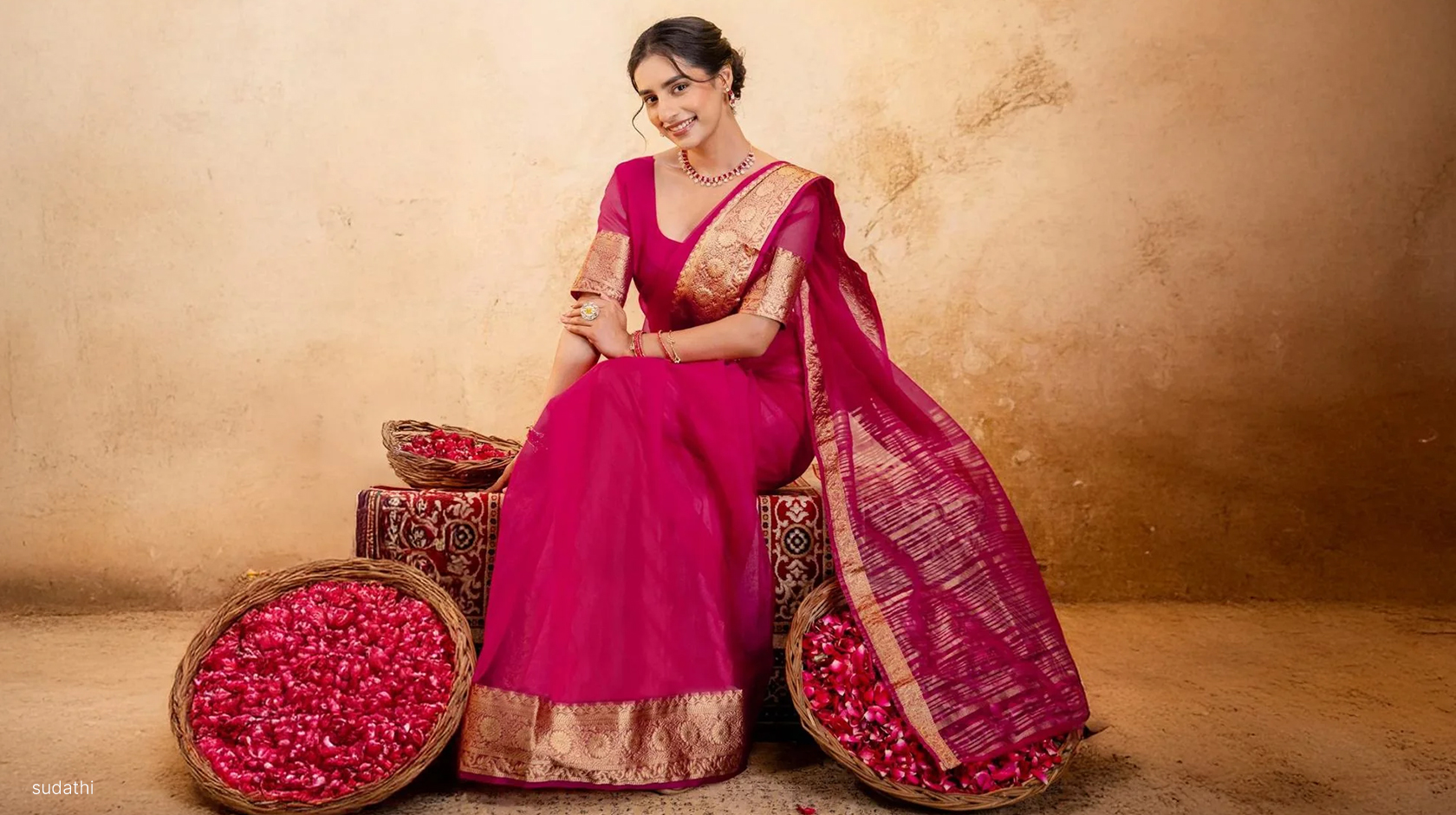
Organza and tissue sarees are among the most versatile choices for Indian festive occasions in 2026. Style organza with structured blouses and minimal jewelry for Durga Puja and Dussehra, and opt for tissue sarees with embellished detailing for weddings and Navratri celebrations.
Festive season dressing calls for fabric that balances beauty with occasion. Organza and tissue sarees deliver both—sheer enough to feel elegant, structured enough to hold a drape, and available in a range of finishes that suit everything from Navratri nights to wedding receptions.

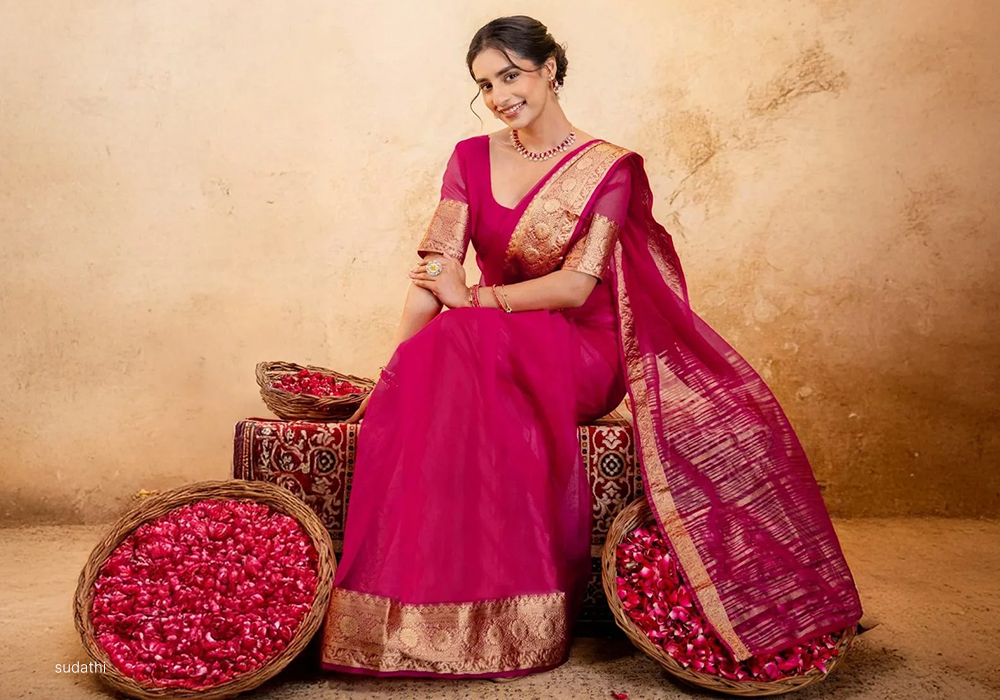
If you've been wondering how to style these fabrics for 2026's festive calendar, this guide breaks it down by occasion, draping approach, and styling tips that actually work.
What Makes Organza and Tissue Sarees Different?
Organza is a crisp, sheer fabric with a stiff body—originally woven from silk, now also available in synthetic blends. Its natural volume makes it ideal for structured silhouettes and dramatic pallus.
Tissue saree fabric is interwoven with metallic threads (typically gold or silver zari), giving it a luminous, almost iridescent quality. It's slightly heavier than organza but drapes beautifully and catches the light with every movement.
Both fabrics photograph exceptionally well—an important consideration for the heavily documented festive occasions of the Indian calendar.
How to Style Organza Sarees for Navratri and Durga Puja
For high-energy occasions like Navratri Garba nights, organza's stiff body is both an advantage and a consideration. The fabric holds pleats well, but its crispness can make movement feel restrictive if not draped correctly.
Draping tip: A Lehenga drape works particularly well with organza—the fabric's structure creates a naturally voluminous skirt silhouette without extra pinning effort. For those dancing Dandiya, this is one of the most practical options available.
Styling details to prioritize:
- Pair with a fitted, contrast-color blouse to let the saree's sheer quality stand out
- Choose oxidized silver jewelry for Navratri; gold temple jewelry for Durga Puja
- Keep hair pulled back—a neat bun or braid prevents it from catching on the fabric's texture
For Durga Puja pandal visits, where you're walking more than dancing, the traditional drape works beautifully with organza. The fabric's body means pleats stay in place for hours without constant adjustment.
How to Style Tissue Sarees for Dussehra and Wedding Functions
Tissue sarees are the natural choice for celebratory occasions with a higher formality level. The zari weave makes them feel inherently festive without requiring additional embellishment—which means your styling can stay relatively simple.
For Dussehra celebrations, a tissue saree in deep jewel tones—burgundy, forest green, or royal blue—pairs well with traditional gold jewelry and a sleek blouse. The metallic thread catches firelight and stage lighting beautifully during evening events.
For wedding functions, tissue sarees compete comfortably with lehengas at ceremonies like mehendi and sangeet. Choose a fabric with a heavier zari density for reception events, and a lighter weave for daytime functions where comfort matters more.
Styling details to prioritize:
- Thin, delicate blouse borders complement tissue fabric without competing with the zari
- Antique gold or polki jewelry works better than contemporary finishes
- Heeled footwear is recommended—tissue sarees drape slightly longer than lighter fabrics
What Blouse Silhouettes Work Best With Sheer Festive Fabrics?
Both organza and tissue sarees benefit from a blouse that provides visual grounding. Because both fabrics carry significant texture and shine on their own, blouse choices should complement rather than compete.
Structured options—sweetheart necklines, square necks, or boat necks—work particularly well. Deep back cuts add a contemporary edge without disrupting the traditional feel. For organza specifically, a heavily embroidered blouse in a matching or contrasting tone creates a balanced look across the entire drape.
Build the Rest of Your 2026 Festive Wardrobe
Organza and tissue sarees are strong starting points for a festive wardrobe built around occasions rather than trends. From Navratri Garba nights (where draping technique matters as much as fabric choice) to wedding receptions where the zari in a tissue saree earns its moment in the spotlight, these fabrics reward thoughtful styling.
For occasion-specific draping guidance, explore our post on the three best saree draping styles for Garba and Navratri dancing.
FAQs: Organza & Tissue Saree Styling
Is organza saree suitable for summer festive occasions?
Organza in a lighter, synthetic blend is manageable in warmer weather. Pure silk organza tends to retain heat, so it's better suited for evening events or air-conditioned venues.
Can tissue sarees be machine washed?
No. Tissue sarees with zari weave should always be dry cleaned to prevent damage to the metallic threads.
Which is easier to drape—organza or tissue?
Tissue sarees are generally easier for beginners. Organza's stiffness can make pleating more challenging, particularly in heavier silk versions.

