


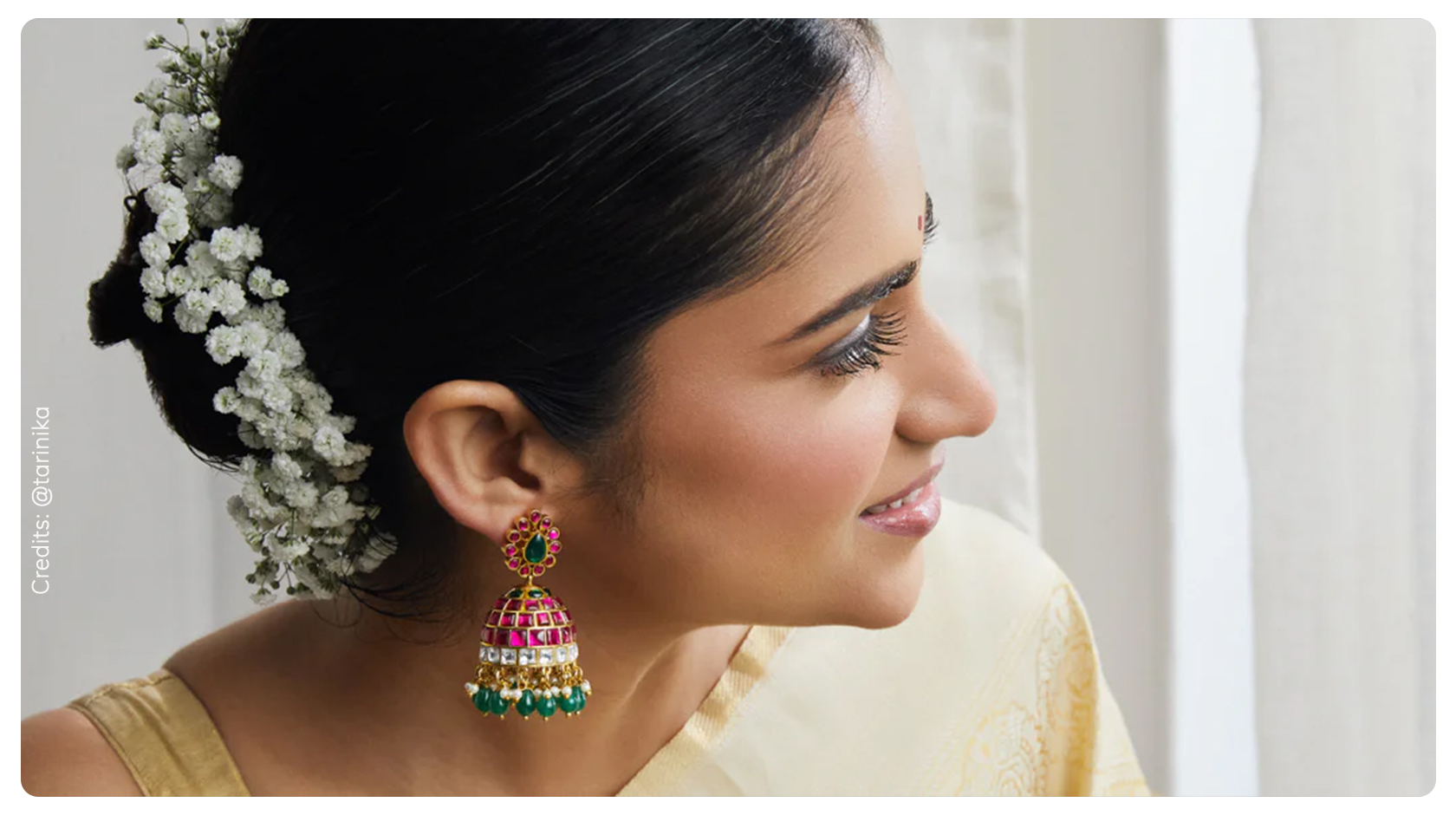
Jhumka earrings are versatile bell-shaped earrings with roots in South Indian temple jewelry dating back to the 3rd century BCE. Classic gold and kundan jhumkas suit traditional wear like sarees and lehengas, oxidised styles complement casual and fusion outfits, and pearl or diamond jhumkas work beautifully with Western ensembles. The right pair depends on your outfit, occasion, and face shape.
Few earrings carry as much history—or as much visual impact—as the jhumka. With their signature bell-shaped silhouette and satisfying sway, they've been a wardrobe constant across generations and regions of India. What started as adornments for temple deities in South India has evolved into one of the most versatile jewelry styles in existence.

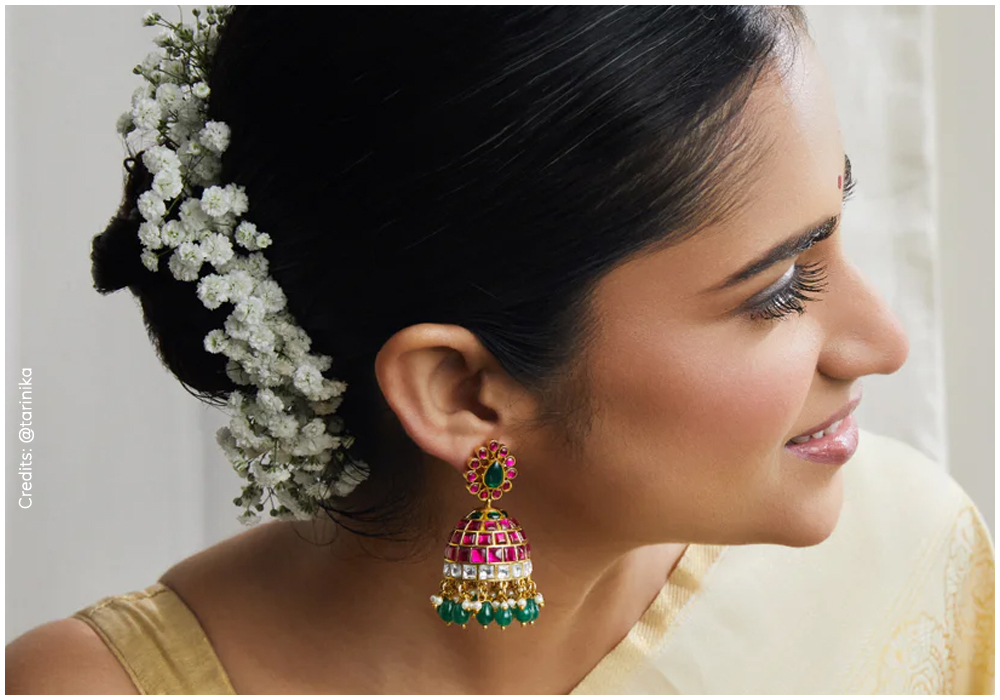
But with so many variations now available—from delicate pearl drops to bold oxidised statement pieces—choosing the right jhumka for your outfit can feel overwhelming. This guide breaks it down by type, occasion, and outfit category so you can style with confidence every time.
What makes jhumka earrings so distinct?
Jhumkas are defined by their dome-shaped top and hanging bell component, often decorated with ghungroos, gemstones, or intricate metalwork. Their origins trace to the Chola dynasty in South India (3rd century BCE), where they were first crafted for temple deities before being adopted by classical dancers in Bharatanatyam and Kuchipudi.
Over the centuries, regional artisan traditions gave rise to distinct variations: filigree jhumkas from Odisha's Cuttack region (a craft dating back 500 years), meenakari and kundan jhumkas from Rajasthan, enamel and silver styles from Kashmir, and elaborate gold filigree from West Bengal. Today, they span everything from bridal grandeur to lightweight everyday wear.
What are the main types of jhumka earrings?
Understanding the key types makes outfit pairing much simpler.
Classic gold jhumkas — The original, and still the most beloved. Gold jhumkas work across nearly every traditional occasion, from weddings to festivals. Available in 14kt, 18kt, and 22kt versions, they range from lightweight daily-wear styles to elaborate bridal designs.
Oxidised jhumkas — Characterized by a darkened silver finish and an antique, bohemian feel. Oxidised jhumkas often feature tribal or floral motifs and are among the most versatile styles for casual and fusion dressing.
Kundan and stone-studded jhumkas — Set with glass or semi-precious stones in gold foil, kundan jhumkas are made for grand occasions. They catch light beautifully and are a go-to for wedding and festive wear.
Pearl jhumkas — Pearl drops cascading from the bell dome create an understated elegance that works equally well with traditional sarees and contemporary gowns.
Layered and tiered jhumkas — Multi-tiered designs that add dimension and movement. Best suited for high-impact occasions like sangeets, receptions, or festive evenings.
Modern and fusion jhumkas — Clean geometric lines, detachable components, and pastel enamel work characterize this growing category. They're designed to move between ethnic and Western wardrobes with ease.
How do you pair jhumka earrings with traditional Indian outfits?
Sarees
For silk or embroidered sarees at weddings and formal events, gold or kundan jhumkas are the natural match. If you're wearing a lighter cotton or linen saree to a more casual gathering, oxidised jhumkas create a chic, grounded contrast without overpowering the fabric.
Lehengas
Heavier, multi-tiered jhumkas suit bridal and festive lehengas. Match the level of embellishment in your earring to the density of your lehenga's embroidery—if the outfit is heavily adorned, a slightly more restrained jhumka keeps the look balanced rather than overwhelming.
Kurtis and kurta sets
Simple kurtis are where oxidised silver or lightly gold-plated jhumkas shine. Medium-sized designs with minimal embellishment are ideal—enough to elevate a casual look without turning it into a formal one. Jhumkas are widely regarded as the default earring for kurtis for exactly this reason.
Can you wear jhumka earrings with Western or casual outfits?
Yes—and this is where modern jhumka styling has expanded most noticeably.
With a little black dress: Pearl jhumkas or subtle gold-plated designs add an unexpected cultural touch without competing with a minimal silhouette.
With a white shirt and jeans: A single bold silver or contemporary metal jhumka creates a striking fusion. The contrast between casual clothing and a statement earring is the point.
With a boho maxi dress: Oxidised jhumkas are the natural pairing here. Their earthy finish complements printed fabrics and flowing silhouettes.
With tailored blazers or jumpsuits: Dainty drop jhumkas in gold or mesh metallic finishes work well—enough visual interest to elevate the look, without weighing it down.
One principle applies across all Western pairings: keep other accessories minimal. When jhumkas are styled with Western outfits, they work best as the focal point. Heavy necklaces or stacked bracelets dilute the impact.
Which jhumka style suits which face shape?
Face shape is one of the most practical filters when choosing a jhumka.
- Round faces: Opt for longer, more angular jhumkas to add vertical length and balance.
- Square faces: Softer, rounded dome designs or pearl drop styles help counterbalance a strong jawline.
- Oval faces: The most adaptable shape—most jhumka styles work well.
- Heart-shaped faces: Look for jhumkas that are wider at the bottom to balance a broader forehead.
- Elongated faces: Rounder domes or wider Chandbali-jhumka hybrid styles add horizontal fullness.
Hairstyle matters too. A neat bun or braid keeps the earrings in full view and lets them lead the look. If you're wearing your hair loose, medium-sized jhumkas that peek through naturally tend to work better than very large or long styles.
How to care for your jhumka earrings
A few simple habits protect your investment.
- Wipe each pair with a soft, dry cloth after wearing to remove oils and moisture.
- Store individual pairs in separate pouches or boxes to prevent scratching and tangling.
- Keep jhumkas away from perfumes, hairsprays, and lotions—chemicals dull the finish over time, especially on oxidised or plated pieces.
- For hypoallergenic needs, look for 14kt, 18kt, or 22kt gold, or sterling silver with an anti-tarnish coating.
For daily wear, lightweight designs under 10 grams are recommended for extended comfort. Bridal and statement jhumkas can run heavier, but for day-long events, prioritize pieces with smart weight distribution.
The right jhumka is already waiting for you
Jhumka earrings have survived more than 2,000 years of fashion because they genuinely work—across cultures, occasions, outfits, and decades. Whether you're building your first ethnic jewelry collection or refining a well-stocked one, the key is knowing which style serves which purpose.
Start with a classic gold or oxidised pair for versatility, add a kundan or pearl option for celebrations, and let a modern fusion jhumka handle the everyday moments in between.
Frequently Asked Questions
What type of jhumka earrings are best for everyday wear?
For daily wear, small to medium gold or silver jhumkas with minimal embellishment are ideal. Look for lightweight designs under 10 grams with clean lines. Oxidised silver jhumkas with simple filigree detailing are a popular choice for office wear and casual outings alike.
Can jhumka earrings be worn with Western outfits?
Yes. Pearl jhumkas and contemporary metal jhumkas pair well with Western silhouettes like little black dresses, blazers, and maxi dresses. When doing so, keep other jewelry minimal to let the earrings stand out as the focal point of the look.
Which jhumka style is best for weddings?
Kundan, diamond, and multi-tiered gold jhumkas are the most popular choices for wedding occasions. For bridal wear specifically, designs weighing around 10 grams strike a balance between grandeur and comfort for long events.
How do I choose jhumka earrings based on my face shape?
Longer, angular jhumkas suit round faces; softer rounded designs suit square faces; most styles flatter oval faces; and wider-bottomed styles balance heart-shaped faces. For elongated faces, opt for rounder dome shapes that add horizontal width.
What is the difference between traditional and modern jhumka earrings?
Traditional jhumkas draw from regional Indian craftsmanship—gold temple jhumkas, kundan, meenakari enamel, and filigree work—and are best suited for festive and formal occasions. Modern jhumkas use geometric forms, pastel enamel, detachable components, and mixed materials, making them adaptable to both ethnic and Western wardrobes.

