

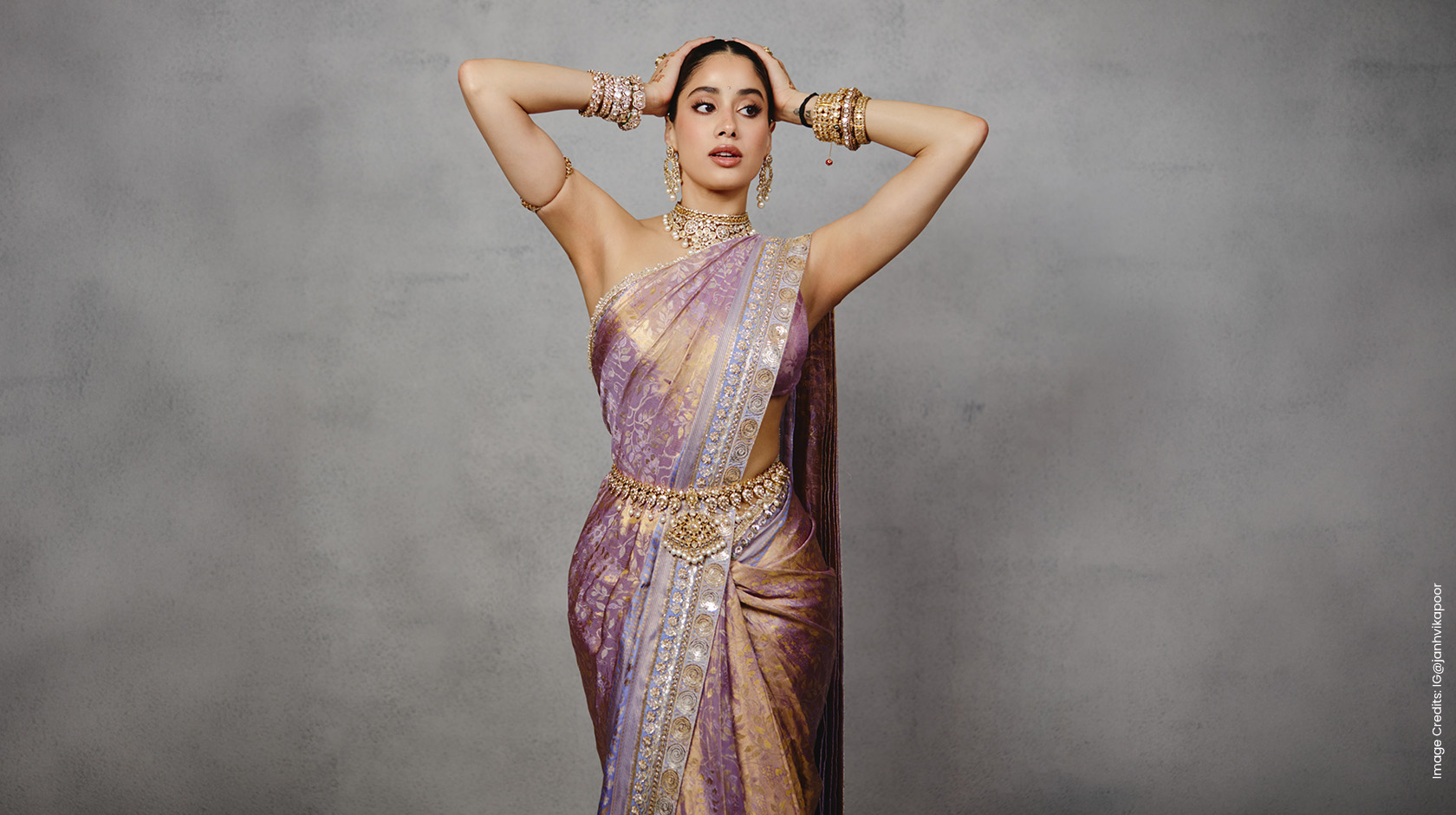
Long before it was cinching Rashmika Mandanna's bridal saree or catching flashbulbs at Manish Malhotra's Diwali bash, the kamarbandh was already doing its job on stone. Carved into temple walls, worn by goddesses, dancers and queens, it has spent centuries being the one accessory that never went out of season — it just kept changing its address.
Carved in Stone, Worn by the Gods
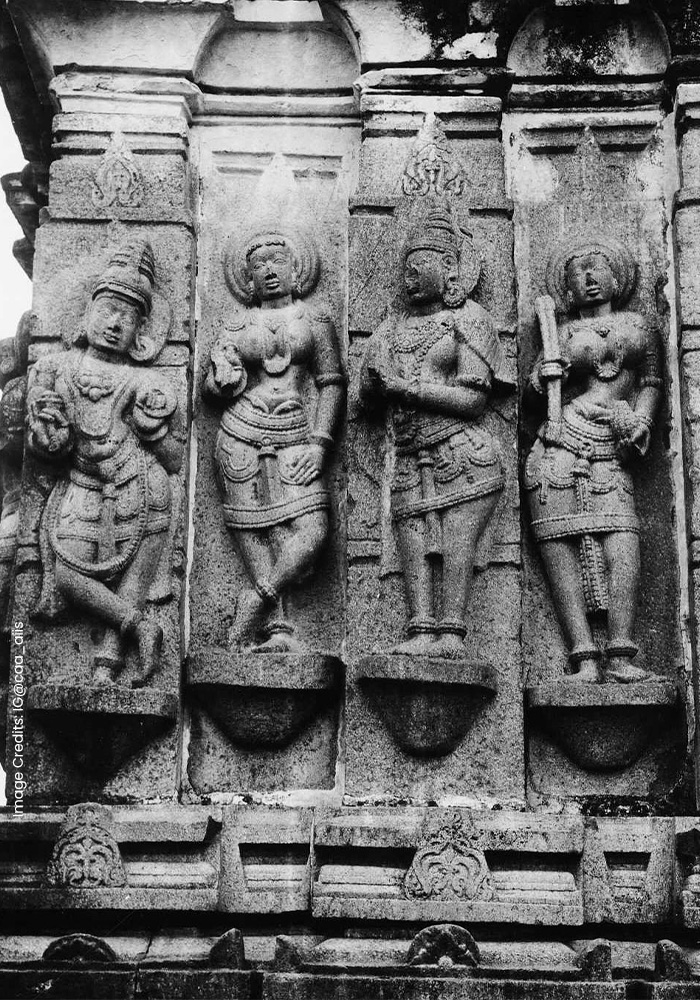
Walk through any temple complex built between the 8th and 13th centuries, Karnataka's Hoysala shrines included, and you will find her: the sculpted woman, hip cocked, waist wrapped in a beaded or tiered belt sitting low over the drape. At the Bhutesvara temple in Medak, Kalaburagi, this 13th-century figure wears her kamarbandh the way Chola bronzes and Hoysala apsaras do across the subcontinent — not as an afterthought, but as the ornament that defines the silhouette.

Turns Out, The Waist Was Always the Main Character
This wasn't decorative flourish. In temple sculpture, the kamarbandh appears on gods, demons, dancers and royals alike, which tells you everything about how central it was to the aesthetic vocabulary of the time.
From Simple Sash to Serious Jewellery
Some carvings show a simple five-tier belt with a rectangular buckle; others go elaborate, with floral centrepieces and multi-strand beading clearly inspired by real jewellery worn at court. The ornamental version was called kamarband, the softer fabric sash worn underneath, patka — and together they held both drape and dynasty in place.
One Waist Ornament, Many Regional Accents
The accessory's roots go back further still, to Vedic-era India, where waist ornaments show up in Sanskrit literature and are woven into descriptions of royal women in the Ramayana itself. By the time the Cholas, Hoysalas, Vijayanagara rulers and later the Nayaks were commissioning their goldsmiths, the kamarbandh had evolved into a genuine craft discipline — you can still see its legacy in the Tamil oddiyanam, the Kerala vaddanam, and the Rajasthani kardhani, each a regional dialect of the same original idea.
It also travelled. The plain cloth version worn by kings and commoners alike eventually found its way onto British military uniforms stationed in colonial India, was anglicised into the "cummerbund," and now sits quietly at the centre of Western black-tie dressing — proof that a good waist accessory respects no borders.
The Waist Belt Gets Its Bollywood Comeback
Cut to 2026, and the kamarbandh is having the kind of moment that would make its temple-sculpture ancestors smug.
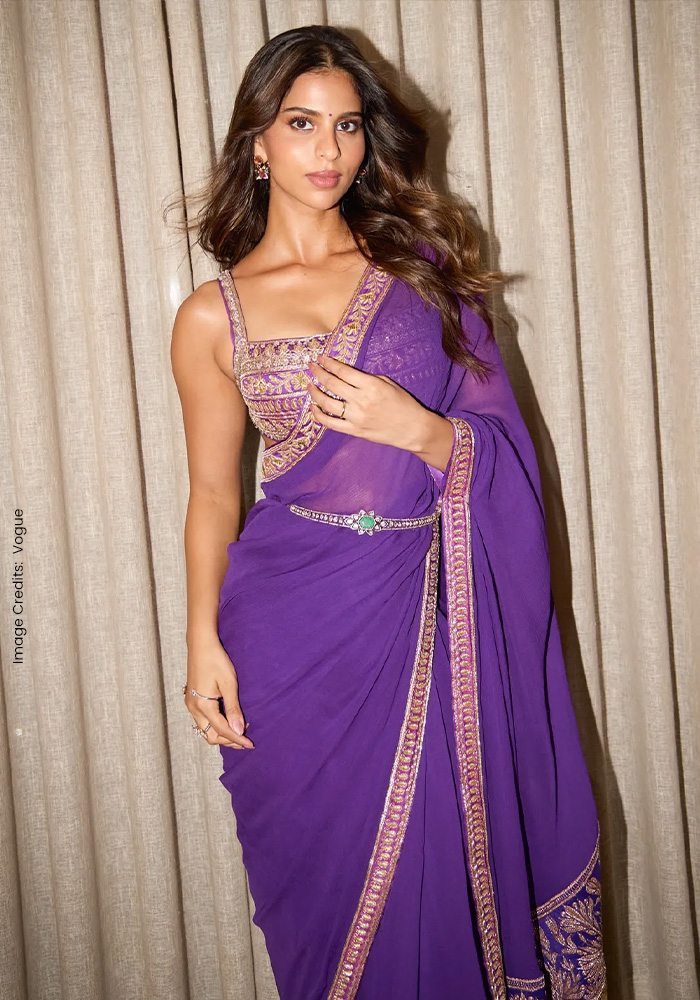
Suhana Khan: Let the Waist Do the Talking
Suhana Khan showed up to Manish Malhotra's Diwali bash in a recycled vintage violet saree — its borders repurposed from decades-old hand-embroidered pieces the designer had preserved himself, and let a sleek diamond-encrusted metallic waistband do the heavy lifting. No layered necklaces, no competing jewellery. Just a violet drape, minimal diamonds, and a belt that pulled the whole look into focus.
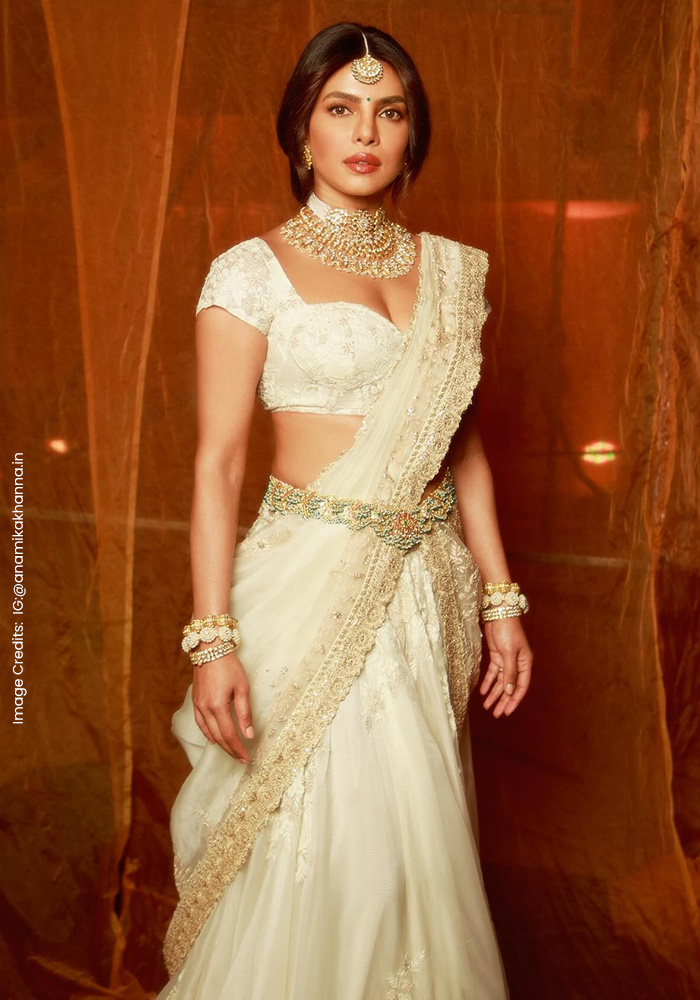
Priyanka Chopra Jonas: When Less Jewellery Means More Drama
Priyanka Chopra Jonas went the devi route in an ivory Anamika Khanna lehenga-saree, its border embroidery thinning delicately as it climbed toward the pallu, finished with scalloped edging and a sculpted, sweetheart-neck blouse built to showcase her choker. It is, unsurprisingly, the exact silhouette that calls for a kamarbandh, the kind of ivory-on-gold restraint where a waist ornament does more work than a fistful of jewellery ever could.
Khushi Kapoor: Roots, But Make Them Runway-Ready
And then there's Khushi Kapoor, who leaned into her South Indian heritage in a hand-woven pattu saree, metallic zari borders, zardozi embroidery, the whole nine yards (literally) of Kanjivaram tradition. It's the kind of saree that was practically made for temple jewellery, kamarbandh included, and Khushi wore it like a quiet nod to roots rather than a costume.
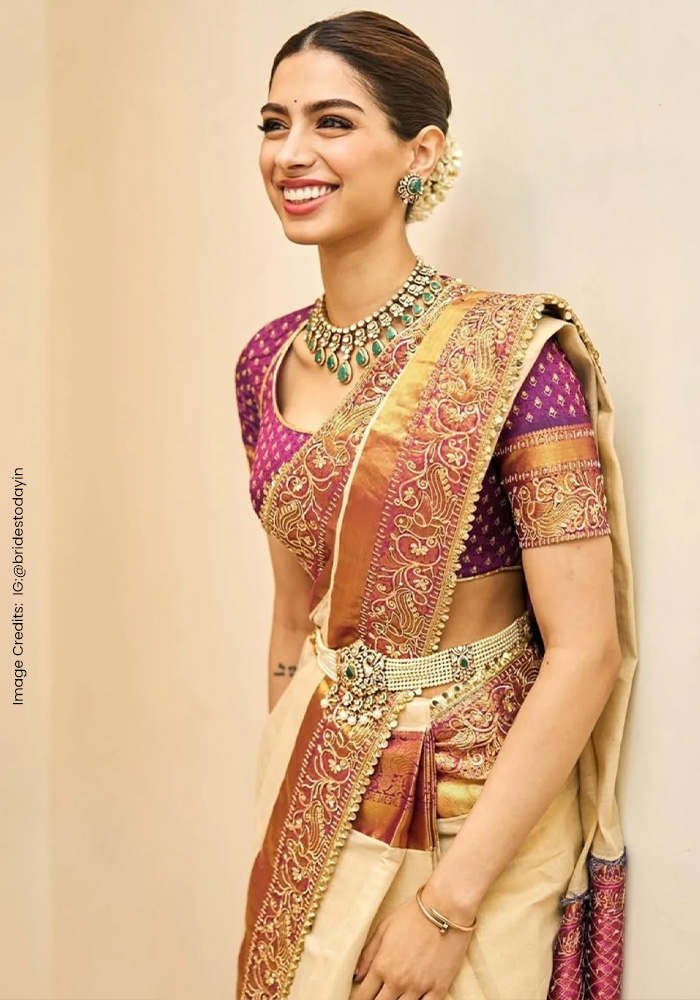
Three very different women, three very different saree stories — and the same belt-shaped thread running through all of them.
The Bridal Non-Negotiable
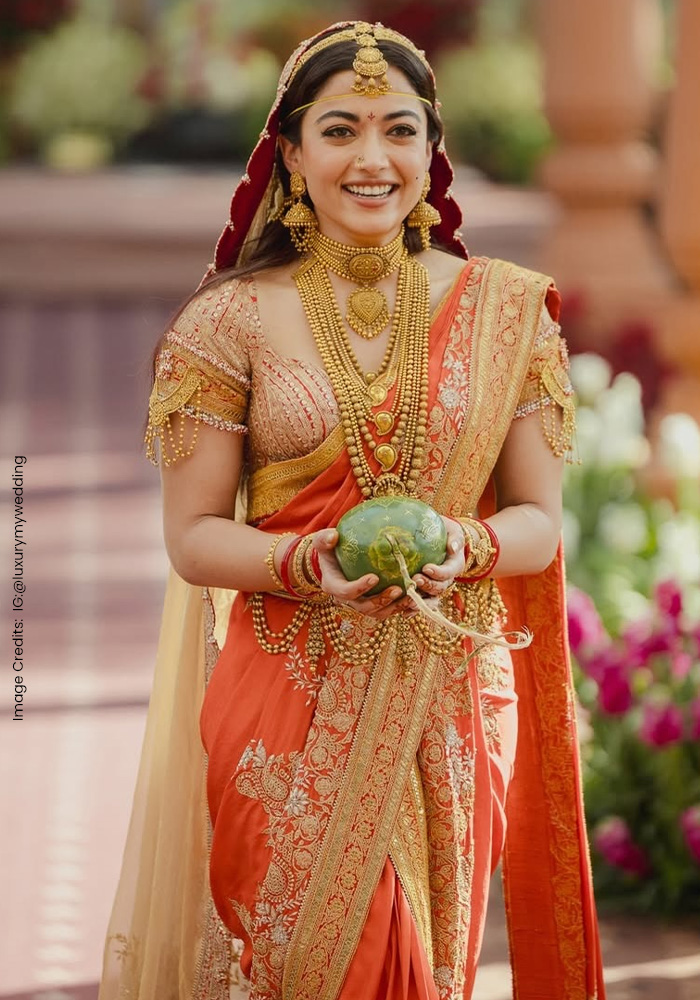
If there was any doubt that the kamarbandh has graduated from trend to tradition, Rashmika Mandanna's wedding to Vijay Deverakonda settled it. Her bridal jewellery — ten months in the making, nearly three kilograms of gold — included eleven separate pieces: mathapatti, champasaralu, jada billa, bajuband, hathphool, and right at the centre of it all, the kamarbandh cinching her orange-and-gold Banarasi silk saree into place.
Pretty, Yes. Practical, Also.
It wasn't a styling accident. In South Indian bridal tradition, the waist belt is what gives a heavy silk drape its structure — without it, all that fabric and zari work has nowhere to sit. Rashmika's reception look, a red Mysore silk saree, carried the same striking waist belt through to her second outfit, proving this isn't a one-look wonder.
The Kamarbandh Has Officially Entered Bridal Duty
For brides going the temple-jewellery route in 2026, the kamarbandh isn't an optional add-on anymore. It's practically load-bearing — for the saree, and for the whole aesthetic.
Five Kamarbandhs Worth Adding to Your Trousseau
The Statement Bloom
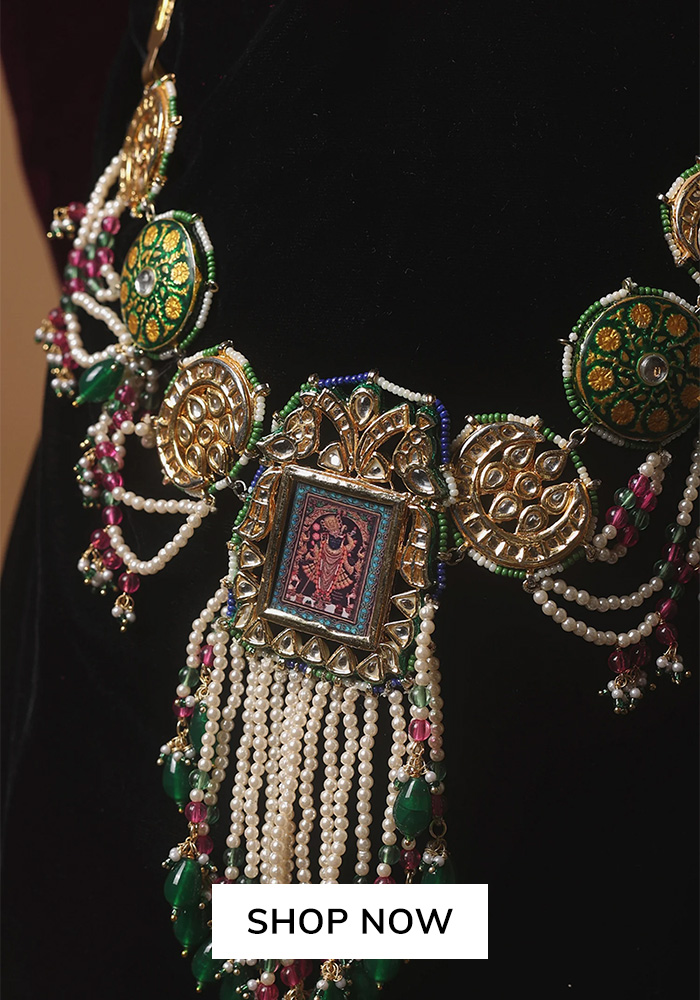
Dugran By Dugristyle's Verdant Glow kamarband is the one to reach for when your outfit can handle a little drama. Kundan work anchors a cluster of green, pink and red stones across a wide gold-plated band, giving it the same layered, floral-carved energy as those temple-sculpture belts with ornate centrepieces.
Wear it over a solid-colour Banarasi or a heavily worked lehenga where the belt itself becomes the focal point — pair with a plain-bordered saree so the kamarbandh doesn't have to compete for attention.
The Bride's Understudy
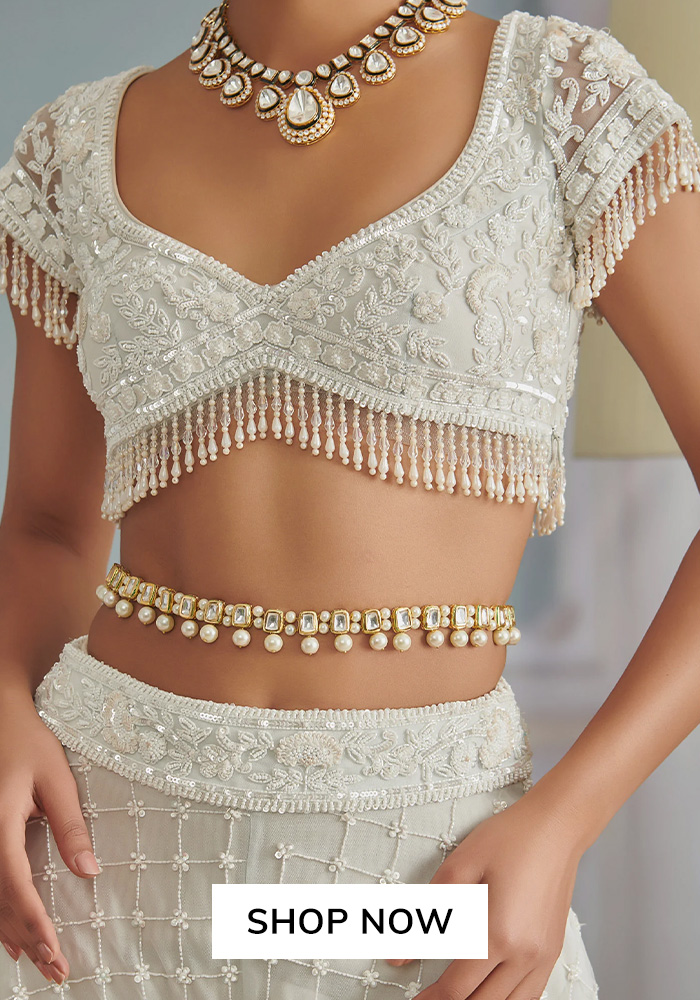
The Kundan and Pearl gold kamarbandh, with its pearl-chain drops and small traditional bells, does exactly what Rashmika's did, gives a heavy silk saree somewhere to rest. The lobster clasp makes it genuinely adjustable rather than "adjustable" in name only, which matters when you're planning to wear it through a full day of ceremony and photographs.
This is the pick for ivory, gold or red bridal drapes where the brief is regal, not maximalist.
The Everyday Elegant
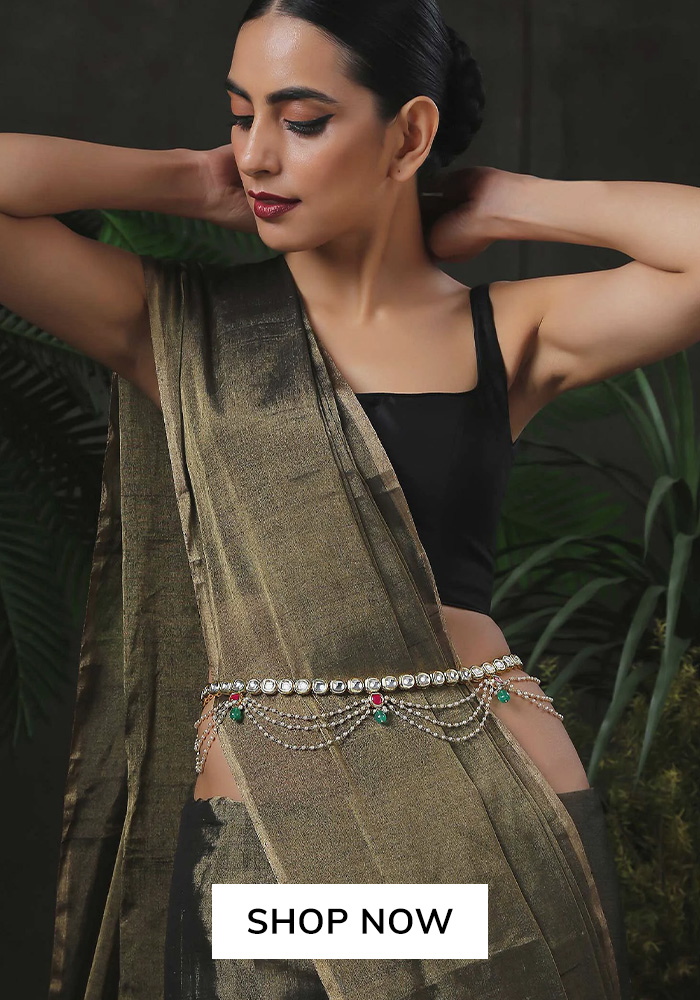
For versatility, Paisley Pop's Kundan Pearl Embellished Adjustable kamarbandh earns its keep. Round and square-cut kundan stones sit in a 22k gold-plated finish with pearl drops running the length of the belt, polished enough for a sangeet, restrained enough for a smaller family function.
Its adjustable design means it moves easily between a fitted lehenga skirt and a draped saree, which makes it the one piece in this edit worth buying first if you're building a jewellery box from scratch.
The Heirloom Look
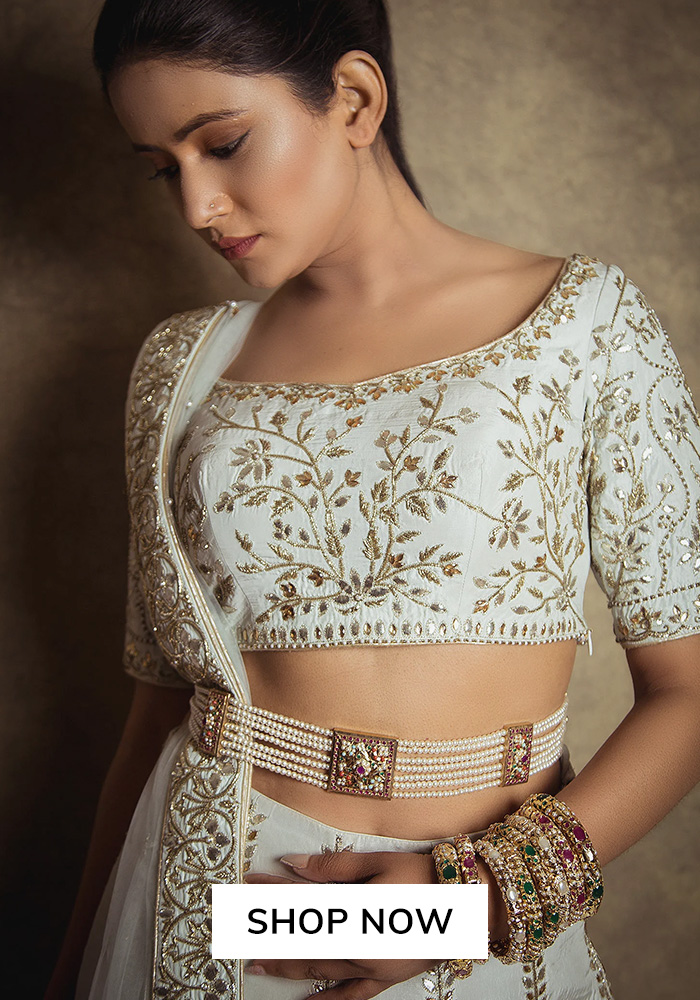
Queens Jewels' Bridal Jadau Bead Embellished kamarbandh channels the floral-carved, layered-bead aesthetic straight out of temple sculpture, multi-coloured stones, a handcrafted finish, and enough visual weight to hold its own against a heavily embroidered bridal lehenga.
This is the belt for the maximalist bride who wants her waist ornament to read as generational jewellery rather than a modern accessory, styled the way Rashmika wore hers: front and centre, not tucked away.
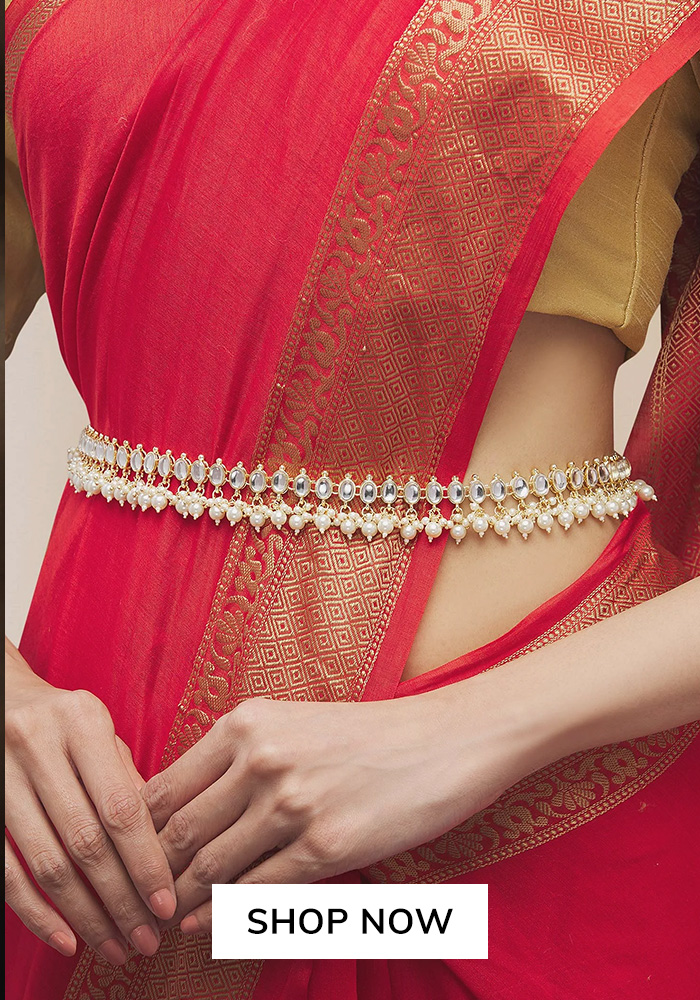
The Quiet Finisher Moh-Maya By Disha Khatri's Gold Kundan and Pearl kamarband is the most understated of the five, a narrow band with kundan and pearl clusters that reads more "finishing touch" than "showstopper."
It's the belt for anyone following Suhana Khan's lead: minimal jewellery everywhere else, one sleek waist accent doing all the talking. Try it over a solid saree with a statement choker and nothing else, let the kamarbandh be the one decision that defines the look.
The Long Way Round
What's striking about the kamarbandh's 2026 comeback isn't that it's new, it's that it never actually left. It just moved from temple walls to trousseaus, from Chola goldsmiths to Instagram styling credits, carrying the same basic idea the whole way: that the waist deserves its own ornament, not just an accessory borrowed from the neck or the wrist. Eight hundred years on, that argument still holds up.