
Old-money style is widely misunderstood. Most people assume it means expensive clothes, rare labels, or the kind of dressing that announces wealth before a word is spoken.
In India, that reading misses everything.
Here, true refinement has always lived inside the fabric itself — in a weaver's hands working a loom for days, in a border that takes months to embroider, in a textile tradition older than most modern nations. It is not about spending more. It is about knowing more.
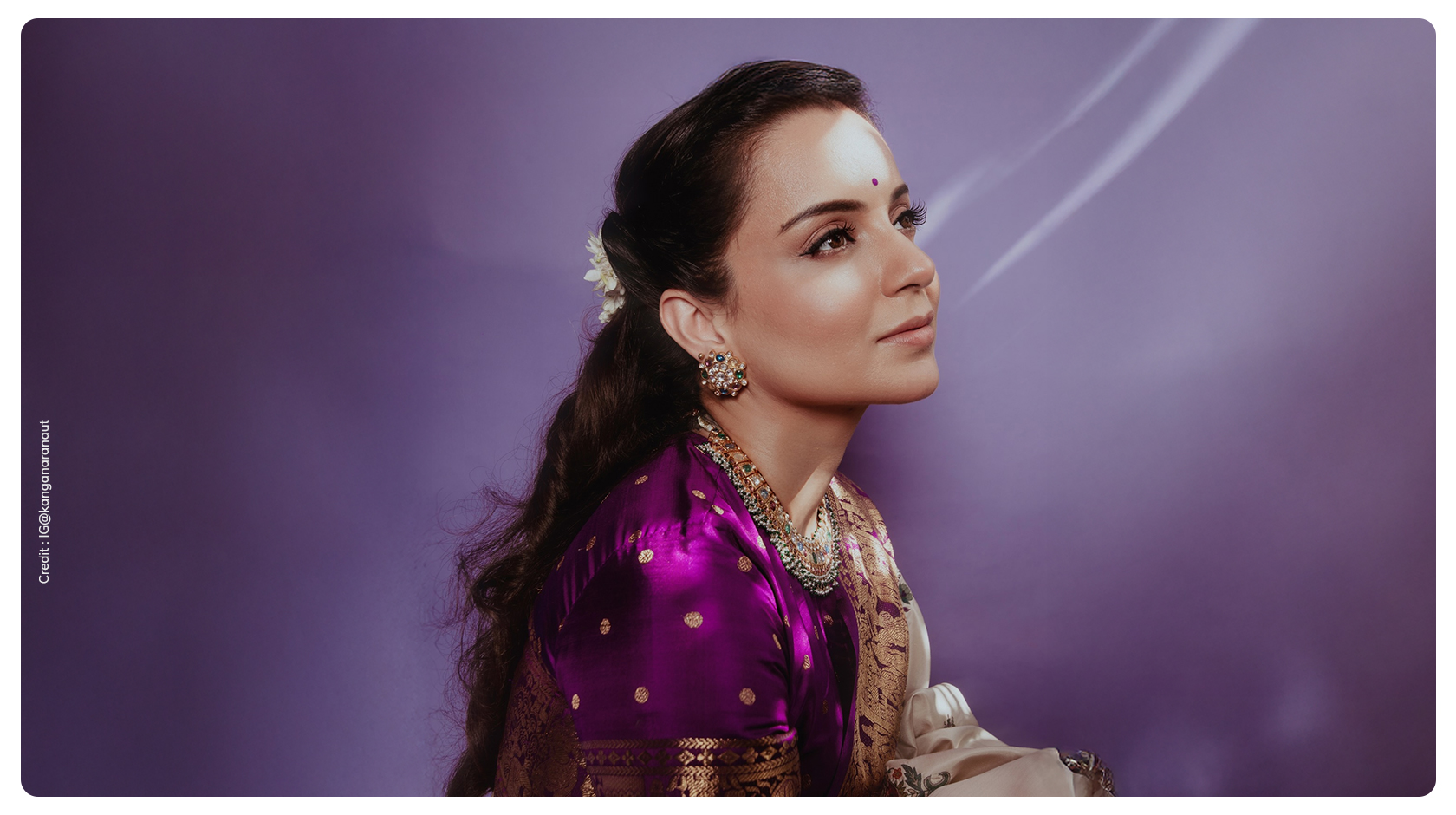
Kangana Ranaut's saree wardrobe understands this distinction with rare clarity. Across film screenings, national events, and public appearances, her Kangana Ranaut saree looks form a coherent philosophy: that the most powerful dressing draws from cultural depth, not trend cycles.

The Saree That Started the Conversation
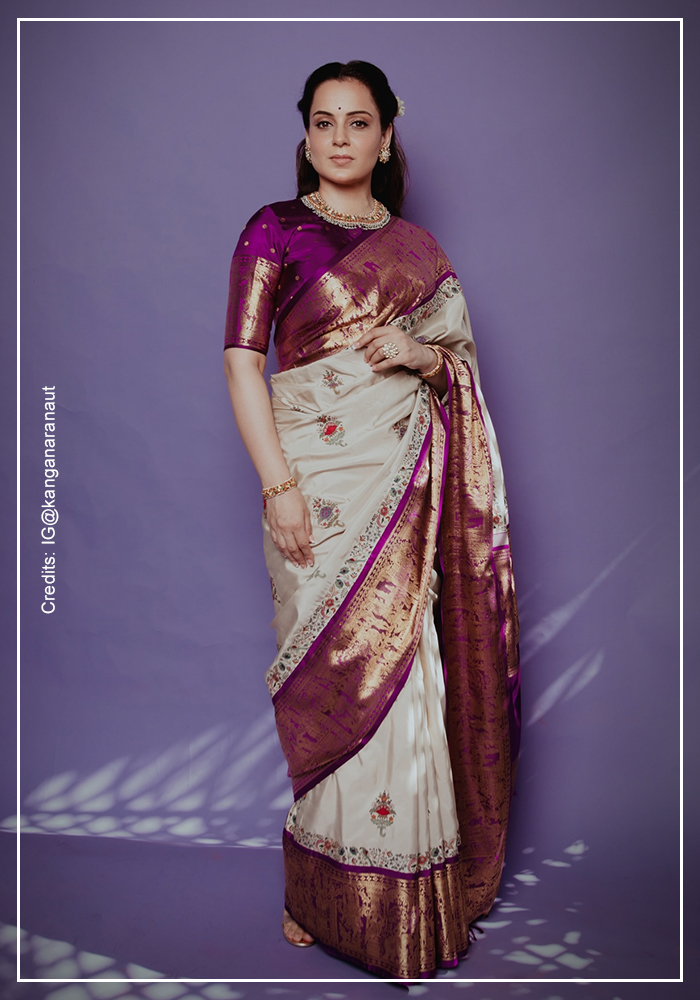
The Gaurang Shah Kanjeevaram is one of the most discussed pieces in the Kangana Ranaut saree collection — and rightfully so.
Handwoven Kanjeevaram silk is already one of South India's most respected textile legacies. What makes this piece remarkable is the layering of mochi embroidery, a craft historically practiced by artisan communities in Gujarat and Rajasthan, onto a Southern weaving tradition.
The jewel-toned purple pallu deepens the visual story. Classic Kundan jewellery and a fresh gajra in the hair complete a look that feels simultaneously rooted and effortless — the kind of dressing that needs no caption.
Confidence Through Craft
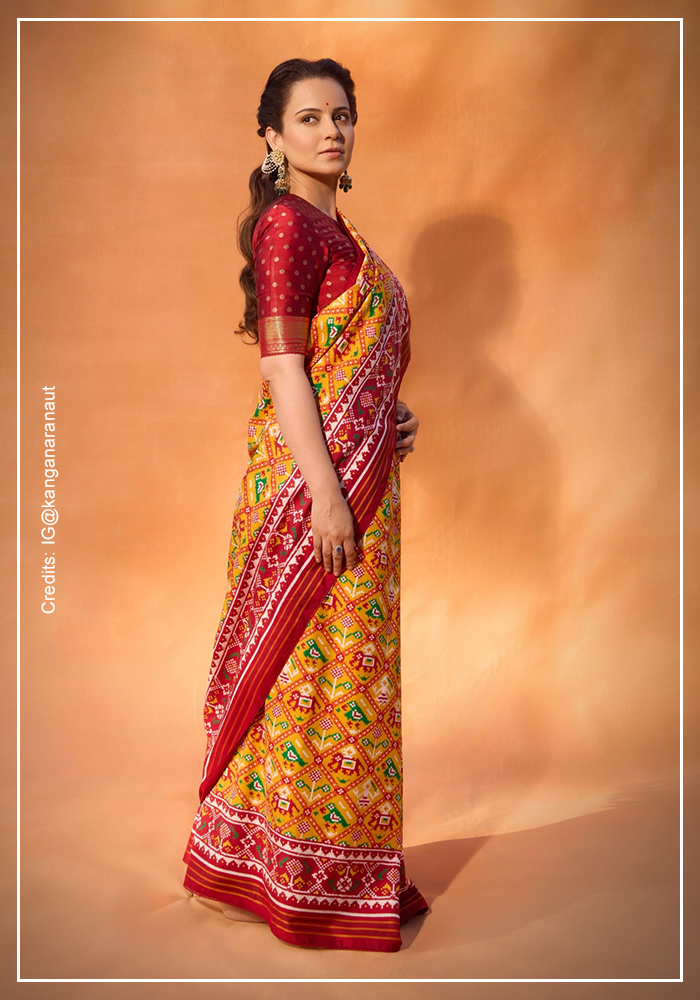
At the Rising Bharat Summit 2026, Kangana arrived in a mustard yellow Patola saree paired with a rich red blouse — and the look spoke for itself.
Patola weaving from Gujarat is one of India's most technically demanding textile traditions. In double-ikat weaving, both warp and weft threads are dyed before the loom is even set up. Every geometric motif is calculated before a single thread is passed through.
The result is a textile that earns its authority long before it is worn. No heavy embellishment was needed here. The fabric was the statement.
Where East Meets West, Beautifully
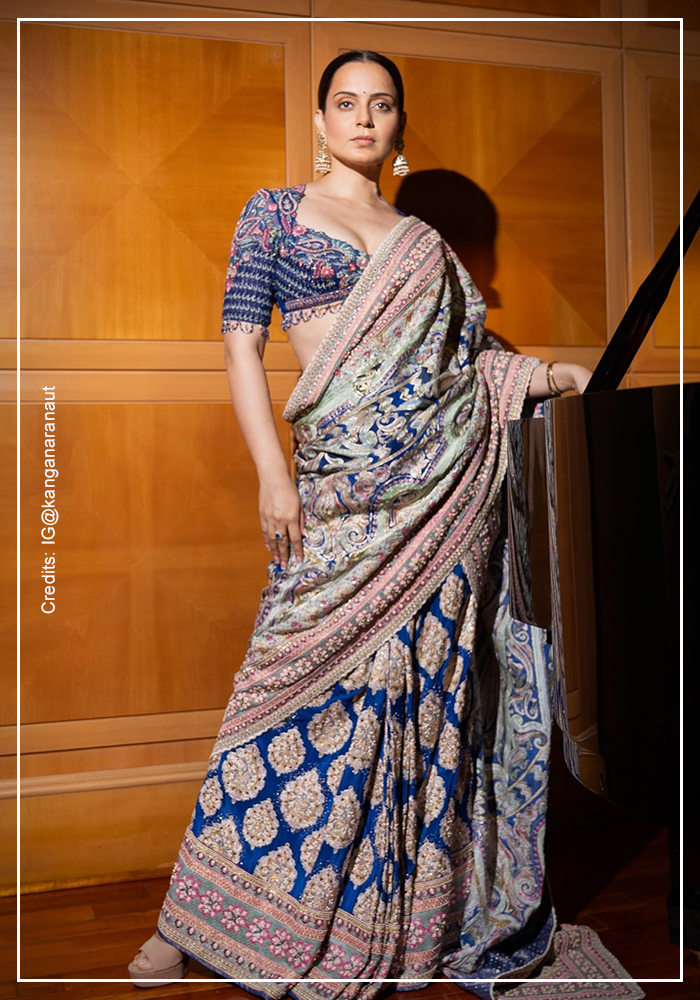
The Tarun Tahiliani royal blue Kashida saree brings a different kind of beauty into the picture — one shaped by centuries of cultural exchange.
Kashida embroidery carries Persian-inspired motifs that traveled into Kashmir's craft vocabulary over generations and were gradually made entirely its own. On this saree, those woven patterns feel neither borrowed nor exotic. They feel inevitable.
The deep royal blue grounds the look with a quiet authority. This is luxury Indian fashion at its most architecturally composed.
The Power of Restraint
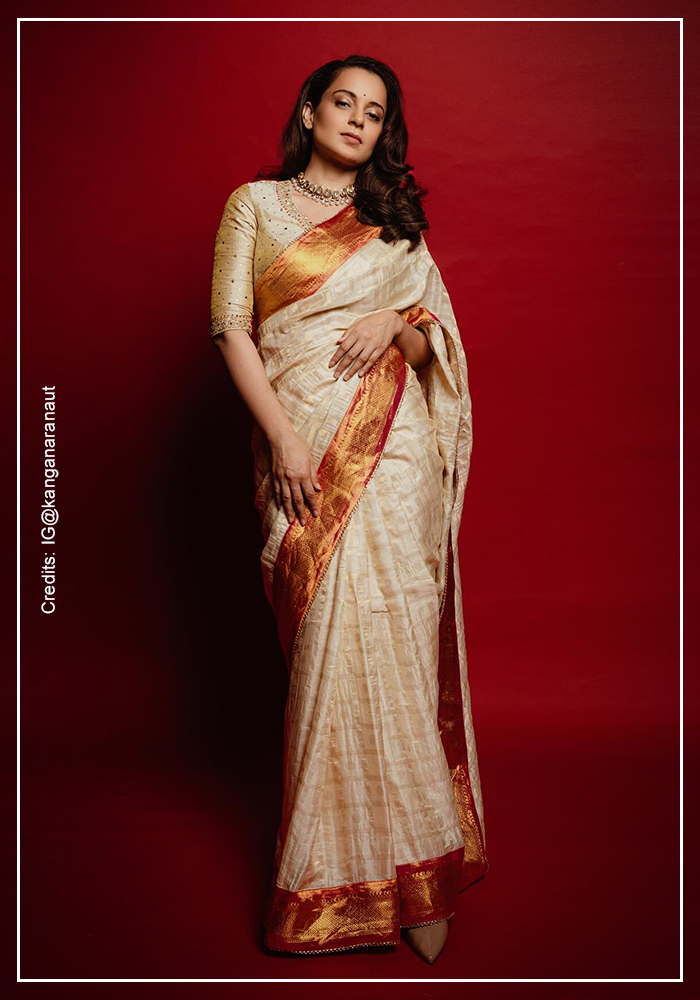
Not every great designer saree announces itself loudly. The ivory silk saree with a red-and-gold zari border proves that knowing when to stop is its own form of mastery.
A cream silk base. A precisely worked zari border in red and gold. A Kundan and pearl choker that completes without competing. That is the entire composition — and it is enough.
In a moment when maximalism dominates celebrity saree looks, this kind of restraint reads as genuinely radical. Heritage sarees like this one have survived generations not because they were fashionable, but because they were right.
When Ornate Is Done Right
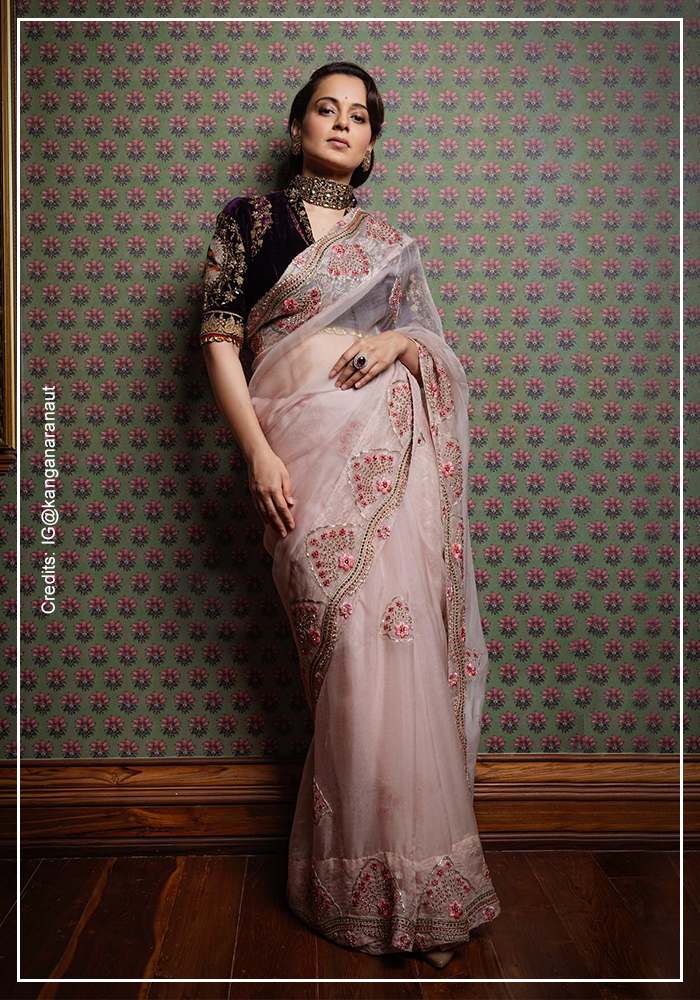
Old-money dressing is sometimes mistakenly reduced to minimalism. The Rimple & Harpreet Narula pink silk organza saree complicates that idea in the best way.
The detailed floral threadwork across the organza surface is unabashedly ornate. But it is executed with a precision that keeps richness from tipping into excess. In traditional Indian fashion, embellishment has always been a record of skill — not decoration for its own sake.
When that skill is genuine, ornament becomes meaning.
Archival Dressing
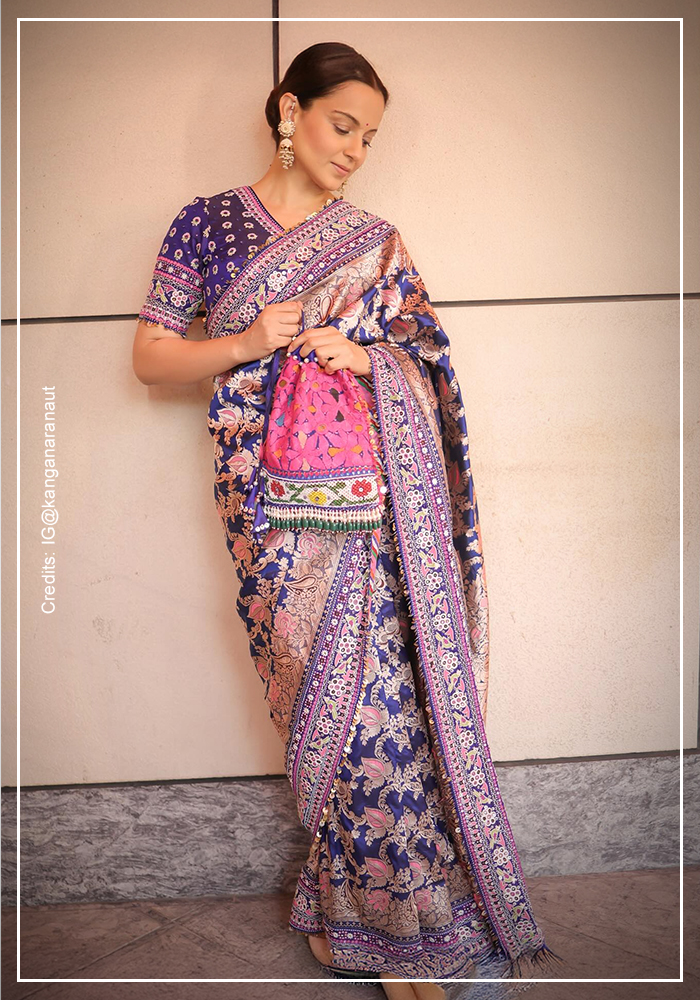
The purple brocade saree worn at the Emergency screening is the kind of piece people remember.
Rich brocade work, mochi embroidery, mirror detailing, tassels, and a coordinating potli bag create a look that feels collectible — the kind of garment a woman keeps, passes on, and tells stories about. Most designer sarees worn at celebrity events feel like costumes. This one feels like an acquisition.
Within the broader Kangana Ranaut style narrative, this saree makes a particular argument: that the most valuable wardrobe pieces are the ones built to outlast the moment.
Wearing a Craft Back to Life
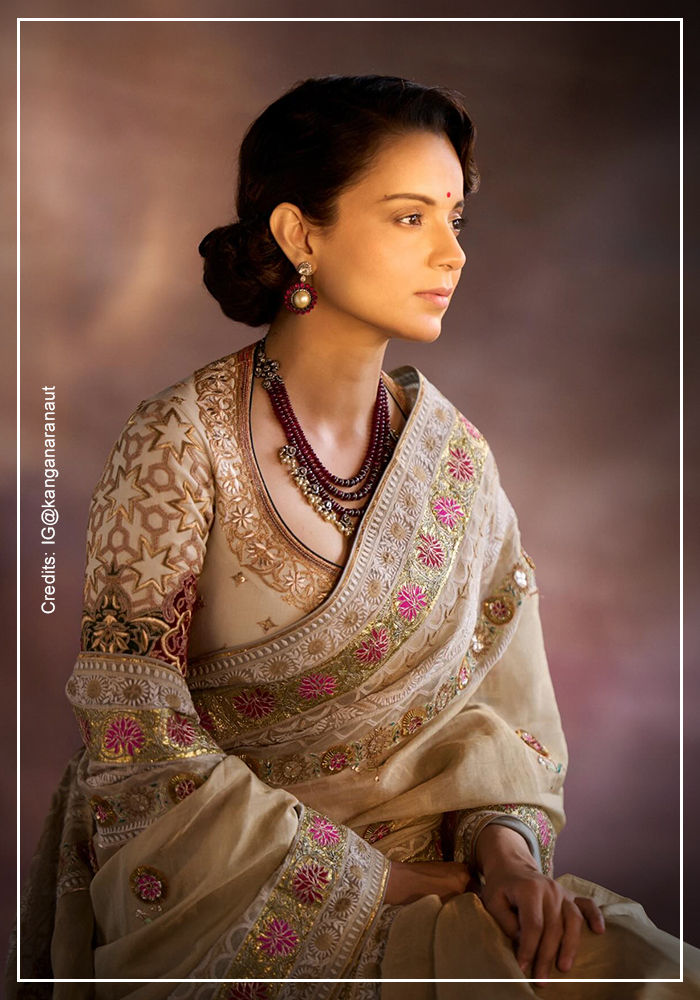
The cream mul zari saree, with its Vasli and Kharra Gota revival techniques, belongs to a different category entirely.
These are crafts so specialized that their living practitioners can be counted in the dozens. To wear such a piece publicly is not simply a style choice — it is an act of cultural preservation. Handloom sarees of this kind carry the time and fingerprints of weavers who have spent lifetimes mastering what no machine can replicate.
Their value is irreplaceable. Their survival depends on being seen.
Effortless and Entirely Contemporary
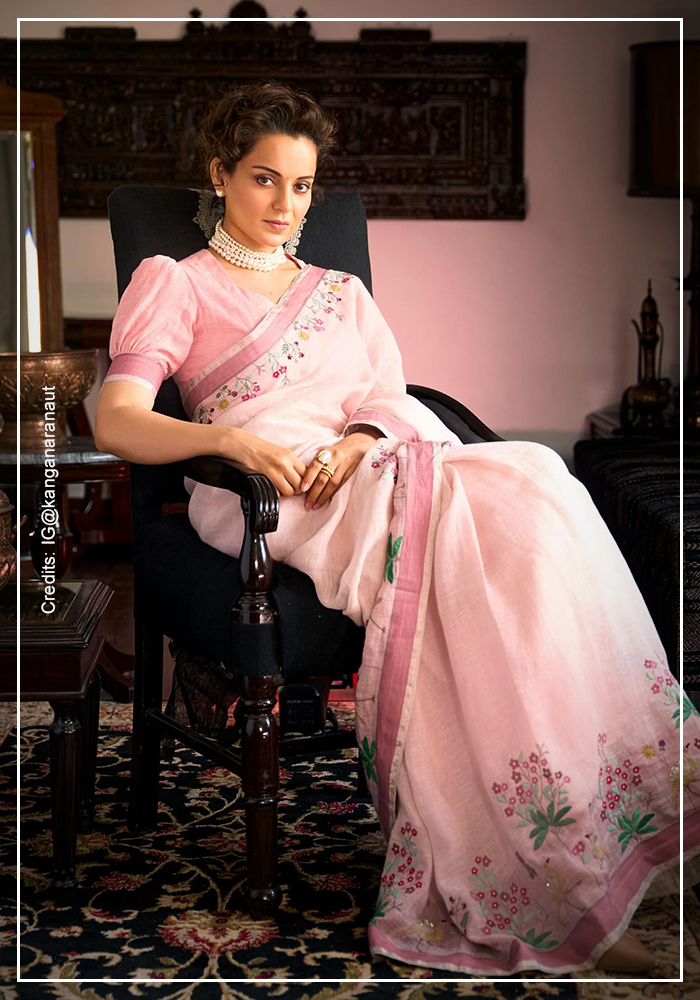
The rose quartz linen gota kinari saree shows how deeply traditional choices can feel genuinely modern.
Linen as a base fabric brings an ease and breathability that feels current without trying to be. Gota detailing along the border adds precision and shimmer without weight. Pearl jewellery, a mogra-adorned bun, and a red bindi complete the look with an effortlessness that takes years of instinct to achieve.
This is where Indian textile heritage and contemporary sensibility find their most natural meeting point.
Color as Conviction
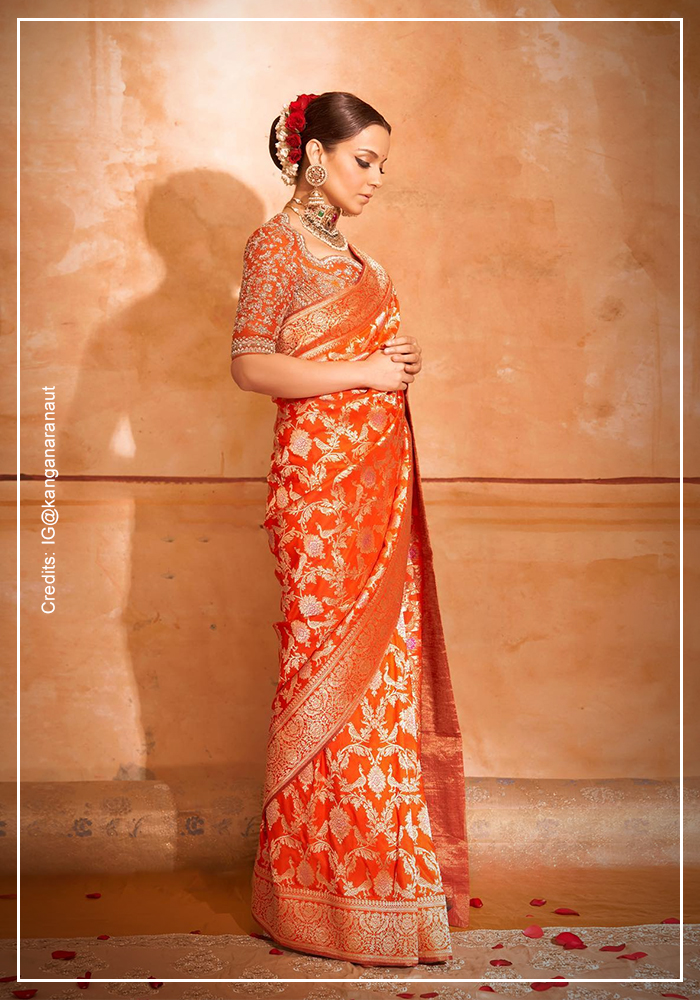
The Jayanti Reddy orange Banarasi saree is a reminder that vibrant colour and quiet elegance are not in conflict — not when the textile carries the right history.
Banarasi silk, woven in Varanasi for generations, has a luminosity that no synthetic alternative can convincingly imitate. Add zardosi embroidery — intricate metallic needlework practiced by master craftspeople — and the orange transforms from a colour choice into a celebration. This is Indian craftsmanship at its most joyful.
Luxury in the Details
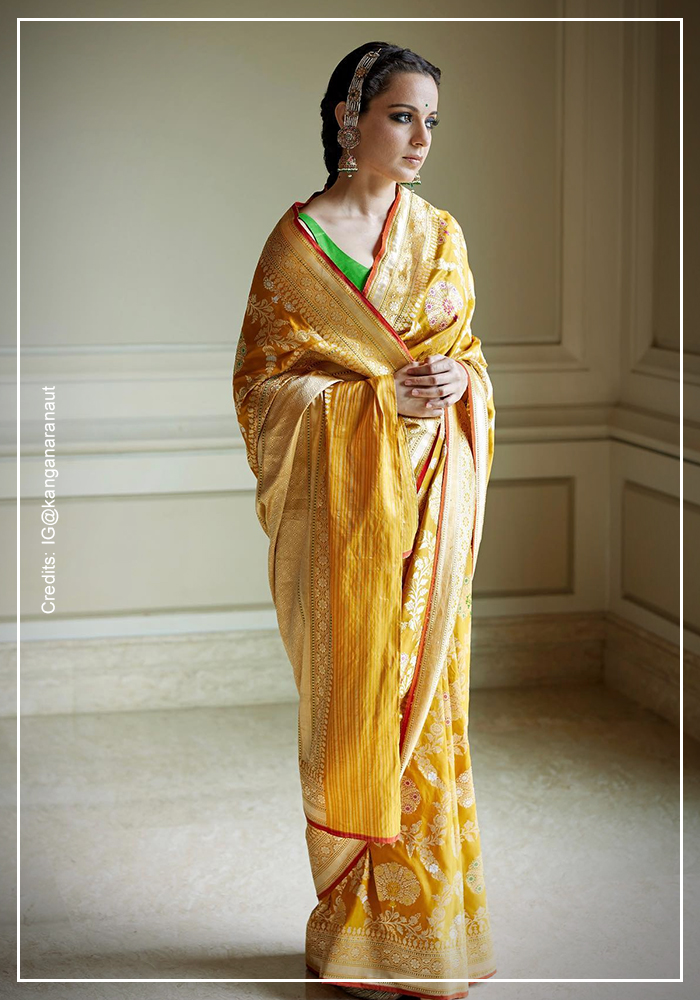
The Priyanka Raajiv yellow Banarasi saree closes this wardrobe story with extraordinary precision.
The vertical pattidaar jaal across the body and the handcrafted kadua border speak to a level of technical investment that the fashion industry rarely pauses to honour. Heritage jewellery and a braided hairstyle ground the look in a continuity that extends well beyond any current trend cycle.
True luxury, this saree insists, is not made quickly. It is earned through time, skill, and patience — and it shows.
More Than a Celebrity Closet
What separates Kangana Ranaut's saree choices from most celebrity dressing is a quality of genuine intentionality.
Across Kanjeevaram and Patola, Kashida and Banarasi, organza and brocade, the Kangana Ranaut saree collection reflects a consistent understanding: India's textile traditions are not backdrop or aesthetic shorthand. They are the point.
Her wardrobe does not reflect heritage. It inhabits it. And the result is something that feels less like a celebrity closet put together for cameras — and more like a living archive of Indian craftsmanship, built by someone who genuinely knows what she is holding.