


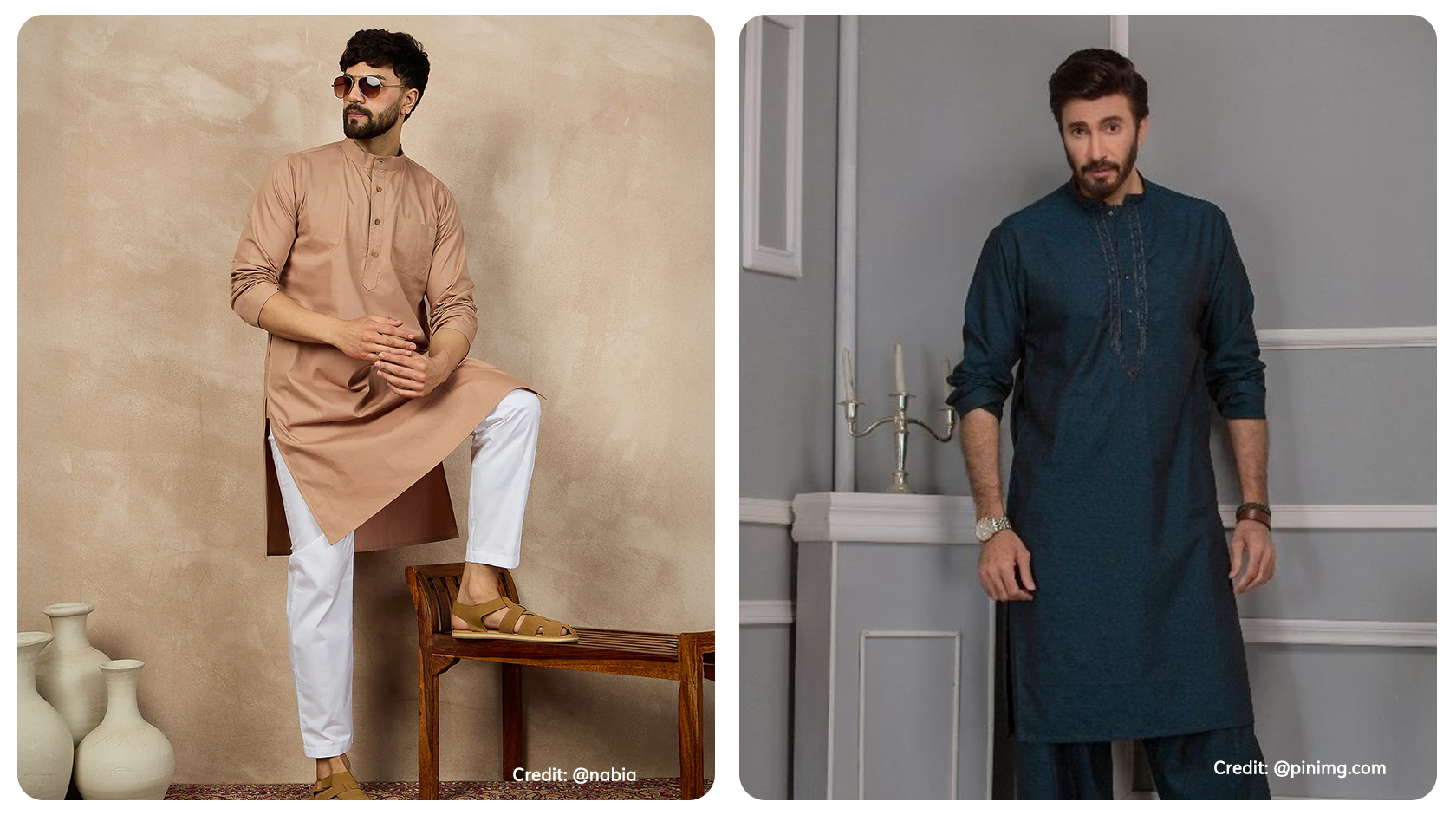
At first glance, a kurta and a kameez can look like the same garment with two different names. Both are traditional South Asian tunics for men, both pair with churidars or trousers, and both turn up at weddings, festivals, and casual outings alike. But the two are distinct pieces with separate roots, silhouettes, and dress codes.

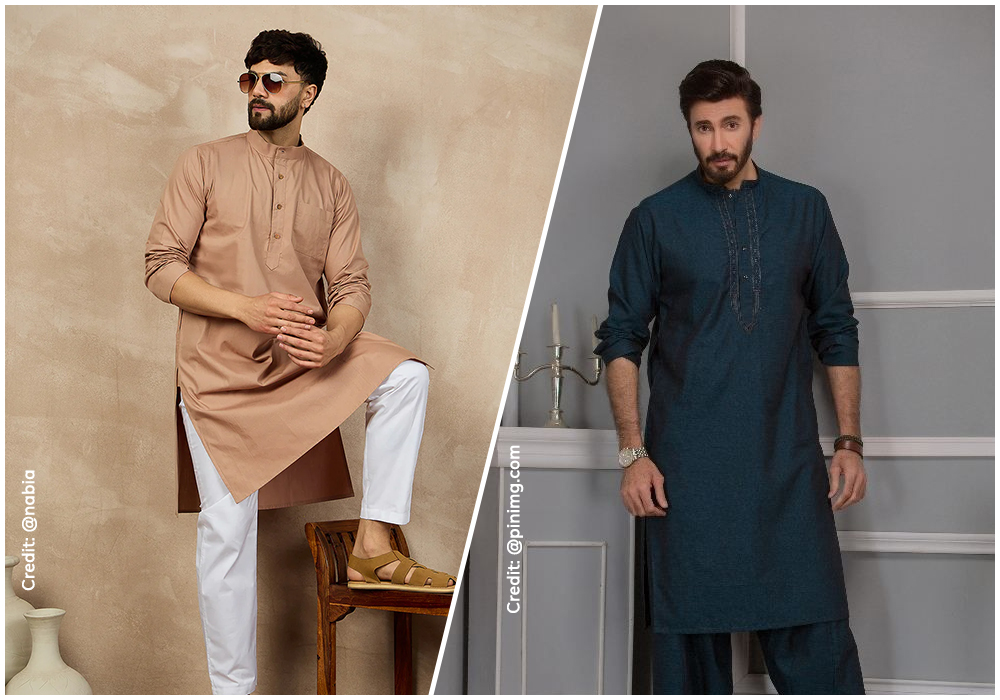
Knowing the difference helps you shop smarter and dress for the right occasion. A kurta leans casual and comfortable. A kameez leans formal and structured. This guide breaks down each garment, compares them side by side, and shares practical styling tips so you can choose with confidence.
What is a men's kurta?
A kurta is a long, loose-fitting tunic that typically falls between the hips and the knees for men. It traces its roots to Central Asian and Persian dress and has been a staple in Northern India for centuries, originally as casual everyday wear.
Kurtas favor a minimalist, straight-cut silhouette with little to no flare at the hem. Necklines are simple—think round necks, mandarin (band) collars, or stiff collars. They're usually made from lightweight, breathable fabrics like cotton and linen, which makes them ideal for warm weather and long days. For formal moments, a silk kurta dresses the look up nicely.
What is a men's kameez?
A kameez is a longer, more tailored tunic that generally extends past the knees. It carries the influence of Mughal and Persian fashion and rose to prominence during Mughal rule. Today it's widely worn as a Pakistani and Punjabi outfit for men, often paired with churidar pants.
Compared to the kurta, the kameez is more fitted and design-forward. It experiments with seams, asymmetric high-low hemlines, and elaborate necklines that feature embroidery, sequins, or lace. Richer fabrics—silk, georgette, chiffon, and velvet—are common, giving the kameez its dressier, more luxurious feel.
What are the key differences between a kurta and a kameez?
The core distinction comes down to formality. The kurta is the relaxed, versatile option, while the kameez is the polished, occasion-ready one. Here's how they compare across six factors:
- Length: Kurtas fall between the hips and knees. Kameez tunics run longer, usually past the knees.
- Silhouette: Kurtas are straight-cut and loose. Kameez styles are tailored and body-conscious.
- Neckline: Kurtas keep necklines simple. Kameez necklines are more decorative, often with embellishment.
- Fabric: Kurtas use lightweight cotton and linen. Kameez uses richer silk, georgette, and velvet.
- Embroidery: Kurtas feature subtle, delicate detailing. Kameez carries heavier, intricate work.
- Occasion: Kurtas suit casual and semi-formal settings. Kameez suits weddings and formal events.
Should you choose a kurta or a kameez?
There's no strict rule—your choice depends on the occasion and your personal style.
Choose a kurta if comfort and versatility matter most. Its relaxed fit and breathable fabric make it a strong pick for daytime events, casual outings, office wear, and warm climates. Pair it with slim-fit trousers, chinos, or jeans for a modern look.
Choose a kameez if you want to make a statement at a formal event. Its tailored cut, richer fabrics, and detailed embroidery shine at weddings, evening parties, and winter celebrations where a dressier outfit is expected.
How to style a kurta and a kameez
A few simple choices can elevate either garment:
- Pair a kurta with tapered or slim-fit pants for a sharp, office-ready look, or with jeans and chinos for casual ease.
- Add a layer. A designer jacket, blazer, or shawl brings depth and a polished, layered feel.
- Accessorize the kameez with statement pieces tuned to the occasion—the design-heavy elegance handles bold accessories well.
- Play with length and fabric. Longer cuts read as sober and sophisticated, while shorter, well-designed versions feel contemporary.
The bottom line on kurta vs kameez
The kurta and kameez share a heritage, but they serve different roles in a modern wardrobe. The kurta is your everyday, breathable, easy-to-style tunic. The kameez is your formal, fitted, embellished showpiece. Keep both in rotation and you'll be ready for anything—from a relaxed weekend to a grand celebration.
Ready to add one to your closet? Explore a men's kurta and kameez collection, and pick the style that fits your next occasion.
Frequently asked questions
Are a kurta and a kameez the same thing?
No. While both are traditional tunics worn by men, they differ in length, fit, and formality. A kurta is shorter and looser, while a kameez is longer, more tailored, and dressier.
Which is more formal, a kurta or a kameez?
The kameez is generally more formal. Its tailored silhouette, luxurious fabrics, and intricate embroidery make it well suited to weddings and special occasions, while the kurta works best for casual and semi-formal settings.
What do you wear with a kurta or a kameez?
Both pair well with churidars and trousers. Kurtas also work with jeans and chinos for a modern look, while a kameez is most often worn with churidar pants for a traditional finish.
Can you wear a kurta to a wedding?
Yes. A kurta in a richer fabric like silk, with subtle embroidery, can work for semi-formal weddings. For grand, formal celebrations, a kameez is usually the more fitting choice.
Which is better for hot weather?
A kurta is the better pick for warm days. Its lightweight cotton or linen fabric and loose, straight cut keep you cool, making it ideal for summer and long daytime events.

