


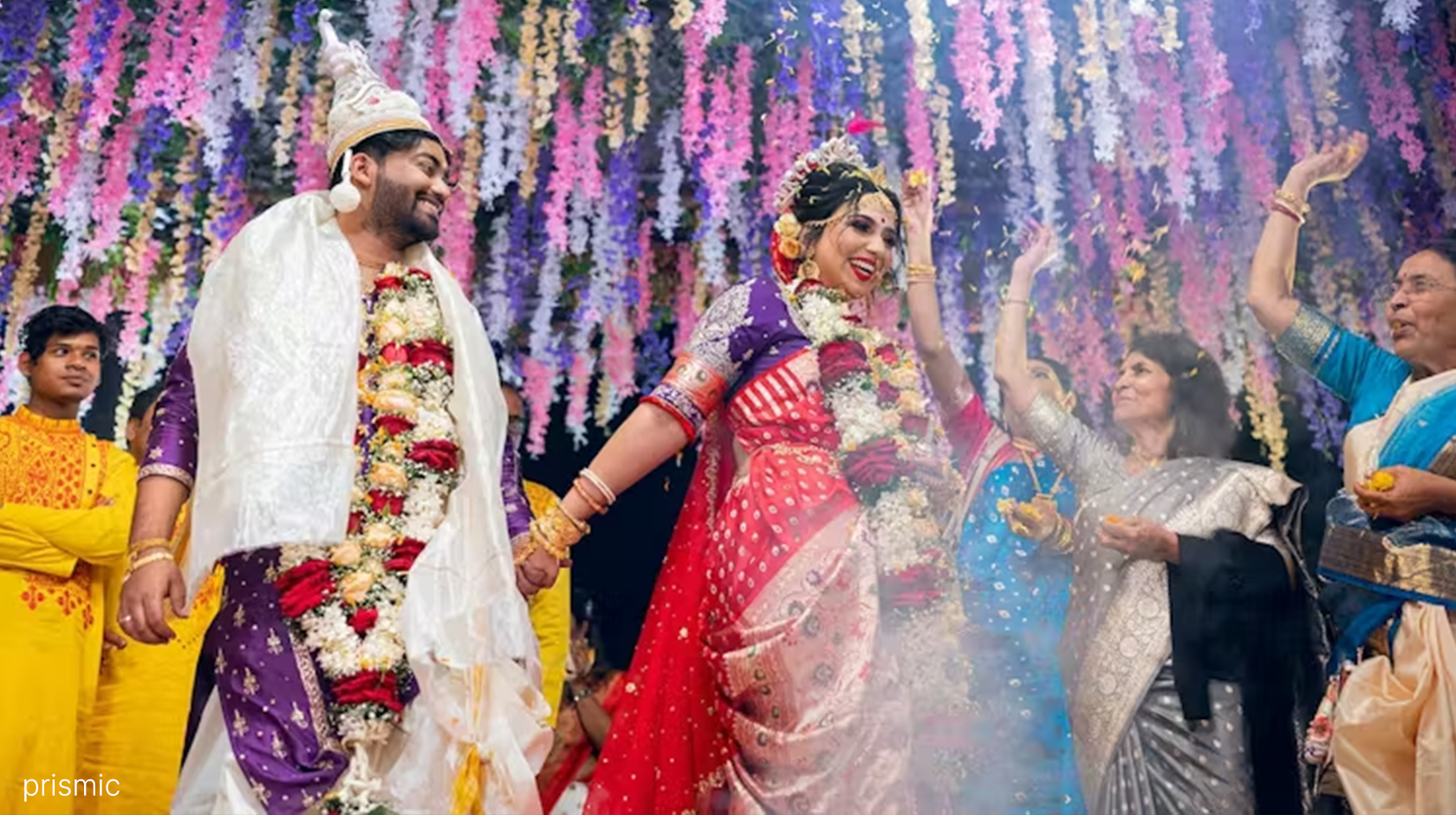
Weddings in Odisha are a spectacular confluence of ancient Vedic tradition, regional folk culture, and the deep spiritual legacy of a land that gave the world the Jagannath Temple and the Konark Sun Temple. An Odia wedding known locally as Biye is not merely a union of two people. It is a multi-day ceremonial journey that binds two families, honors the gods, and celebrates the living culture of one of India's oldest civilizations. If you are attending, planning, or researching an Odisha wedding in 2026, this complete guide covers every ritual, tradition, and meaningful detail you need to know.

What Makes Odisha Weddings Unique?
Odia weddings are distinguished by their deep rootedness in Shakta and Vaishnava traditions, their reverence for Lord Jagannath (a form of Lord Vishnu worshipped uniquely in Odisha), and the integration of regional folk art including Pattachitra paintings, Sambalpuri textiles, and Gotipua dance forms into the wedding aesthetic.
Unlike weddings in many other Indian states, Odia ceremonies place extraordinary emphasis on the role of the maternal uncle (Mama). In Odia wedding tradition, the Mama occupies a ceremonial position of highest honor second only to the bride's father and participates in several exclusive rituals throughout the wedding sequence.
The ceremonies are also heavily influenced by Odia astrology (Jyotish), with every ritual timed down to the minute based on the Panchangam (Hindu almanac). No Odia wedding begins without a properly calculated muhurat, and the priest's role is indispensable from the very first pre-wedding ritual to the last post-wedding prayer.
Pre-Wedding Rituals in Odisha
Jatak Milan (Horoscope Matching)
Before any formal wedding process begins, both families consult their respective family priests to perform Jatak Milan the matching of the bride and groom's birth charts (kundalis). This astrological compatibility check determines the suitability of the match across 36 gunas (qualities). A minimum score of 18 is generally considered acceptable in Odia tradition, with higher scores considered auspicious.
Nischay (Formal Engagement)
Once the horoscopes are matched and families agree to proceed, the Nischay ceremony takes place the official declaration of the marriage alliance. The bride's family visits the groom's home carrying gifts: betel nuts, betel leaves, coconut, fruits, sweets, and new clothes. The two families exchange these gifts formally, and a pandit records the commitment in the presence of elders and witnesses.
From this point forward, the marriage is socially confirmed. In many Odia families, Nischay is accompanied by the exchange of rings in a simple ceremony, blending the traditional with the contemporary.
Mangala Snana (Auspicious Bath)
On the days leading up to the wedding, both the bride and groom undergo Mangala Snana a ritualistic purifying bath performed at dawn. Water infused with turmeric, neem leaves, sandalwood, and sacred herbs is used. This cleansing ritual is believed to remove negative energies and prepare the body and spirit for the sacred ceremonies ahead.
Haldi (Pithi Ceremony)
The Pithi ceremony Odisha's version of the Haldi ritual involves applying a paste of turmeric, sandalwood, and rose water to the bride and groom at their respective homes. Female relatives perform the application while singing folk songs. The yellow color of turmeric is considered auspicious in Odia culture, symbolizing health, purity, and divine light.
Unlike other states where Haldi is a single communal event, in many Odia households Pithi is performed privately and separately for the bride and groom, maintaining the sanctity of individual purification.
Mangala Baje (Auspicious Music Ceremony)
A distinctly Odia pre-wedding tradition, Mangala Baje is the ceremonial playing of traditional instruments the dhol, mahuri (a double-reed wind instrument), and kartala (cymbals) to announce the approaching wedding to the community. The sound of these instruments is itself considered auspicious, believed to invite divine blessings and ward off negative energies from the wedding household.
Ganesh Puja (Invocation of the Remover of Obstacles)
Before any significant ceremony begins, Odia families perform a dedicated Ganesh Puja a prayer to Lord Ganesha seeking his blessings for an obstacle-free wedding. This ritual is performed both at the bride's and the groom's home and marks the official spiritual beginning of the wedding sequence.
The Main Wedding Day: Core Odia Rituals
Barajatraa (Groom's Procession)
The wedding day begins with the Barajatraa the groom's procession to the bride's home. The groom, dressed in traditional Odia attire, is accompanied by his family and friends. Traditional musicians playing dhol and mahuri lead the procession. The groom is often carried in a decorated palki (palanquin) in rural and traditional families, though cars adorned with flowers have replaced this in most urban settings.
Dwarcharita (Welcome at the Gate)
Upon arriving at the bride's home, the groom is received in the Dwarcharita ritual a formal welcome ceremony performed at the entrance. The bride's mother performs an aarti, offers the groom a sarapan (a tray with betel nuts, flowers, and sweets), and applies tilak on his forehead. In many Odia families, the Mama (maternal uncle) plays a central role in this welcome escorting the groom inside with great honor.
Lagna (Auspicious Moment Declaration)
The family pandit announces the Lagna the exact auspicious moment determined by astrology at which the main wedding ceremony must begin. All other rituals stop and preparations intensify as the Lagna approaches. This is the most time-sensitive moment of the Odia wedding, and families take great care to ensure everything is ready before it arrives.
Sindura Daana (Vermillion Ceremony)
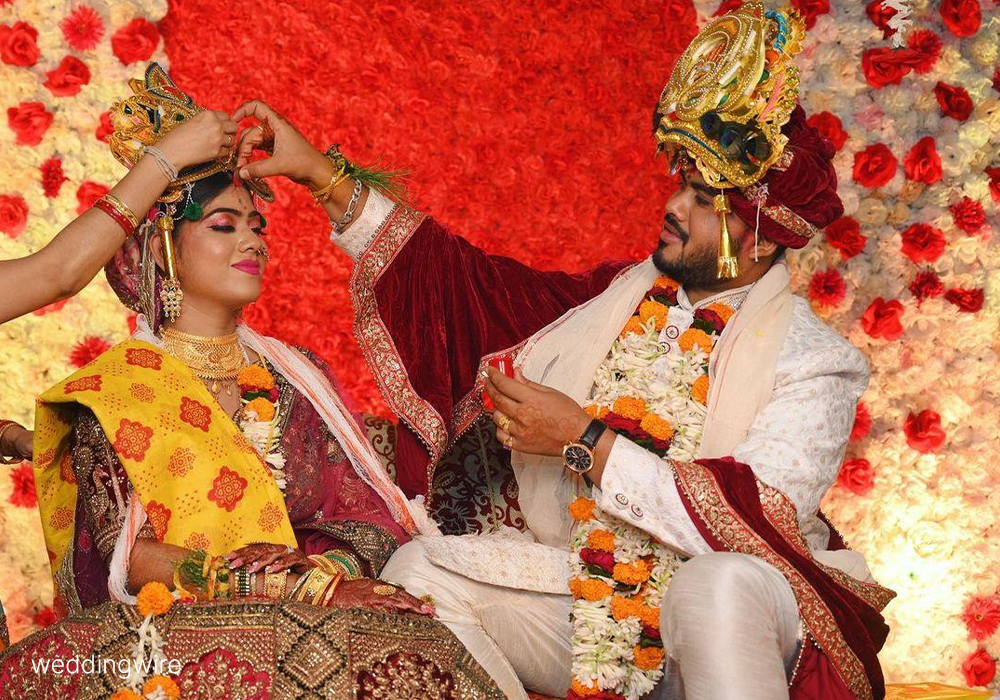
One of the most sacred moments of the Odia wedding, Sindura Daana is the ritual in which the groom applies sindoor (vermillion) in the bride's hair parting for the first time. This act officially marks the bride as a married woman and is performed under the guidance of the priest, amid the chanting of Vedic mantras.
In Odia tradition, the sindoor is first placed on a betel leaf before being applied a small but significant cultural detail that distinguishes the Odia Sindura Daana from its counterparts in other states.
Saat Paak (Seven Circles)
Saat Paak is the Odia equivalent of the Saptapadi the seven sacred circles taken by the bride and groom around the sacred fire (homa). However, in Odia tradition, the circles are taken differently: the bride is seated on a wooden piri (low stool) and is carried around the groom seven times by her brothers or maternal uncle, while the groom remains seated. This ritual symbolizes the bride's family encircling her with their blessings before formally giving her away.
This distinctive inversion where the bride is carried, not walking is one of the most visually striking and culturally unique aspects of the Odia wedding ceremony.
Sampradaan (Kanyadaan)
Sampradaan also called Kanyadaan is the formal gifting of the bride by her father to the groom. This is considered the holiest act a father can perform in Hindu tradition. The bride's father places her right hand in the groom's hand, pours sacred water over their joined hands, and recites Vedic mantras declaring the gift. In Odia culture, this moment is accompanied by tremendous emotion and is witnessed by every elder present at the ceremony.
The Mama (maternal uncle) is often present at this moment, standing beside the bride's father as a co-witness and co-giver reflecting his elevated ceremonial status in Odia weddings.
Homa (Sacred Fire Ritual)
The Homa a sacred fire ritual forms the spiritual backbone of the Odia wedding ceremony. Oblations of ghee, camphor, herbs, and rice are offered into the fire while the priest chants specific mantras for marital happiness, health, prosperity, and longevity. The fire is considered the divine witness to the marriage vows its presence makes the union spiritually binding.
Post-Wedding Rituals in Odisha
Bidaai (Bride's Farewell)
Bidaai the farewell of the bride from her parental home is one of the most emotionally powerful moments of an Odia wedding. The bride throws a fistful of puffed rice (mudhi) backward over her shoulders as she leaves, symbolizing her gratitude to her parental home and her wish for their continued prosperity. She departs without looking back a tradition that carries both sorrow and the hope of a beautiful future.
Grihapravesh (Entry into the New Home)
Upon arriving at her new home, the bride performs Grihapravesh a welcome ritual that formally establishes her as the new daughter-in-law of the household. She tips over a pot of rice at the threshold with her right foot, symbolizing abundance entering the home with her. The groom's mother performs an aarti and the bride is welcomed into the family with great warmth and ceremony.
Saathia (Auspicious Symbols Drawing)
At the entrance of the home, the bride draws Saathia traditional Odia auspicious symbols using rice paste on the walls and floor. These symbols, similar to rangoli, are believed to invite Goddess Lakshmi into the new home and establish the bride's role as the keeper of the household's spiritual well-being.
Badhabhaat (First Cooked Meal)
A deeply touching post-wedding tradition, Badhabhaat is the ceremony in which the bride cooks her first meal in her new home. This meal typically rice and dal is shared by the couple and key family members, symbolizing the bride's entry into her domestic role and the family's acceptance of her as one of their own.
Traditional Odisha Wedding Attire
Bride
The traditional Odia bride is radiant in a Sambalpuri silk saree or a Bomkai saree both renowned for their handwoven ikat patterns and vibrant colors. Red is the most auspicious and traditional bridal color in Odisha, though shades of maroon, gold, and saffron are also widely worn.
Traditional Odia bridal jewelry includes the Tarakasi (silver filigree jewelry unique to Odisha), Kaan Phool (ear ornaments), Chandrahaar (a layered gold necklace), and Nupur (anklets). The bride's forehead is adorned with a traditional Tikuli a decorative forehead ornament made of gold or lac which is a hallmark of Odia bridal identity.
Groom
The traditional Odia groom wears a white or cream dhoti with a silk uttariya (upper cloth) draped over the shoulder. A gold-embroidered pagdi (turban) completes the look in many communities. The groom's attire is understated and dignified, in contrast to the bride's vivid elegance.
Odia Wedding Food: Traditional Delicacies
An Odia wedding feast is a celebration of the state's rich culinary heritage:
- Dalma lentils cooked with vegetables; a staple of every Odia feast
- Machha Besara mustard-based fish curry
- Chenna Poda Odisha's famous baked cottage cheese dessert, considered the original cheesecake of India
- Khaja a crispy, layered sweet, especially popular in wedding feasts
- Pitha traditional rice cakes in varieties like Manda Pitha and Arisha Pitha
- Pakhala fermented rice water, often served as a refreshing wedding day drink
- Rasabali and Chhena Gaja milk-based sweets considered indispensable at Odia celebrations
Regional & Community Wedding Variations in Odisha
|
Community |
Distinct Wedding Custom |
|
Brahmin (Odia) |
Strict Vedic rituals; Gotra exchange before Sampradaan |
|
Khandayat |
Warrior-caste traditions; sword-carrying groom procession |
|
Kondh (Tribal) |
Nature worship; bride price system; community feast |
|
Santali |
Oral vows in native language; village elder as officiant |
|
Odia Muslim |
Nikah with local Odia cultural elements integrated |
|
Coastal Odia |
Fish gifting at engagement (Nischay); seafood-heavy feast |
Frequently Asked Questions (FAQ)
Q1. What is an Odia wedding called? An Odia wedding is called Biye. It is conducted as per Hindu Vedic traditions with significant regional customs unique to Odisha, including the distinctive Saat Paak (seven circles) and Sampradaan rituals.
Q2. What is unique about the Saat Paak ritual in Odisha? In Odisha's Saat Paak ritual, the bride is carried around the seated groom seven times by her brothers or maternal uncle the opposite of the Saptapadi in most other Hindu weddings where both walk together. This makes it one of the most culturally distinctive wedding rituals in India.
Q3. What does an Odia bride wear on her wedding day? An Odia bride traditionally wears a Sambalpuri silk or Bomkai saree in red or maroon, paired with Tarakasi silver filigree jewelry and a Tikuli forehead ornament both iconic to Odia bridal identity.
Q4. What is the role of the Mama (maternal uncle) in Odia weddings? The maternal uncle holds the highest ceremonial position in Odia weddings after the bride's father. He participates in the Dwarcharita welcome, Sampradaan, and other key rituals reflecting the deep cultural importance of the maternal family in Odia tradition.
Q5. How many days does an Odisha wedding last? A traditional Odia wedding typically spans three to five days, including pre-wedding rituals (Nischay, Pithi, Mangala Baje), the main wedding day (Biye), and post-wedding ceremonies (Grihapravesh, Badhabhaat).
Q6. What is Chenna Poda and why is it served at Odia weddings? Chenna Poda is a baked cottage cheese dessert Odisha's most celebrated sweet often described as India's original cheesecake. It is considered deeply auspicious and is a non-negotiable part of every Odia wedding feast.

