


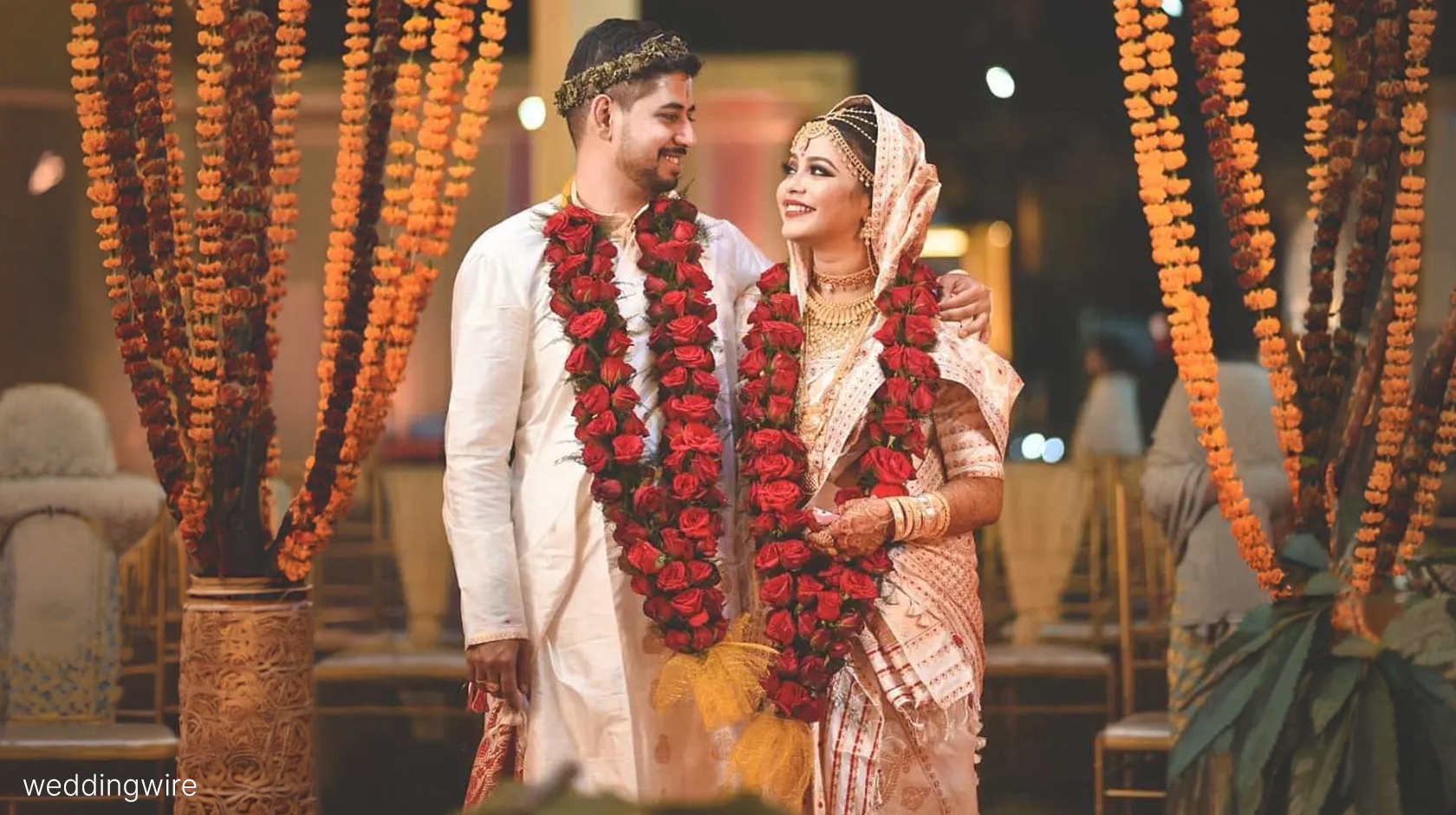
Among all the rituals that unfold in the days before an Assamese wedding, the Tel Diya ceremony stands apart for its quiet intimacy and emotional depth. While the main wedding day (Biya) is loud, joyful, and community-centered, Tel Diya is a softer, more private moment a ritual of oil, touch, and tenderness shared between a bride and the women who love her most. In 2026, as Assamese wedding traditions continue to be celebrated with renewed pride, the Tel Diya ceremony remains one of the most beloved and emotionally resonant pre-wedding customs in the region.

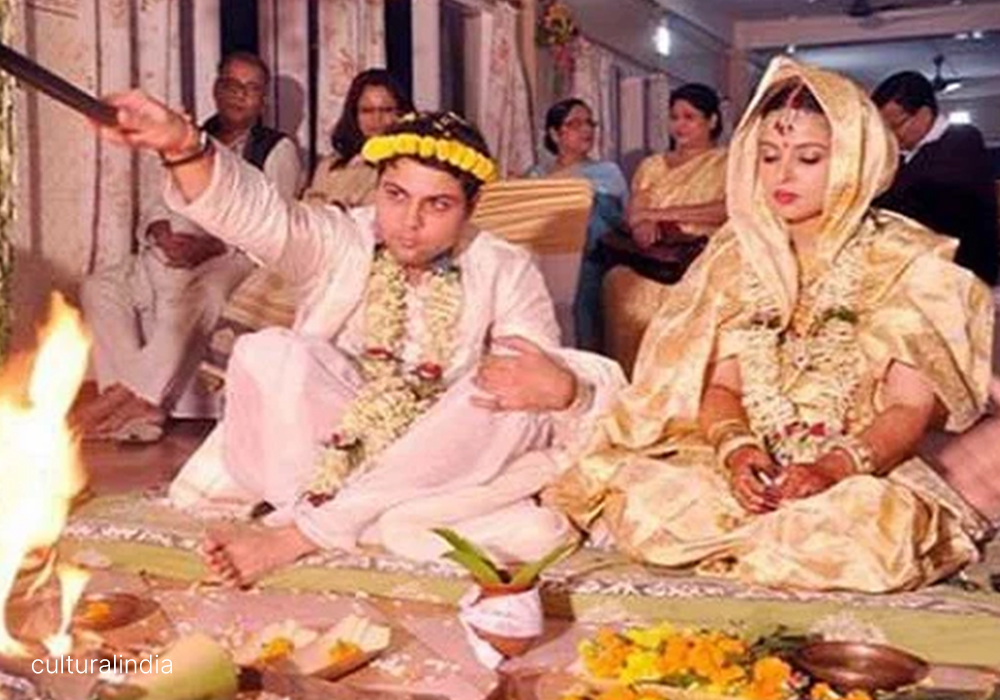
What Is the Tel Diya Ceremony?
Tel Diya literally meaning "oil application" in Assamese is a pre-wedding ritual in which mustard oil is applied to the bride's (and sometimes the groom's) hair and body by female members of the family. The ceremony takes place at the respective homes of both the bride and groom, usually on the evening before the wedding day.
The word "Tel" means oil and "Diya" means to give or apply. Together, Tel Diya represents the act of anointing a deeply sacred gesture found across many cultures worldwide, here given an Assamese identity rooted in love, blessing, and farewell.
It is one of the key pre-wedding ceremonies in Assamese weddings, sitting alongside Juron (formal engagement), Pitoni (turmeric application), and Niyara (purification period) in the sequence of rituals that lead up to the Biya.
The Meaning & Significance of Tel Diya
- A Ritual of Purification
Mustard oil has been used in Indian households for centuries for its medicinal and purifying properties. In the context of the Tel Diya ceremony, applying oil is believed to cleanse the bride's body and prepare her spiritually and physically to enter the sacred space of marriage. It is an act of readying the person from the outside in.
- A Farewell Wrapped in Love
Tel Diya is one of the last intimate rituals the bride shares exclusively with the women of her family her mother, aunts, sisters, and close female relatives. The act of applying oil is unhurried and tender. In many families, it is accompanied by quiet conversations, gentle teasing, and emotional tears. For the bride, it is often the moment when the reality of leaving home truly sets in making Tel Diya one of the most emotionally charged events of the entire wedding journey.
- Beauty & Nourishment Before the Wedding
From a practical standpoint, mustard oil nourishes the hair and skin, leaving the bride with a natural glow ahead of the wedding day. In Assamese culture, beauty preparation was always rooted in nature mustard oil, turmeric, and herbs were the original skincare. Tel Diya honors this tradition of caring for the bride using what the earth provides.
- Community of Women
Tel Diya is performed exclusively by women, making it a rare sacred feminine space within the larger wedding ceremony structure. It reinforces the bonds between women of the family across generations grandmothers, mothers, daughters, sisters all gathered around a single woman at one of the most pivotal moments of her life.
- Invoking Blessings
As each relative applies oil, she whispers or offers a quiet blessing for health, happiness, fertility, and a long, loving marriage. This informal yet heartfelt transfer of blessings from elder women to the bride is considered one of the most powerful spiritual acts of the entire wedding sequence.
When Is Tel Diya Performed?
Tel Diya is typically performed on the eve of the wedding day the night before the Biya. In some households, it may be performed on the same day as the Pitoni (turmeric) ceremony, creating a combined beauty and blessing ritual that lasts through the afternoon and evening.
The timing is often guided by the family pandit in accordance with the wedding muhurat 2026 and the specific customs of the community. In households following stricter traditional practices, Tel Diya is performed only after sunset, once the day's other pre-wedding rituals are complete.
How Is the Tel Diya Ceremony Performed? Step-by-Step
Step 1 Preparation of the Space
The area where the ceremony will be performed is cleaned and decorated simply a wooden piri (low stool) is placed at the center, often on a bed of banana leaves or a white cloth. A small oil lamp (diya) is lit nearby, and fresh flowers may be placed around the space. The atmosphere is intentionally calm and intimate this is not a ceremony for large crowds.
Step 2 Gathering of Women
Female members of the family the bride's mother, grandmothers, maternal aunts, sisters, and close friends gather around. In many families, the gathering also includes married women from the neighborhood who are considered auspicious (suhagins) and whose presence is believed to bring good fortune to the bride.
Step 3 Seating of the Bride
The bride, dressed in simple everyday clothing (she will dress in full bridal attire only on the wedding day), is seated on the piri. Her hair is loosened and left open so the oil can be applied freely.
Step 4 Oil Application by the Mother
The ceremony begins with the bride's mother being the first to apply mustard oil. She gently massages oil into the bride's scalp, hair, and sometimes her arms and hands. This act by the mother carries the deepest emotional weight of the evening it is a mother's last act of physical care for her daughter before she becomes someone else's family.
Step 5 Application by Other Relatives
After the mother, other female relatives take turns applying oil each accompanied by a blessing, a prayer, or simply a loving touch. Elder women apply it with authority and grace; younger sisters may do so with giggles and sentiment. The circle of women moves gently, unhurried.
Step 6 Folk Songs (Husori & Wedding Geet)
Throughout the ceremony, women sing traditional Husori or pre-wedding folk songs melodies passed down through generations that speak of the bride's beauty, her mother's love, and the bittersweet joy of a daughter leaving home. These songs are an essential part of the Tel Diya experience and distinguish it from any modern beauty ritual.
Step 7 Closing Prayers
The ceremony concludes with a short prayer often an informal invocation of the family deity and Goddess Gauri seeking blessings for the bride's new life. The oil lamp remains lit as a symbol of divine presence throughout the ritual.
Tel Diya for the Groom: Is It Performed?
Yes in many Assamese families, a parallel Tel Diya ceremony is performed for the groom at his home on the same evening. The format is similar: male elders and female relatives gather, and oil is applied to the groom's head and body. However, the ceremony on the groom's side tends to be shorter and less emotionally elaborate than the one performed for the bride.
In some communities, the groom's Tel Diya is combined with other pre-wedding rituals and may not be held as a separate, standalone ceremony.
Tel Diya vs. Haldi Ceremony: What Is the Difference?
Many people confuse Tel Diya with the Haldi (turmeric) ceremony, but they are distinct rituals:
|
Aspect |
Tel Diya |
Haldi (Pitoni) Ceremony |
|
Primary substance |
Mustard oil |
Turmeric paste |
|
Purpose |
Nourishment, blessing, farewell |
Purification, auspiciousness, glow |
|
Mood |
Quiet, intimate, emotional |
Festive, playful, celebratory |
|
Participants |
Immediate family women only |
Extended family and friends |
|
Timing |
Evening before the wedding |
Afternoon before the wedding |
|
Music |
Soft folk songs (Husori) |
Lively wedding songs |
In many Assamese households, both ceremonies are performed on the same pre-wedding day Tel Diya in the evening following the Pitoni earlier in the afternoon.
What to Wear During Tel Diya?
Since oil will be applied, the bride wears simple, old clothing during the Tel Diya ceremony typically a plain cotton mekhela chador or any old saree she does not mind getting oil on. This is not a ceremony for silk or embroidery. The simplicity of dress is itself meaningful it is one of the last moments the bride is just herself, unpretty and unperformed, surrounded by the women who love her as she is.
Frequently Asked Questions (FAQ)
Q1. What is the Tel Diya ceremony in Assamese weddings? Tel Diya is a pre-wedding ritual in which mustard oil is applied to the bride's hair and body by female family members on the eve of the wedding. It is a ceremony of purification, nourishment, blessings, and emotional farewell.
Q2. Who performs the Tel Diya ceremony? The ceremony is led by the bride's mother, followed by other female relatives grandmothers, aunts, sisters, and close family friends. The mother is always the first to apply oil.
Q3. What oil is used in the Tel Diya ceremony? Traditional mustard oil is used, as it holds cultural and medicinal significance in Assamese households. In some families, the oil may be infused with herbs or mixed with a small amount of turmeric for added auspiciousness.
Q4. Is Tel Diya the same as Haldi ceremony? No. Tel Diya uses oil and is focused on nourishment and intimate blessing, while the Haldi (Pitoni) ceremony uses turmeric paste and is more festive and purification-oriented. Both are separate pre-wedding rituals in Assamese weddings.
Q5. Is Tel Diya performed for the groom too? Yes, in many Assamese families, a similar Tel Diya ritual is performed for the groom at his home on the same evening, though it is typically shorter and less elaborate than the one performed for the bride.

